
Estimate Only
Approximate pricing
Customized Repair Estimate after on-site inspection reflects your scope.
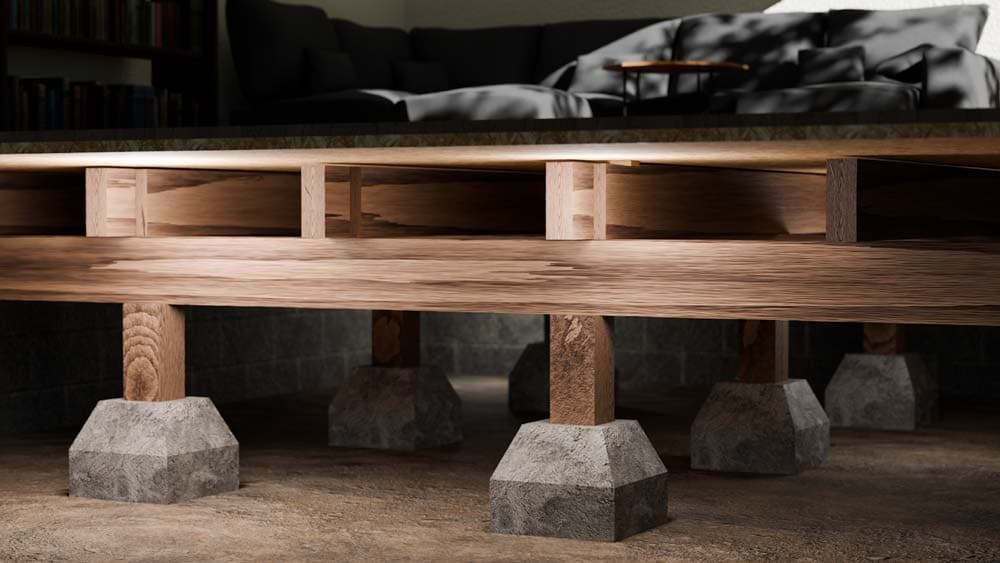
Epp Foundation Repair has sistered floor joists in Nebraska, Iowa, Kansas, and Missouri crawl spaces and basements since 1994, diagnosing the cause first, then attaching the new joist with structural fasteners that match the load.

A local specialist will inspect your foundation, walk you through the findings, and send a clear estimate, no cost, no pressure.
Diagnosis First
Sistering repairs a floor joist by fastening a new full-length joist alongside the damaged or undersized one so the new member carries the load. It fits an undersized joist, a joist cracked from an added load, or rot confined to one end, as long as enough sound wood remains to anchor the sister and the cause of the damage has been addressed.
In Depth
Everything a Midwest homeowner should know about this repair, from the specialists who do it every day.
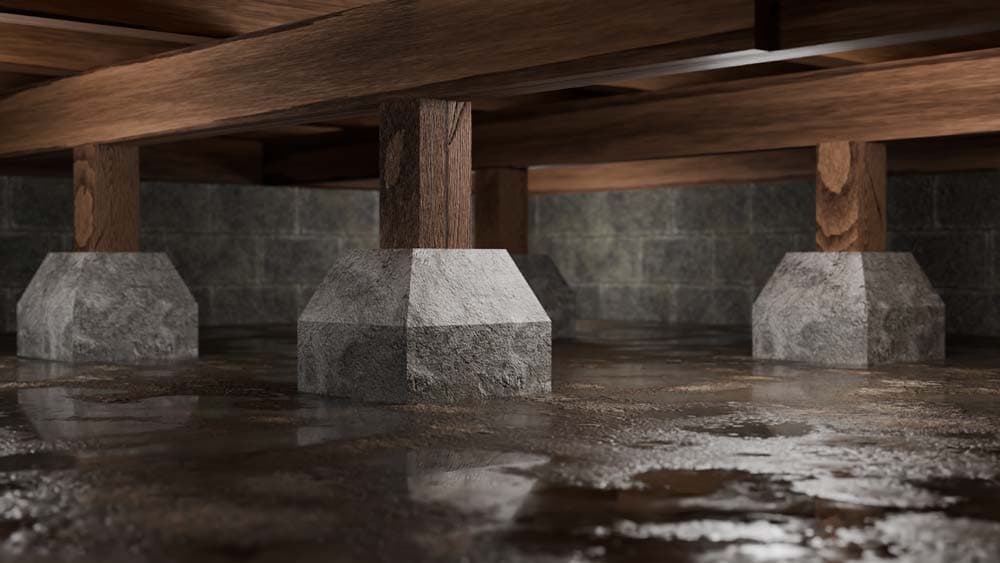
Epp Foundation Repair sisters a floor joist by attaching a new full-length joist directly alongside the existing damaged or undersized member, fastened with structural screws or carriage bolts so that the new joist carries the load the original can no longer carry alone. The technique is fast, non-destructive to the subfloor above, and structurally equivalent to replacement in residential applications across Nebraska, Iowa, Kansas, and Missouri, but only when the damage is localized and the existing joist has enough sound wood left to anchor the sister to. The four scenarios where sistering is the right call: an undersized joist (a 2x8 spanning 14 feet at 16-inch on-center, common in 1950 to 1970s Lincoln and Omaha construction), a cracked or checked joist from over-notching or an overload event (a kitchen island, a gun safe, a hot tub added without structural review), a partially rotted joist where the rot is confined to one end (typically the sill contact end in a chronically wet crawl), or a new load above the joist (an added bathroom, a moved partition wall).
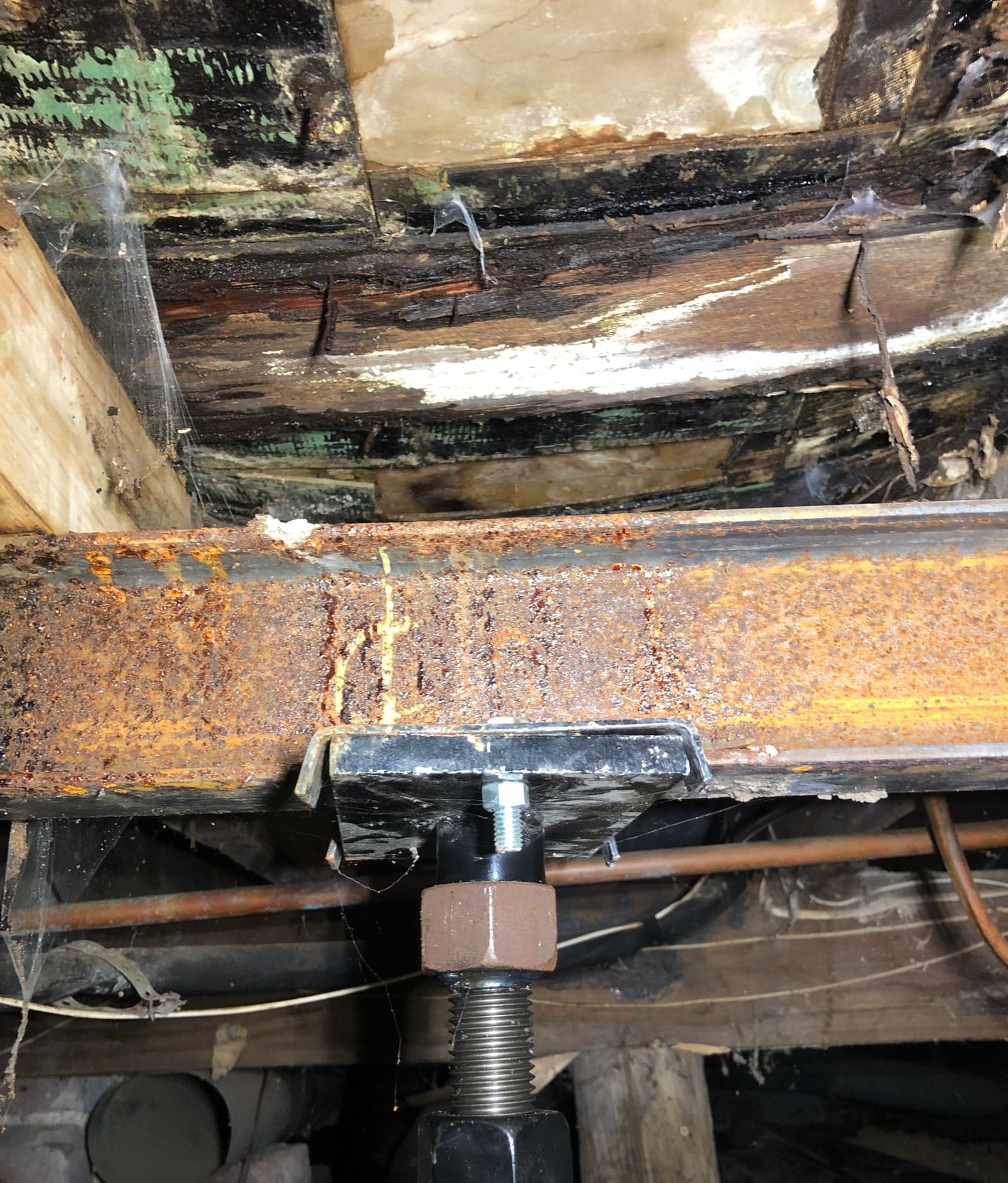
Epp Foundation Repair runs a sister-joist install in four sequenced steps. First, our crew enters the crawl space or basement and confirms the joist condition with a moisture meter, awl probe, and visual inspection. A joist that compresses under awl pressure or shows a white powdery surface is a rotted floor joist, and sistering is the wrong tool. Second, the crew jacks temporary support below the affected floor area, typically a 4x4 post on a 12x12 plywood pad set under a temporary 4x6 beam, to relieve the existing joist of load during install. Third, the new joist is cut to length (bearing-to-bearing) and lifted into position alongside the existing joist with the top edges flush so the subfloor sits flat. Fourth, the sister is fastened with GRK RSS 5-inch structural screws at 6 to 12 inches on-center or with half-inch carriage bolts at 16 inches on-center through pre-drilled holes. Staggered top-and-bottom so the fastener pattern transfers shear across both members.
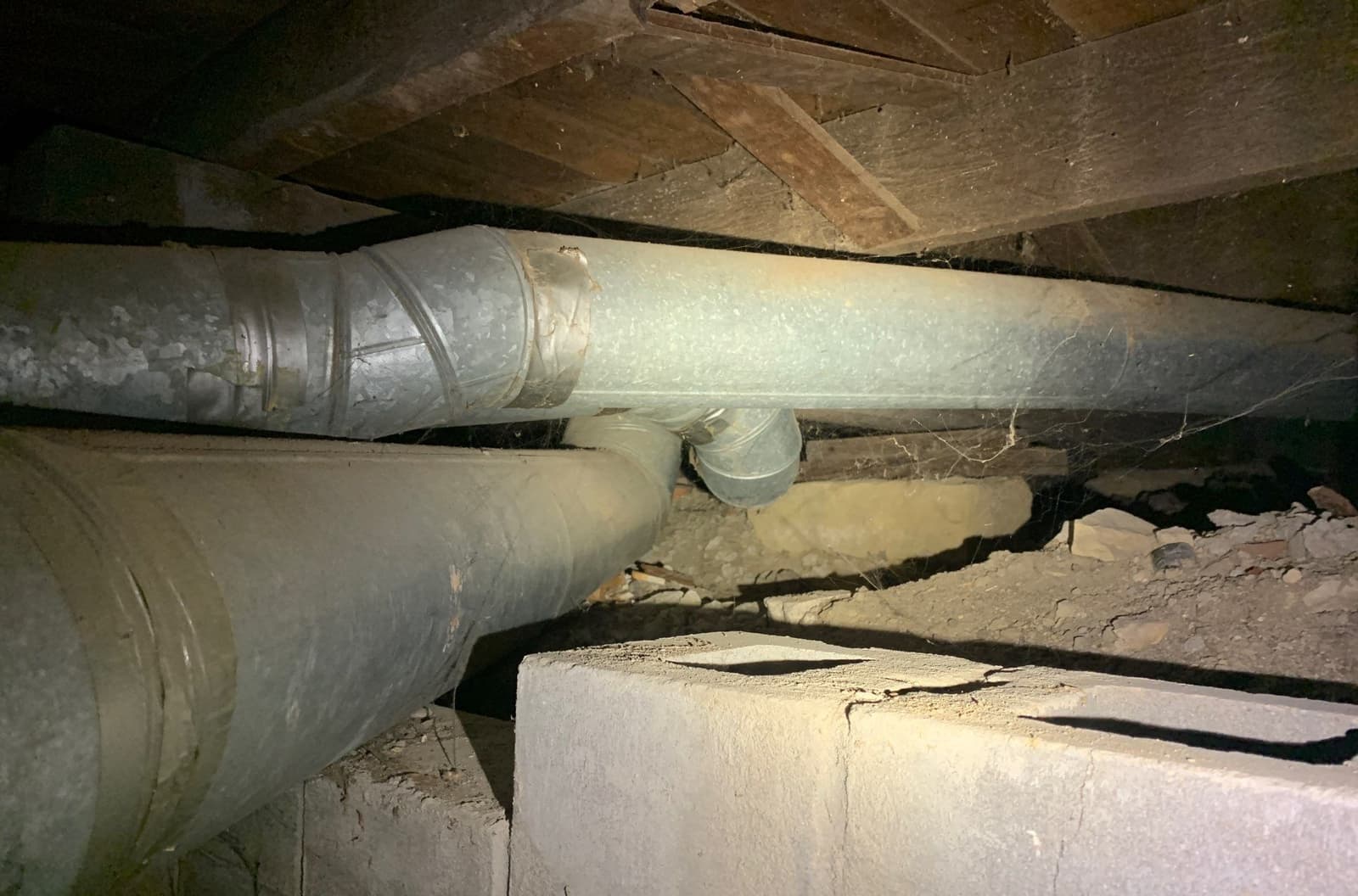
Epp Foundation Repair does the sister install: cut, jack, lift, fasten. The crew also documents joist condition and load path so the structural file is complete if the home sells later. The crew does not remove the existing damaged joist (if removal is required, the job is a joist replacement scope, priced and sequenced differently). The crew does not refinish the subfloor above the repair area. Small dips in the subfloor that remain after a controlled floor leveling lift are finish-carpenter scope, not structural scope. The crew does not re-route HVAC ducts that occupy the joist bay; if a duct or plumbing line is in the way, we coordinate access with the homeowner or their HVAC contractor before scheduling. Where the lumber path stays blocked, a bolted steel repair plate restores capacity in less space. And the crew does not treat carpenter ant or termite damage. Pest control is a licensed-applicator scope and runs separately.
Don't sister a joist that's rotted through more than 30% of its length. The load path collapses and the sister fails prematurely. Don't sister a joist where the bearing end (the part sitting on the sill plate or beam) is crushed or pulverized. The joist can't anchor what's below it. Don't sister a joist if the cause of the original damage is still active (active rot from a wet crawl, active termite activity, active settlement of the support below). The sister will follow the same failure path within five to ten years. In all three cases Epp recommends replacement, replacement plus moisture control, or replacement plus structural support below, depending on the diagnosis.
Labor, materials, and temporary support included. Customized Repair Estimate after on-site inspection reflects your scope.
Epp Foundation Repair holds a BBB A+ rating and won the BBB Integrity Award in 2011 and again in 2016. The only foundation contractor in Nebraska to win the award twice. Founder Dave Epp has been diagnosing joist failures in Midwestern crawl spaces and basements since 1994. The crew works out of five offices: Lincoln NE, Omaha NE, Grand Island NE, Norfolk NE, and St. Joseph MO.
Which Solution Is Right?
| Method | Fits when | Not a fit when |
|---|---|---|
| Sistering | The existing joist retains enough sound wood to anchor a new joist alongside it: an undersized span, a crack from an added load, or rot confined to one end. | More than 30 percent of the joist length is rotted through, the bearing end is crushed, or the underlying moisture or pest source is still active. |
| Replacement | The existing joist no longer has enough sound wood to anchor a sister, or the cause of the damage is still active. | The joist has enough sound length and a stable, addressed cause. Sistering is faster and less invasive in that case. |
Each method is matched to a specific failure mode and soil profile. Browse the toolkit we draw from when diagnosing your home.
Epp Foundation Repair has sistered undersized, cracked, and partially-rotted joists across Nebraska, Iowa, Kansas, and Missouri since 1994. GRK structural fasteners, full-bearing sister joists.
Epp Foundation Repair has installed steel repair plates on damaged floor joists since 1994. Fast reinforcement where sistering a full lumber joist isn't practical.
Epp Foundation Repair has leveled sagging floors across Nebraska, Iowa, Kansas, and Missouri since 1994. Laser-surveyed, cause-matched, lifted incrementally.
Epp Foundation Repair has sistered, reinforced, and replaced failing beams since 1994. Under thousands of homes from Lincoln to Omaha to St. Joseph.
Epp Foundation Repair has rebuilt undersized and rotted carrier beams in 1950s through 1970s homes since 1994. The main beam carrying your entire floor system.
Epp Foundation Repair has installed code-listed steel adjustable jack posts under sagging floors since 1994. Permanent structural support, not temporary shoring.
Most 1950s to 1970s homes across our service region were built with 2x8 joists at 16-inch centers spanning 14 feet, which is at the edge of code even when new. Combined with chronic-wet crawl spaces that rot sill plates and joist ends, the framing under older homes here fails predictably. Repair starts with cause diagnosis: settled support, rotted bearing, or undersized member.
Most of eastern Nebraska and western Iowa sits on wind-deposited loess, a fine, silty soil 10 to 200+ feet deep. Loess holds its structure when dry but loses cohesion rapidly when saturated. After a wet spring, saturated loess expands against foundation walls. After a dry Nebraska summer, it contracts, pulling away from footings, creating voids beneath slabs, and producing the vertical and diagonal settlement cracks we see most frequently on the Lincoln, Omaha, Council Bluffs corridor.
The Marshall and Sharpsburg loess series, dominant across the eastern Nebraska service area, are particularly prone to this cyclical volume change. Homes built in the 1960s, 1980s on uncompacted loess backfill show the highest incidence of progressive settlement cracking in our inspection data.
Eastern Nebraska's 36, 42" frost penetration depth means the soil below grade freezes and thaws 60, 80 times per year. Each cycle applies lateral pressure to basement walls. A wall that holds through ten cycles can fail in the eleventh if drainage has worsened, backfill has settled, or the wall was already at capacity. Horizontal cracks near the soil grade line are almost always a freeze-thaw story in this region.
In eastern Kansas, expansive clay pockets near the surface introduce a different failure mode. Consistent volume change regardless of frost depth. Horizontal cracking in Kansas foundations typically traces to clay expansion; the same pattern in Nebraska more often indicates frost-driven hydrostatic pressure.
These are the framing repair problem signs Epp Foundation Repair diagnoses most often. Each one links to what causes it and how it is repaired.
Our specialists evaluate the underlying cause before recommending any work. Inspections are at no cost and there's no obligation to proceed.
"I've sistered more joists in Nebraska and Iowa basements than I can count since 1994. The question I always ask first is not how to sister. It's whether sistering is even the right answer. If too much of the joist length is rotted through, sistering doesn't fix the problem. You're bolting good wood to compromised wood and the load path is wrong."

Epp Foundation Repair is locally owned and operated, with crews dedicated exclusively to foundation, basement, and concrete work across the Midwest.
Foundation repair, waterproofing, and concrete leveling are our entire focus, not a sideline.
Three decades of experience with Midwest soils, basements, and weather conditions.
Recognized in 2011 and 2016 for ethical business practices and customer transparency.
Every repair comes with a written Epp warranty, from 1 year to the lifetime of the structure depending on the product.
A small sample of work completed across our service area.
Explore detailed case studies of recent foundation, waterproofing, and concrete projects across Nebraska, Iowa, Kansas, and Missouri.
View All ProjectsDon't see your question here? Our team is happy to help. Reach out anytime.
Every home is different. What a repair costs depends on the cause, the scope, and access. A free on-site inspection produces a Customized Repair Estimate that reflects your home, not a typical range.
Customized Repair Estimate after on-site inspection reflects your scope.
Don't sister a joist that's rotted through more than 30% of its length, has crushed or pulverized bearing ends at the sill plate or beam, or sits in a crawl space with an unaddressed moisture source. Don't sister over active carpenter ant or termite damage until a licensed applicator has treated and confirmed dormant. In these cases, replacement (sometimes combined with moisture control or helical-pier support below) is the correct call.
Epp Foundation Repair holds a BBB A+ rating and won the BBB Integrity Award in both 2011 and 2016. The only foundation contractor in Nebraska to win the award twice.
Related to what you are reading. Our team covers the same ground on camera.
Every framing repair method we install. Sequenced so the soil profile and failure mode determine the fix.
 01
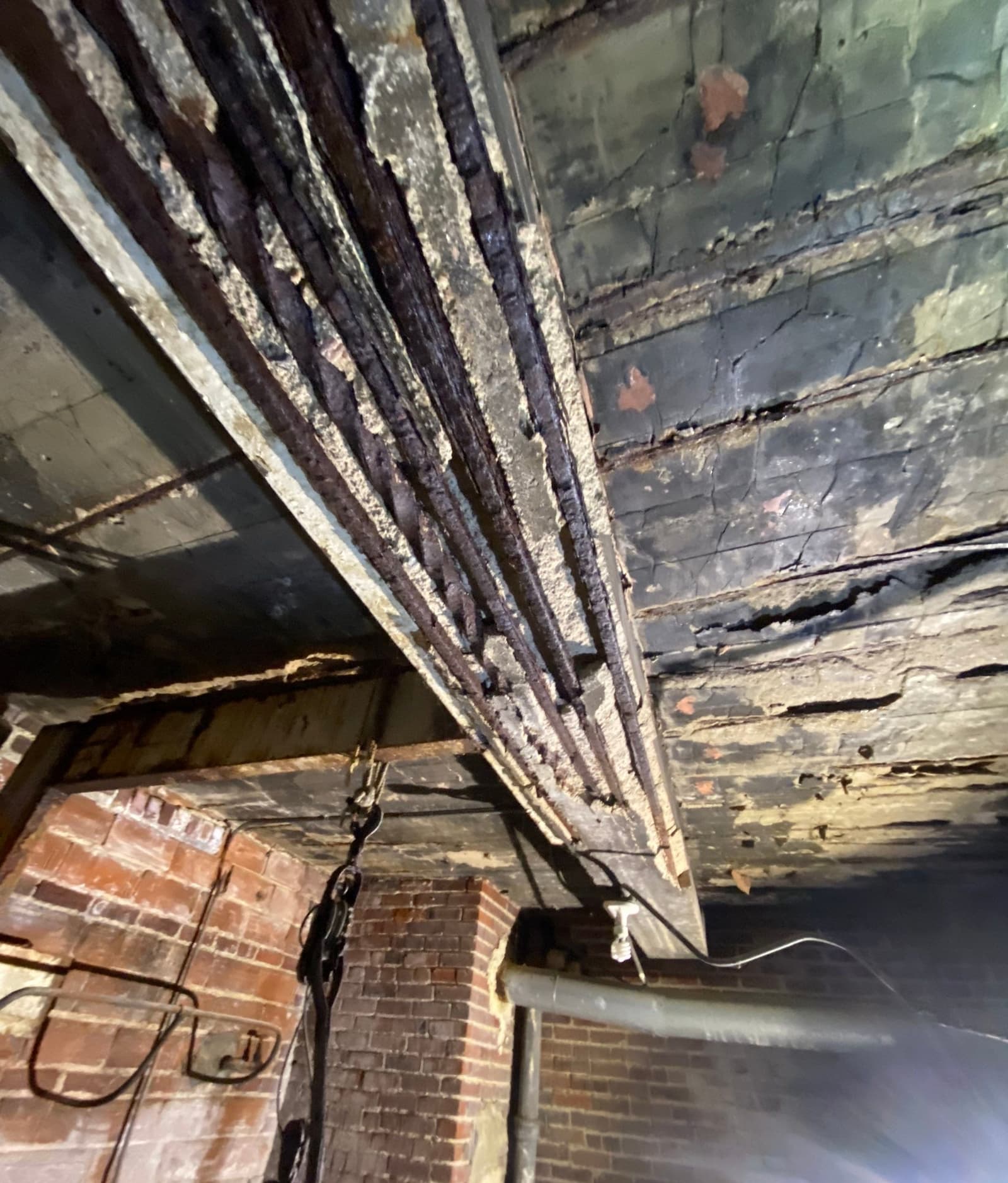
01 Floor joist repair covers the full intervention range. Sistering, end-rot repair, repair plates, full replacement. Chosen after a diagnosis that distinguishes wood damage from a settled support or undersized beam below.
Learn more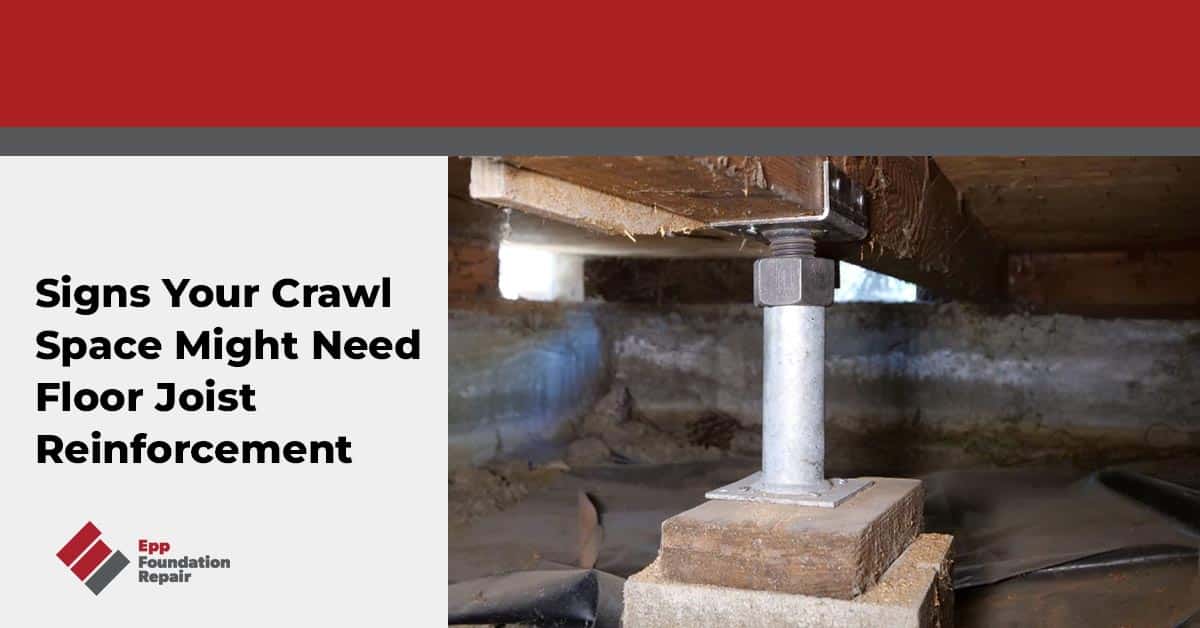 02
02 Joist repair covers any structural joist. Floor, ceiling, or accessible attic. With the same diagnostic-first approach: identify whether the joist failed, or whether the support below it failed, then match the intervention.
Learn more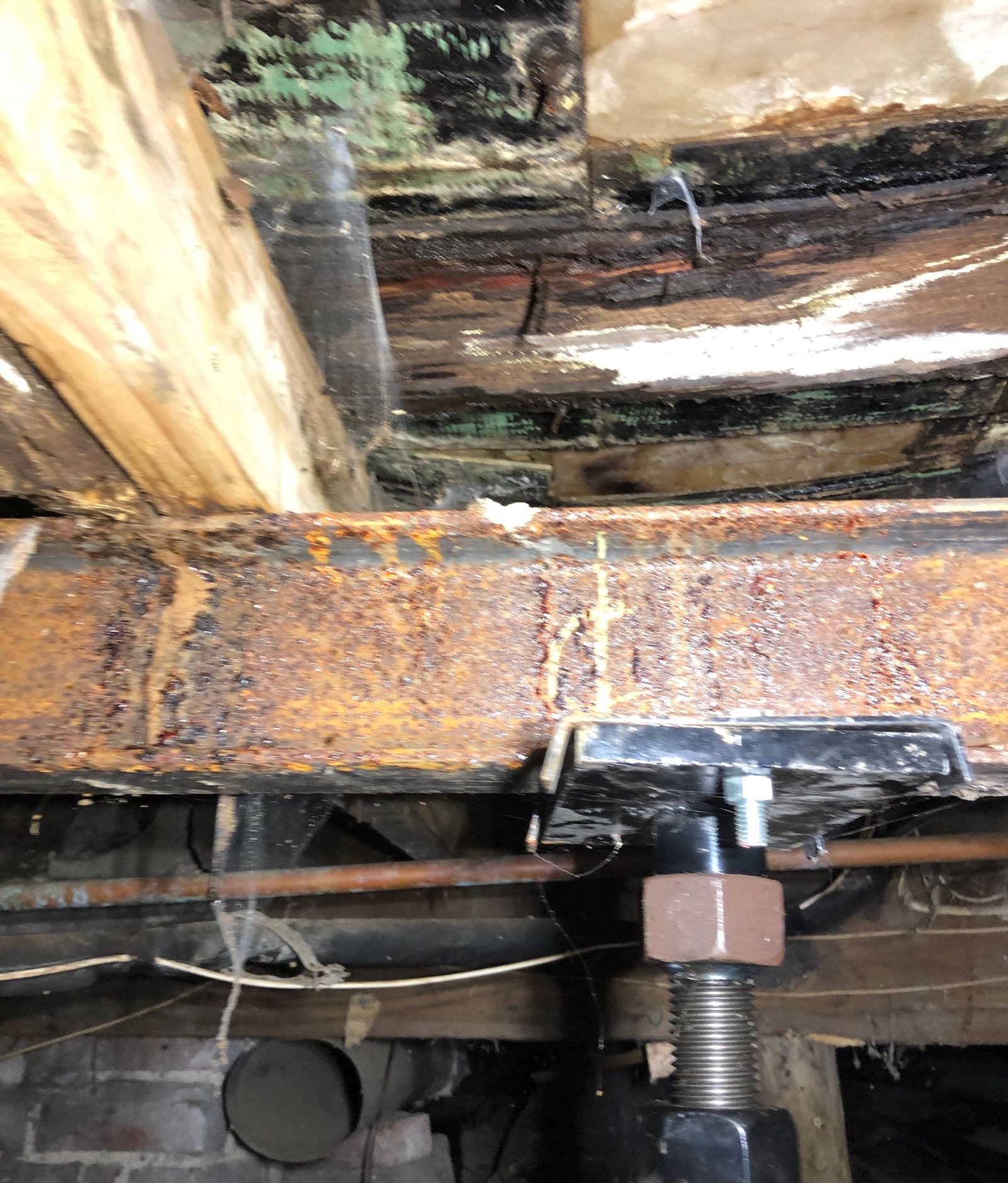 03
03 Sagging floor repair starts with a laser-level survey to identify the cause. Undersized joist, rotted joist, settled support post, sagging beam, or foundation movement. Then executes the structural lift, sister, jack, or pier work matched to the diagnosis.
Learn more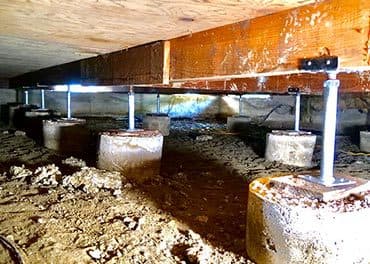 04
04 Epp Foundation Repair replaces failed wood posts and undersized concrete piers in crawl spaces and basements across NE, IA, KS, and MO. Typically with helical pier and adjustable steel jack-post upgrades.
Learn moreEpp Foundation Repair replaces failed structural beams and girders in basements and crawl spaces across NE, IA, KS, and MO. Engineered LVL or steel I-beam, properly sized supports, load verified.
Learn moreEpp Foundation Repair sisters or replaces rotted exterior deck joists and corroded joist hangers across NE, IA, KS, and MO. Exterior-rated structural screws, ledger-condition assessment, and honest scope.
Learn moreLocal crews based in five regional offices, dispatched daily across four states. If your town isn't listed, call us: we likely serve your area.
A straightforward path from initial inspection to completed repairs.
Epp inspects the joist with a moisture meter, awl probe, and visual check. A joist that compresses under awl pressure or shows a white powdery surface has rot deep enough that sistering is the wrong tool. Sistering is approved only when sound wood remains across at least 70% of the joist length.
Epp jacks a temporary 4x6 beam below the affected floor area on 4x4 posts set on 12x12 plywood pads, relieving the existing joist of load during install. The lift is gradual. Typically 1/16 inch per day if the floor above is finished. To avoid cracking drywall or trim.
Epp cuts the new joist (typically same dimension as existing or upgraded one size, e.g, 2x8 sistered with 2x10 if span exceeds code) to fit bearing-to-bearing alongside the existing member. Top edges are kept flush so the subfloor above sits flat after the temporary support is removed.
A 4.9-star average across Google, with verified reviews from homeowners throughout Nebraska, Iowa, Kansas, and Missouri.
Schedule your inspection in seconds with our Driive booking tool, or share a few details and a local specialist will follow up within one business day.
Practical articles from the Epp team on foundation health, waterproofing, and home preservation.
 Framing RepairLatest
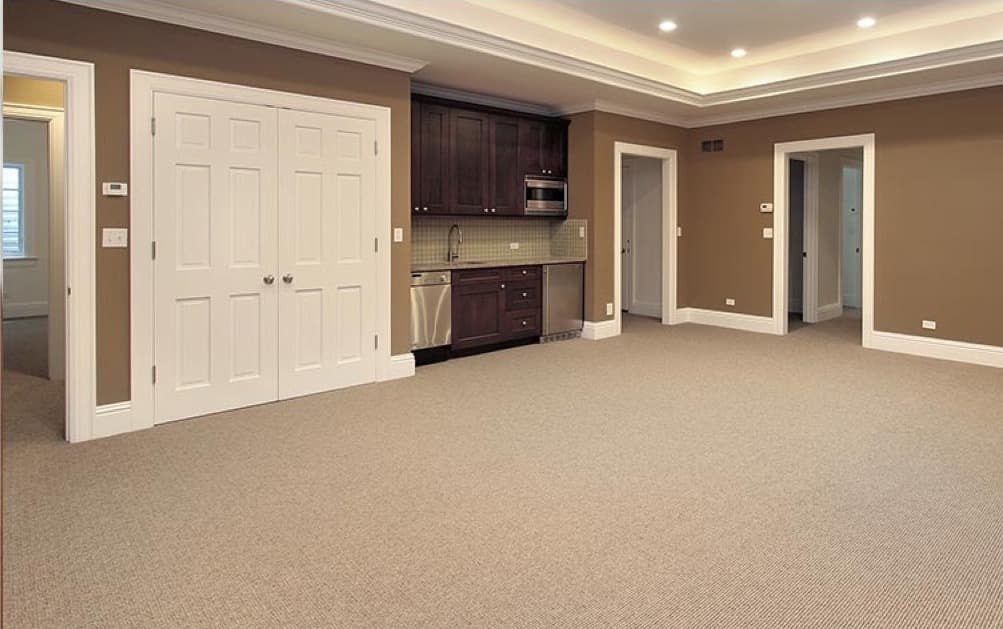
Converting a crawl space into a basement is possible but involves major work. Learn the process, the pros and cons, and what to expect before starting.
 Framing Repair
Learn what causes a sloping floor, three easy ways to test for one, and the repair options a foundation contractor may recommend to fix it.
 Framing Repair
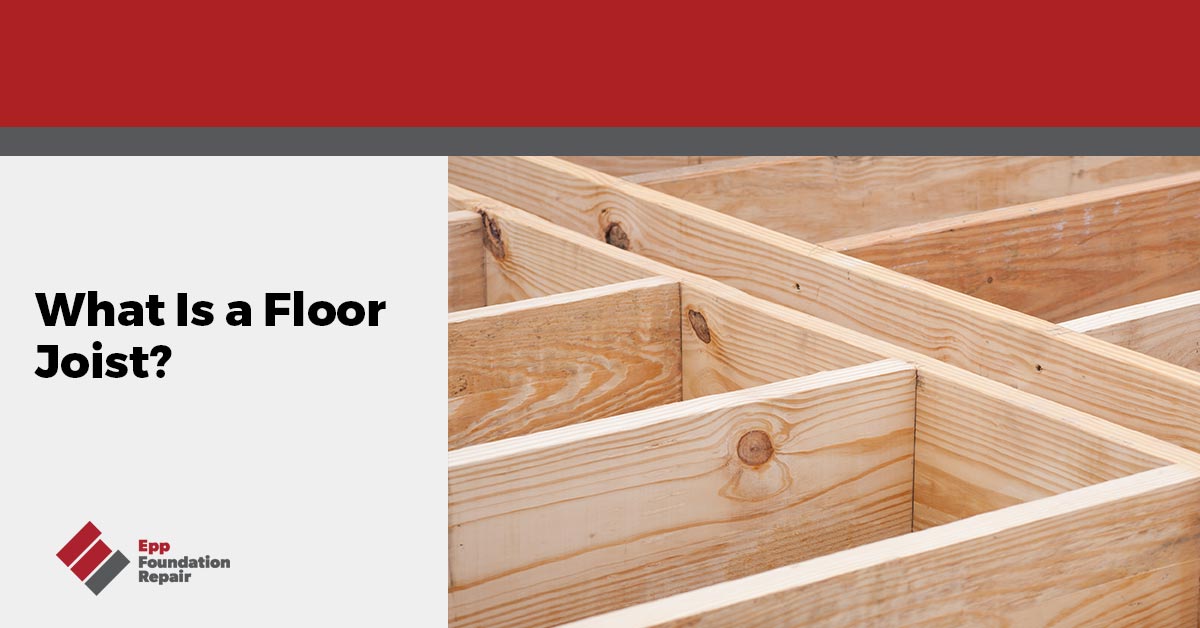
Floor joists carry the weight of the floor above a crawl space. Learn what they are, the problems that weaken them, the warning signs, and how they are repaired.
 Framing Repair
Learn what floor joists do, why they weaken, the repair methods a foundation contractor uses, and the signs that a crawl space floor needs attention.
