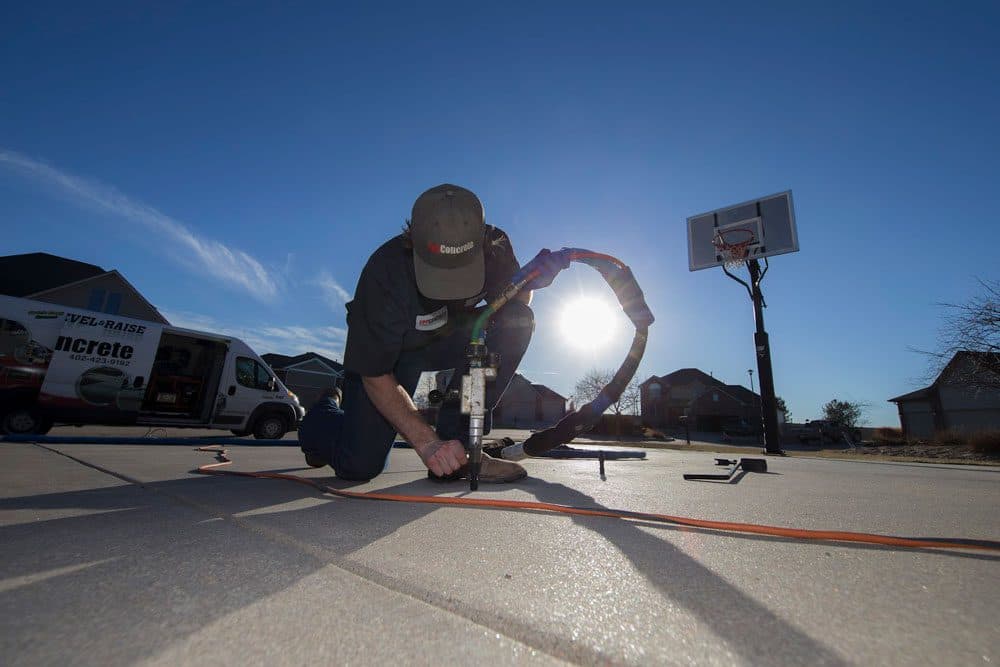
Bonded Patches Restore Spalled, Salt-Damaged, and Broken Concrete Areas.
Epp Foundation Repair patches localized concrete damage across Nebraska, Iowa, Kansas, and Missouri, such as salt-spalled stoops, broken handrail anchors, and pitted garage entries, with the right material matched to the substrate.

Let's take the first step toward a healthy home.
A local specialist will inspect your foundation, walk you through the findings, and send a clear estimate, no cost, no pressure.
Concrete Patching: how it works and when it's the right call.
The mechanics rely on bond integrity. A patch is only as strong as its connection to the parent concrete; a strong mortar laid on a dirty or weak substrate can fail at the bond line. The technician starts by chipping out loose, spalled, or unsound concrete with a chisel or grinding wheel until the remaining surface rings solid under hammer test. The cavity is profiled with vertical or slightly undercut edges, not feather-thin tapers, because thin patch edges curl and pop loose. The substrate is cleaned with a wire brush and compressed air; any oil, salt residue, or curing compound is removed with a degreaser. A bonding agent (Portland cement slurry, polymer-modified acrylic bonder, or epoxy bonder, depending on patch material) is applied to the substrate while it's still tacky. The patch material is then installed in lifts and troweled to match the surrounding profile. Cure times vary by patch material. Exterior patches are sealed after curing to block water and de-icing salt. The same freeze-thaw cycle that damaged the original slab can damage an unsealed patch.
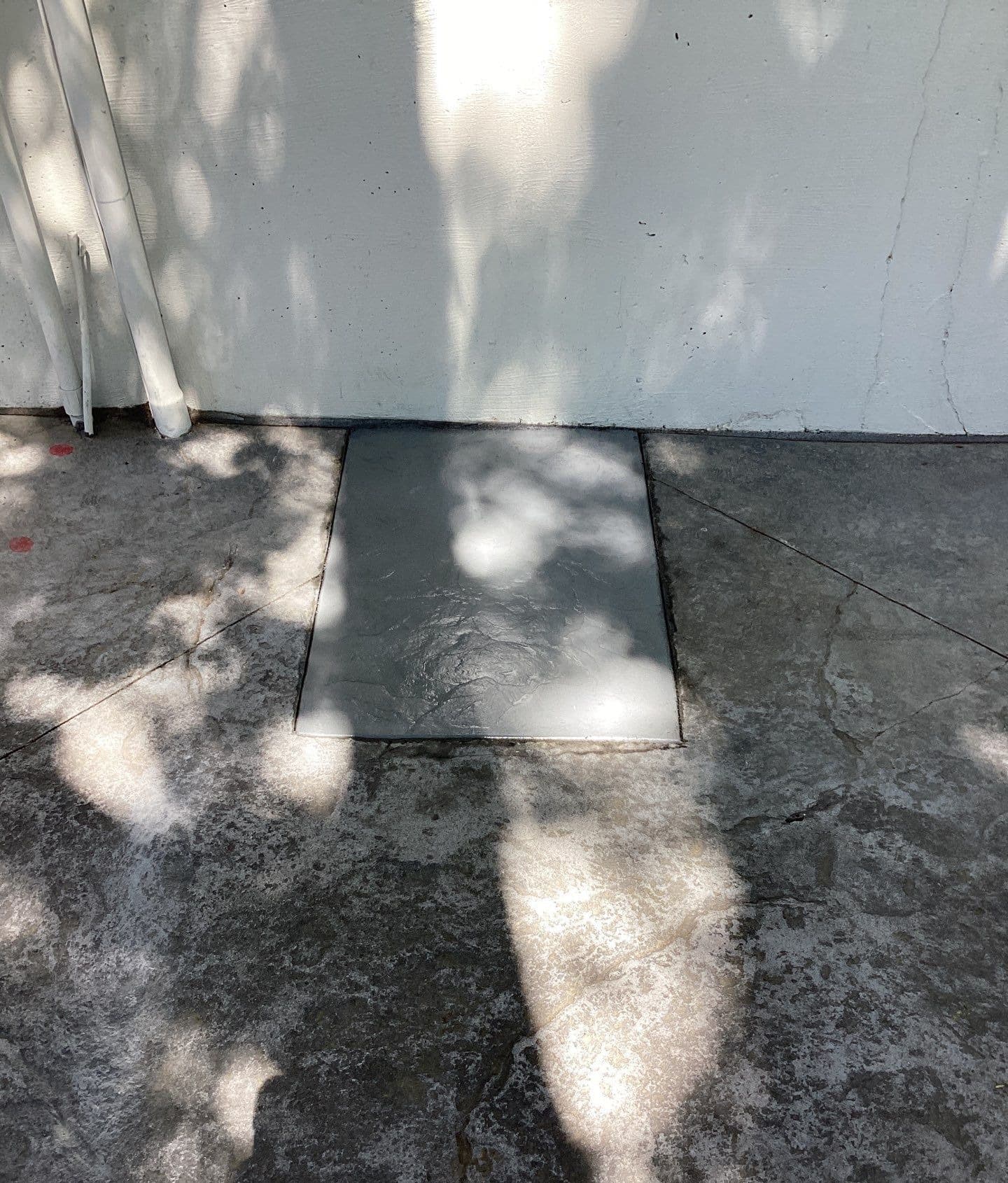
How we install concrete patching.
Step 01.Damage Assessment & Material Selection
The technician sounds the slab with a hammer to map the full damage zone, because spalled concrete commonly extends beyond the visible crater. Patch material is selected by duty: Portland cement-based mortar for thick structural patches or patches carrying load, polymer-modified mortar for thin patches and salt-damaged surface repair.
Step 02.Substrate Removal to Sound Concrete
Loose, spalled, and unsound concrete is chipped out with a chisel or grinder until the remaining substrate rings solid under hammer test. The cavity is profiled with vertical or slightly undercut edges. Feather-thin tapers are removed because thin patch edges always curl and pop loose.
Step 03.Substrate Cleaning & Bonding Agent
The cavity is cleaned with a wire brush and compressed air, then degreased if oil or salt residue is present. The substrate is dampened (for cement-based patches) or kept dry (for epoxy) per the manufacturer specification. A bonding agent matched to the patch material (cement slurry, polymer acrylic bonder, or epoxy bonder) is then applied.
"The patch that fails six months later almost always fails at the bond line, not in the patch material. Somebody troweled fresh mortar onto a dusty cavity, skipped the bonder, or feathered the edge to nothing. Three steps. Chip to sound concrete, clean substrate, bond, and the patch outlasts the slab."

Care and expertise from a team that's been doing this since 1994.
Epp Foundation Repair is locally owned and operated, with crews dedicated exclusively to foundation, basement, and concrete work across the Midwest.
Foundation repair, waterproofing, and concrete leveling are our entire focus, not a sideline.
Three decades of experience with Midwest soils, basements, and weather conditions.
Recognized by the Better Business Bureau for integrity and ethical business practices.
Many of our repairs carry a written Epp warranty. The warranty page lists every covered repair and its terms.

Answers to common questions about Concrete Patching.
Don't see your question here? Our team is happy to help. Reach out anytime.
Concrete Leveling warning signs this solution resolves.
Each problem sign below is a symptom this solution is engineered to fix. See how we diagnose it before we recommend this method.

Pitting, Flaking, and Staining on Exterior Concrete
Epp Foundation Repair has inspected salt-damaged and surface-failing concrete across Nebraska, Iowa, Kansas, and Missouri since 1994. Most pitting is cosmetic, but we tell you when it isn't.
Learn more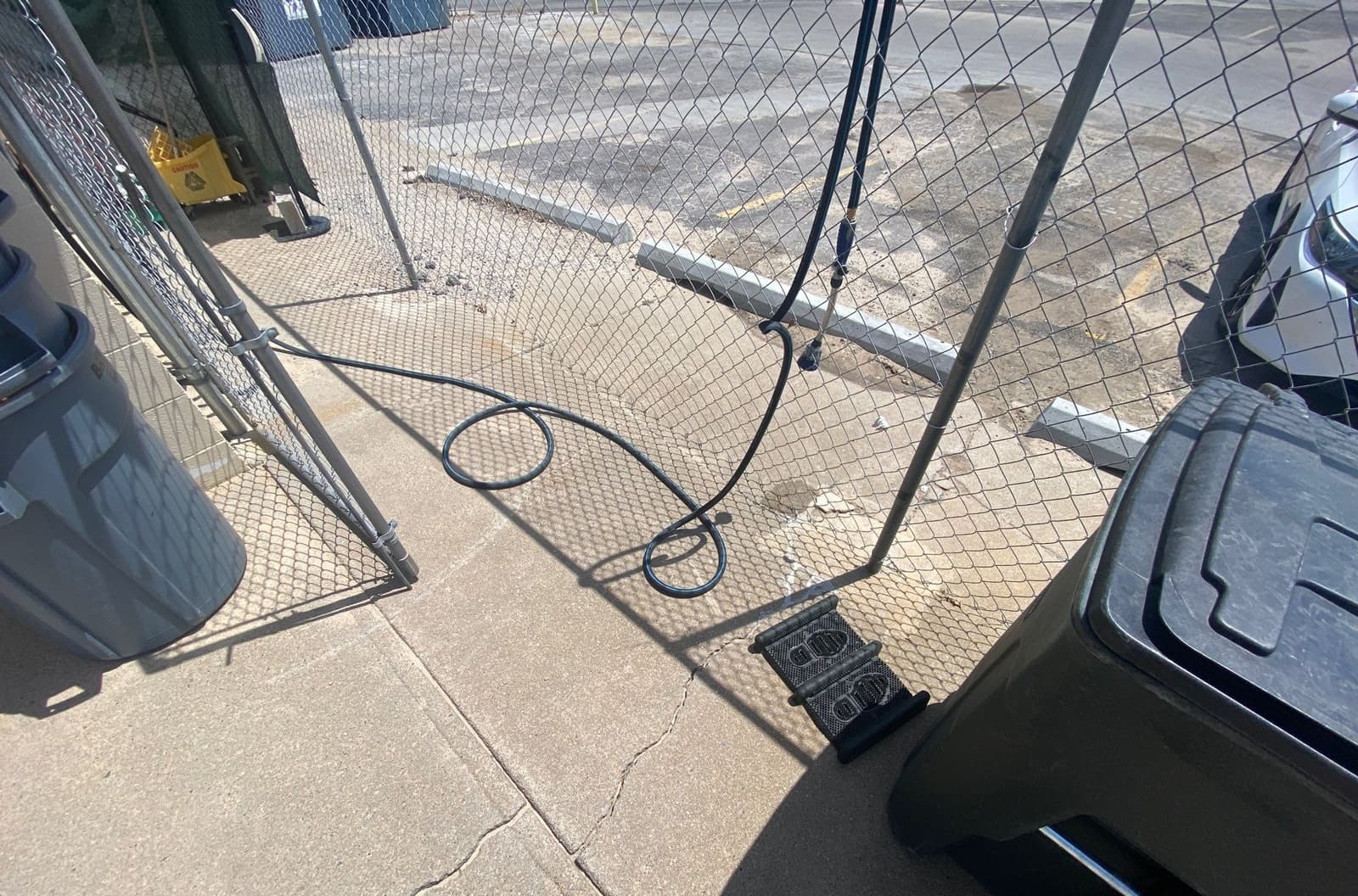
Broken Sidewalks
Epp Foundation Repair has rehabilitated cracked, spalled, and section-loss sidewalks across Nebraska, Iowa, Kansas, and Missouri since 1994, lifting what's salvageable and coordinating replacement honestly.
Learn more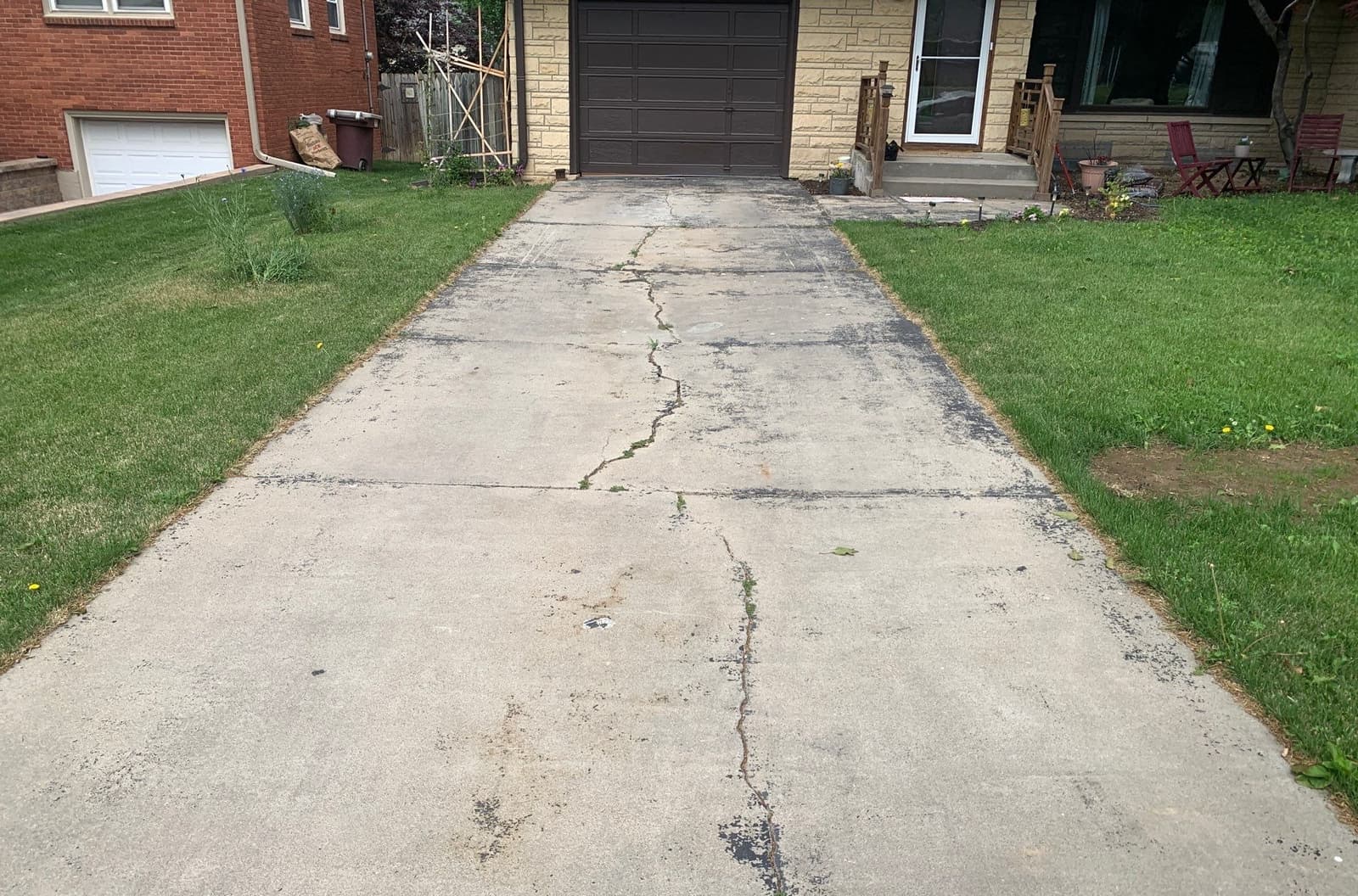
Cracked Driveway
Epp Foundation Repair has assessed and repaired cracked driveways across Nebraska, Iowa, Kansas, and Missouri since 1994, separating cosmetic shrinkage from structural failure during an on-site inspection.
Learn more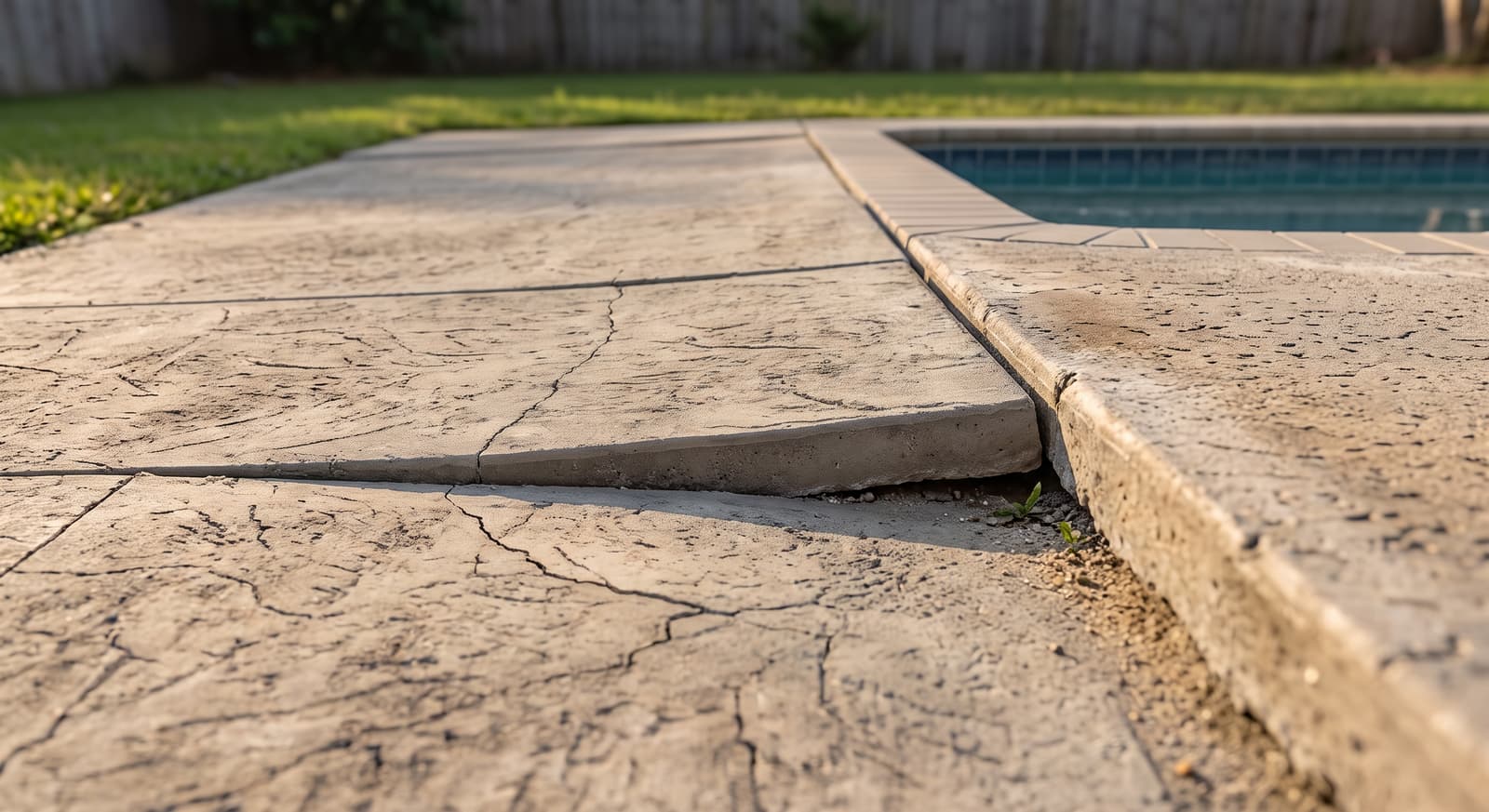
Pool Deck Settling and Tilting Around the Pool
Epp Foundation Repair has lifted settled pool decks across Nebraska, Iowa, Kansas, and Missouri since 1994, and we tell you honestly when the pool itself, not the deck, is the problem.
Learn more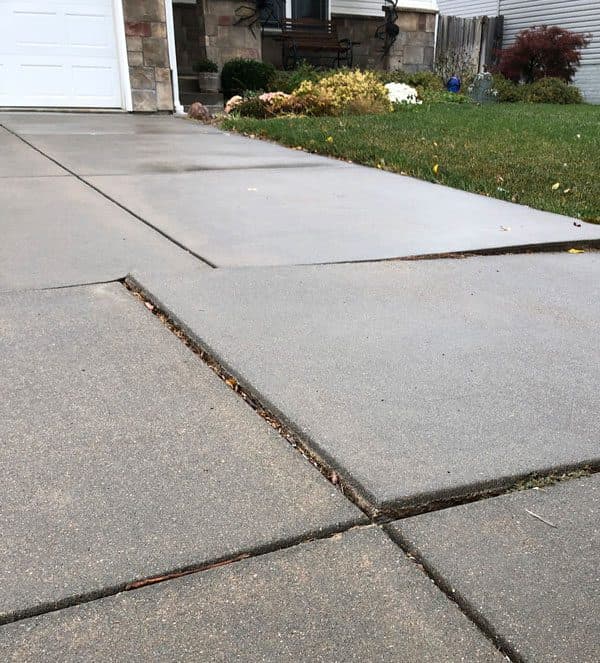
Sinking Driveways Diagnosed and Lifted Back to Grade
Epp Foundation Repair, family owned since 1994, diagnoses and lifts sunken driveways across Nebraska, Iowa, Kansas, and Missouri, and the water source gets addressed first.
Learn more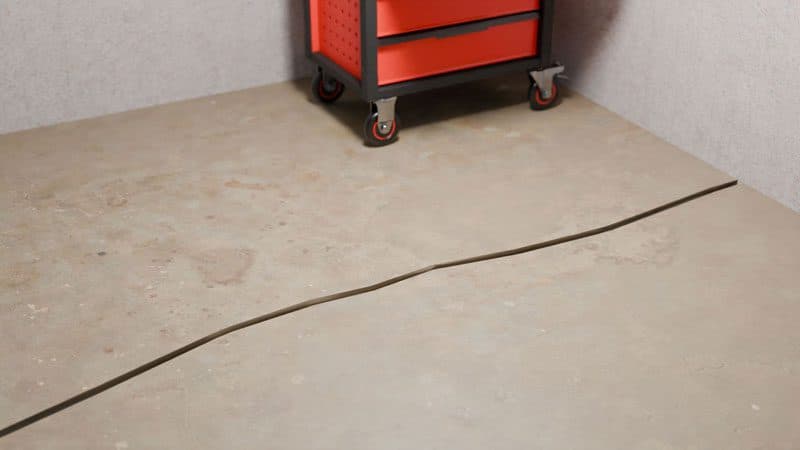
Sinking Garage Floors
Epp Foundation Repair has stabilized sinking garage slabs across Nebraska, Iowa, Kansas, and Missouri since 1994 using polyurethane foam injection.
Learn moreServing Nebraska, Iowa, Kansas & Missouri.
Local crews based in five regional offices, dispatched daily across four states. If your town isn't listed, call us: we likely serve your area.
- Omaha, NE
- Lincoln, NE
- Topeka, KS
- Sioux City, IA
- Bellevue, NE
- St. Joseph, MO
- Council Bluffs, IA
- Grand Island, NE
- Papillion, NE
- Kearney, NE
Take the first step toward a healthy home.
A straightforward path from initial inspection to completed repairs.
Schedule your inspection.
A local specialist visits your home, evaluates the foundation, and answers your questions on site. No cost, no obligation.
Receive an estimate based on your needs.
We provide a clear, Customized Repair Estimate with a scope of work tailored to your home's specific issues. Typically within one business day.
Get your repairs.
Trained crews complete the work on schedule.
Over 1,700 homeowners have shared their experience.
A 4.9-star average across Google, with verified reviews from homeowners throughout Nebraska, Iowa, Kansas, and Missouri.
Two ways to start: book instantly, or request an estimate.
Schedule your inspection in seconds with our Driive booking tool, or share a few details and a local specialist will follow up within one business day.
- A local foundation specialist on site
- A complete walk-through of the findings
- A Customized Repair Estimate within one business day
- No cost, no obligation, no high-pressure sales
Expert guidance on protecting your home.
Practical articles from the Epp team on foundation health, waterproofing, and home preservation.
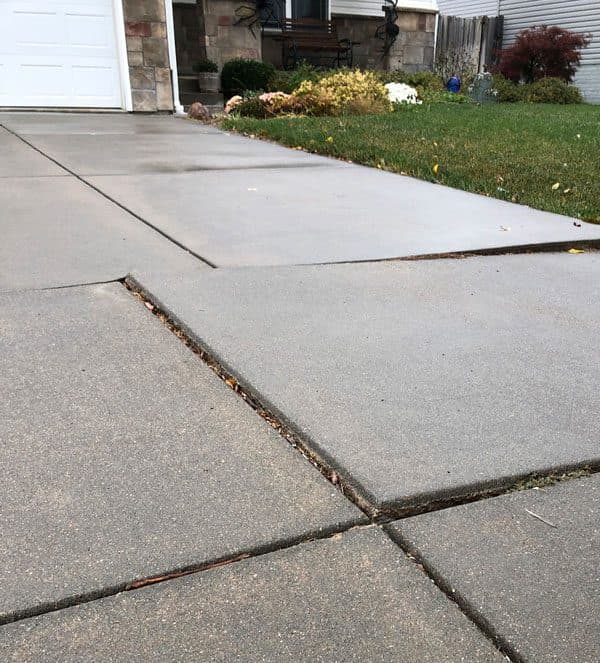 Concrete LevelingLatest
Sunken Driveway or Sidewalk: Should You Lift It or Replace It?
Sunken concrete can often be lifted instead of replaced. Learn why driveways and sidewalks sink, when lifting works, and when replacement makes more sense.
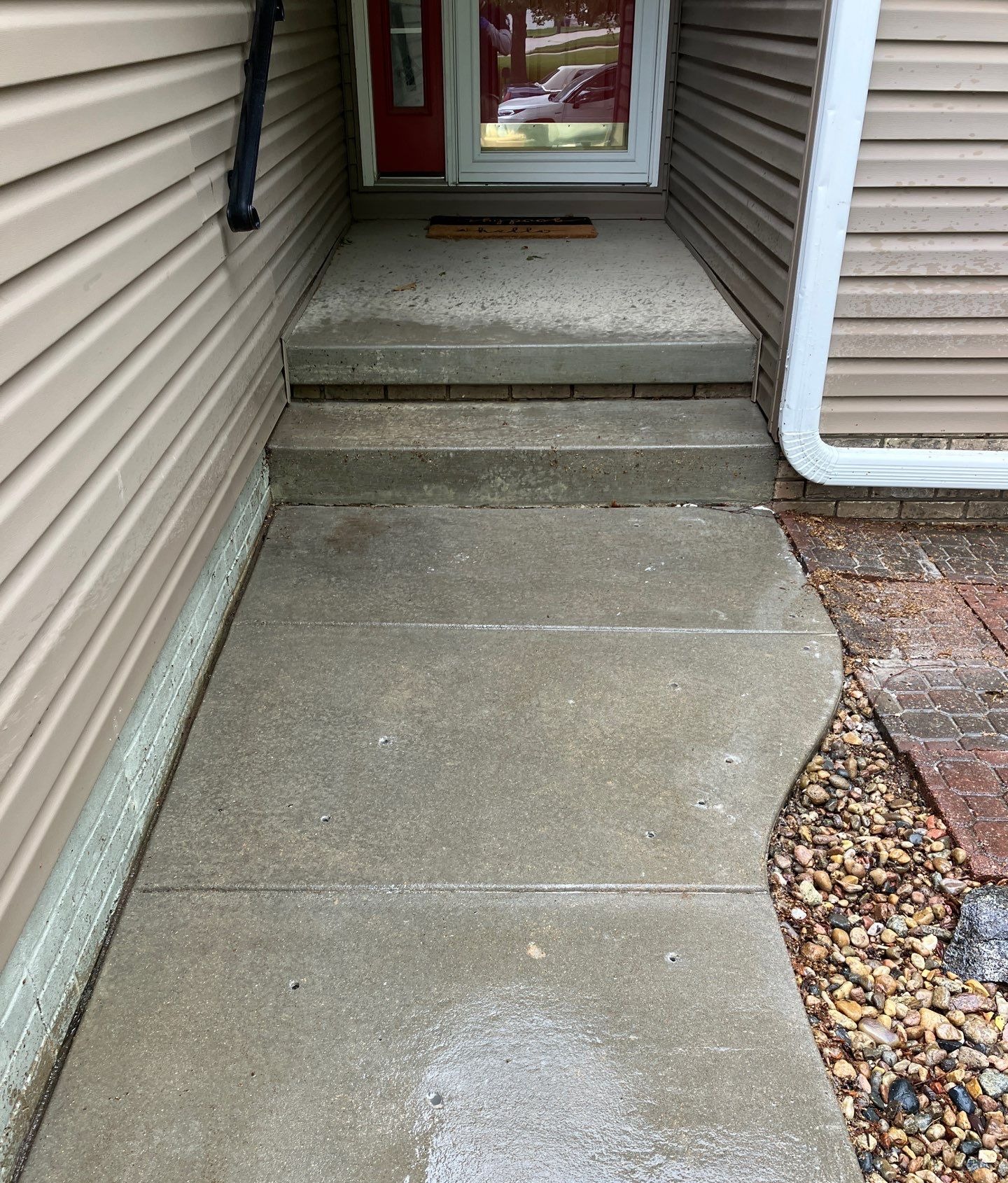 Concrete Leveling
Why Are My Front Steps Pulling Away From the House?
Front steps that sink and pull away from the house are often a soil problem. Learn why it happens and when Epp can lift them with polyurethane foam.
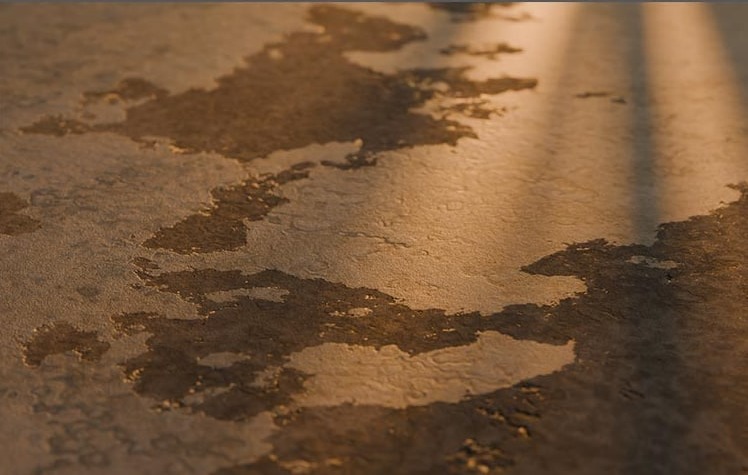 concrete leveling
Mudjacking vs. Foam injection: ten factors that affect pricing.
Both methods can lift sunken concrete, but only one is what Epp Foundation Repair installs. Here are the ten factors behind the price difference and why.
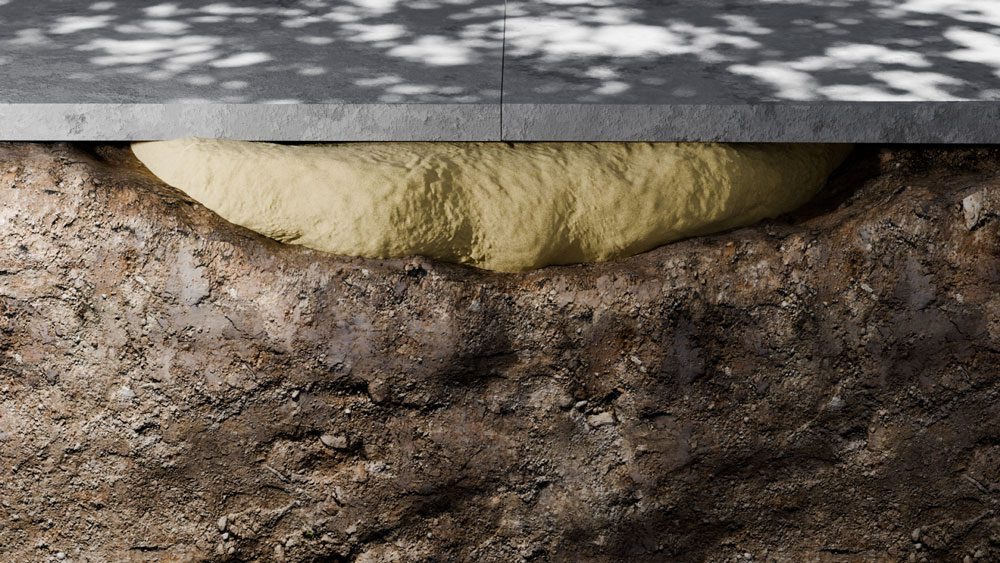 Concrete Leveling
Expandable Foam For Concrete Leveling: Homeowners Guide
Expandable foam offers a fast, minimally invasive way to level uneven concrete surfaces. Learn how polyurethane foam injection works and what to avoid.
Five regional offices across the Midwest.
St. Joseph, MO 64506