
Estimate Only
Approximate pricing
Customized Repair Estimate after on-site inspection reflects your scope.
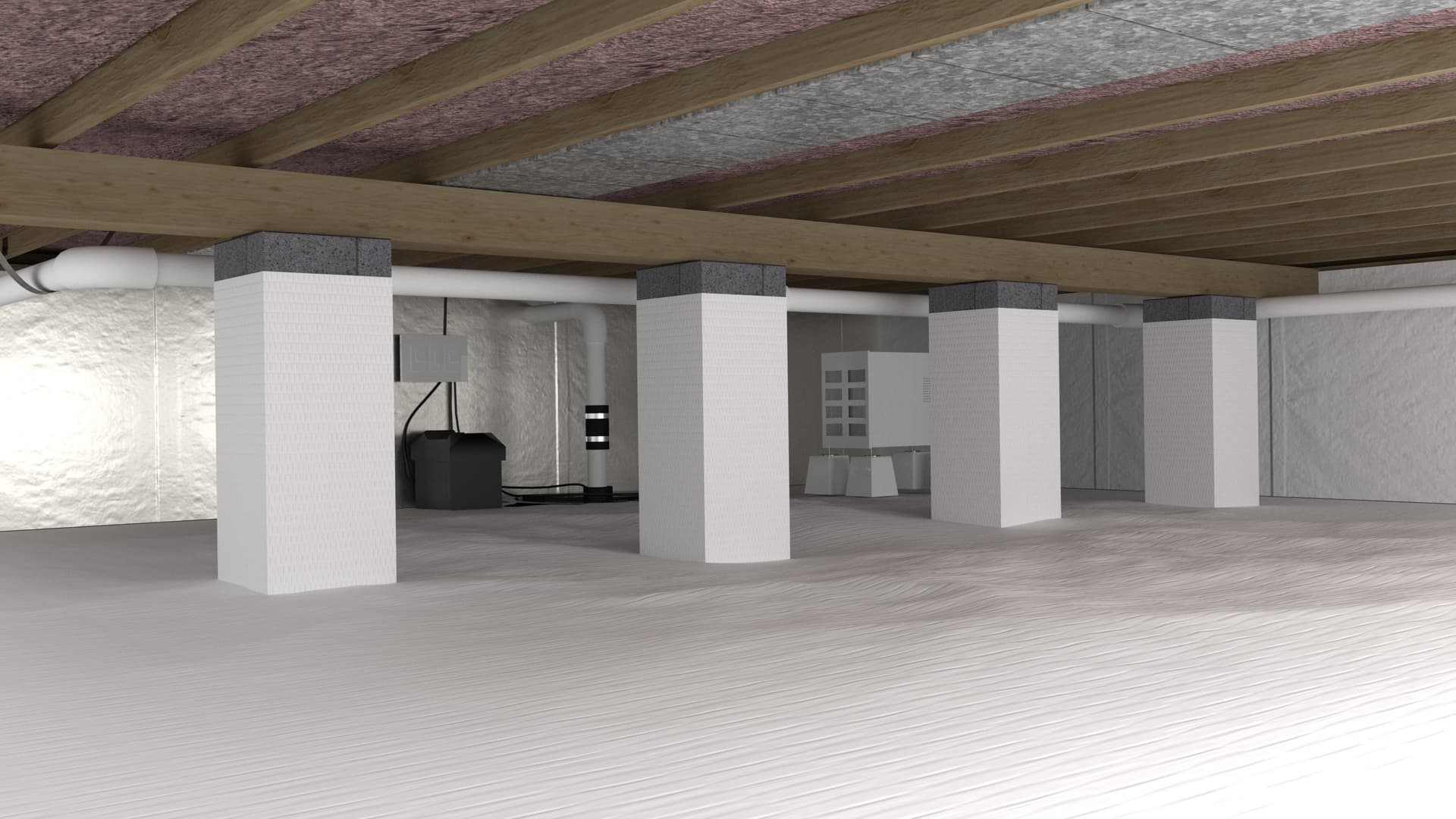
Fiberglass batts under the subfloor of a vented Nebraska or Iowa crawl absorb moisture, lose R-value, and fall down within 5 to 8 years. Serving NE, IA, KS, and MO, Epp Foundation Repair installs rigid XPS foam board on foundation walls and coordinates closed-cell spray foam application on walls and band joist. It is the modern approach for the encapsulated crawl space.

A local specialist will inspect your foundation, walk you through the findings, and send a clear estimate, no cost, no pressure.
Diagnosis First
Crawl space insulation installation applies closed-cell spray foam or rigid foam board to the foundation walls of an already sealed, dehumidified crawl, converting it into conditioned space. It follows encapsulation, never replaces it. Fiberglass batts stapled between the floor joists absorb humidity and fail within several years in this climate, which is why the modern approach insulates the walls instead.
In Depth
Everything a Midwest homeowner should know about this repair, from the specialists who do it every day.
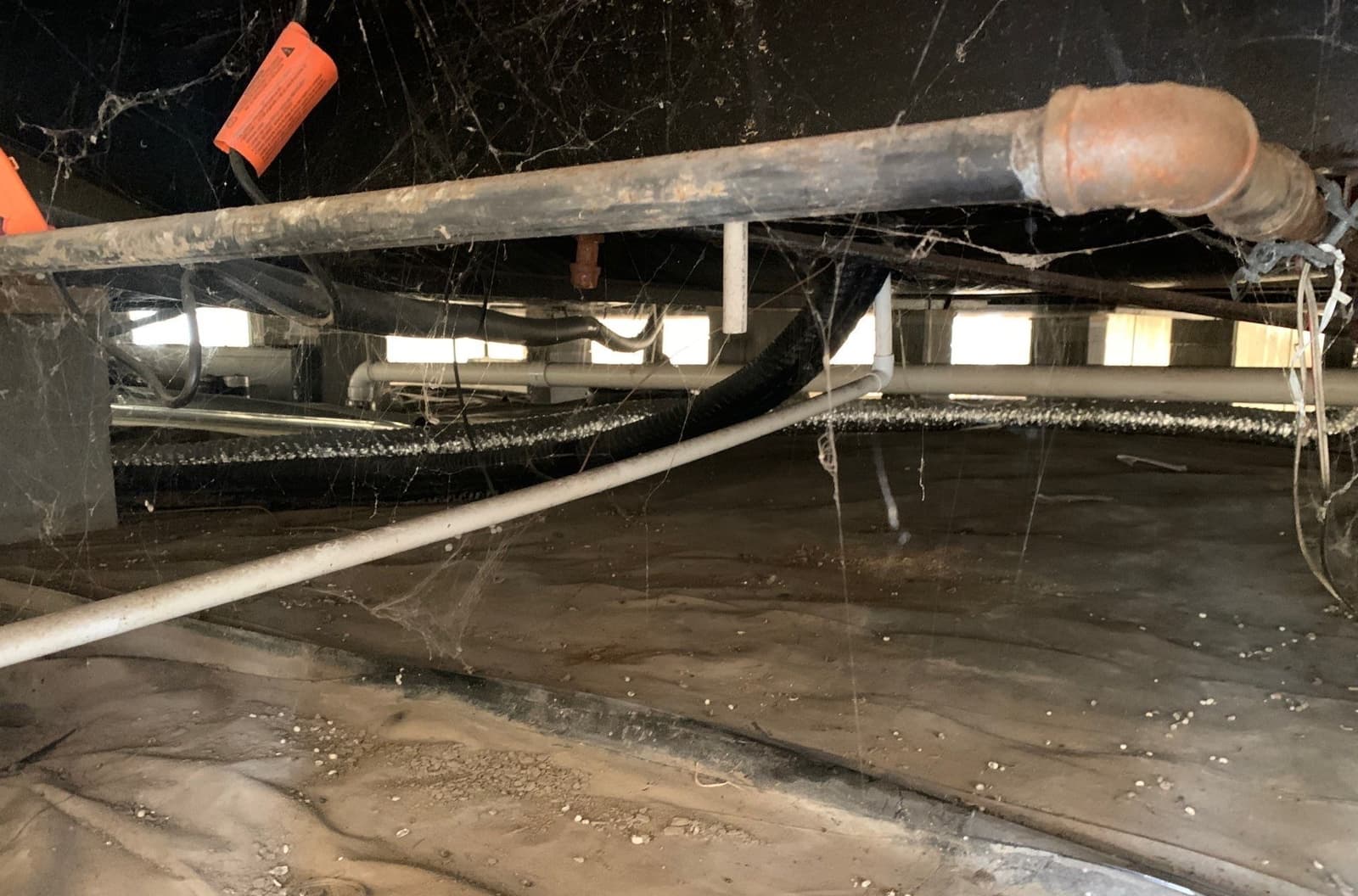
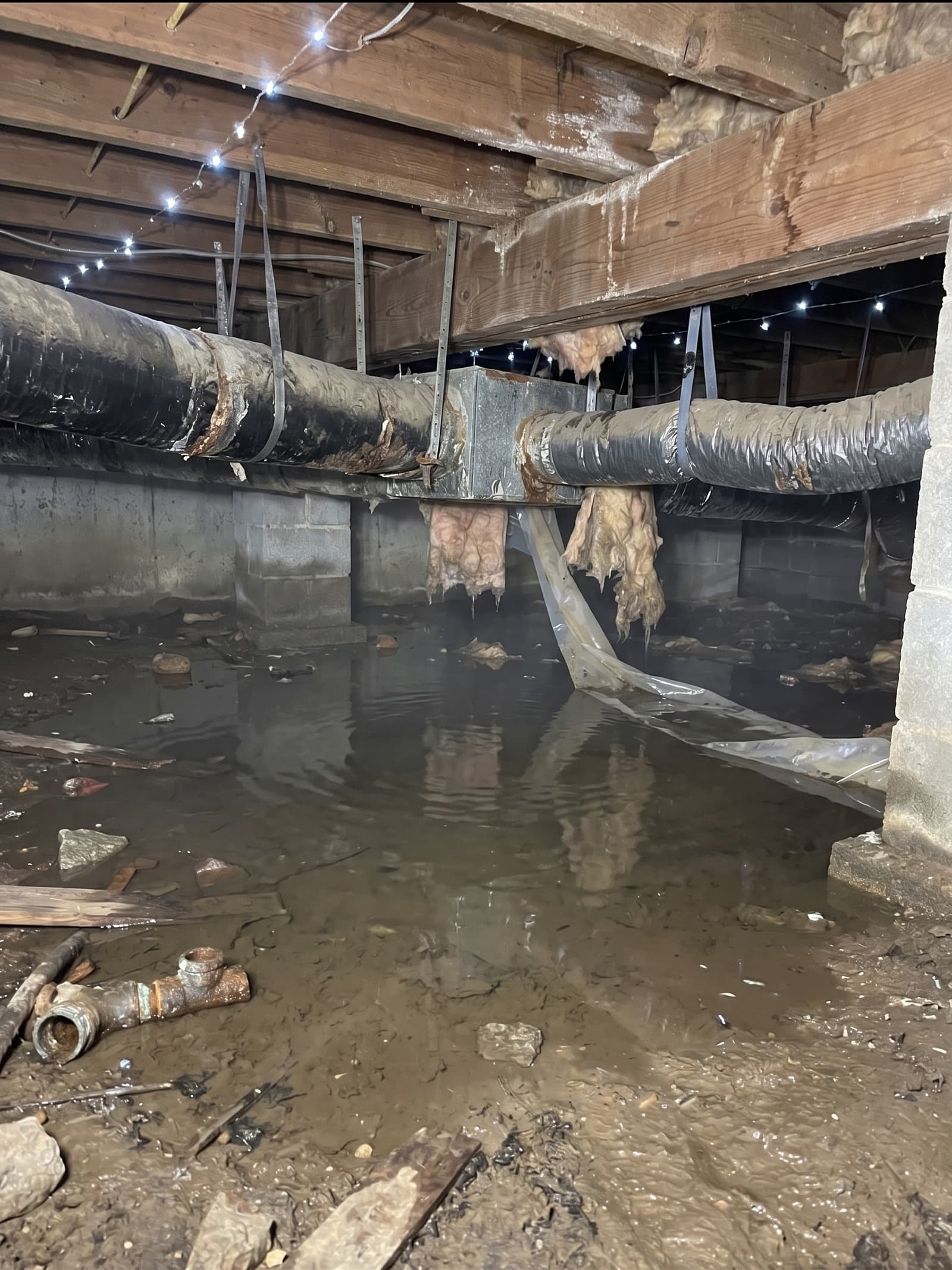
Crawl-space insulation has changed in the last 20 years, and the change matters in the Epp service area more than almost anywhere in the country. The old approach, fiberglass batts stapled between floor joists in a vented crawl, fails in eastern Nebraska, western Iowa, Kansas, and Missouri within 5 to 8 years on average. The reason is climate-specific. Summer relative humidity in a vented crawl in this region runs high. Fiberglass batts absorb that moisture by capillary action, lose much of their R-value, and the kraft facing fails between the staples and the joist edges. By year 5 to 8, the batts are sagging or fallen, the wood moisture content in the joists has climbed, and the homeowner is paying to heat a crawl space that's now warmer and wetter than the conditioned space above. The modern approach inverts the geometry: insulate the foundation walls of a crawl space that has already had a complete crawl space encapsulation (sealed, dehumidified, and dry), not the joists above it. The crawl becomes part of the conditioned building envelope, not unconditioned outdoors. Closed-cell spray foam on walls and band joist gives R-6.5 per inch, doubles as a secondary vapor barrier on the wall surface, and air-seals every penetration in one application. Rigid XPS foam board on walls gives R-5 per inch and installs cleaner, and it is used where spray foam is impractical. Epp Foundation Repair installs rigid foam board in-house and coordinates closed-cell spray foam through a specialized subcontractor.
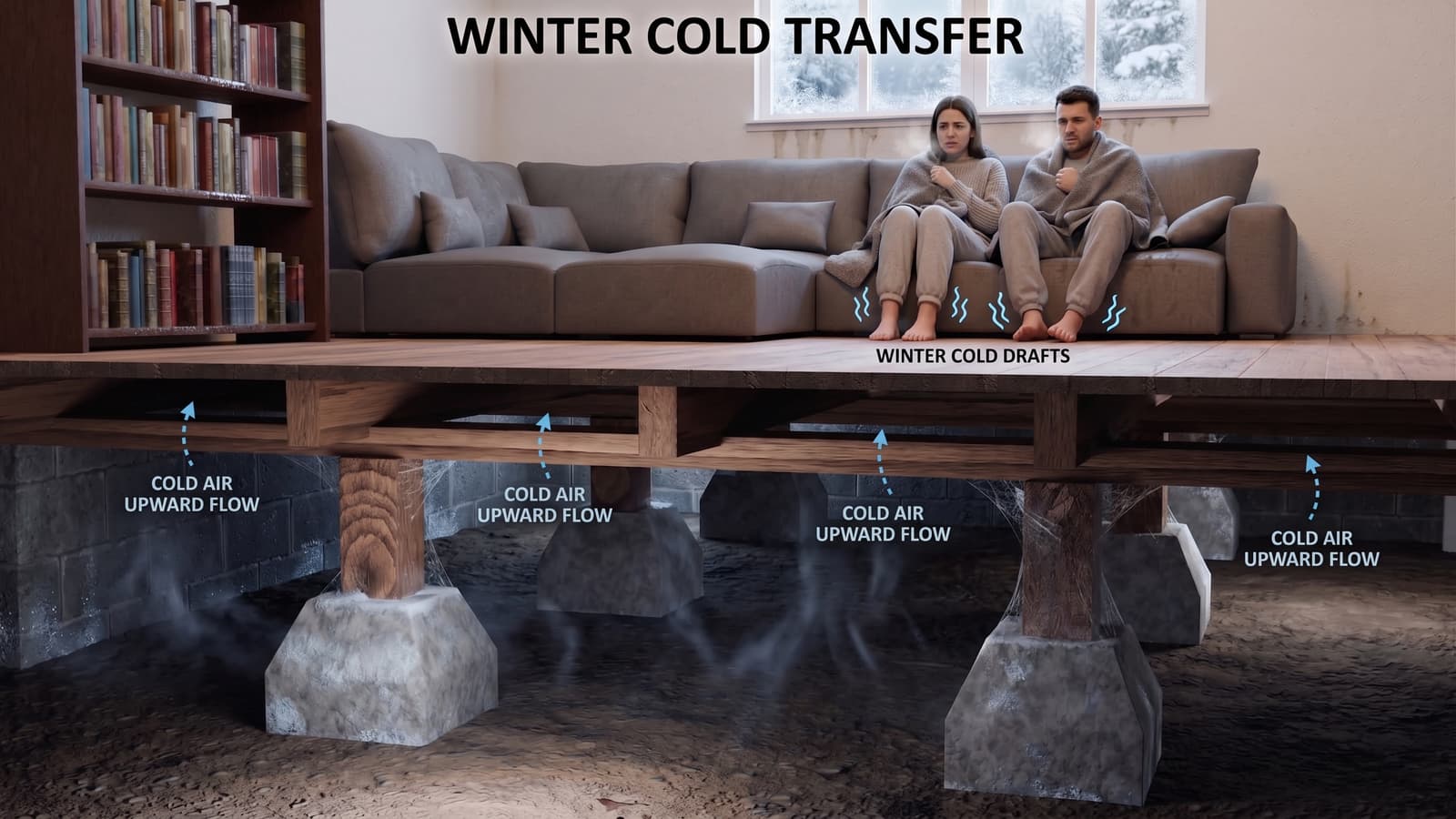
A properly insulated encapsulated crawl space accomplishes four measurable things that an uninsulated or batt-insulated crawl does not. The first is a thermal break at the foundation wall. The poured concrete or block foundation wall conducts heat directly between conditioned air inside the crawl and the colder soil outside, so an uninsulated foundation wall loses heat through conduction in winter. Wall insulation cuts that loss. The second is air sealing at the band joist. The band joist gap, the seam between the foundation wall and the framing above it, is a major air leak in many homes. Closed-cell spray foam expands into and seals that gap in one application. Rigid foam board with sealant at the edges handles much of the same load. Either approach reduces air leakage into the home. The third is a secondary vapor barrier on the wall. Closed-cell spray foam is a Class II vapor retarder at 2 inches of thickness, meaning it slows moisture migration through the foundation wall from outside soil into the crawl air. This complements the floor vapor barrier; the two products handle different moisture sources. The fourth is floor temperature improvement above the crawl. A conditioned, insulated crawl space holds floor surfaces warmer in winter than a vented or partially insulated crawl. Cold floors over a vented crawl are routinely the primary motivation for the encapsulation and insulation scope.
Three applications, in priority order. As the post-encapsulation step that completes the conversion to conditioned space. This is most of Epp's crawl-space insulation work. The vapor barrier on the dirt floor, the sealed foundation vents and the crawl space dehumidifier are already in place (or installed in the same project window). The crawl is now a sealed, dehumidified buffer space, and insulating the foundation walls completes the conversion. The crawl is now part of the conditioned building envelope, and the home's heating load can drop as a result. As the energy-savings scope on a home with documented high heating costs. This is less common as a standalone scope and more often combined with the full encapsulation. As the conversion step when a crawl is being repurposed for storage or mechanical housing. A crawl space being used to store seasonal items or house an HVAC unit needs to be conditioned space. Vapor barrier and dehumidifier handle the humidity, wall insulation handles the temperature.
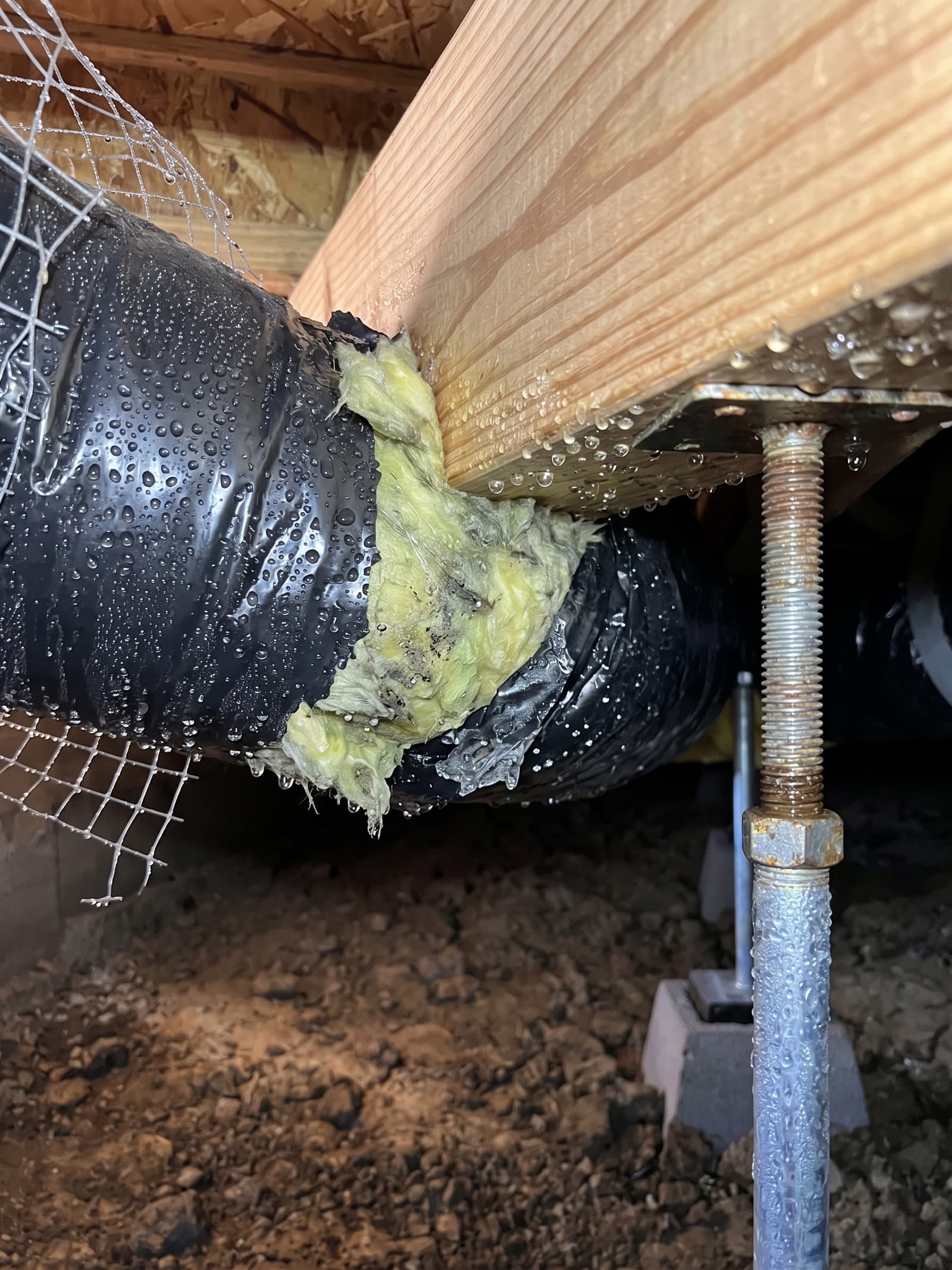
Two clear non-applications. Do not install crawl-space insulation before encapsulation is complete. Spray foam or rigid board on the foundation walls of a vented, unconditioned crawl traps moisture between the insulation and the wall surface and accelerates wood rot at the band joist. The sequence is non-negotiable: vapor barrier, sealed vents, dehumidifier, then insulation. Epp will not install insulation on a crawl that hasn't completed the encapsulation steps. Do not install fiberglass batts between floor joists as the primary crawl-space insulation in the Epp service area. The product fails in this climate. Existing fiberglass that's still in good condition is sometimes left in place during a wall-insulation upgrade for marginal R-value contribution, but new fiberglass installation between joists is not within Epp's scope of work. And a warning on existing fiberglass removal. Old fallen fiberglass batts in a crawl space that's been wet for years are routinely contaminated with mold on the batts and joists and with mouse activity. Removal is sometimes within Epp's scope, more often referred to a remediation contractor or scoped as homeowner work. Each project documents that boundary explicitly. ## How Epp Installs It
The length of a residential crawl-space wall insulation installation depends on material and crawl size, and the work follows this sequence. Verify encapsulation is complete. Every one of the crawl space encapsulation solutions that comes first is confirmed on site. That means vapor barrier on the floor, sealed vents, and a commercial dehumidifier installed and running, with the crawl at its target humidity at the inspection visit. Insulation does not get installed on a crawl that hasn't hit that target. If the encapsulation is incomplete, Epp finishes the encapsulation scope first or paces the projects so the dehumidifier has time to bring the crawl to target before the insulation goes on. Existing fiberglass disposition. Old fiberglass batts between joists are documented for condition, presence of mold, and presence of mouse activity. Removal is scoped explicitly on the Customized Repair Estimate (Epp scope, remediation contractor, or homeowner). Wet or mold-contaminated fiberglass is not handled by Epp without remediation contractor involvement. Wall preparation. Foundation walls inspected for active leaks, efflorescence, and visible cracking. Any active crack is repaired before insulation goes on, typically with polyurethane injection. Wall surface cleared of loose debris, paint chips, and efflorescence. The wall must be dry at the time of insulation application; closed-cell spray foam in particular fails to adhere to wet substrate. Rigid XPS foam board (Epp installs in-house). Rigid foam board on the walls is the standard spec. XPS panels are cut to fit each wall section, installed with foam-board adhesive and mechanically fastened with masonry fasteners. Seams sealed with closed-cell spray foam from a single-component canister or with foam-board tape. Inside corners get a continuous wrap or sealed butt joint. Wall coverage extends from the floor vapor barrier up to the sill plate; the band joist is treated separately. Closed-cell spray foam (subcontracted to a certified installer). Spray foam applied on foundation walls and band joist per code requirement. The spray-foam contractor handles permitting, application, and inspection. Epp coordinates scheduling, verifies the work meets specification on completion, and integrates the spray-foam phase into the overall crawl-space project timeline. Documentation. Insulation type, R-value per area, and total R-value contribution documented on the Customized Repair Estimate. Homeowner receives Epp's installation documentation.
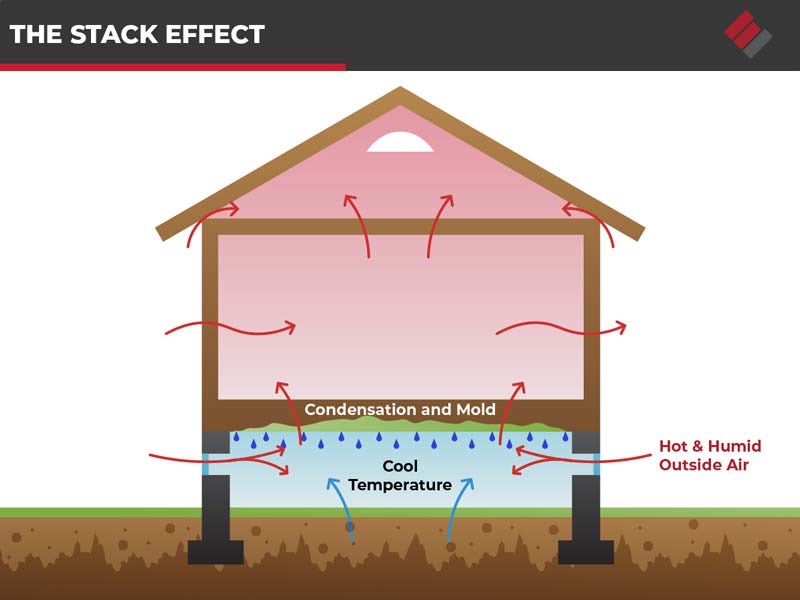
Soil temperature across the Epp service area swings with the seasons, and the foundation wall conducts heat in both directions through the entire year. Indoor relative humidity in this region runs low in winter (heated air dries) and spikes in summer (humid outdoor air pulled into vented crawls through the stack effect). As a result, crawl-space wall surfaces routinely sit near the dew point in summer, and the area near the rim joist can drop below freezing in winter. Closed-cell spray foam handles both extremes by providing the thermal break and the secondary vapor retarder in one application. Freeze-thaw cycles can heave shallow soil against the foundation wall each winter. Rigid foam board attachment uses fastener spacing and adhesive coverage designed to absorb that movement without cracking. Expansive clay across Kansas and Missouri expands when wet and applies lateral pressure against the lower foundation wall. Insulation attachment in those regions accounts for the expected wall movement at the design phase.
Epp installs rigid XPS foam board on foundation walls in-house. Five adjacent scopes Epp does not perform. Closed-cell spray foam application. Epp coordinates a certified subcontractor with dedicated spray equipment. Removal of mold-contaminated or rodent-contaminated fiberglass insulation. That's remediation contractor scope; Epp identifies the condition and refers. Insulation of HVAC ductwork inside the crawl space. Uninsulating supply ducts to reduce condensation load is sometimes the right scope on a high-humidity crawl, but ductwork insulation is mechanical contractor work. Fiberglass batt installation between floor joists. Epp does not install this product as the primary crawl insulation in the service area because the failure mode is documented. Energy audit or blower-door testing to quantify air-leak reduction. That's energy auditor scope, recommended separately to homeowners who want pre and post measurement.
Customized Repair Estimate after on-site inspection reflects your scope. Epp Foundation Repair holds BBB A+ accreditation and is a BBB Integrity Award winner. Every crawl-space insulation proposal documents the encapsulation status, the material selection logic, and the band-joist treatment specification.
Which Solution Is Right?
| Method | Fits when | Not a fit when |
|---|---|---|
| Closed-cell spray foam | Irregular wall surfaces such as block, stone, or parged concrete, or where air sealing every penetration in one application is the priority. | The homeowner wants future wall access, since the continuous foam coat is not removable the way rigid board is. |
| Rigid XPS foam board | Flat foundation walls and tighter budgets, installed in-house with adhesive and masonry fasteners. | Wall surfaces are irregular enough that seam sealing at every panel edge becomes impractical. |
Each method is matched to a specific failure mode and soil profile. Browse the toolkit we draw from when diagnosing your home.
Epp Foundation Repair installs crawl space wall insulation inside the sealed envelope across Nebraska, Iowa, Kansas, and Missouri, replacing fallen batts with a thermal break that stays put. Epp is BBB A+ accredited and a BBB Integrity Award winner.
Epp Foundation Repair has installed encapsulation systems across Nebraska, Iowa, Kansas, and Missouri since 1994. Epp is BBB A+ accredited and a BBB Integrity Award winner.
Epp Foundation Repair installs the crawl space liner as the sealed floor of a full encapsulation across Nebraska, Iowa, Kansas, and Missouri, with sealed seams, wall runs, and closed piers, never a loose sheet of plastic.
Based on NOAA 1991 to 2020 climate normals for Lincoln Municipal Airport and Omaha Eppley Airfield, the average July dew point is 65 degrees in Lincoln and 66 degrees in Omaha. Water can form on any surface that is cooler than the dew point of the air around it, so summer air that comes in through open crawl space vents can leave water on pipes, ducts and joists. Ground that stays wet after rain and snowmelt can also keep a bare soil crawl space floor damp.
Based on NOAA 1991 to 2020 climate normals for Lincoln Municipal Airport and Omaha Eppley Airfield.
Based on USDA soil survey data for Lancaster County (Lincoln) and Douglas County (Omaha), clay is the main soil type in both counties. The survey rates Lancaster County high and Douglas County moderate for shrink swell. Clay can swell when it gets wet and shrink as it dries, so a slab or foundation on clay can move up and down with the seasons. The soils that cover the most ground in Lancaster County are Wymore and Aksarben, and in Douglas County they are Contrary and Marshall.
Loess, the wind deposited silt common in eastern Nebraska and western Iowa, can lose strength and settle when it gets wet. Water can reach it from runoff, a plumbing leak or a downspout that empties next to the house.
In Lincoln and Omaha, soil near the surface can freeze and thaw many times between fall and spring. Each city's building code sets a frost line depth, which is the minimum depth below finished grade for a footing. It is 36 inches in Lincoln and 42 inches in Omaha. Supports that sit above that depth, such as some porches, stoops and chimney footings, can move as the ground freezes and thaws.
Horizontal cracks in a basement wall are more often linked to pressure from the soil outside the wall than to settlement. Wet soil pushes harder against a wall than dry soil, and soil that freezes against the wall can add to that pressure.
Climate: NOAA U.S. Climate Normals 1991 to 2020, LINCOLN MUNI AP (USW00014939) and OMAHA EPPLEY AIRFIELD (USW00014942); July dew point averaged from the hourly normals at LINCOLN MUNI AP (USW00014939) and OMAHA EPPLEY AIRFIELD (USW00014942), retrieved September 30, 2026. Soil: USDA NRCS Soil Data Access (SSURGO), county survey for Lancaster County and Douglas County. Frost line depth: Lincoln Municipal Code 20.12.140 and Omaha Municipal Code Sec. 43-127.
These are the crawl space encapsulation problem signs Epp Foundation Repair diagnoses most often. Each one links to what causes it and how it is repaired.
Our specialists evaluate the underlying cause before recommending any work. Inspections are at no cost and there's no obligation to proceed.
"Fiberglass batts between joists in a vented Nebraska crawl is a five-year decision. Maybe eight if the crawl runs dry. We've pulled out so much sagging, wet, mouse-chewed fiberglass over the decades I don't even photograph it anymore. The modern answer is rigid foam or closed-cell on the walls, and you don't insulate the walls until the encapsulation is finished. Get the sequence wrong and you're paying for the work twice."

Epp Foundation Repair is locally owned and operated, with crews dedicated exclusively to foundation, basement, and concrete work across the Midwest.
Foundation repair, waterproofing, and concrete leveling are our entire focus, not a sideline.
Three decades of experience with Midwest soils, basements, and weather conditions.
Recognized by the Better Business Bureau for integrity and ethical business practices.
Many of our repairs carry a written Epp warranty. The warranty page lists every covered repair and its terms.
A small sample of work completed across our service area.
Explore detailed case studies of recent foundation, waterproofing, and concrete projects across Nebraska, Iowa, Kansas, and Missouri.
View All ProjectsDon't see your question here? Our team is happy to help. Reach out anytime.
Every home is different. What a repair costs depends on the cause, the scope, and access. A free on-site inspection produces a Customized Repair Estimate that reflects your home, not a typical range.
Customized Repair Estimate after on-site inspection reflects your scope.
Do not install crawl-space insulation before encapsulation is complete. Spray foam or rigid board on the foundation walls of a vented, unconditioned crawl traps moisture between the insulation and the wall surface and accelerates wood rot at the band joist. The non-negotiable sequence is vapor barrier, sealed vents, dehumidifier, then insulation. Epp will not install insulation on a crawl that is still humid or showing active moisture issues. Do not install fiberglass batts between floor joists as the primary crawl insulation in this climate. The product fails within 5 to 8 years. And do not remove mold-contaminated or rodent-contaminated fiberglass without remediation contractor involvement.
Epp Foundation Repair holds BBB A+ accreditation and is a BBB Integrity Award winner.
Related to what you are reading. Our team covers the same ground on camera.
Every crawl space encapsulation method we install. Sequenced so the soil profile and failure mode determine the fix.
 01
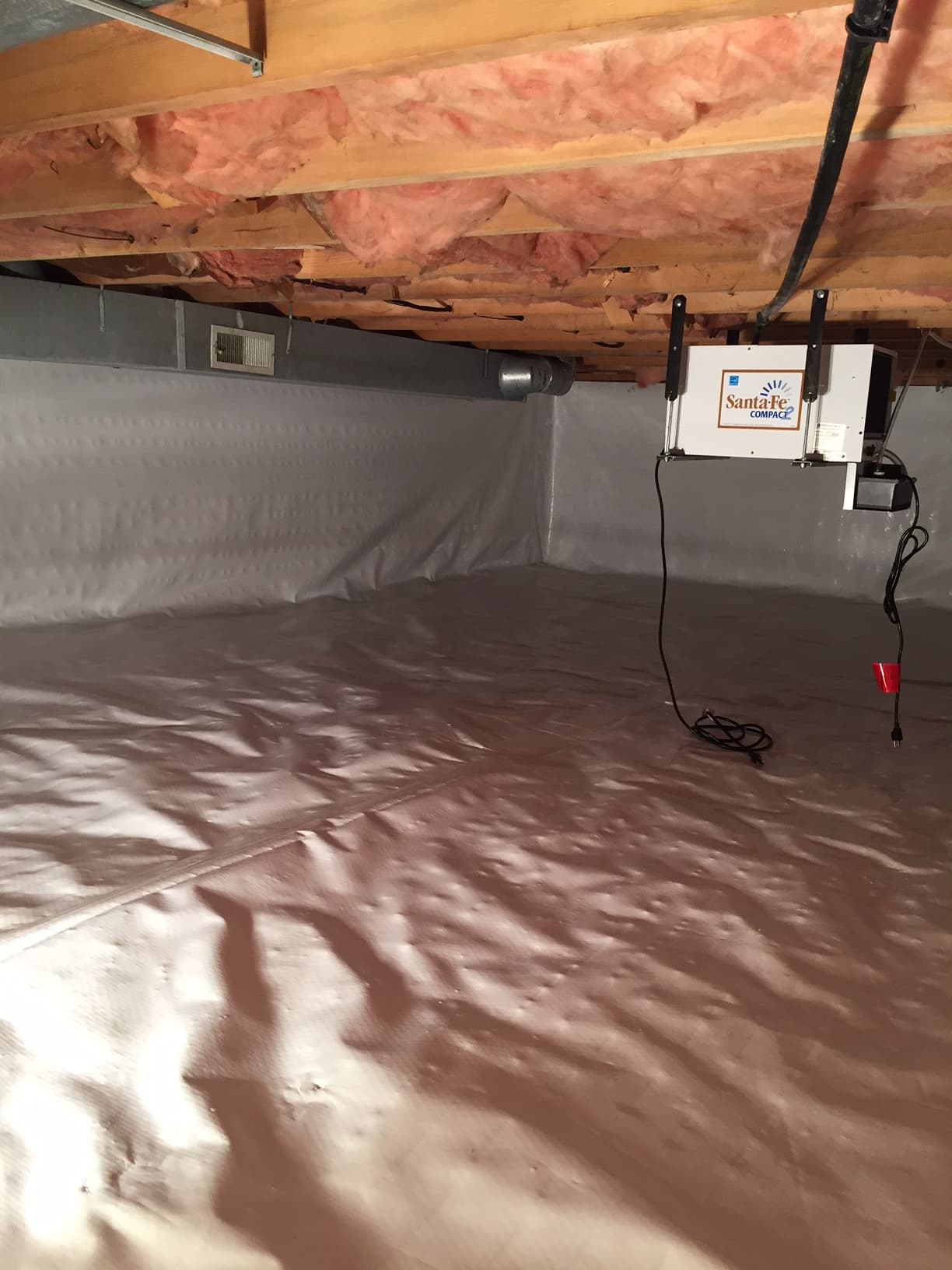
01 Crawl space liner installation from Epp Foundation Repair covers the entire dirt floor with reinforced polyethylene, sealed at every seam and mechanically fastened up the foundation walls. Serving Nebraska, Iowa, Kansas, and Missouri, Epp installs the liner as the foundation layer of a complete encapsulation system, built to be paired with drainage and a dehumidifier rather than serve as a standalone fix.
Learn more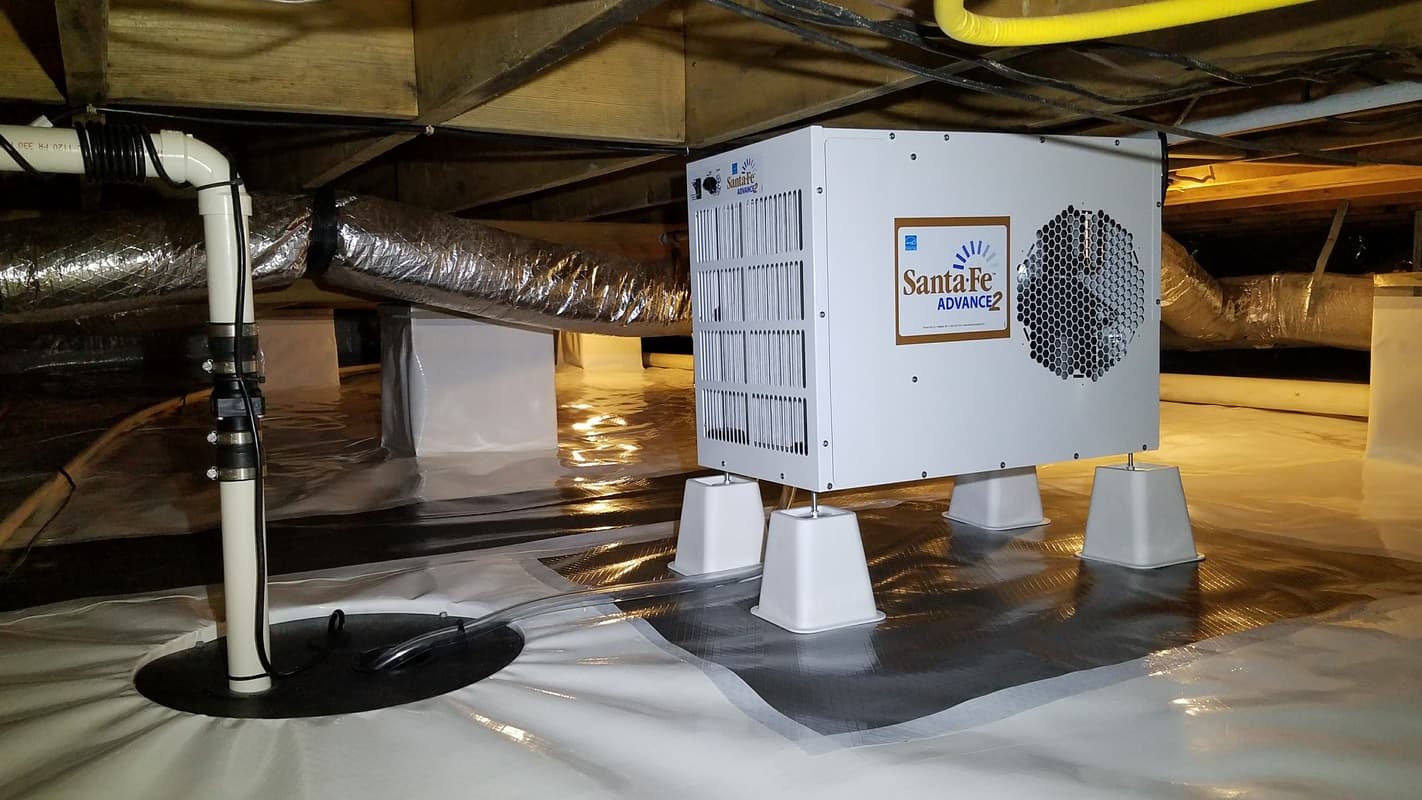 02
02 Crawl space dehumidifier installation from Epp Foundation Repair fits a commercial-grade unit to the size of your crawl, not a one-size household model. Epp installs commercial grade crawl space dehumidifiers sized to crawl cubic footage, hard-plumbed for continuous condensate drainage so the unit never needs manual emptying, and set to the homeowner's target relative humidity. Serving Nebraska, Iowa, Kansas, and Missouri.
Learn more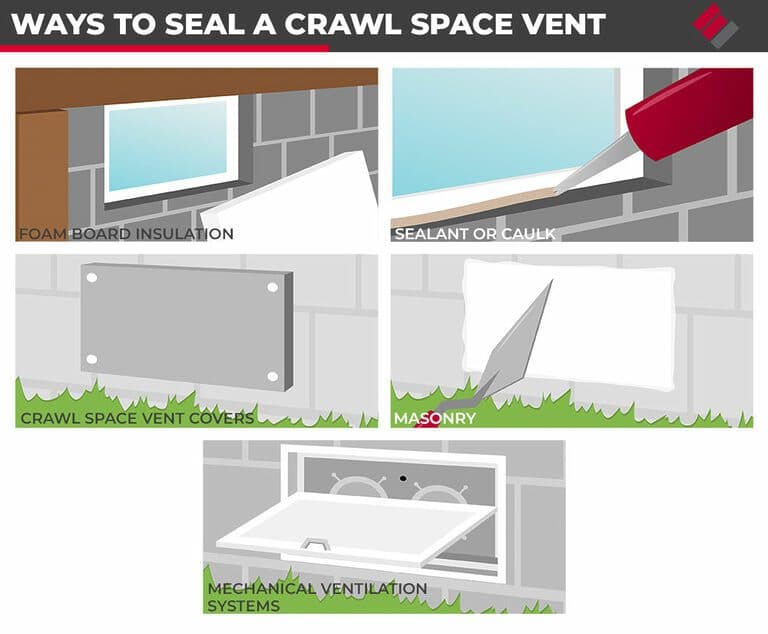 03
03 Crawl space vent sealing from Epp Foundation Repair that keeps the foundation vents closed all year. Rigid foam plugs cut to the vent opening, perimeter sealed with polyurethane caulk, vapor barrier overlapped and taped at the interior face. Serving NE, IA, KS, and MO. Open vents in a Midwest crawl import humidity, they don't remove it.
Learn more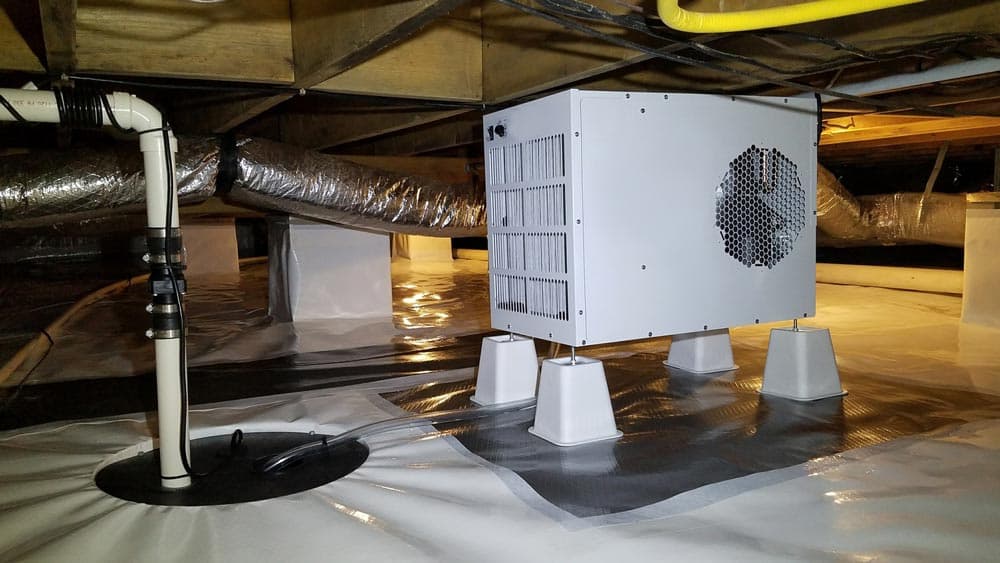 04
04 Crawl space drainage installation from Epp Foundation Repair channels groundwater to a sealed sump pit and cast-iron pump before the vapor barrier and dehumidifier go in. Low-profile perimeter waffle matting collects seepage at the foundation wall, the sump discharges it outside the foundation, and the barrier and dehumidifier take over the humidity that drainage alone leaves behind. Serving Nebraska, Iowa, Kansas, and Missouri.
Learn moreLocal crews based in five regional offices, dispatched daily across four states. If your town isn't listed, call us: we likely serve your area.
A straightforward path from initial inspection to completed repairs.
Vapor barrier on the floor, sealed vents, commercial dehumidifier installed and running, crawl at its target humidity at the inspection visit. Insulation does not go on the walls of an unconditioned crawl. The sequence is non-negotiable because skipping it traps moisture against the wall and accelerates band-joist rot.
Old fiberglass batts between joists documented for condition, mold presence, and rodent activity. Disposition (left in place, Epp removal, remediation contractor referral, or homeowner removal) scoped explicitly on the Customized Repair Estimate. Foundation walls inspected for active leaks and visible cracking. Any active crack repaired before insulation goes on, typically through polyurethane injection.
Rigid XPS foam board (Epp in-house) for flat walls and budget-conscious projects, with seams sealed by foam from a single-component canister. Closed-cell spray foam (subcontracted to certified installer) for irregular wall surfaces, projects where air-sealing is a primary motivation, or band-joist treatment.
A 4.9-star average across Google, with verified reviews from homeowners throughout Nebraska, Iowa, Kansas, and Missouri.
Schedule your inspection in seconds with our Driive booking tool, or share a few details and a local specialist will follow up within one business day.
Practical articles from the Epp team on foundation health, waterproofing, and home preservation.
 Crawl Space EncapsulationLatest
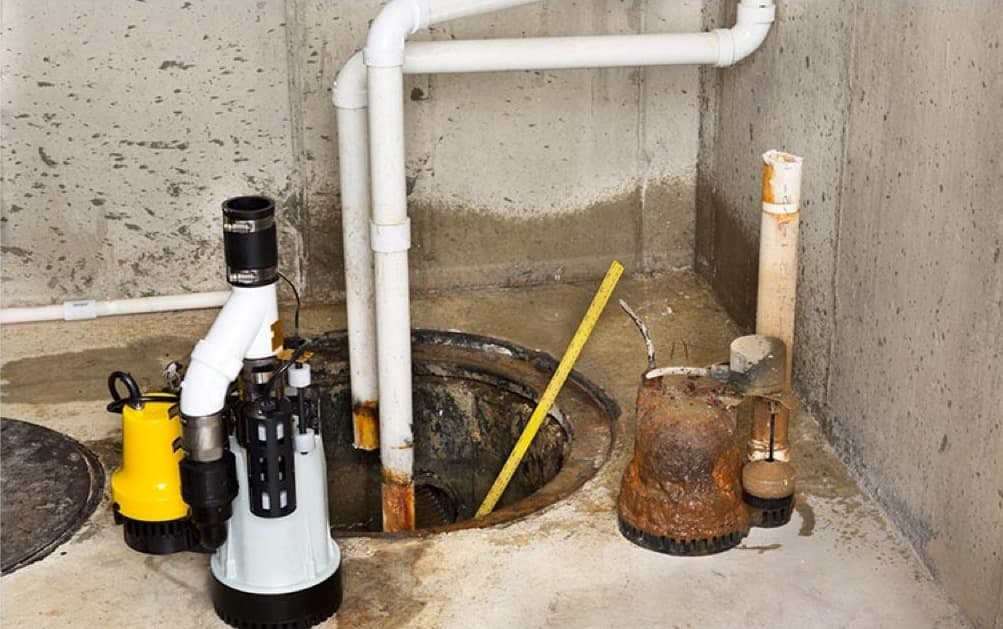
Ejector pumps and sump pumps both move water, but they serve different purposes. Learn how each one works and which one your home needs.
 Crawl Space Encapsulation
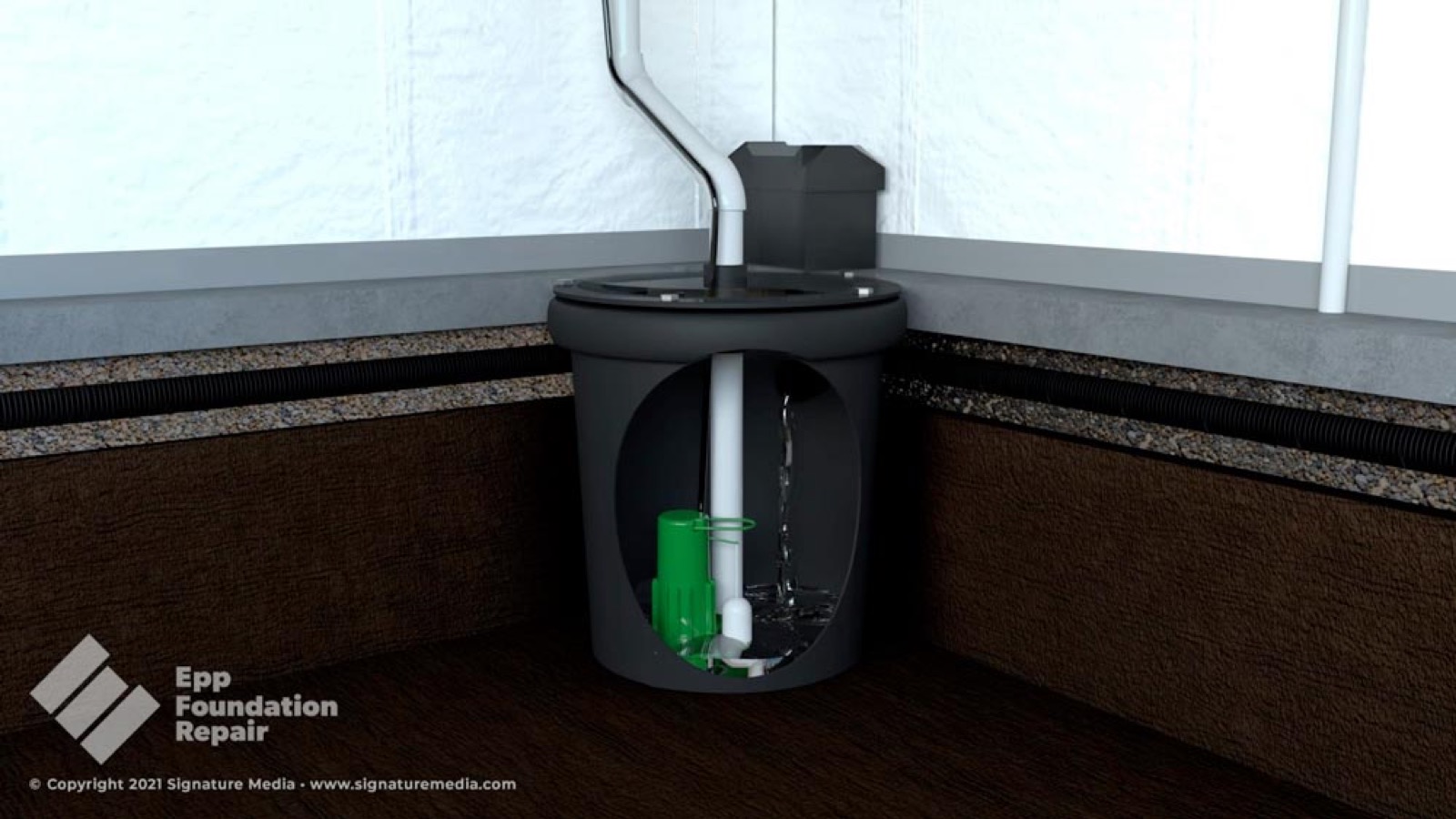
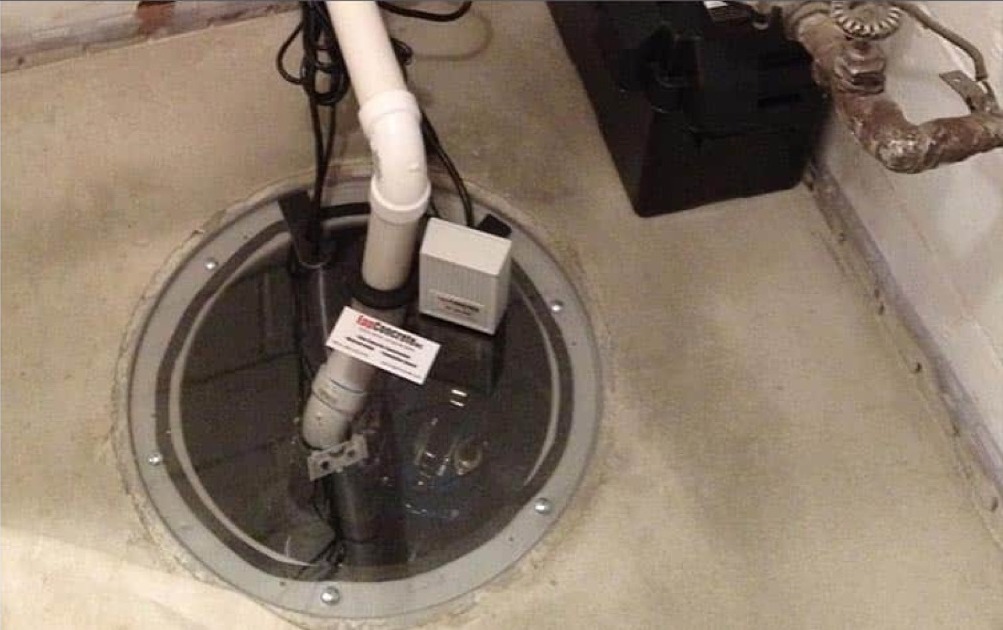
A sump pump removes accumulated water from a sump pit to protect your foundation. Learn how sump pumps work and the types available.
 Crawl Space Encapsulation
Learn why crawl space moisture is harmful, what causes it, and when a dehumidifier actually helps once your crawl space is encapsulated.
 Crawl Space Encapsulation
Sump pumps collect and expel excess groundwater around your foundation. Learn how they work, when you might need one, and effective alternatives.
