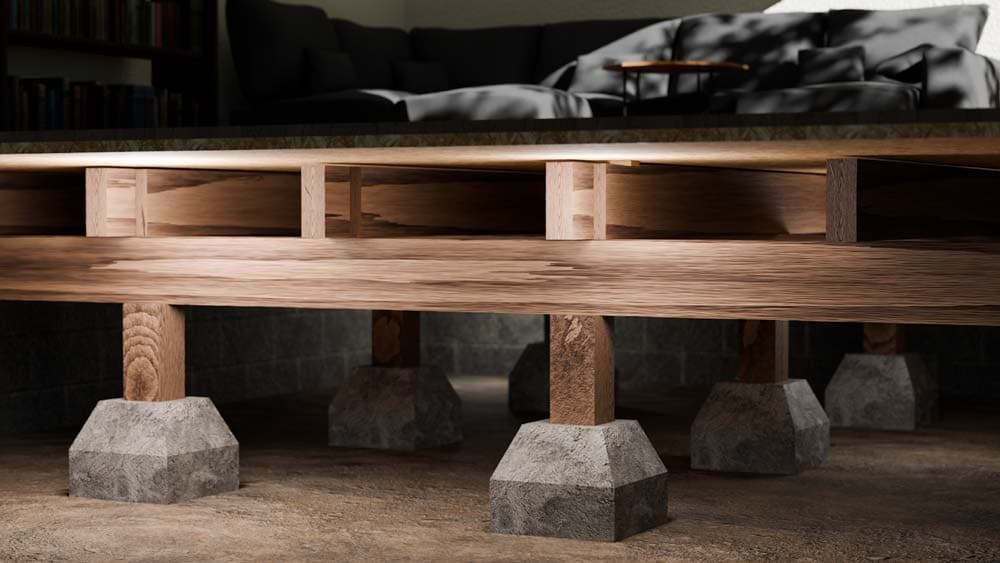
Rotted Deck Joists Aren't Cosmetic. Epp Replaces Before Collapse
Epp Foundation Repair has sistered and replaced rotted deck joists across Nebraska, Iowa, Kansas, and Missouri since 1994. BBB A+. BBB Integrity Award 2011 and 2016.

Let's take the first step toward a healthy home.
A local specialist will inspect your foundation, walk you through the findings, and send a clear estimate, no cost, no pressure.
Rotted Deck Joists: diagnosed and explained.
Epp Foundation Repair inspects deck framing as part of framing repair across the Midwest and commonly finds rot on decks over 15 years old. The danger is not cosmetic. The Consumer Product Safety Commission attributes more than 200 deck-collapse injuries annually nationwide, and the common failure mode is rotted joists or rotted ledger connections. Across Nebraska, Iowa, Kansas, and Missouri the rot drivers cluster around four mechanisms: failed ledger flashing letting water in behind the band joist, joist-hanger nail corrosion from old galvanized nails reacting with modern pressure-treated lumber, ground-contact rot at the post-to-joist connection on low decks, and 50 to 70 annual freeze-thaw cycles working moisture deeper into untreated end cuts. Dave Epp's standard protocol is to inspect the entire deck framing. Not just the visible joist. Because the rot driver almost always extends past what the homeowner can see.
Four Signals a Deck Joist Has Rotted
- 01
Soft, spongy wood when probed with a screwdriver
Epp Foundation Repair uses a screwdriver probe at the joist underside, especially near the ledger and at midspan. Wood that takes the screwdriver more than 1/4 inch with hand pressure has lost more than 50 percent of its fiber strength and needs replacement, not repair.
- 02
Joist hanger nails dropping out or staining the wood orange
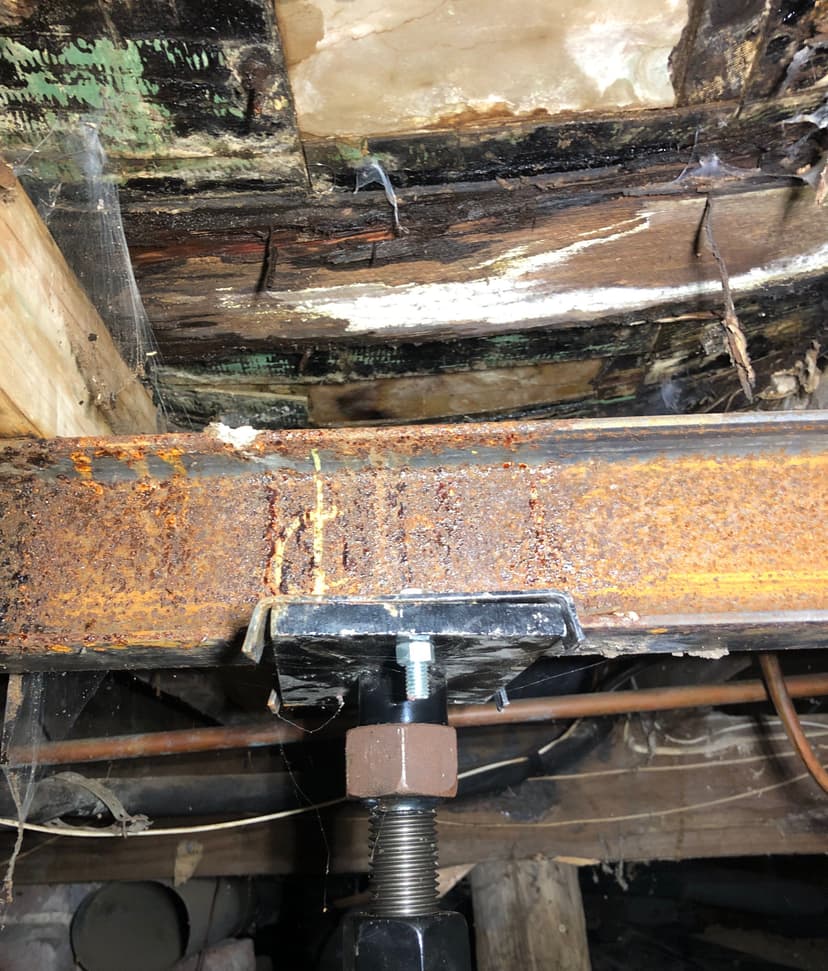
Epp Foundation Repair treats orange staining around hanger nails as evidence of fastener corrosion. Once the nails have lost their galvanized coating, they corrode at full carbon-steel rate and lose 50 percent of their pullout capacity within 5 years. Both the hangers and the affected joist ends need replacement together.
- 03
Visible cracks running with the grain of the joist
Epp Foundation Repair treats grain-direction cracks longer than 6 inches as evidence of internal rot relieving wood pressure as the fibers collapse. The crack is the outside symptom of rot working from inside the joist outward. Surface treatment will not stop this.
- 04
Deck movement, bounce, or visible deflection under normal use
Epp Foundation Repair treats any deck movement that has changed in the past 1 to 3 years as a structural warning. Decks do not become more flexible with age. They become more brittle.
What causes rotted deck joists in Midwest homes.
- 01
Failed ledger flashing causing chronic moisture
Epp Foundation Repair finds failed or missing ledger flashing on rotted-deck inspections. Water runs behind the deck ledger, saturates the band joist of the house, and migrates into the deck joist ends bolted to the ledger. The rot starts at the house wall and works outward 12 to 36 inches before becoming visible. Epp replaces the rotted joists and recommends a licensed deck builder for the ledger and flashing replacement that should accompany the joist work.
- 02
Joist-hanger nail corrosion (galvanized nails on PT lumber)
Epp Foundation Repair sees hanger nail failure on most decks built between 1990 and 2005. The pressure-treated lumber chemistry changed in 2003 from CCA to ACQ. ACQ-treated lumber corrodes standard galvanized nails 5 to 10 times faster than CCA did. Older hangers installed with electroplated or hot-dipped galvanized nails lose 50 percent of their fastener capacity within 10 to 15 years on ACQ lumber. Epp replaces failed hangers with stainless or G-185 hot-dipped triple-galvanized hardware rated for current PT chemistry.
- 03
Ground-contact rot at low-deck posts and joists
Epp Foundation Repair finds ground-contact rot on low decks (less than 18 inches off grade). Even pressure-treated lumber rated for above-ground use rots in 5 to 8 years when in direct contact with soil or trapped against grade. Joist ends bearing on the post tops, posts buried below grade rather than on standoffs, and any framing within 6 inches of soil show concentrated rot.
- 04
Freeze-thaw cycling at 50 to 70 cycles per year (NE, IA, KS, MO)
Epp Foundation Repair tracks regional climate data showing 50 to 70 annual freeze-thaw cycles across the four-state territory. Each cycle pushes moisture deeper into exposed end cuts, screw holes, and any unsealed framing penetration. Over 15 to 20 years the cumulative moisture migration drives rot into joist ends, post tops, and beam ends. Particularly where end cuts were never field-treated with copper naphthenate after cutting on site.
- 05
Trapped debris and standing water on horizontal surfaces
Epp Foundation Repair regularly finds debris-driven rot. Leaves, pine needles, and dirt accumulating in the gap between decking and joist tops, on beam tops, or against ledger boards hold moisture against the wood for weeks at a time during wet seasons. The rot is invisible from above until the joist has lost 40 to 60 percent of its cross-section. Annual cleaning by the homeowner is the prevention; replacement is the cure once rot is established.
How framing repair specialists actually fix rotted deck joists.
Solving rotted deck joists means addressing the underlying soil, pressure, or settlement cause. Not just patching the visible damage. Below are the engineered solutions we install most often for this symptom in Nebraska, Iowa, Kansas, and Missouri homes.
Engineered framing repair solutions for this problem.
Each method is matched to a specific failure mode and soil profile. Browse the toolkit we draw from when diagnosing your home.
Joist Hanger Installation
Epp Foundation Repair has installed and replaced joist hangers across Nebraska, Iowa, Kansas, and Missouri since 1994. Simpson Strong-Tie ZMAX and stainless connectors, code-approved fasteners, warrantied installation.
Joist Sistering and Reinforcement
Epp Foundation Repair has sistered undersized, cracked, and partially-rotted joists across Nebraska, Iowa, Kansas, and Missouri since 1994. GRK structural fasteners, full-bearing sister joists.
Beam Repair
Epp Foundation Repair has sistered, reinforced, and replaced failing beams since 1994. Under thousands of homes from Lincoln to Omaha to St. Joseph.
Carrier Beam Repair
Epp Foundation Repair has rebuilt undersized and rotted carrier beams in 1950s through 1970s homes since 1994. The main beam carrying your entire floor system.
Crawl Space Jacks
Epp Foundation Repair has installed code-listed steel adjustable jack posts under sagging floors since 1994. Permanent structural support, not temporary shoring.
Joist Repair Plates
Epp Foundation Repair has installed steel repair plates on damaged floor joists since 1994. Fast reinforcement where sistering a full lumber joist isn't practical.
Why floor framing in older Nebraska and Iowa homes fails predictably
Most 1950s to 1970s homes across our service region were built with 2x8 joists at 16-inch centers spanning 14 feet, which is at the edge of code even when new. Combined with chronic-wet crawl spaces that rot sill plates and joist ends, the framing under older homes here fails predictably. Repair starts with cause diagnosis: settled support, rotted bearing, or undersized member.
Loess soils and the crack patterns they produce
Most of eastern Nebraska and western Iowa sits on wind-deposited loess, a fine, silty soil 10 to 200+ feet deep. Loess holds its structure when dry but loses cohesion rapidly when saturated. After a wet spring, saturated loess expands against foundation walls. After a dry Nebraska summer, it contracts, pulling away from footings, creating voids beneath slabs, and producing the vertical and diagonal settlement cracks we see most frequently on the Lincoln, Omaha, Council Bluffs corridor.
The Marshall and Sharpsburg loess series, dominant across the eastern Nebraska service area, are particularly prone to this cyclical volume change. Homes built in the 1960s, 1980s on uncompacted loess backfill show the highest incidence of progressive settlement cracking in our inspection data.
Frost depth, freeze-thaw cycles, and horizontal cracking
Eastern Nebraska's 36, 42" frost penetration depth means the soil below grade freezes and thaws 60, 80 times per year. Each cycle applies lateral pressure to basement walls. A wall that holds through ten cycles can fail in the eleventh if drainage has worsened, backfill has settled, or the wall was already at capacity. Horizontal cracks near the soil grade line are almost always a freeze-thaw story in this region.
In eastern Kansas, expansive clay pockets near the surface introduce a different failure mode. Consistent volume change regardless of frost depth. Horizontal cracking in Kansas foundations typically traces to clay expansion; the same pattern in Nebraska more often indicates frost-driven hydrostatic pressure.
"Decks don't fall slowly. They hold up for fifteen years on rotted joists and then come down at a graduation party. If I tell you to get the furniture off, get the furniture off the same day. It's the only honest call I can make."

Care and expertise from a team that's been doing this since 1994.
Epp Foundation Repair is locally owned and operated, with crews dedicated exclusively to foundation, basement, and concrete work across the Midwest.
Foundation repair, waterproofing, and concrete leveling are our entire focus, not a sideline.
Three decades of experience with Midwest soils, basements, and weather conditions.
Recognized in 2011 and 2016 for ethical business practices and customer transparency.
Every repair comes with a written Epp warranty, from 1 year to the lifetime of the structure depending on the product.

Answers to common questions about Rotted Deck Joists.
Don't see your question here? Our team is happy to help. Reach out anytime.
Other framing repair warning signs to watch for.
If you see one, it's worth checking for the others. Most foundation problems show up as more than one symptom.
Serving Nebraska, Iowa, Kansas & Missouri.
Local crews based in five regional offices, dispatched daily across four states. If your town isn't listed, call us: we likely serve your area.
- Omaha, NE
- Lincoln, NE
- Topeka, KS
- Sioux City, IA
- Bellevue, NE
- St. Joseph, MO
- Council Bluffs, IA
- Grand Island, NE
- Papillion, NE
- Kearney, NE
Take the first step toward a healthy home.
A straightforward path from initial inspection to completed repairs.
Schedule your inspection.
A local specialist visits your home, evaluates the foundation, and answers your questions on site. No cost, no obligation.
Receive an estimate based on your needs.
We provide a clear, Customized Repair Estimate with a scope of work tailored to your home's specific issues. Typically within one business day.
Get your repairs.
Our own trained crews complete the work on schedule and back it with a written Epp warranty, set out in your contract.
Over 1,700 homeowners have shared their experience.
A 4.9-star average across Google, with verified reviews from homeowners throughout Nebraska, Iowa, Kansas, and Missouri.
Two ways to start: book instantly, or request an estimate.
Schedule your inspection in seconds with our Driive booking tool, or share a few details and a local specialist will follow up within one business day.
- A local foundation specialist on site
- A complete walk-through of the findings
- A Customized Repair Estimate within one business day
- No cost, no obligation, no high-pressure sales
Expert guidance on protecting your home.
Practical articles from the Epp team on foundation health, waterproofing, and home preservation.
 Framing RepairLatest
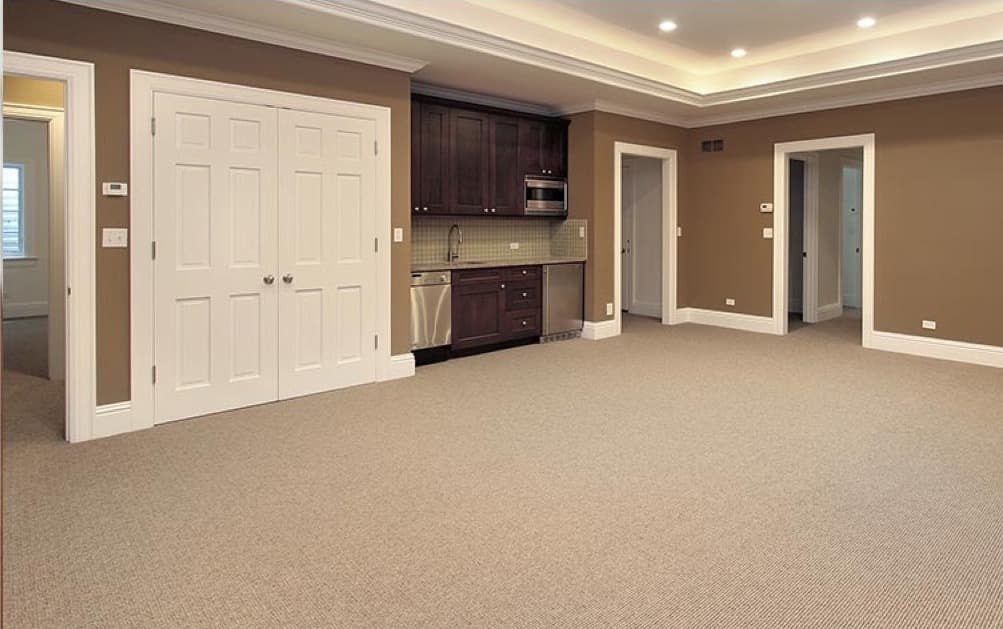
Can You Turn A Crawl Space Into A Basement?
Converting a crawl space into a basement is possible but involves major work. Learn the process, the pros and cons, and what to expect before starting.
 Framing Repair
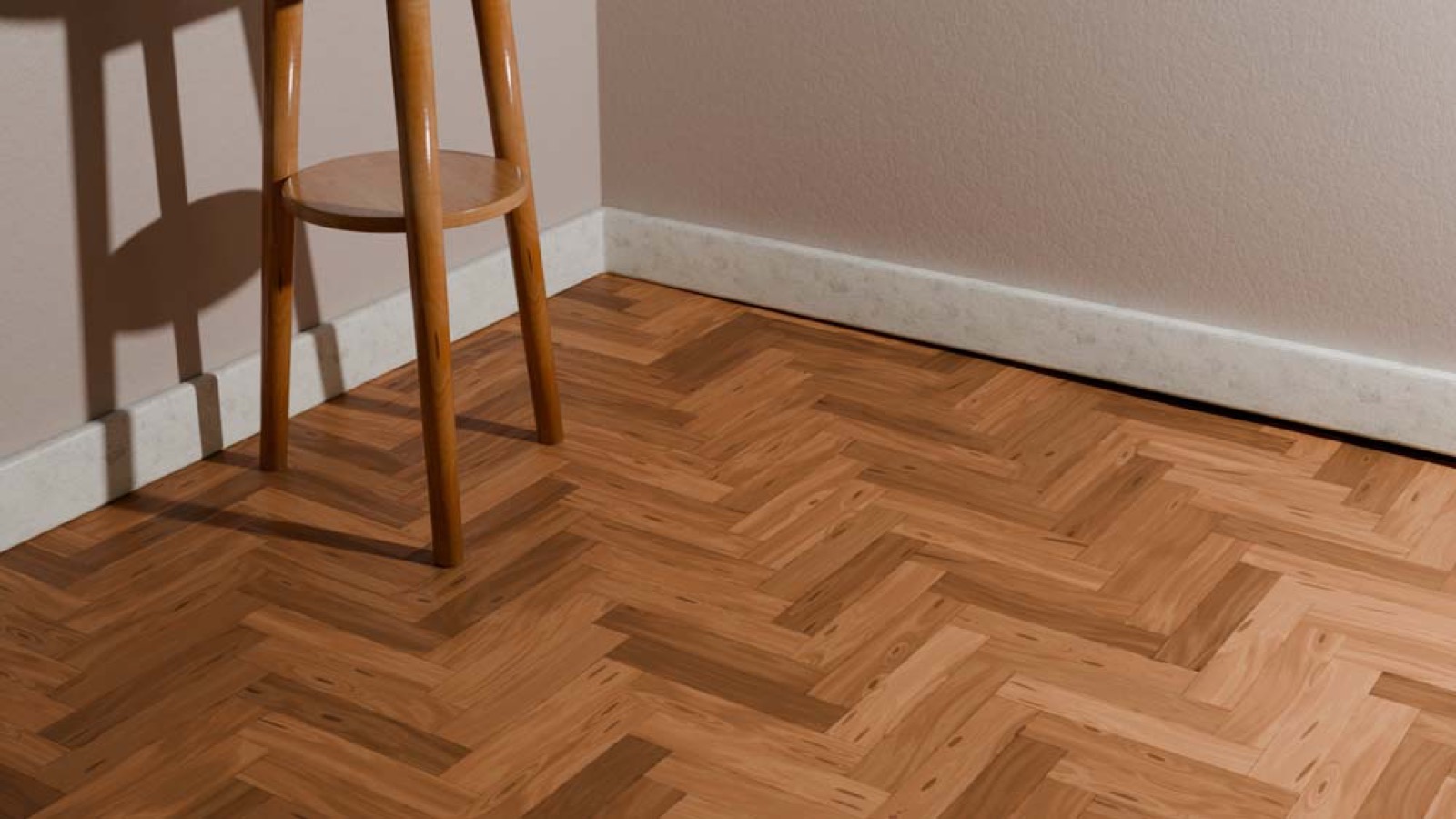
How to Identify and Fix a Sloping Floor
Learn what causes a sloping floor, three easy ways to test for one, and the repair options a foundation contractor may recommend to fix it.
 Framing Repair
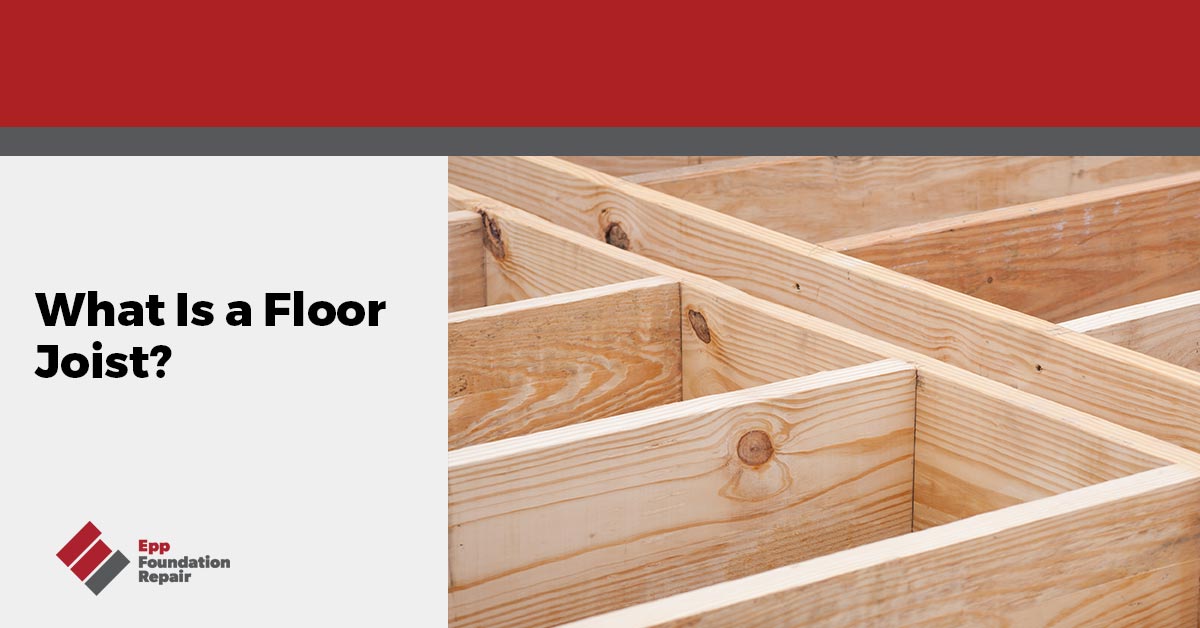
What Is a Floor Joist?
Floor joists carry the weight of the floor above a crawl space. Learn what they are, the problems that weaken them, the warning signs, and how they are repaired.
 Framing Repair
The Basics Of Floor Joist Repair
Learn what floor joists do, why they weaken, the repair methods a foundation contractor uses, and the signs that a crawl space floor needs attention.
Five regional offices across the Midwest.
St. Joseph, MO 64506