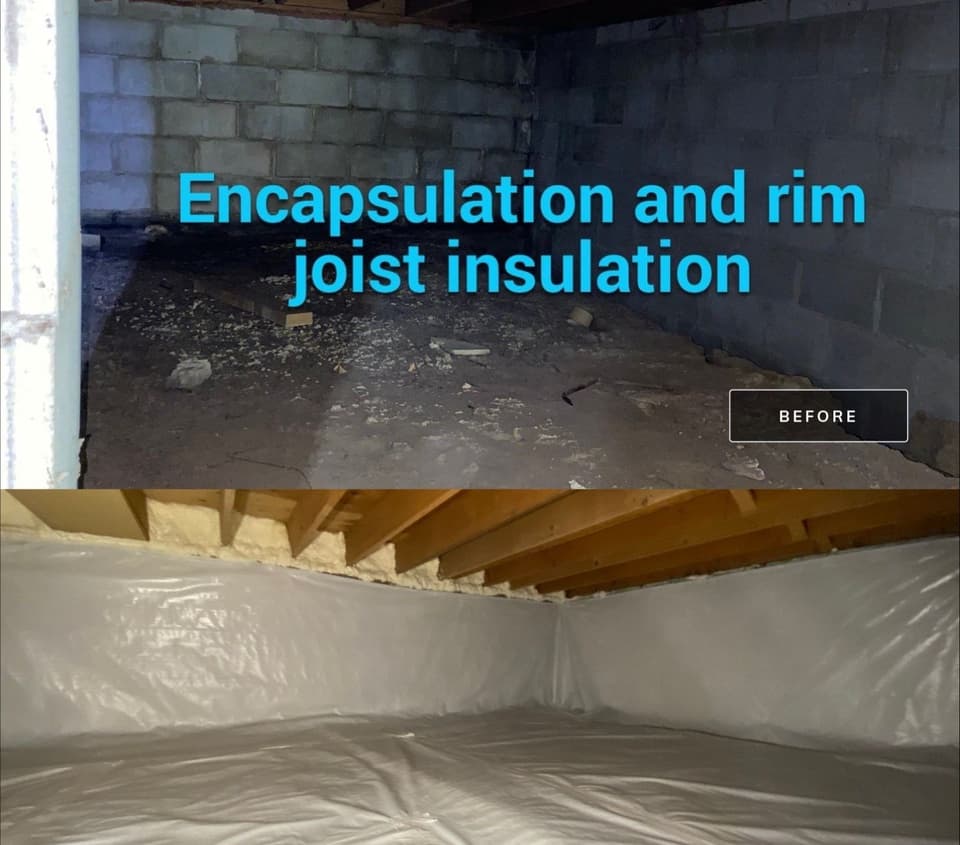
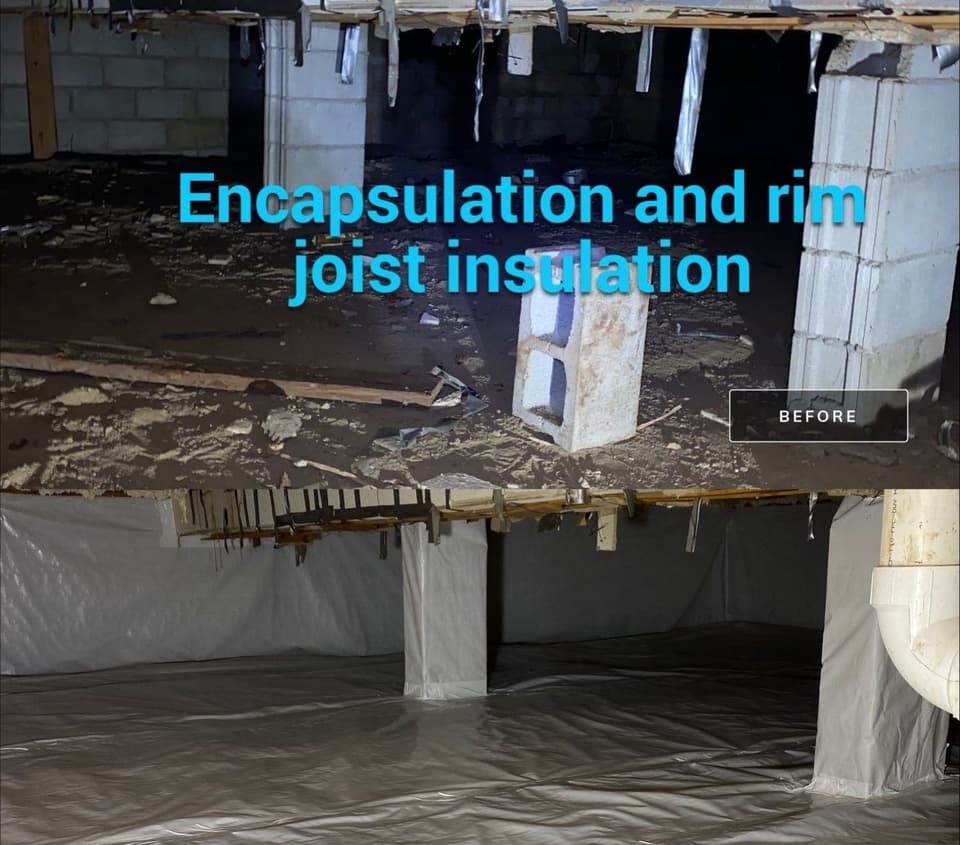
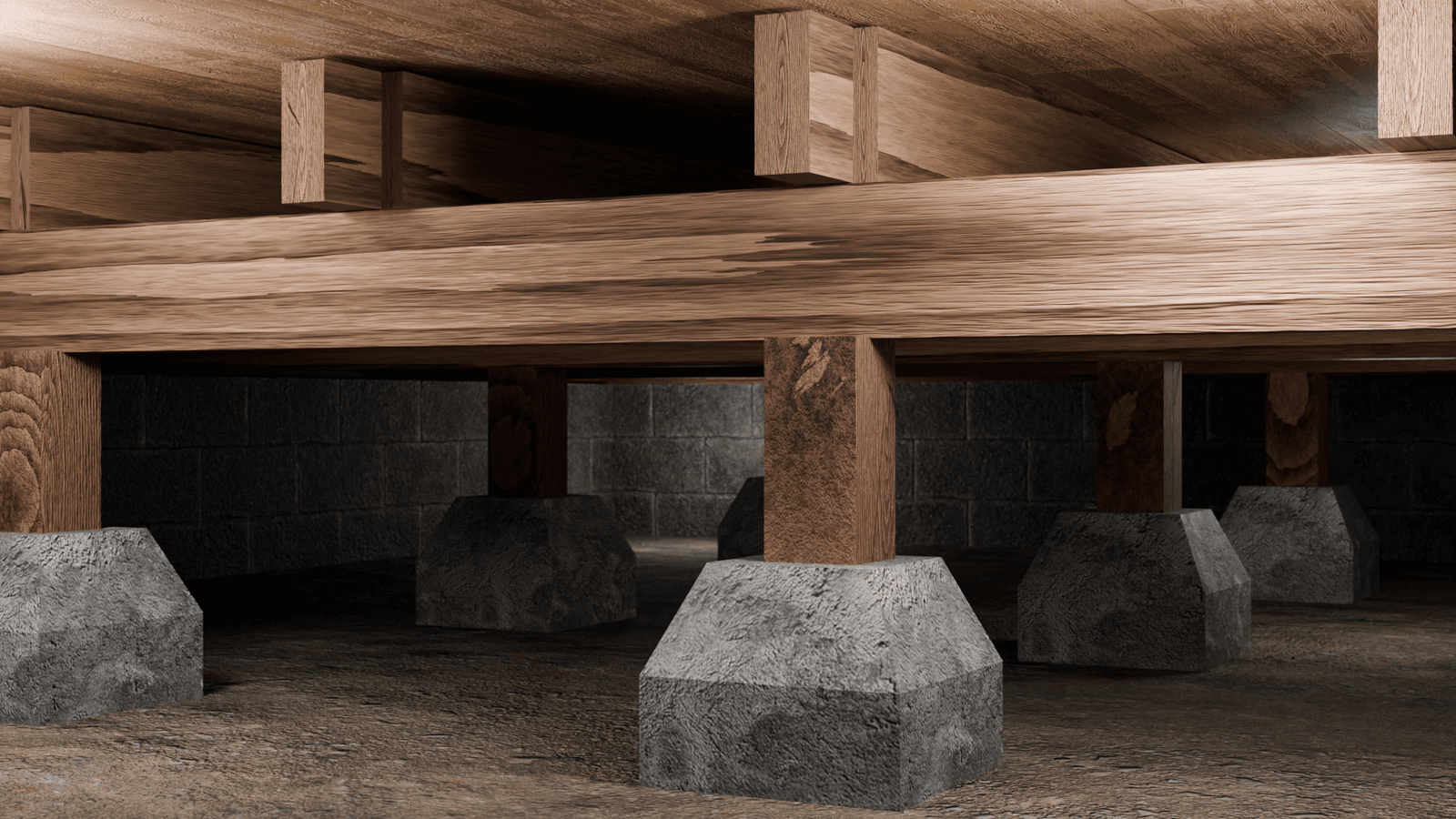
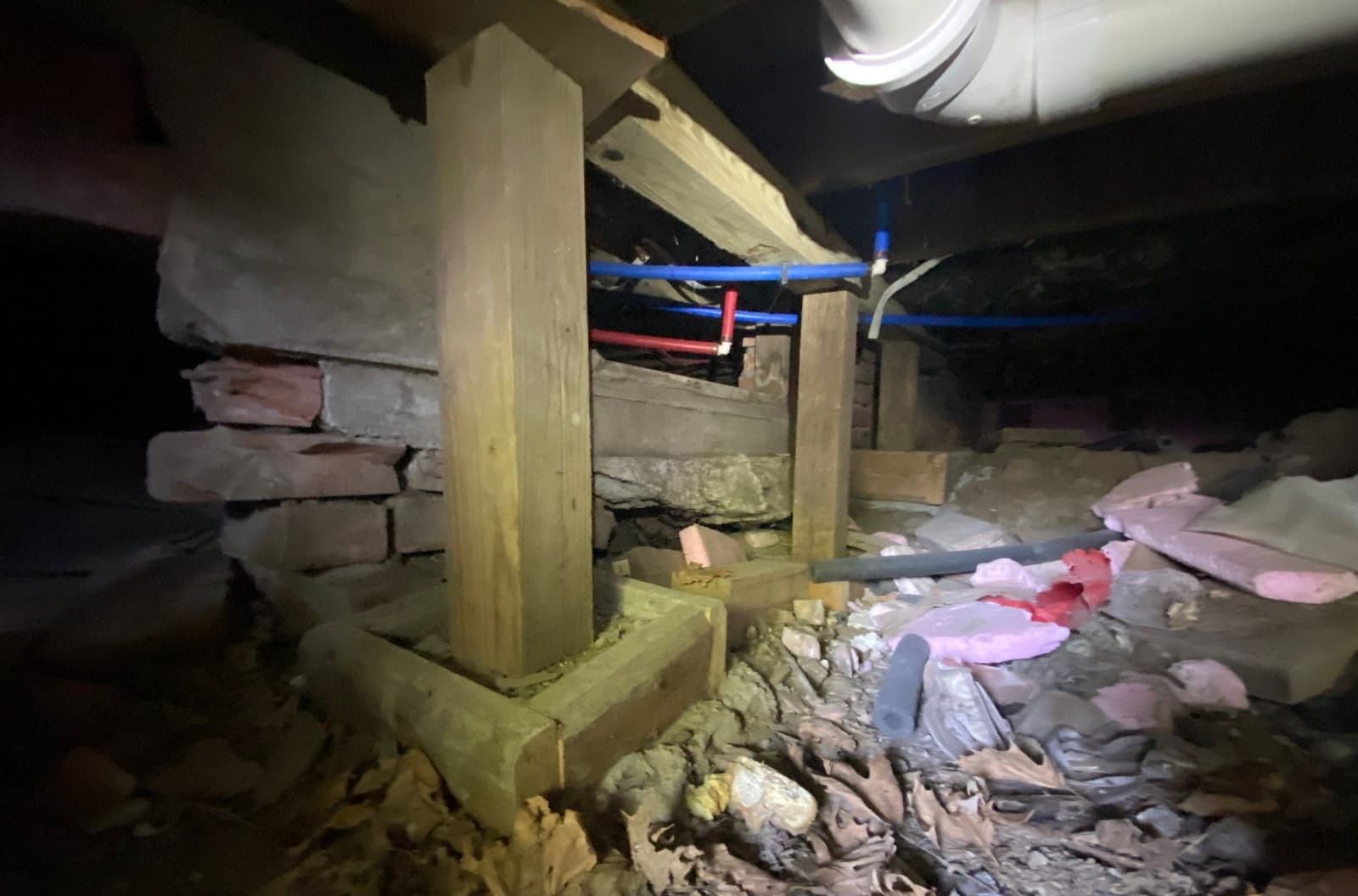
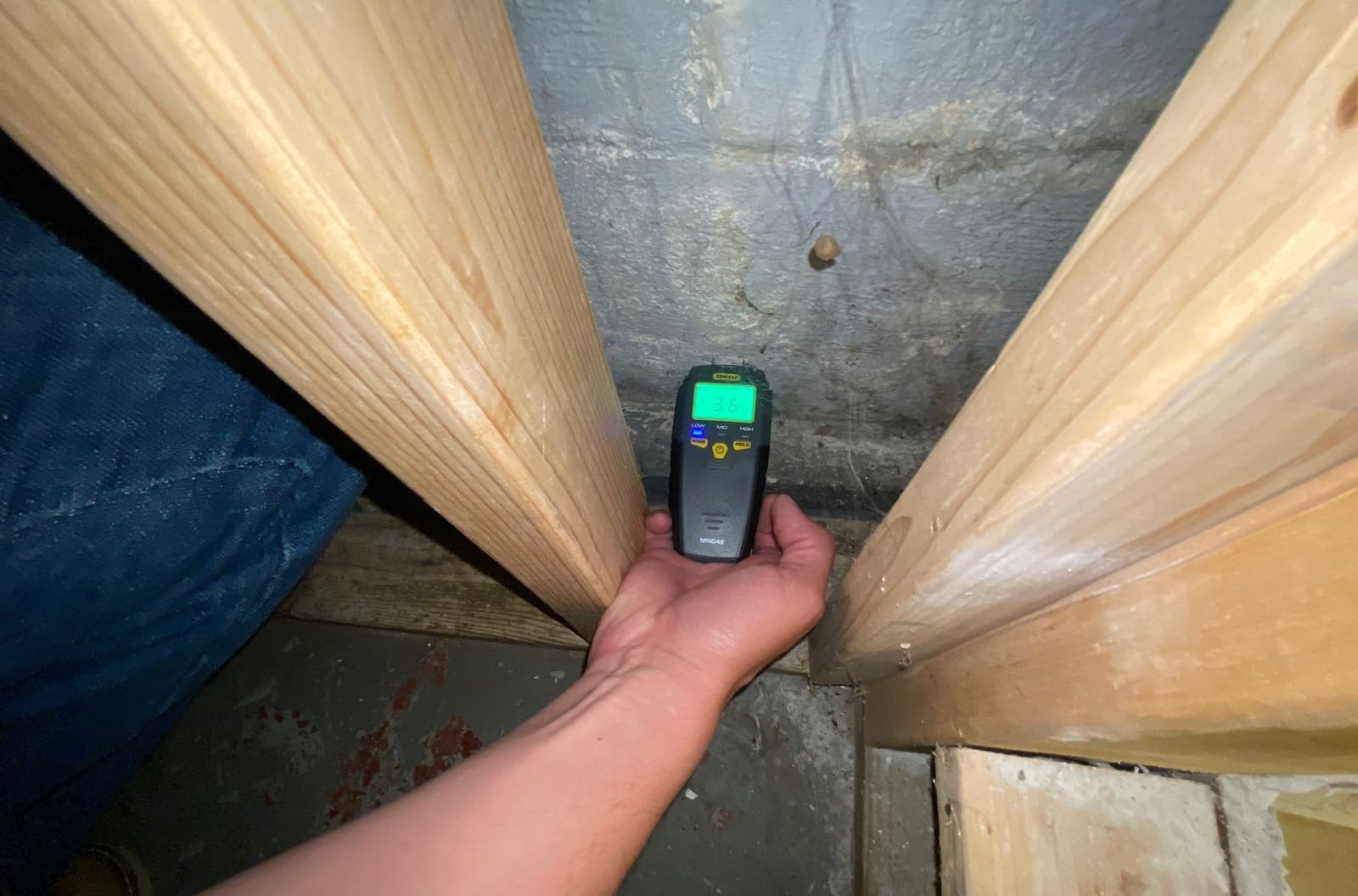
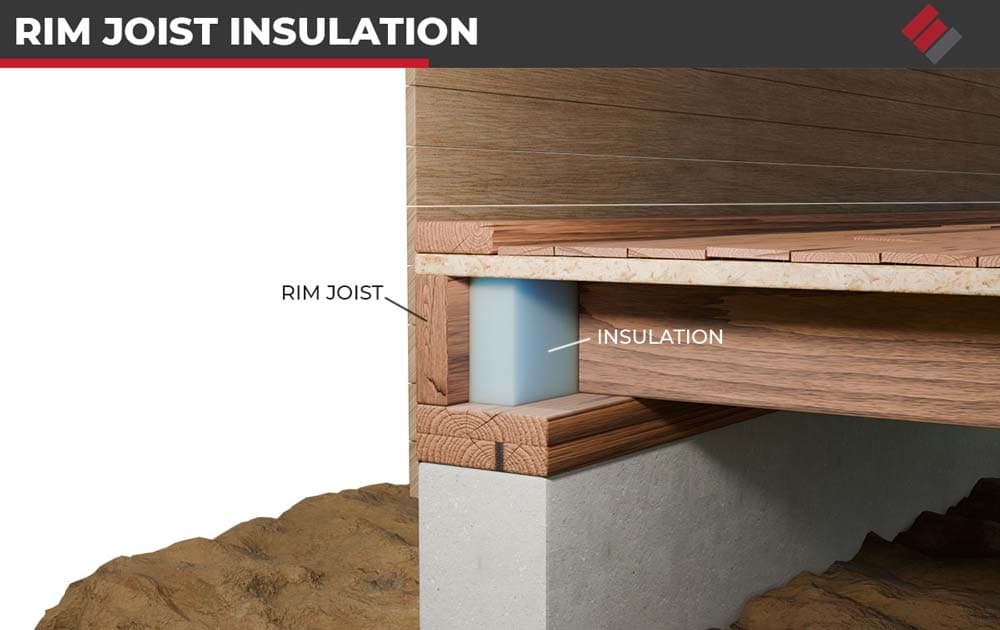
Crawl space sump pump installation differs from basement sump installation in three ways that change every part of the job: clearance is far lower than in a basement, the floor is dirt (not slab), and the pump itself sits in a more aggressive environment: high humidity, ambient soil temperatures, and limited service access for the rest of its life. Epp Foundation Repair has installed crawl-space sumps across Nebraska, Iowa, Kansas, and Missouri since 1994, and a common failure pattern is not the pump itself but the install: a builder-grade plastic pump in an undersized pit, set on an uneven dirt-floor seat, with discharge piping that can freeze in winter. This page covers crawl-space sump pump installation as a standalone service and as a pre-encapsulation step. Basement sump pump installation is a separate scope under the basement waterproofing silo, and the design differences are large enough to warrant the separation.
CH 01
What a Crawl Space Sump Pump Actually Does
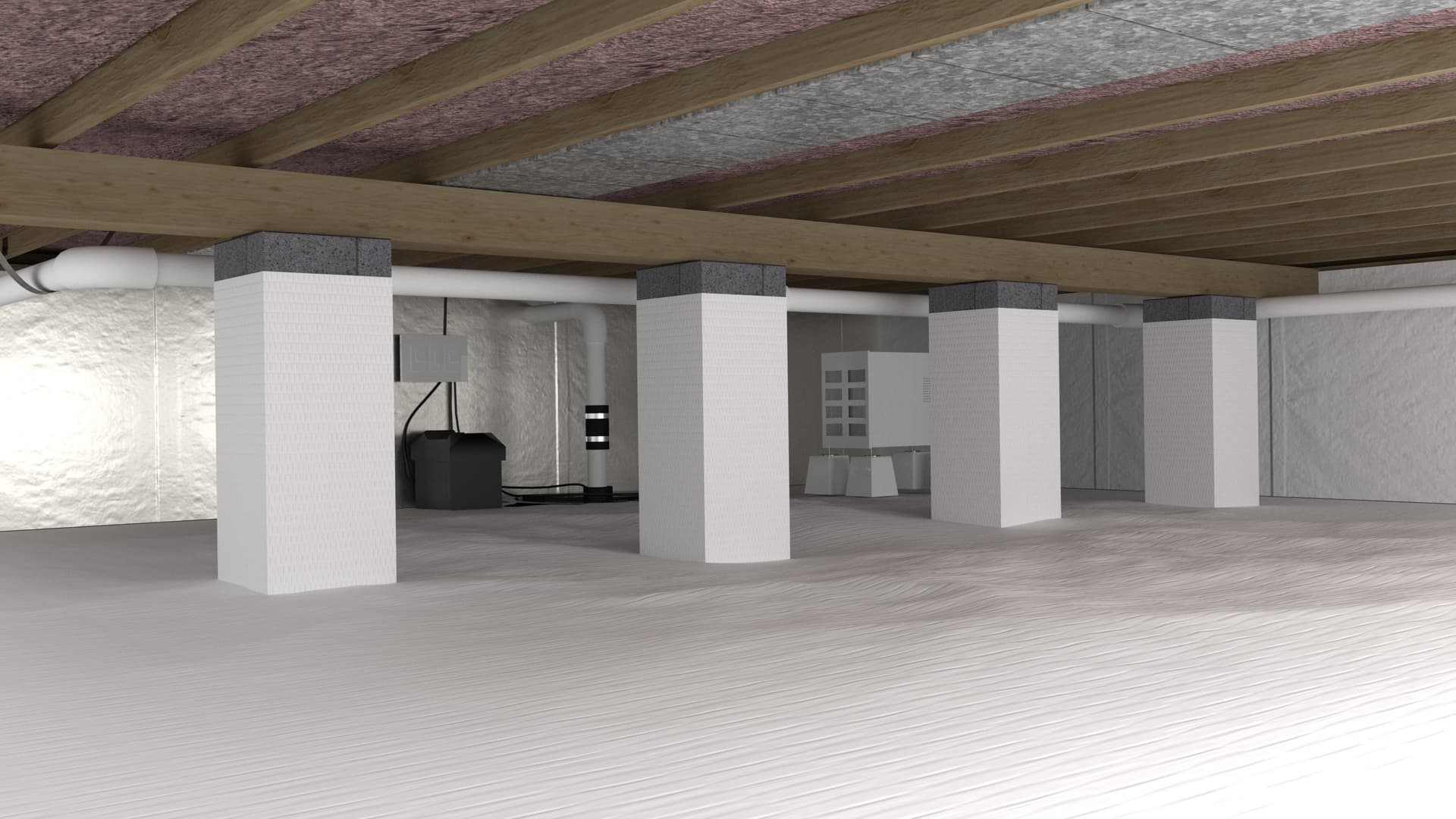
A crawl-space sump system uses the same four components as a basement system (pit, float switch, submersible pump, check valve), but every component is sized and sited for the constraints of a crawl. The sump pit is a polyethylene basin set into the dirt floor, with a perforated wall that lets groundwater enter from the surrounding soil. The float switch rises with water level and activates the pump at a set threshold. The pump motor is a cast-iron submersible, Epp's standard for crawl spaces because the high-humidity environment is hard on plastic-housing pumps. The check valve in the discharge line prevents pumped water from siphoning back into the pit each cycle. Discharge runs from the pump through PVC pipe, through a foundation wall penetration to the exterior, and out to a daylight termination 6 to 10 feet from the foundation, into a French drain inlet, or into a dry well. Discharge never enters a sanitary sewer, and it enters a storm sewer only with municipal approval. In a dirt-floor crawl, the dirt around the basin is supported and a gasketed lid seals the basin against vapor migration so the sump itself doesn't become a humidity source.
CH 02
When Crawl Space Sump Installation Is the Right Scope
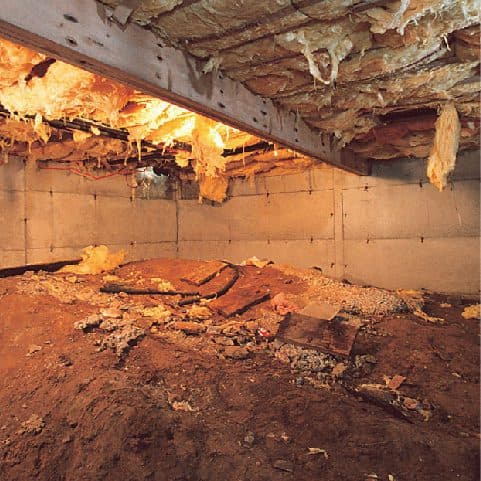
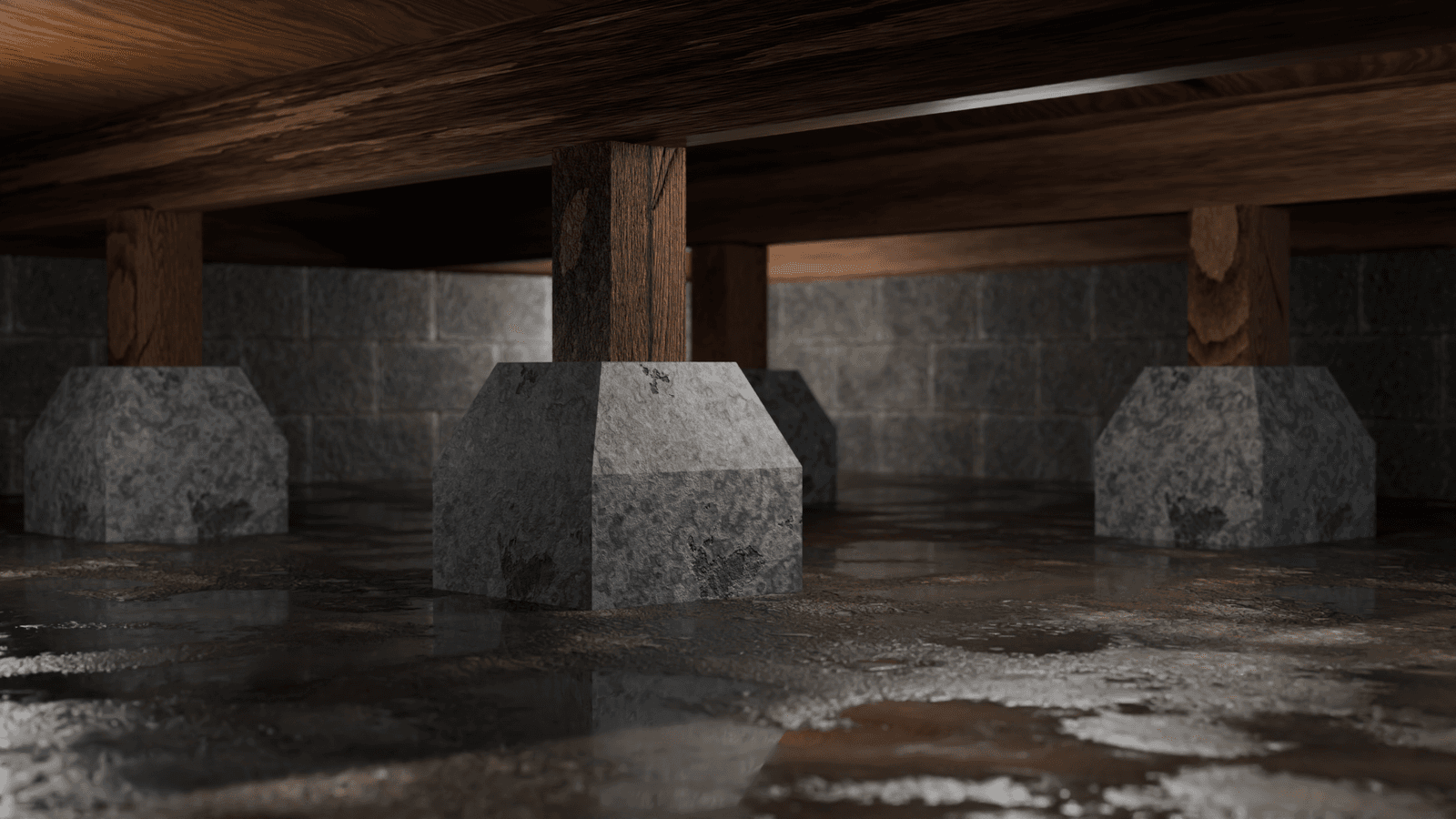
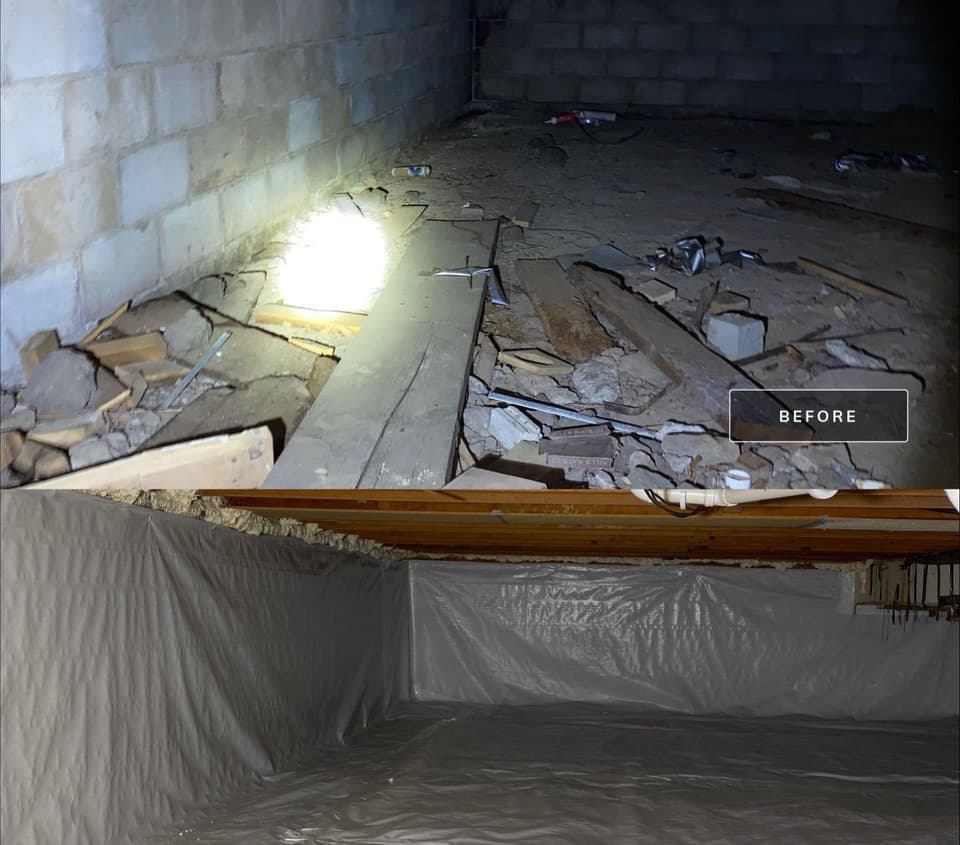
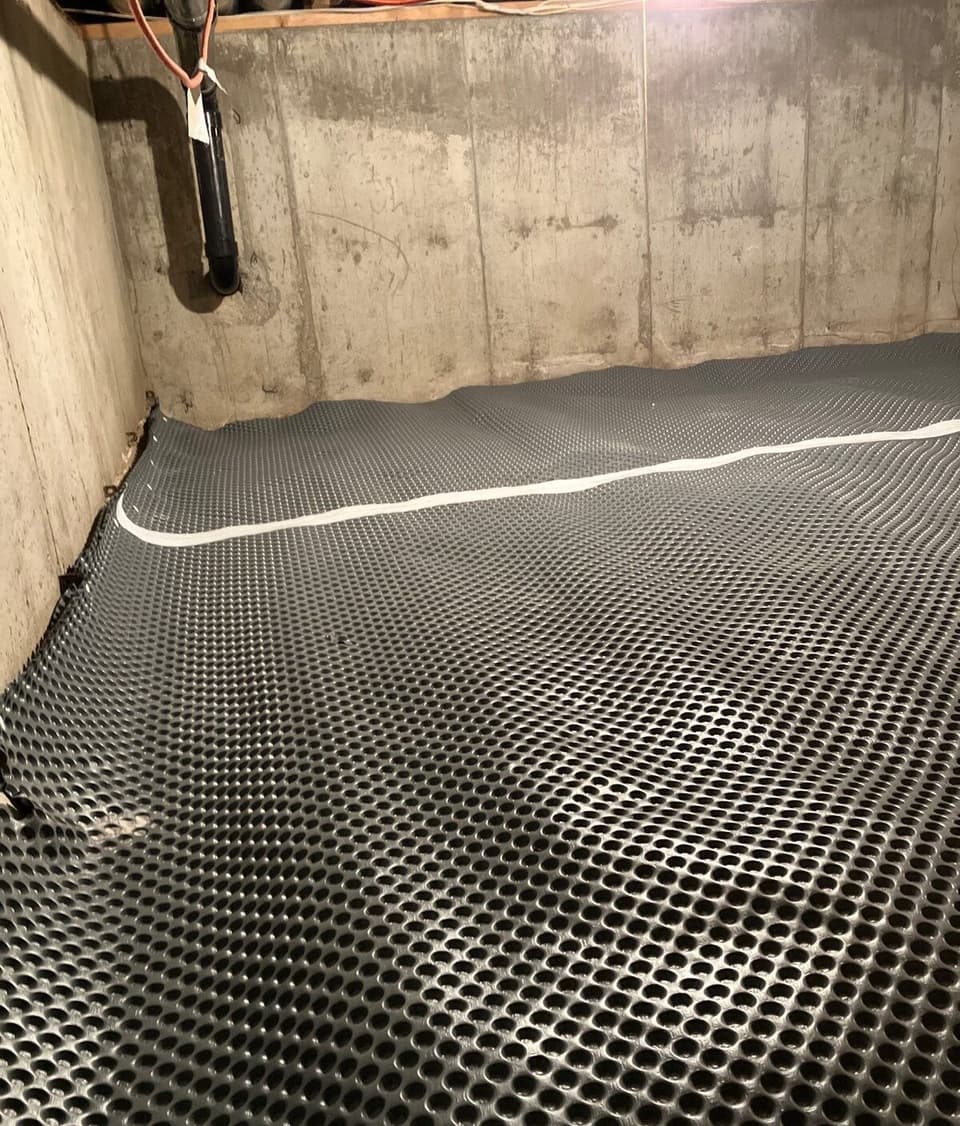
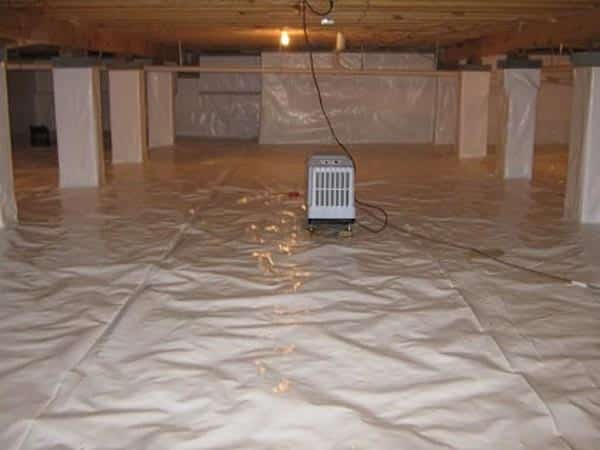
Four patterns. Dirt-floor crawl spaces with chronic groundwater seepage where standing water appears in spring or after heavy rain. The sump pit captures water at the lowest point before it saturates the joists above. Crawls being prepared for encapsulation. Epp installs the sump first, lays drainage matting against the foundation wall feeding the pit, then installs the vapor barrier over the dirt with the basin penetration sealed to the barrier. Crawls with a shallow perched water table through much of spring (common across eastern NE and western IA over glacial till). The sump pulls that water down and out before it wicks into wood. Crawls with an existing failed pump in a pit that's deteriorated, silted, or set at the wrong elevation. Replacing the basin itself is part of the job, not a separate visit.
CH 03
When Pump-Only Replacement Is the Right Scope
Three patterns. A primary pump that has failed (motor burned out, impeller broken, float stuck) and needs an immediate swap, with the existing basin in serviceable condition. A pump approaching the end of its service life that the homeowner wants replaced proactively before the next high-water season. A builder-grade plastic-housing pump installed by a previous contractor that needs an upgrade to a cast-iron unit capable of handling actual seepage volume in regional conditions.
CH 04
What Epp Installs and How
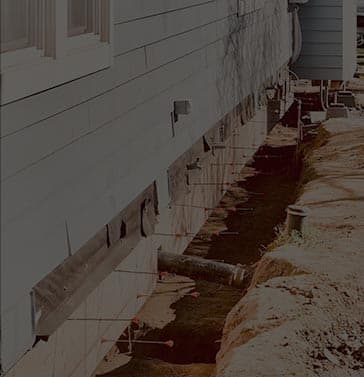
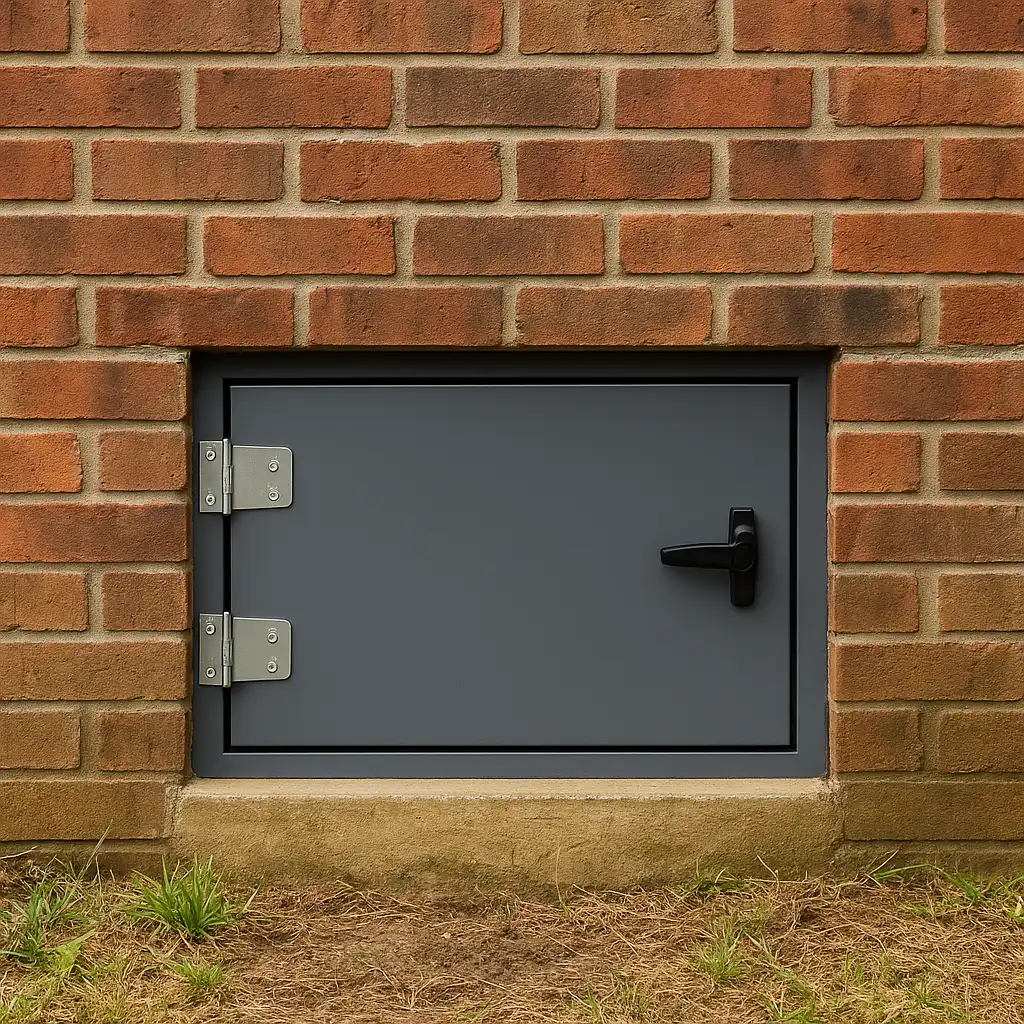
A new crawl-space pit-and-pump installation includes five steps in this sequence. Pit location and excavation. Pit location is set at the lowest point of the crawl floor, identified by laser-level survey of the dirt grade. Crews hand-excavate a hole through the dirt to seat a perforated polyethylene basin at the correct elevation. Basin set and gravel surround. The basin is set plumb in the excavation. Washed gravel backfill around the basin perforations creates a permeable zone that lets groundwater enter the pit from the surrounding soil. The top of the basin sits slightly above the surrounding dirt so a future vapor barrier can be sealed to the basin rim. Pump, float, and check valve. A cast-iron submersible primary with vertical float switch is set in the basin. Epp uses cast-iron because the crawl-space humidity environment is harder on plastic housings than a basement is, and a vertical float because tethered floats snag on basin walls and discharge piping during high-cycle events. Check valve seats at the pump head. Discharge piping out through the wall. PVC discharge runs vertically out of the basin, across the crawl ceiling space (strapped to joists), and out through a foundation wall penetration to the exterior. Wall penetration is sealed with hydraulic cement and a non-shrink urethane sealant to prevent water intrusion at the penetration point. Exterior discharge runs 6 to 10 feet from the foundation, routed below frost depth where it crosses unheated ground. Test and document. Crews fill the pit with water from a garden hose and run the pump through several cycles to confirm float operation, check-valve seal, and exterior discharge flow. Installation date, pump model and serial number, and warranty terms are documented for the homeowner. ## Why NE/IA/KS/MO Crawl Spaces Run Pumps Harder
Eastern Nebraska and western Iowa loess soils over glacial till can hold a perched water table through much of spring. In a shallow crawl space, that perched water can sit at or above the dirt floor during spring runoff. A Lincoln or Omaha dirt-floor crawl with active groundwater can cycle a sump pump far more often during a wet week than in a dry summer month. Crawl spaces in expansive clay zones have a second problem. When those clays swell against the foundation, they drive water into the crawl from the perimeter. Combined with repeated freeze-thaw cycles that heave shallow exterior discharge lines, regional crawl-space sumps work harder than the same pump in a drier climate. Epp specifies cast-iron from the start and routes discharge below frost depth across unheated ground.
CH 05
What Epp Does Not Do and Who Does
Epp installs the crawl-space sump system: pit, pump, check valve, discharge piping, exterior termination. Three adjacent scopes Epp does not perform. Electrical panel work or new circuit installation. Sump pumps often need a dedicated circuit, and any new circuit, GFCI installation, or sub-panel work is licensed electrician scope. Epp will use an existing dedicated circuit at the crawl or identify what electrical work is needed in the Customized Repair Estimate. Pumping out existing standing water from a flooded crawl is water restoration company scope. Once the crawl is dry to the dirt, Epp installs the sump system to keep it dry. Extension of discharge line to street, storm sewer, or sanitary sewer is municipal code territory, and local codes restrict tying into storm or sanitary sewers. Epp will not pull a permit or install a configuration that violates code.
CH 06
When NOT to Install a Crawl Space Sump Pump
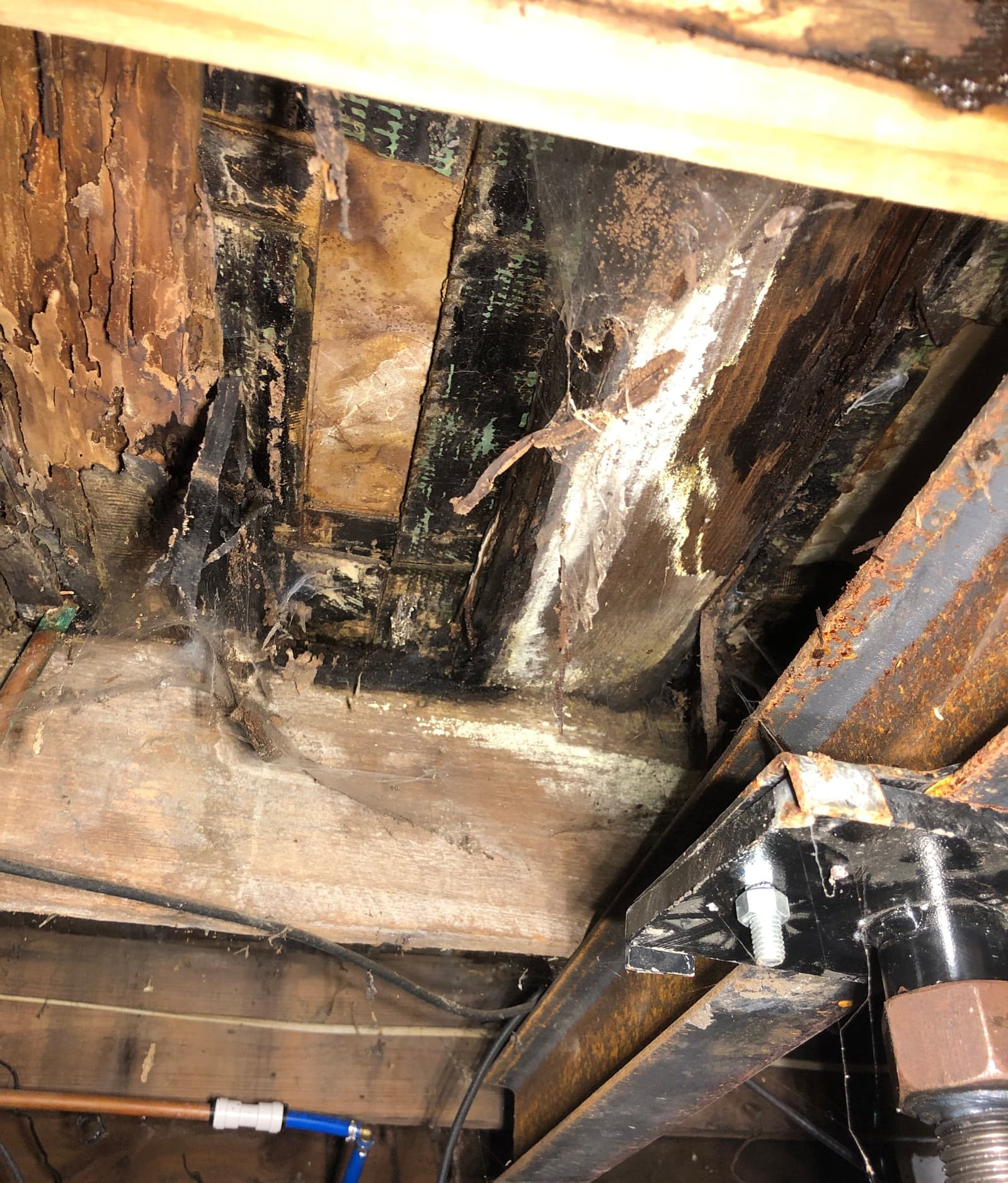
Don't install a sump pump without first diagnosing the actual water source. A pump is the active end of a water management system, not a source diagnosis. Some crawl-space water inquiries Epp receives trace to an upstream fix. Epp's Customized Repair Estimate says so before any pump quote. Don't install a pump as the only intervention in a crawl that needs encapsulation. A sump pump pulls liquid water out but does nothing for vapor migration from the dirt floor, condensation on cold ductwork, or the 60-percent-plus relative humidity that grows mold on joists. In a crawl with chronic moisture, the sump is one component of a four-component system (sump + drainage matting + vapor barrier + dehumidifier or conditioned air). Installing only the sump leaves the joists wet from above even when the floor is dry. Don't replace just the pump in a basin that's deteriorated, silted, or set at the wrong elevation. A new cast-iron pump in a failing basin will not last as long as it should.
CH 07
Pricing
Customized Repair Estimate after on-site inspection reflects your scope. Epp Foundation Repair is BBB A+ rated and a BBB Integrity Award winner. The pump carries the manufacturer's warranty only, and every crawl space sump installation includes a documented service note in the file telling the next owner exactly what was installed and when.