
Diagnose the Source First. Intrusion and Condensation Look the Same but Need Different Fixes
Epp Foundation Repair has diagnosed wet basement walls in Nebraska, Iowa, Kansas, and Missouri homes since 1994. BBB A+. BBB Integrity Award.

Let's take the first step toward a healthy home.
A local specialist will inspect your foundation, walk you through the findings, and send a clear estimate, no cost, no pressure.
Wet Basement Walls: diagnosed and explained.
Epp Foundation Repair treats a wet basement wall as a diagnostic question before a repair quote. Damp, wet, or water-stained walls can have two completely different causes. Water passing through from the outside (intrusion) or water condensing on the cool wall face from humid interior air (condensation), and the fix for one is wrong for the other. Across the four-state territory, intrusion is the more common diagnosis and condensation the less common one, with seasonal mix: spring leaks are almost always intrusion driven by hydrostatic load from saturated loess and clay backfill, while late-summer dampness in finished basements is often condensation from a humid air mass meeting a cool wall. Dave Epp's first move on every wet-wall inspection is to run a pin-type moisture meter at multiple heights and locations on the wall, repeat the reading later if the cause is ambiguous, and only then scope a repair. Epp does not sell waterproofing to a homeowner whose problem is actually condensation.


Four Signals That the Cause Is Intrusion, Not Condensation
- 01
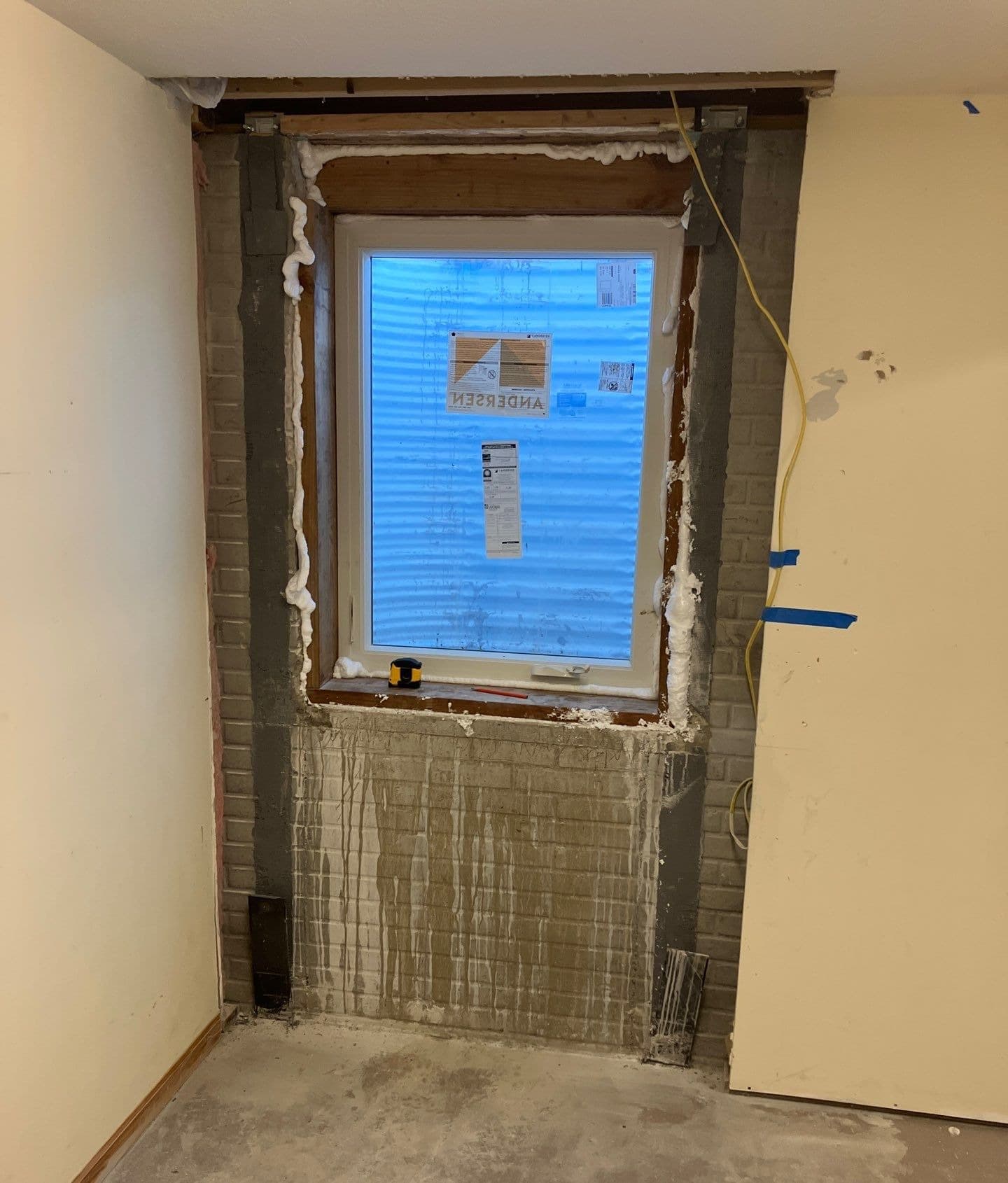
Wetness is heaviest near the basement floor
Epp Foundation Repair treats floor-zone-heavy dampness as a near-certain indicator of hydrostatic intrusion. The wet band height matches the high-water-mark of the recent water table, and condensation does not concentrate at that height because air temperature is not lowest at floor level.
- 02
Symptom appears or worsens during March through May, not July through August
Epp Foundation Repair maps symptom timing against seasonal patterns on every inspection. Intrusion peaks during spring snowmelt and storm activity when the water table is highest. Condensation peaks during humid late summer when interior air dew point exceeds wall surface temperature.
- 03
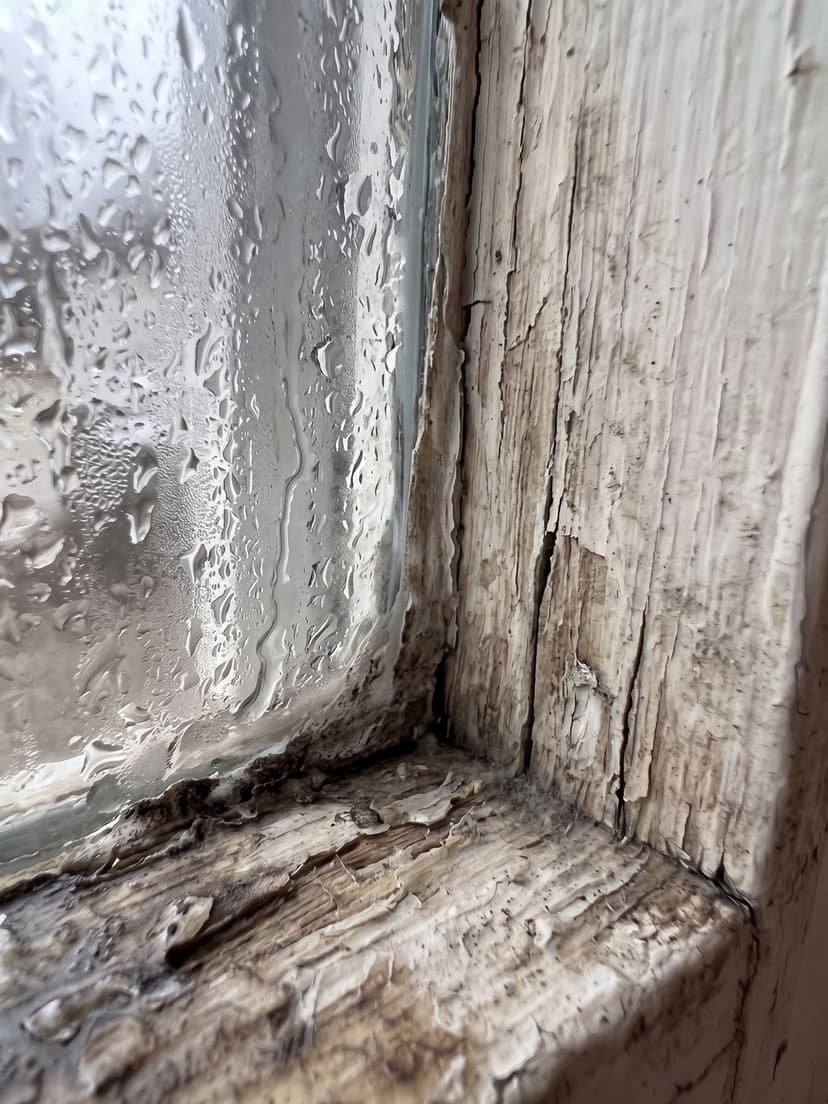
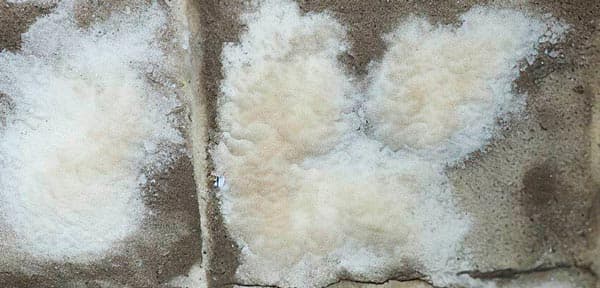
Visible cracks, efflorescence, or peeling paint accompany the wet wall
Epp Foundation Repair correlates wall-surface symptoms with the type of moisture present. Cracks, efflorescence deposits, and peeling paint all indicate liquid water passing through the wall from outside. These symptoms require minerals and pressure that condensation cannot supply.
- 04
Pin-type moisture meter reads high inside the wall, not just on the surface
Epp Foundation Repair runs a pin-type moisture meter at multiple wall heights on every inspection. Pins driven into the concrete or CMU read internal moisture content. Intrusion shows high internal readings. The wall itself is wet. Condensation shows dry internal readings with wet surface.
What causes wet basement walls in Midwest homes.
- 01
Hydrostatic pressure from saturated soil (NE, IA spring snowmelt and storm window)
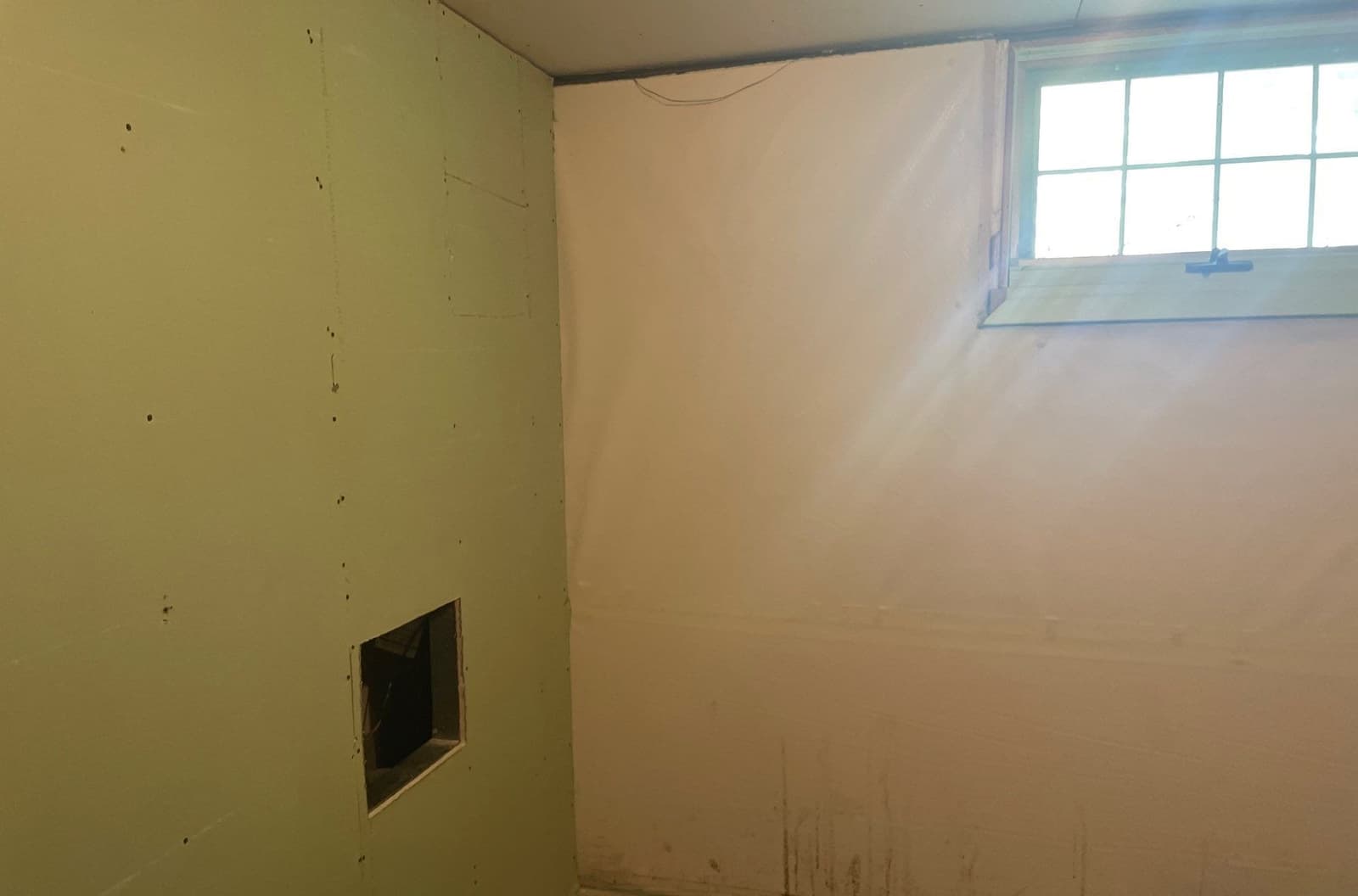
Epp Foundation Repair identifies hydrostatic intrusion as the cause of wet basement walls in inspections across the four-state territory. Loess-rich and glacial-till backfill across eastern Nebraska and western Iowa holds water after a heavy rain, generating lateral pressure against the foundation wall during March through May.
- 02
Cracked wall letting water through under pressure
Epp Foundation Repair finds an active leaking crack as the primary cause on some wet-wall inspections. Narrow cracks are easily missed visually but pass significant water under hydrostatic load. A single vertical crack can let in water during a wet storm. The dampness pattern centers on the crack and fans outward as the water spreads behind any wall finish material. Epp seals these with sequential epoxy and polyurethane injection.
- 03
Surface water from downspout overflow or reverse grading saturating the wall from above
Epp Foundation Repair finds above-grade surface water as a contributing source on wet-wall inspections. A downspout dumping water close to the foundation, a hose bib that has been dripping, a window well that fills during storms, or a yard graded toward the house instead of away saturates the upper wall from outside the soil line. The wetness pattern is different.
- 04
Condensation on cool walls from humid interior air (late summer, finished basements)
Epp Foundation Repair finds condensation as the actual cause on some wet-wall inspections, more often in finished basements during July and August. The mechanism is the opposite of intrusion: humid interior air meets a cool wall face, the air cools below its dew point at the wall surface, and water condenses on the wall from inside rather than passing through from outside.
- 05
Expansive clay backfill driving wet-dry cycling (KS, MO)
The clay soils across northeast Kansas and northwest Missouri are expansive enough that the backfill swells in spring and shrinks back in late summer. Each cycle pushes water through the wall and then pulls it back, generating a recurring wet-wall pattern that records the high-water mark of each wet season. Freeze-thaw cycles add a second loading vector.
How basement waterproofing specialists actually fix wet basement walls.
Solving wet basement walls means addressing the underlying soil, pressure, or settlement cause. Not just patching the visible damage. Below are the engineered solutions we install most often for this symptom in Nebraska, Iowa, Kansas, and Missouri homes.
Engineered basement waterproofing solutions for this problem.
Each method is matched to a specific failure mode and soil profile. Browse the toolkit we draw from when diagnosing your home.
Interior Drainage Systems
Epp Foundation Repair has installed sub-slab perimeter drains and sump systems across Nebraska, Iowa, Kansas, and Missouri since 1994, and it is the default basement waterproofing solution in this region.
Choosing a Crawl Space Sump Pump
Cast-iron or plastic housing, pit size, and discharge setup all change how long a crawl space sump pump lasts. Epp Foundation Repair has installed and serviced them across Nebraska, Iowa, Kansas, and Missouri since 1994.
Epoxy Crack Injection
Epp Foundation Repair has injected foundation cracks across Nebraska, Iowa, Kansas, and Missouri since 1994, and uses sequential polyurethane plus epoxy when one alone won't hold.
What puts water against basement walls in Nebraska and Iowa?
Rain and melting snow soak into the soil around a basement. When that water cannot drain away, it can press against the walls and floor and find a way in through cracks and joints.
Based on NOAA 1991 to 2020 climate normals for Lincoln Municipal Airport and Omaha Eppley Airfield.
What kind of soil is around Lincoln and Omaha?
Based on USDA soil survey data for Lancaster County (Lincoln) and Douglas County (Omaha), clay is the main soil type in both counties. The survey rates Lancaster County high and Douglas County moderate for shrink swell. Clay can swell when it gets wet and shrink as it dries, so a slab or foundation on clay can move up and down with the seasons. The soils that cover the most ground in Lancaster County are Wymore and Aksarben, and in Douglas County they are Contrary and Marshall.
Loess, the wind deposited silt common in eastern Nebraska and western Iowa, can lose strength and settle when it gets wet. Water can reach it from runoff, a plumbing leak or a downspout that empties next to the house.
How does freezing weather affect footings and basement walls?
In Lincoln and Omaha, soil near the surface can freeze and thaw many times between fall and spring. Each city's building code sets a frost line depth, which is the minimum depth below finished grade for a footing. It is 36 inches in Lincoln and 42 inches in Omaha. Supports that sit above that depth, such as some porches, stoops and chimney footings, can move as the ground freezes and thaws.
Horizontal cracks in a basement wall are more often linked to pressure from the soil outside the wall than to settlement. Wet soil pushes harder against a wall than dry soil, and soil that freezes against the wall can add to that pressure.
Climate: NOAA U.S. Climate Normals 1991 to 2020, LINCOLN MUNI AP (USW00014939) and OMAHA EPPLEY AIRFIELD (USW00014942), retrieved September 30, 2026. Soil: USDA NRCS Soil Data Access (SSURGO), county survey for Lancaster County and Douglas County. Frost line depth: Lincoln Municipal Code 20.12.140 and Omaha Municipal Code Sec. 43-127.
"I've walked into basements where someone quoted ten thousand dollars in waterproofing and the actual problem was a humid August and a wall that gets to fifty-eight degrees in the afternoon. That's a dehumidifier, not a sump pump. Run the moisture meter first, then talk price."

Care and expertise from a team that's been doing this since 1994.
Epp Foundation Repair is locally owned and operated, with crews dedicated exclusively to foundation, basement, and concrete work across the Midwest.
Foundation repair, waterproofing, and concrete leveling are our entire focus, not a sideline.
Three decades of experience with Midwest soils, basements, and weather conditions.
Recognized by the Better Business Bureau for integrity and ethical business practices.
Many of our repairs carry a written Epp warranty. The warranty page lists every covered repair and its terms.
Answers to common questions about Wet Basement Walls.
Don't see your question here? Our team is happy to help. Reach out anytime.
Other basement waterproofing warning signs to watch for.
If you see one, it's worth checking for the others. Most foundation problems show up as more than one symptom.
Serving Nebraska, Iowa, Kansas & Missouri.
Local crews based in five regional offices, dispatched daily across four states. If your town isn't listed, call us: we likely serve your area.
- Omaha, NE
- Lincoln, NE
- Topeka, KS
- Sioux City, IA
- Bellevue, NE
- St. Joseph, MO
- Council Bluffs, IA
- Grand Island, NE
- Papillion, NE
- Kearney, NE
Take the first step toward a healthy home.
A straightforward path from initial inspection to completed repairs.
Schedule your inspection.
A local specialist visits your home, evaluates the foundation, and answers your questions on site. No cost, no obligation.
Receive an estimate based on your needs.
We provide a clear, Customized Repair Estimate with a scope of work tailored to your home's specific issues. Typically within one business day.
Get your repairs.
Trained crews complete the work on schedule.
Over 1,700 homeowners have shared their experience.
A 4.9-star average across Google, with verified reviews from homeowners throughout Nebraska, Iowa, Kansas, and Missouri.
Two ways to start: book instantly, or request an estimate.
Schedule your inspection in seconds with our Driive booking tool, or share a few details and a local specialist will follow up within one business day.
- A local foundation specialist on site
- A complete walk-through of the findings
- A Customized Repair Estimate within one business day
- No cost, no obligation, no high-pressure sales
Expert guidance on protecting your home.
Practical articles from the Epp team on foundation health, waterproofing, and home preservation.
 Basement WaterproofingLatest
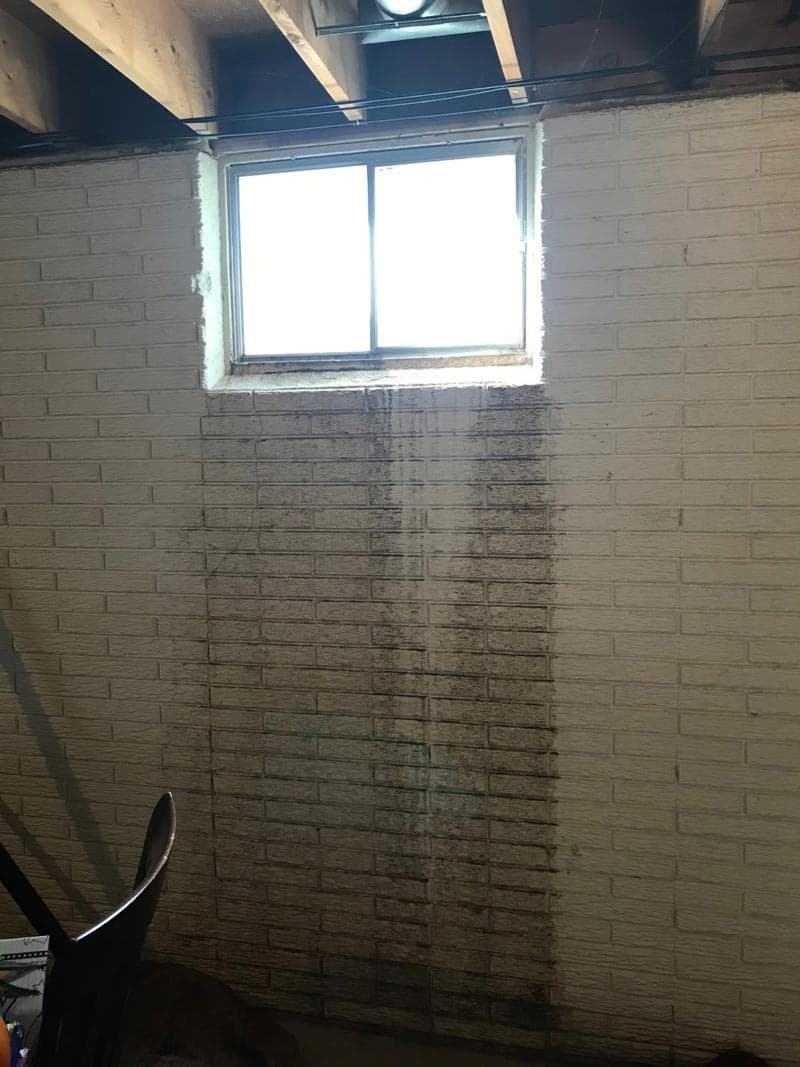
Can You Waterproof Basement Walls From the Inside With Paint?
Waterproof paint and sealer can help with light dampness, but they usually cannot stop water pushed through a basement wall by wet soil outside.
 Basement Waterproofing
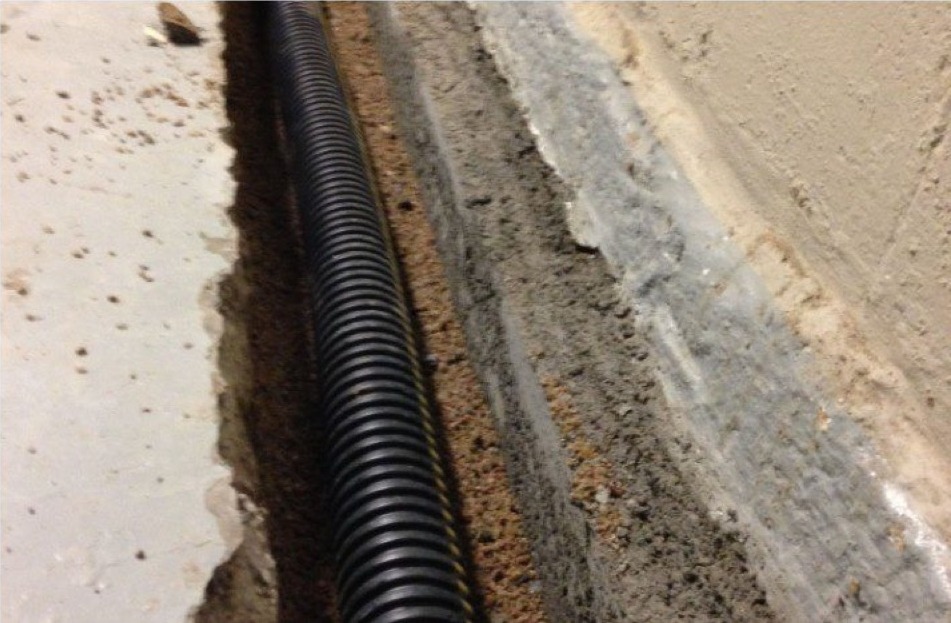
What Is Drain Tile?
Drain tile channels water away from your foundation to keep the surrounding soil dry, which helps prevent many common foundation problems.
 Basement Waterproofing
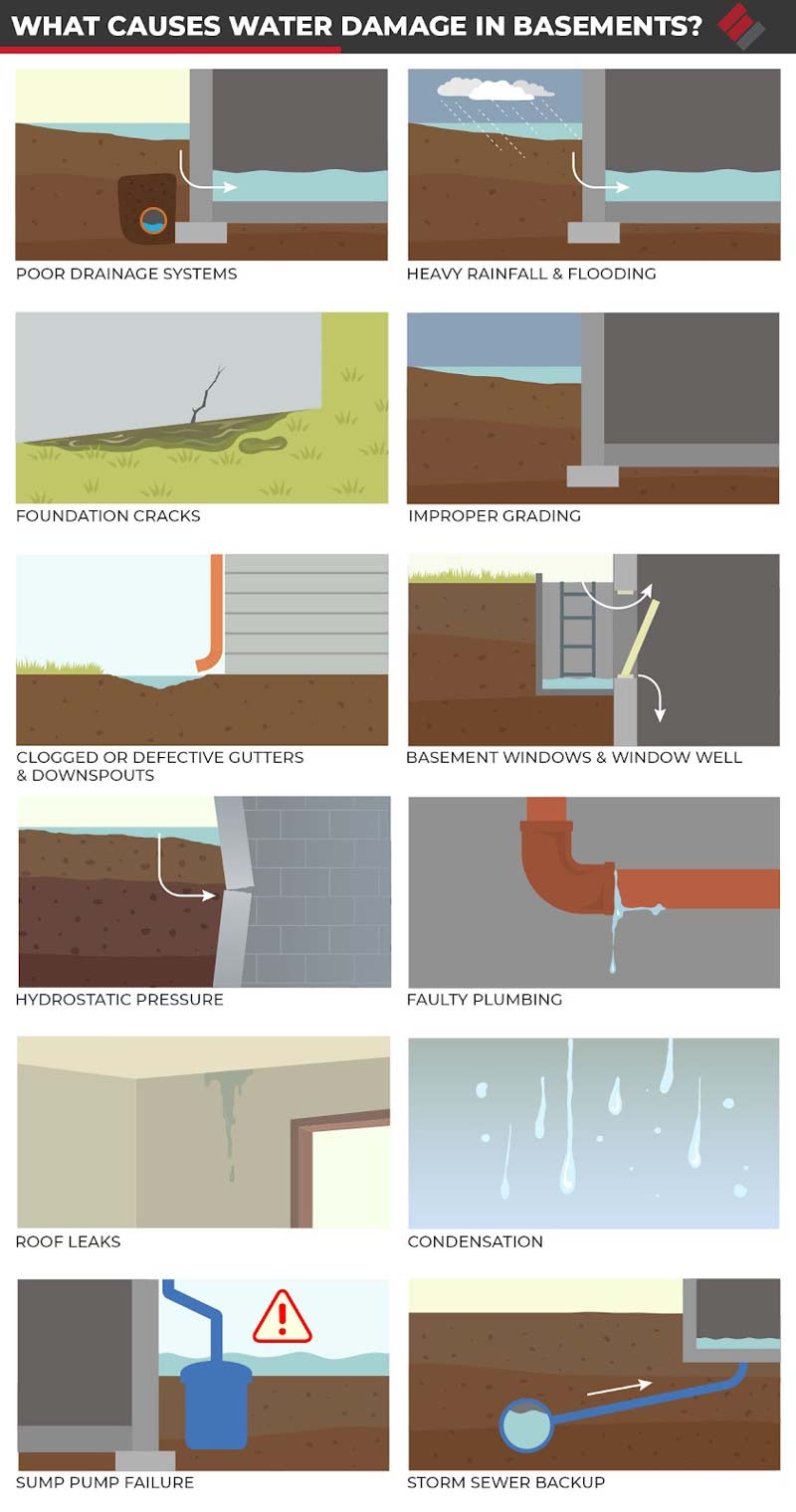
Water Seeping Through Foundation Slab: Hydrostatic Pressure
Water seeping through a foundation slab escalates quickly. Learn what hydrostatic pressure is, why it happens, and how to stop it damaging your home.
 Basement Waterproofing
Is Efflorescence Harmful? Causes And Removal Options
Efflorescence is a chalky white residue left by evaporating water. It signals moisture intrusion that can lead to bigger problems if ignored.
Five regional offices across the Midwest.
St. Joseph, MO 64506