
Estimate Only
Approximate pricing
Customized Repair Estimate after on-site inspection reflects your scope.
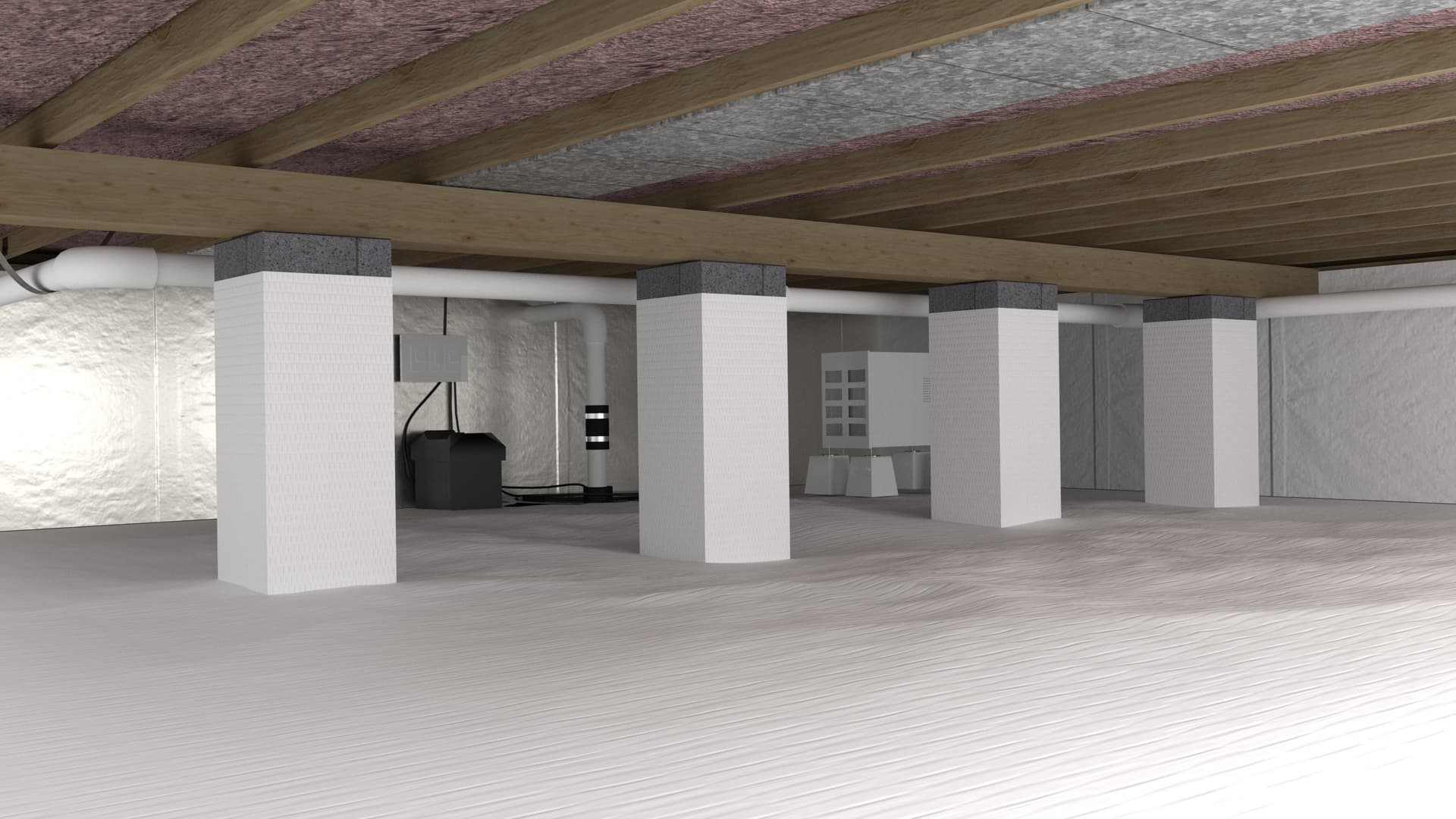
A bare dirt crawl space floor anywhere in the Midwest pumps moisture into the joists twelve months a year. Serving Nebraska, Iowa, Kansas, and Missouri, Epp Foundation Repair installs reinforced polyethylene liners across the entire crawl floor, sealed at every seam and mechanically fastened up the walls.

A local specialist will inspect your foundation, walk you through the findings, and send a clear estimate, no cost, no pressure.
Diagnosis First
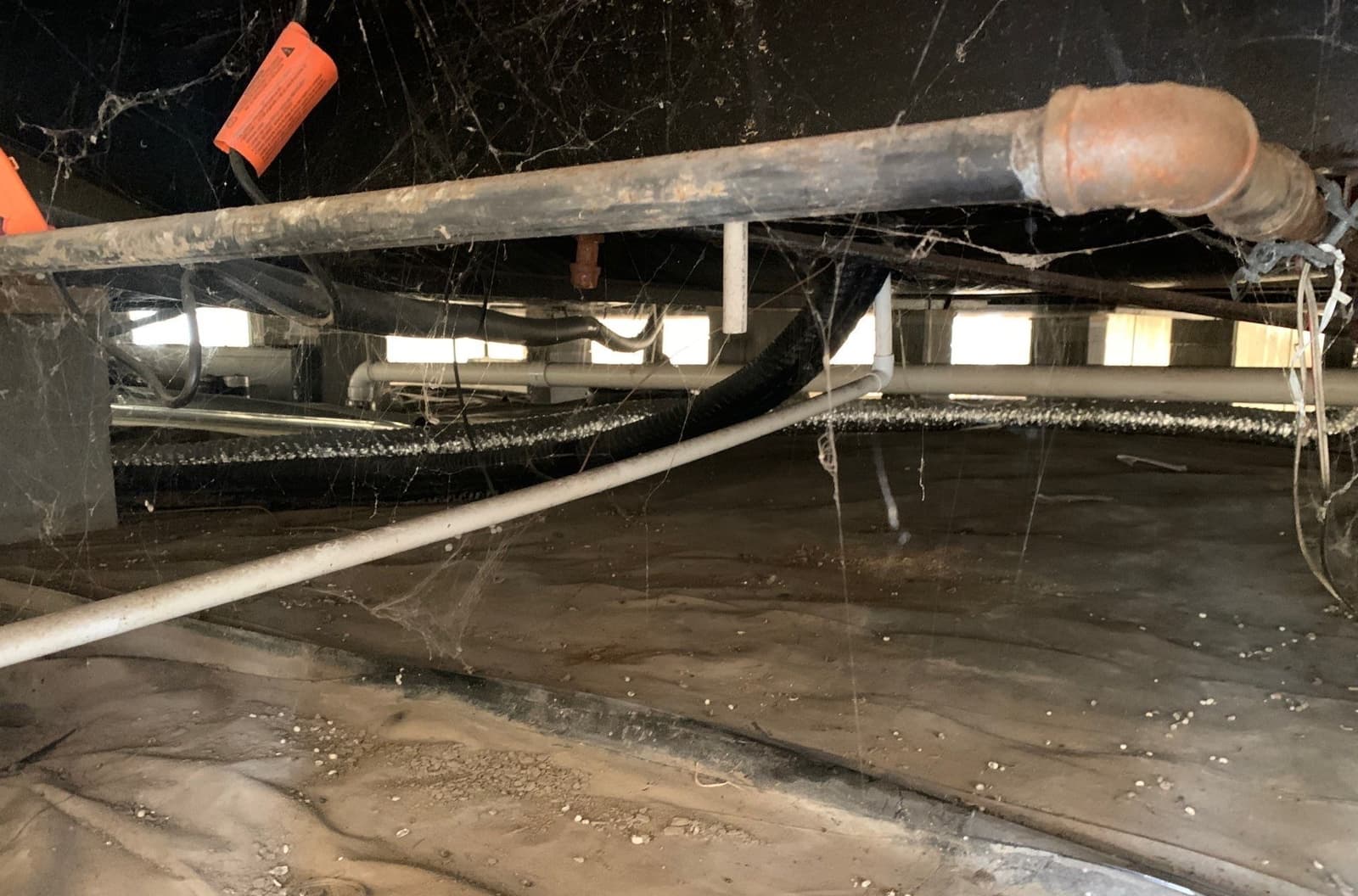
Crawl space vapor barrier installation covers the dirt floor and lower foundation walls with reinforced polyethylene to stop ground moisture from evaporating into the wood structure above. It is the first layer of a complete encapsulation system. Alone, on a crawl that is already chronically humid, it only moves where the moisture condenses instead of removing it.
In Depth
Everything a Midwest homeowner should know about this repair, from the specialists who do it every day.
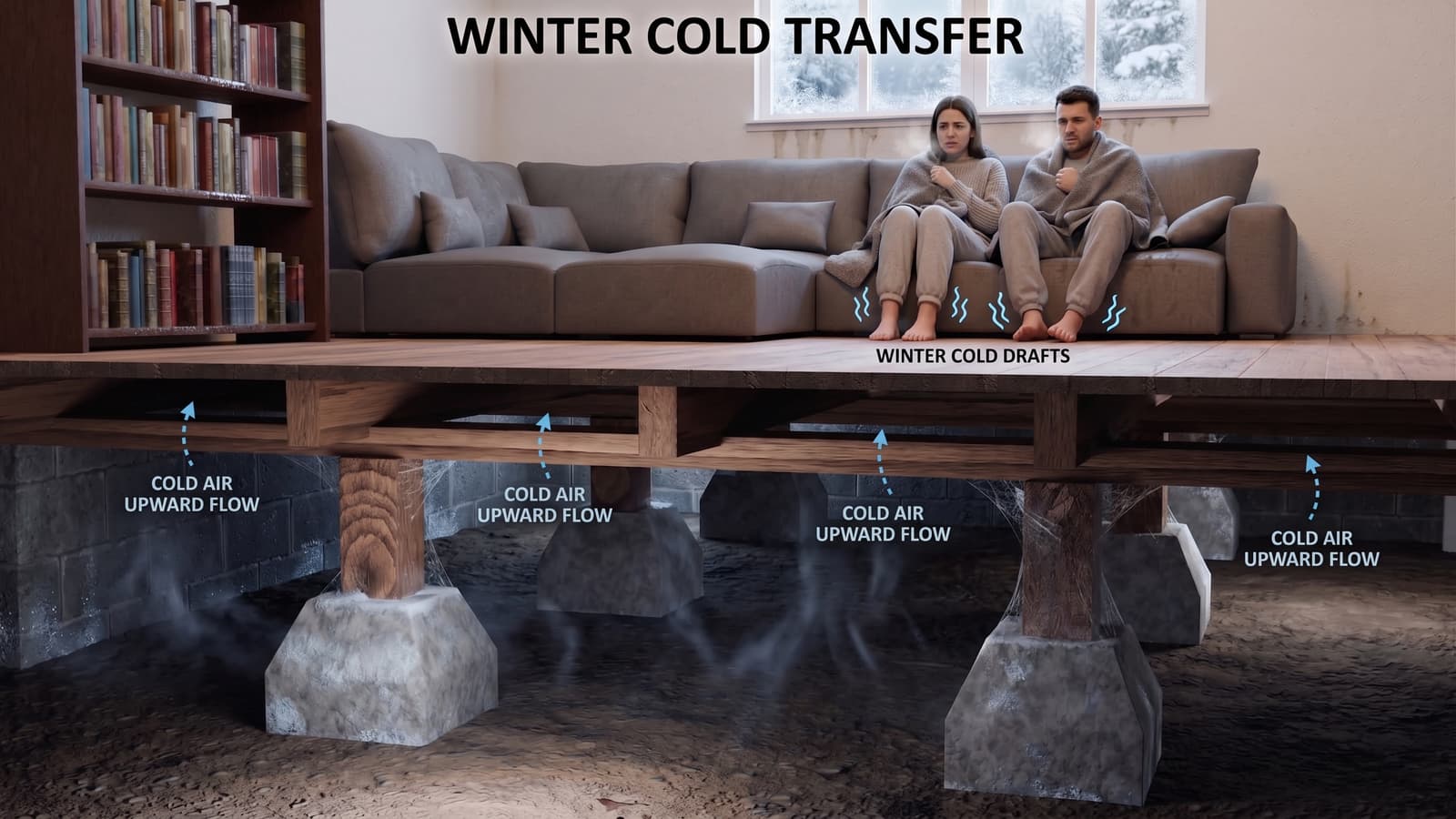
A crawl-space vapor barrier is not basement vapor barrier. The basement product hangs on a wall and drains seepage down into a cove drain. The crawl-space product covers the dirt floor of the entire crawl space, seals at every seam, and climbs up the foundation walls (to the sill plate on a full encapsulation) to stop ground moisture from evaporating into the wood structure overhead. Epp Foundation Repair installs crawl-space vapor barriers across Nebraska, Iowa, Kansas, and Missouri primarily as the first layer of a full crawl space encapsulation, not as a standalone product. And that distinction drives every diagnostic call Epp makes on this scope. A bare dirt crawl space in eastern Nebraska gives off moisture every day by evaporation alone. Loess soil over glacial till holds moisture year-round, and the temperature differential between cool soil and warmer crawl-space air drives that moisture upward into the joist bays. A vapor barrier intercepts the evaporation. But the moisture already in the crawl-space air still has to go somewhere, and without a dehumidifier sized to the cubic footage, that moisture condenses on the underside of the subfloor and the cold ductwork instead of on the dirt. Epp installs the barrier as part of a system or declines the work.
A crawl-space vapor barrier is a thick reinforced polyethylene sheet that covers the entire crawl-space floor and runs up the foundation walls to the sill plate. Sheets overlap at seams and are sealed with butyl seam tape or two-sided butyl tape. The wall extension is mechanically fastened with PVC strips or fender washers and masonry anchors set into the foundation wall. Penetrations for piers, posts, and plumbing get cut-and-sealed boots. The completed barrier stops three things. It stops ground moisture evaporation, which is the largest single moisture source in a vented crawl space. It stops capillary rise through the foundation footing into the lower wall, which the wall-extension portion of the barrier intercepts. It also stops the convective loop that pulls cool soil air upward into the warm joist cavity each summer afternoon. An installed barrier lowers crawl-space relative humidity, but the barrier alone does not hold a crawl at a safe humidity level in a Nebraska or Iowa summer. That last step requires the dehumidifier. Epp uses two material weights. Standard reinforced polyethylene is the floor-only barrier, used when the homeowner is installing a partial system (floor coverage with vented walls, often paired with a dehumidifier and sealed at the perimeter but not extended up the wall). Heavier reinforced polyethylene is the full-encapsulation spec, used when the crawl is being converted to a conditioned space with floor and wall coverage to the sill plate. It is puncture-resistant and designed for occasional foot traffic during HVAC service.
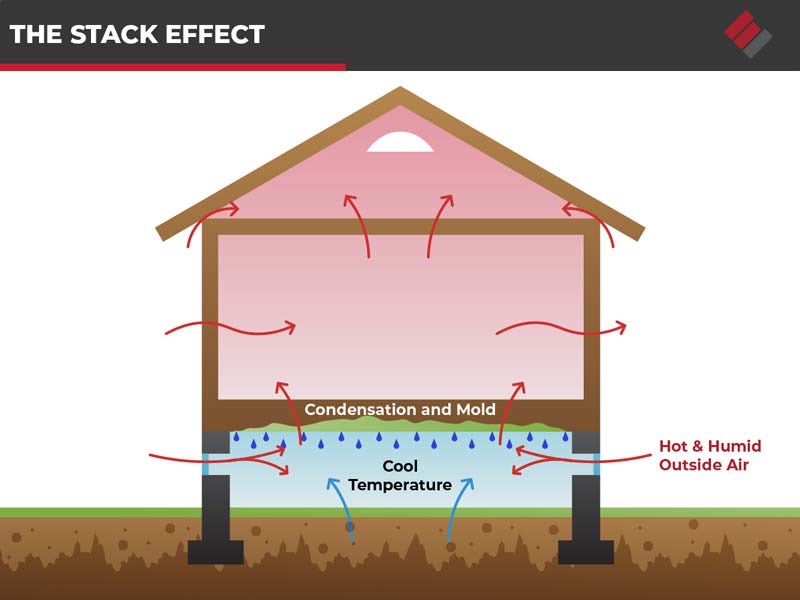
Three applications, all common across Epp's territory. As the first layer of a full crawl-space encapsulation. This is most of Epp's crawl-space vapor barrier work. The homeowner has chronic summer crawl space humidity, condensation forming on ductwork, musty odor reaching the main living space through the stack effect, and visible mold on the floor joists. Epp installs the barrier (floor + wall extension), seals the crawl space vents, and installs a commercial-grade crawl space dehumidifier sized to the cubic footage. The combined system lowers crawl humidity and dries the wood in the joists over time. As pre-finish preparation for converting a crawl to storage or mechanical space. This fits a homeowner planning to use the crawl for seasonal storage or to relocate an HVAC unit into the crawl. Epp installs the floor and wall barrier and pairs it with vent sealing and dehumidification. As remediation in a crawl space with documented chronic moisture but no immediate mold problem. Here the vapor barrier goes into a crawl space with consistently high humidity that has not yet caused visible damage. It is preventive scope, typically paired with a dehumidifier from the same install date so the system is complete from day one.
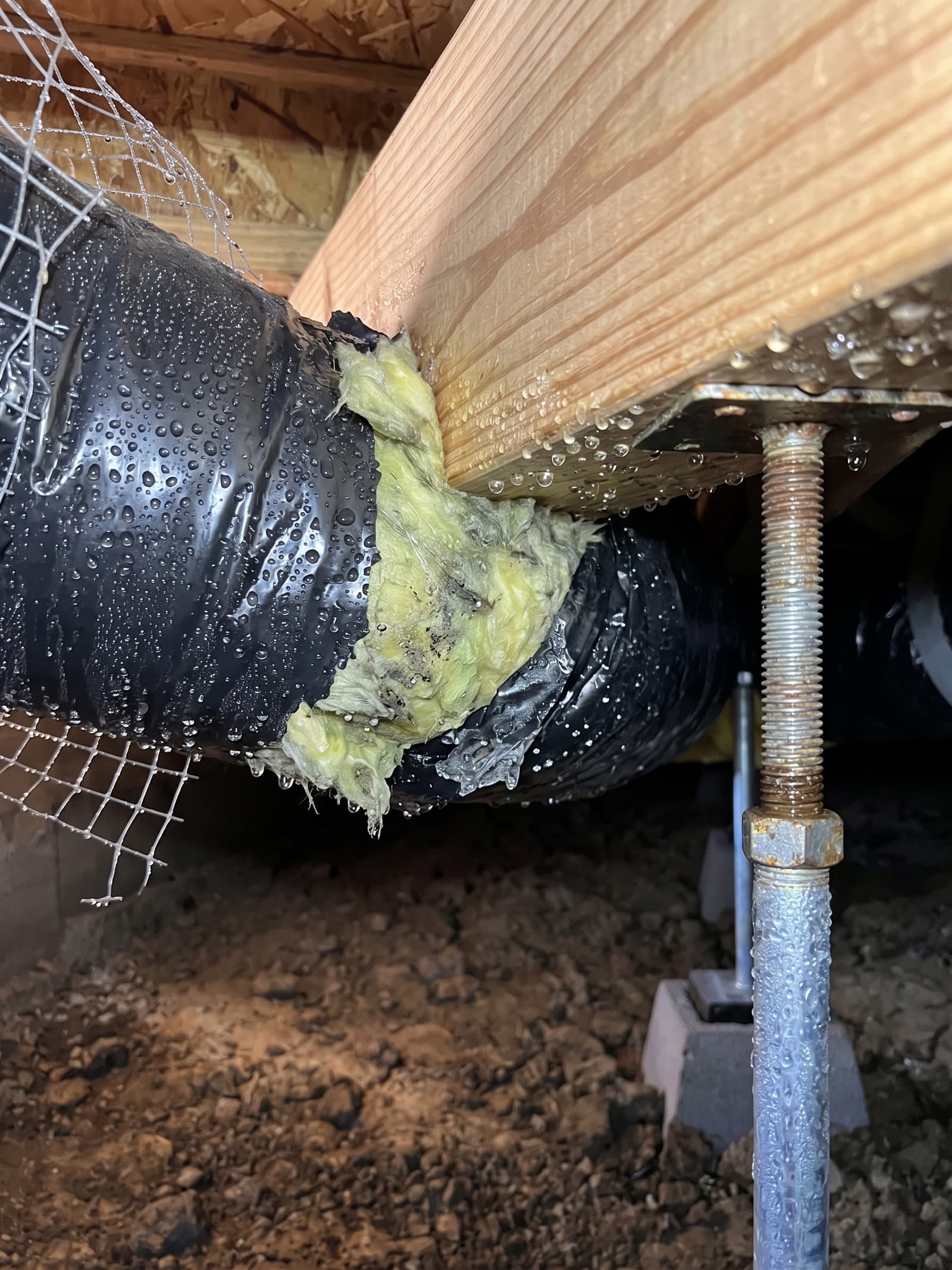
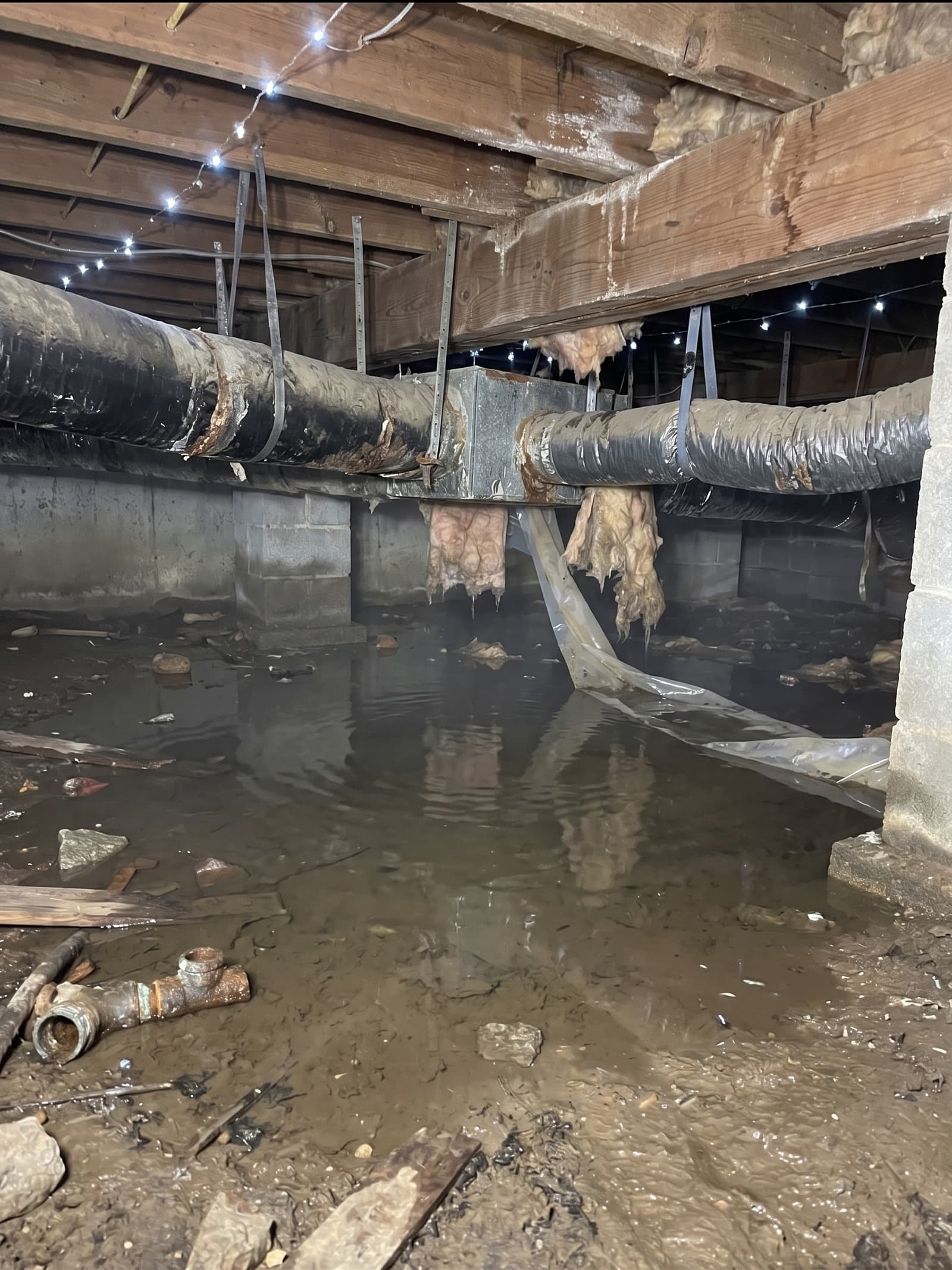
Installing a vapor barrier in isolation, without a dehumidifier and without sealed vents, on a crawl space that's already showing chronic high humidity is the most common wrong-scope scenario in crawl-space work, and one Epp turns down regularly. The barrier stops the ground evaporation contribution, but the air in the crawl is already humid from the vented outdoor air pulling in through unsealed crawl vents. The moisture in that air still condenses, now on the underside of the subfloor and on the cold ductwork, where it shows up as water beading on the supply ducts, instead of on the dirt floor. Epp Foundation Repair will not install a vapor barrier alone in a chronically humid crawl space unless the dehumidifier and vent-sealing scope is also approved or already in place. ## How Epp Installs It
The length of a crawl-space vapor barrier installation depends on access and existing conditions. Crawl-space prep. Existing debris, old fiberglass batt insulation that has fallen, and any standing water in the crawl space are removed before any barrier goes down. If the crawl has visible mold on joists, Epp refers to a remediation contractor and pauses the barrier scope until that work is complete. Epp does not remediate mold in-house. Existing pier and post conditions are inspected; any structural issue is documented before barrier installation covers it. Rough grading and base prep. Sharp rocks and debris on the dirt floor are removed or covered. Epp does not install over rebar stubs, exposed nails, or torn metal. Anything that punctures the barrier from below shortens its service life. Low spots that pond are filled with clean fill or addressed with drainage inside the encapsulation envelope if water is a recurring issue. Floor coverage. Reinforced polyethylene is rolled out across the entire crawl floor, with sheets overlapping at every seam. Cut-and-seal boots are installed at every pier, post, plumbing line, and electrical penetration through the floor. No section of dirt remains exposed. Wall extension and mechanical fastening. Barrier runs up the foundation walls to the sill plate. Top edge is mechanically fastened with a PVC termination strip and masonry anchors set into the foundation wall. Adhesive-only termination is not used. Adhesive against block or poured concrete in a humid crawl can fail. Seam sealing. Every overlap seam is sealed with butyl seam tape or two-sided butyl tape rolled into the overlap. Inside corners get a continuous wrap. Penetration boots are sealed at both the boot-to-pipe junction and the boot-to-barrier junction with butyl. Penetrations are documented on the Customized Repair Estimate. They are the single most common failure point on any vapor barrier installation, residential or commercial.
Eastern Nebraska and western Iowa crawl spaces sit on loess soil over glacial till. The loess holds moisture by capillary action through the entire dry season and releases it as evaporation when the crawl is even slightly warmer than the soil. Indoor relative humidity in this region runs low in winter (heated air dries) and spikes in summer (humid outdoor air pulled through the stack effect into vented crawls). In July and August across the Epp service area, the air is humid enough that cool crawl-space surfaces can condense moisture, and an uninsulated supply duct in a vented crawl routinely runs colder than the surrounding air. Without a vapor barrier, the moisture supply is constant; without a dehumidifier on top of it, the moisture redistribution is the problem. Kansas and Missouri crawls add expansive clay to the picture. The clay expands and contracts with seasonal moisture, opening pier-bearing gaps under the barrier and occasionally tearing the seal at pier penetrations over time. Across the entire territory, freeze-thaw cycles can heave shallow footings each winter. Wall-extension fasteners are designed and torqued to absorb that movement without tearing the barrier.
Epp installs the vapor barrier, the wall extension, and the seam and penetration sealing. Four adjacent scopes Epp does not perform. HVAC modifications inside the crawl. Uninsulating ductwork, relocating supply registers, or zoning the crawl into the conditioned space are mechanical contractor scope. Dedicated electrical circuits for a crawl-space dehumidifier. The dehumidifier install is a separate Epp scope, but the dedicated circuit to power it requires a licensed electrician. Mold remediation on joists or subfloor. Visible mold is a remediation contractor referral; Epp will not encapsulate over active mold growth. Removing old fallen fiberglass batt insulation between joists. Sometimes within scope, more often homeowner or general contractor scope; clarified in the Customized Repair Estimate.
Crawl-space vapor barrier installation includes reinforced poly, full-floor coverage, wall extension, seam sealing, and standard pier and plumbing penetration boots. Customized Repair Estimate after on-site inspection reflects your scope. Epp Foundation Repair holds BBB A+ accreditation and is a BBB Integrity Award winner. Every crawl-space vapor barrier proposal documents the relative humidity reading at the time of inspection, the wood moisture content in the joists, and which of the crawl space encapsulation solutions the barrier needs alongside it to work.
Which Solution Is Right?
| Method | Fits when | Not a fit when |
|---|---|---|
| Standard reinforced polyethylene | Floor-only coverage paired with sealed vents and a dehumidifier, where the barrier will not see regular foot traffic. | The crawl is being converted to conditioned storage or mechanical space that needs full wall coverage to the sill plate. |
| Heavier reinforced polyethylene | Full encapsulation with floor and wall coverage to the sill plate, or any crawl expecting occasional foot traffic during HVAC service. | A basic floor-only install is all the scope calls for, where the heavier material adds cost without a corresponding need. |
Each method is matched to a specific failure mode and soil profile. Browse the toolkit we draw from when diagnosing your home.
Epp Foundation Repair has installed encapsulation systems across Nebraska, Iowa, Kansas, and Missouri since 1994. Epp is BBB A+ accredited and a BBB Integrity Award winner.
Epp Foundation Repair installs the crawl space liner as the sealed floor of a full encapsulation across Nebraska, Iowa, Kansas, and Missouri, with sealed seams, wall runs, and closed piers, never a loose sheet of plastic.
Once a crawl space is sealed with a liner and closed vents, the dehumidifier is what holds the humidity down. Here is how Epp Foundation Repair sizes and sets it up across Nebraska, Iowa, Kansas, and Missouri.
Based on NOAA 1991 to 2020 climate normals for Lincoln Municipal Airport and Omaha Eppley Airfield, the average July dew point is 65 degrees in Lincoln and 66 degrees in Omaha. Water can form on any surface that is cooler than the dew point of the air around it, so summer air that comes in through open crawl space vents can leave water on pipes, ducts and joists. Ground that stays wet after rain and snowmelt can also keep a bare soil crawl space floor damp.
Based on NOAA 1991 to 2020 climate normals for Lincoln Municipal Airport and Omaha Eppley Airfield.
Based on USDA soil survey data for Lancaster County (Lincoln) and Douglas County (Omaha), clay is the main soil type in both counties. The survey rates Lancaster County high and Douglas County moderate for shrink swell. Clay can swell when it gets wet and shrink as it dries, so a slab or foundation on clay can move up and down with the seasons. The soils that cover the most ground in Lancaster County are Wymore and Aksarben, and in Douglas County they are Contrary and Marshall.
Loess, the wind deposited silt common in eastern Nebraska and western Iowa, can lose strength and settle when it gets wet. Water can reach it from runoff, a plumbing leak or a downspout that empties next to the house.
In Lincoln and Omaha, soil near the surface can freeze and thaw many times between fall and spring. Each city's building code sets a frost line depth, which is the minimum depth below finished grade for a footing. It is 36 inches in Lincoln and 42 inches in Omaha. Supports that sit above that depth, such as some porches, stoops and chimney footings, can move as the ground freezes and thaws.
Horizontal cracks in a basement wall are more often linked to pressure from the soil outside the wall than to settlement. Wet soil pushes harder against a wall than dry soil, and soil that freezes against the wall can add to that pressure.
Climate: NOAA U.S. Climate Normals 1991 to 2020, LINCOLN MUNI AP (USW00014939) and OMAHA EPPLEY AIRFIELD (USW00014942); July dew point averaged from the hourly normals at LINCOLN MUNI AP (USW00014939) and OMAHA EPPLEY AIRFIELD (USW00014942), retrieved September 30, 2026. Soil: USDA NRCS Soil Data Access (SSURGO), county survey for Lancaster County and Douglas County. Frost line depth: Lincoln Municipal Code 20.12.140 and Omaha Municipal Code Sec. 43-127.
These are the crawl space encapsulation problem signs Epp Foundation Repair diagnoses most often. Each one links to what causes it and how it is repaired.
Our specialists evaluate the underlying cause before recommending any work. Inspections are at no cost and there's no obligation to proceed.
"A vapor barrier alone on a high-humidity crawl just moves the condensation from the dirt to the joists. I'd rather lose the sale than install a system that fails before long and the homeowner blames us. The barrier is the floor of the encapsulation system. Without the dehumidifier on top of it, you've built a foundation with no house."

Epp Foundation Repair is locally owned and operated, with crews dedicated exclusively to foundation, basement, and concrete work across the Midwest.
Foundation repair, waterproofing, and concrete leveling are our entire focus, not a sideline.
Three decades of experience with Midwest soils, basements, and weather conditions.
Recognized by the Better Business Bureau for integrity and ethical business practices.
Many of our repairs carry a written Epp warranty. The warranty page lists every covered repair and its terms.
A small sample of work completed across our service area.
Explore detailed case studies of recent foundation, waterproofing, and concrete projects across Nebraska, Iowa, Kansas, and Missouri.
View All ProjectsDon't see your question here? Our team is happy to help. Reach out anytime.
Every home is different. What a repair costs depends on the cause, the scope, and access. A free on-site inspection produces a Customized Repair Estimate that reflects your home, not a typical range.
Customized Repair Estimate after on-site inspection reflects your scope.
Do not install a crawl-space vapor barrier in isolation on a crawl that is already chronically humid. The barrier stops ground evaporation but the existing humid air still condenses, now on the underside of the subfloor and the ductwork instead of on the dirt. Epp will not install the barrier alone in that scenario; the dehumidifier and vent-sealing scope must be approved or already in place. Don't install over active mold on the joists or subfloor. That's remediation contractor scope first, then Epp encapsulates. Don't use thin big-box poly as an encapsulation material. It tears at pier penetrations and is not a vapor barrier system.
Epp Foundation Repair holds BBB A+ accreditation and is a BBB Integrity Award winner.
Related to what you are reading. Our team covers the same ground on camera.
Every crawl space encapsulation method we install. Sequenced so the soil profile and failure mode determine the fix.
 01
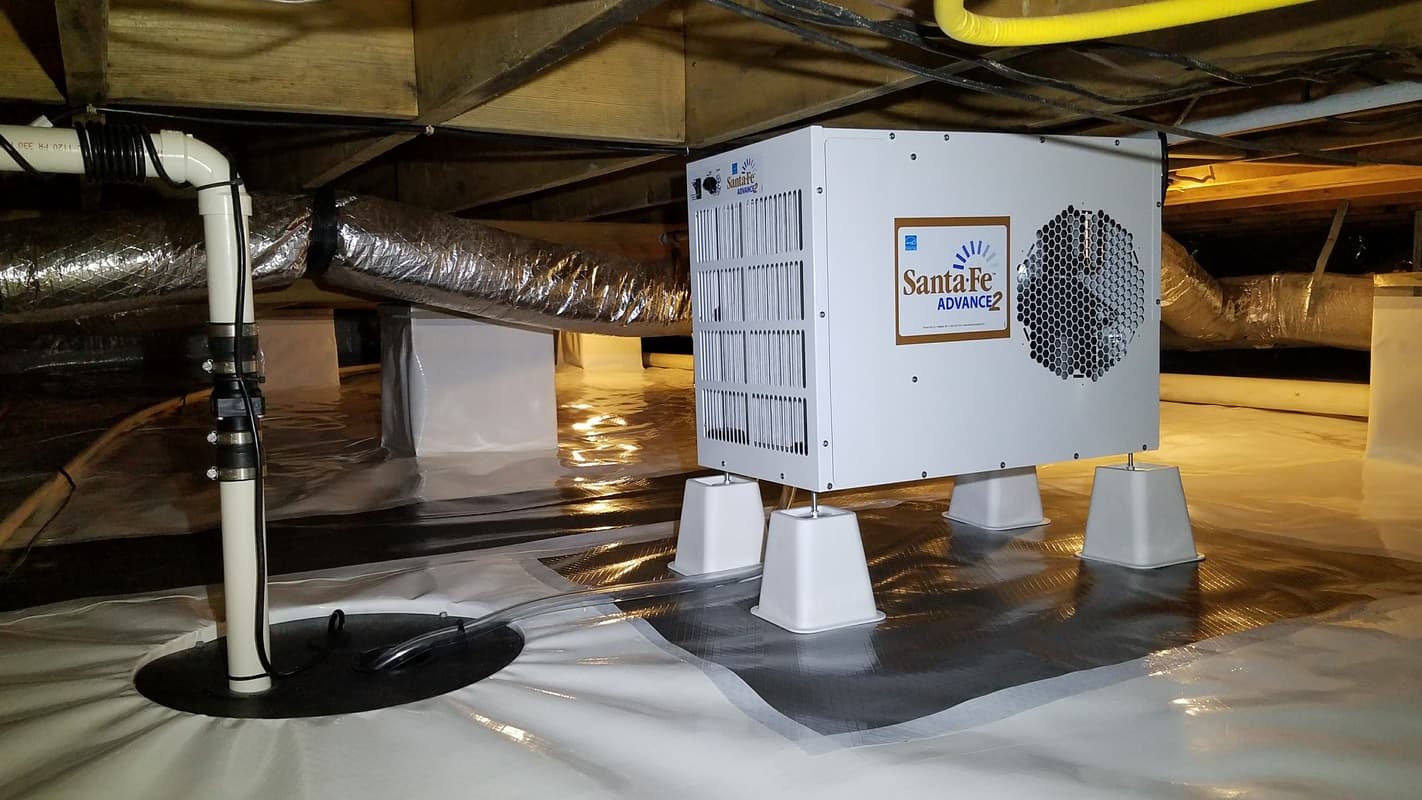
01 Crawl space dehumidifier installation from Epp Foundation Repair fits a commercial-grade unit to the size of your crawl, not a one-size household model. Epp installs commercial grade crawl space dehumidifiers sized to crawl cubic footage, hard-plumbed for continuous condensate drainage so the unit never needs manual emptying, and set to the homeowner's target relative humidity. Serving Nebraska, Iowa, Kansas, and Missouri.
Learn more 02
02 Closed-cell spray foam (R-6.5 per inch) on crawl-space walls and band joist, or rigid XPS foam board on foundation walls. Rigid foam board goes in with Epp's own crew and closed-cell spray foam is coordinated through a certified subcontractor, as the post-encapsulation step that converts a vented crawl into a conditioned, energy-efficient buffer space. Serving NE, IA, KS, and MO. Fiberglass batts between joists do not work in this climate.
Learn more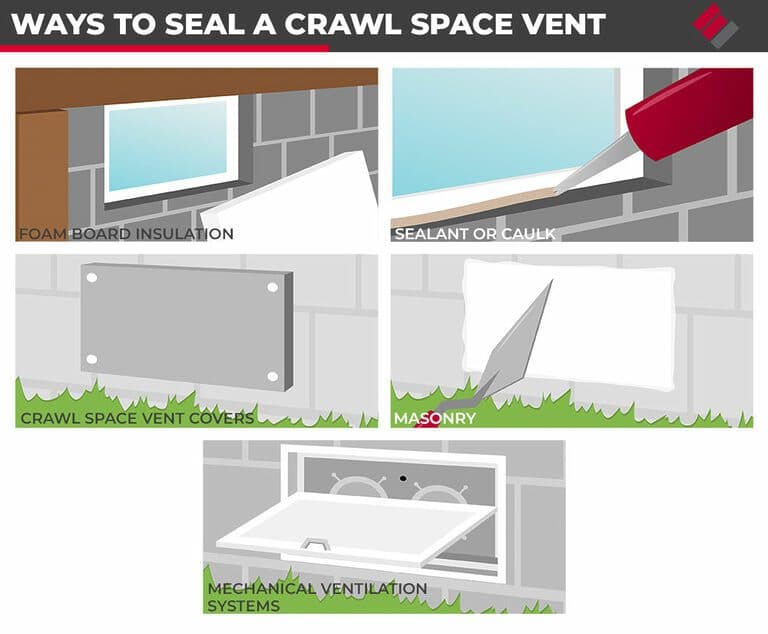 03
03 Crawl space vent sealing from Epp Foundation Repair that keeps the foundation vents closed all year. Rigid foam plugs cut to the vent opening, perimeter sealed with polyurethane caulk, vapor barrier overlapped and taped at the interior face. Serving NE, IA, KS, and MO. Open vents in a Midwest crawl import humidity, they don't remove it.
Learn more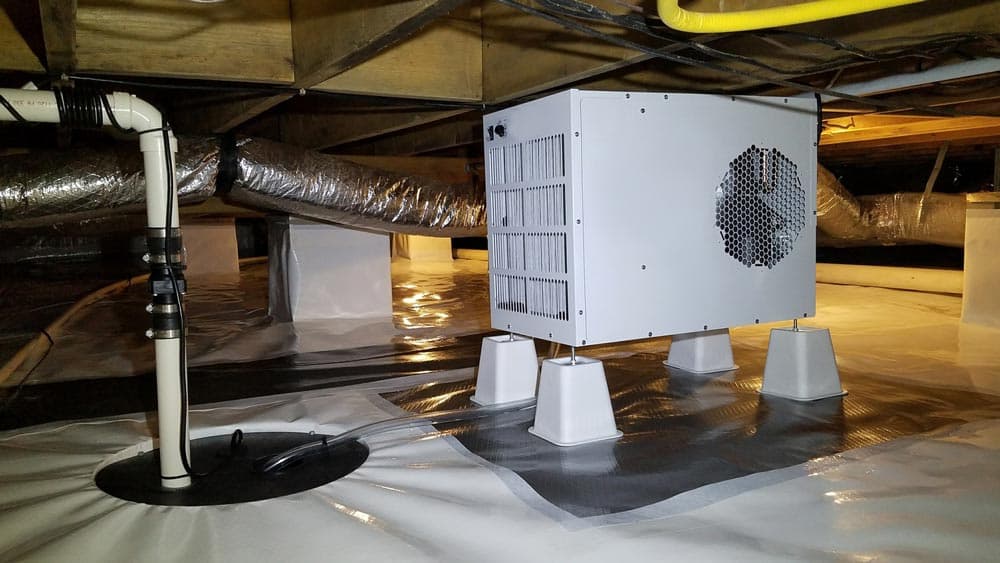 04
04 Crawl space drainage installation from Epp Foundation Repair channels groundwater to a sealed sump pit and cast-iron pump before the vapor barrier and dehumidifier go in. Low-profile perimeter waffle matting collects seepage at the foundation wall, the sump discharges it outside the foundation, and the barrier and dehumidifier take over the humidity that drainage alone leaves behind. Serving Nebraska, Iowa, Kansas, and Missouri.
Learn moreLocal crews based in five regional offices, dispatched daily across four states. If your town isn't listed, call us: we likely serve your area.
A straightforward path from initial inspection to completed repairs.
Epp's inspector measures crawl-space relative humidity at multiple points, wood moisture content on representative joists, dew point at the supply ductwork, and ground moisture (sheet plastic test if needed). A barrier alone is the right scope only when ground evaporation is the dominant moisture source and outdoor-air infiltration is controllable through vent sealing.
Existing debris and any fallen fiberglass batt insulation are removed (scope clarified in the Customized Repair Estimate). Standing water is addressed through drainage on a separate scope before barrier installation. Active mold on joists or subfloor triggers a remediation referral and pauses the barrier work until that scope is complete. Epp does not remediate mold or encapsulate over active growth.
Reinforced polyethylene rolled across the entire crawl floor with overlapping seams. Cut-and-seal boots installed at every pier, post, plumbing line, and electrical penetration. No section of dirt remains exposed. Sharp rocks, rebar stubs, and exposed nails removed or covered to prevent puncture from below.
A 4.9-star average across Google, with verified reviews from homeowners throughout Nebraska, Iowa, Kansas, and Missouri.
Schedule your inspection in seconds with our Driive booking tool, or share a few details and a local specialist will follow up within one business day.
Practical articles from the Epp team on foundation health, waterproofing, and home preservation.
 Crawl Space EncapsulationLatest
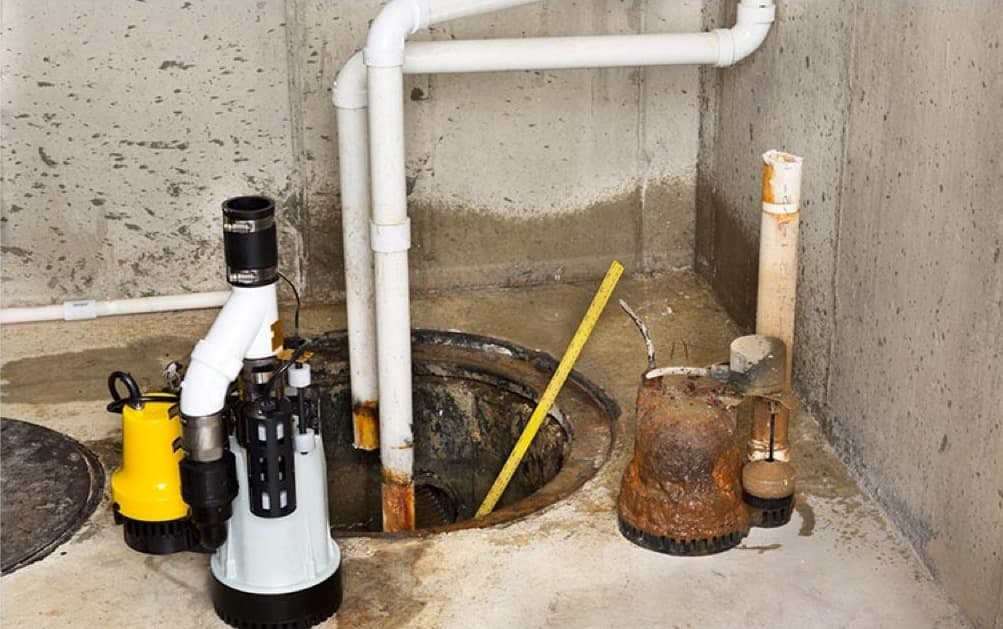
Ejector pumps and sump pumps both move water, but they serve different purposes. Learn how each one works and which one your home needs.
 Crawl Space Encapsulation
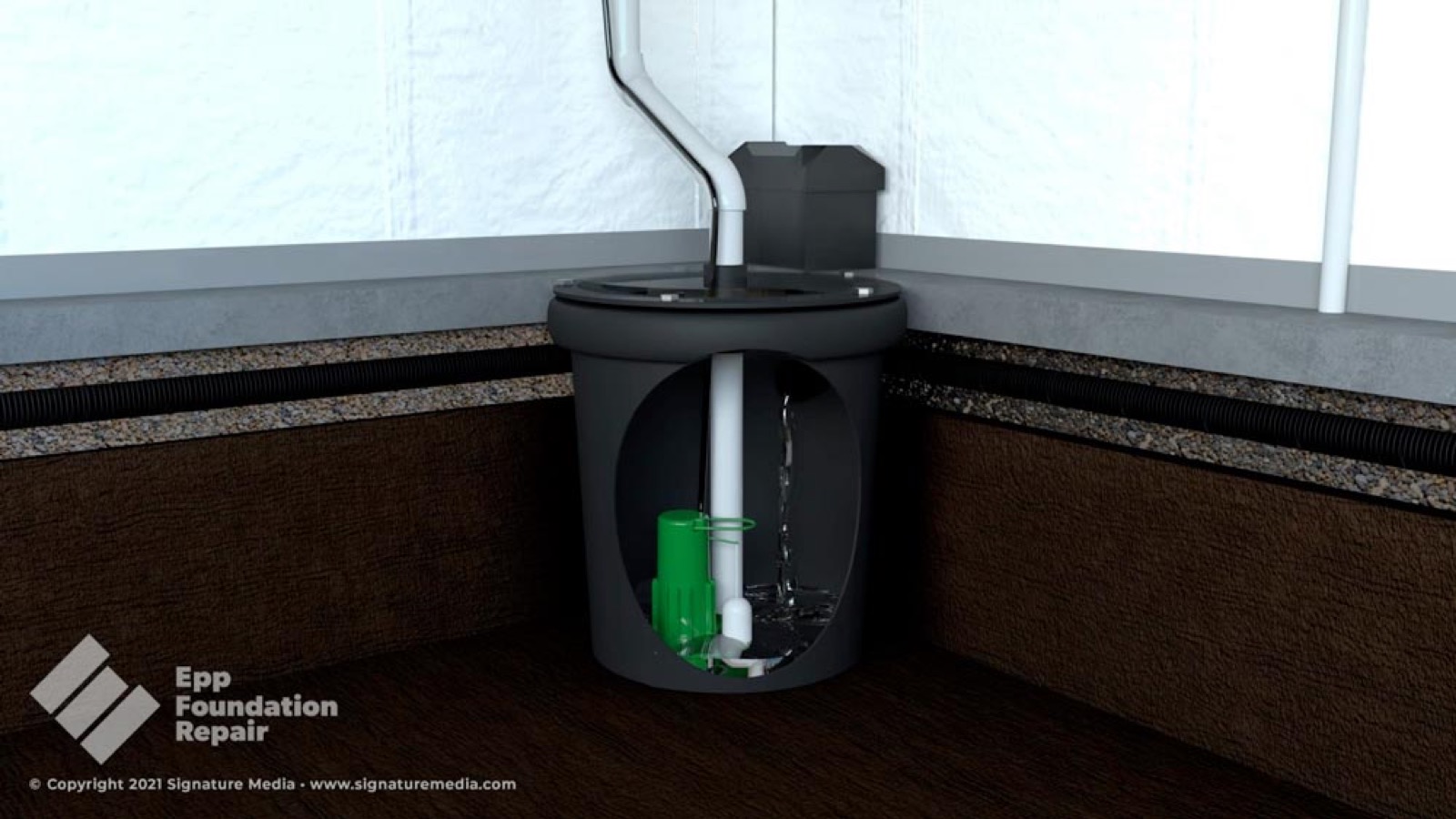
A sump pump removes accumulated water from a sump pit to protect your foundation. Learn how sump pumps work and the types available.
 Crawl Space Encapsulation
Learn why crawl space moisture is harmful, what causes it, and when a dehumidifier actually helps once your crawl space is encapsulated.
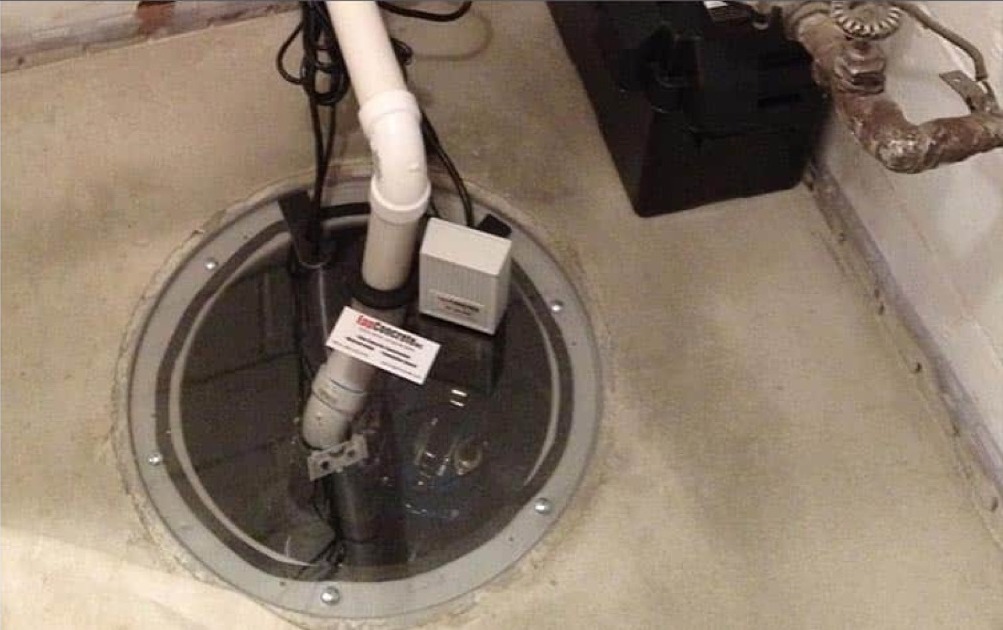 Crawl Space Encapsulation
Sump pumps collect and expel excess groundwater around your foundation. Learn how they work, when you might need one, and effective alternatives.
