
Estimate Only
Approximate pricing
Includes commercial unit sized to the crawl, gravity condensate plumbing, controller setup, and commissioning. Customized Repair Estimate after on-site inspection reflects your scope.
Serving Nebraska, Iowa, Kansas, and Missouri, Epp Foundation Repair installs commercial grade dehumidifiers sized to a crawl's cubic footage, hard-plumbed for continuous condensate drainage, and set to the homeowner's target relative humidity.

A local specialist will inspect your foundation, walk you through the findings, and send a clear estimate, no cost, no pressure.
Diagnosis First
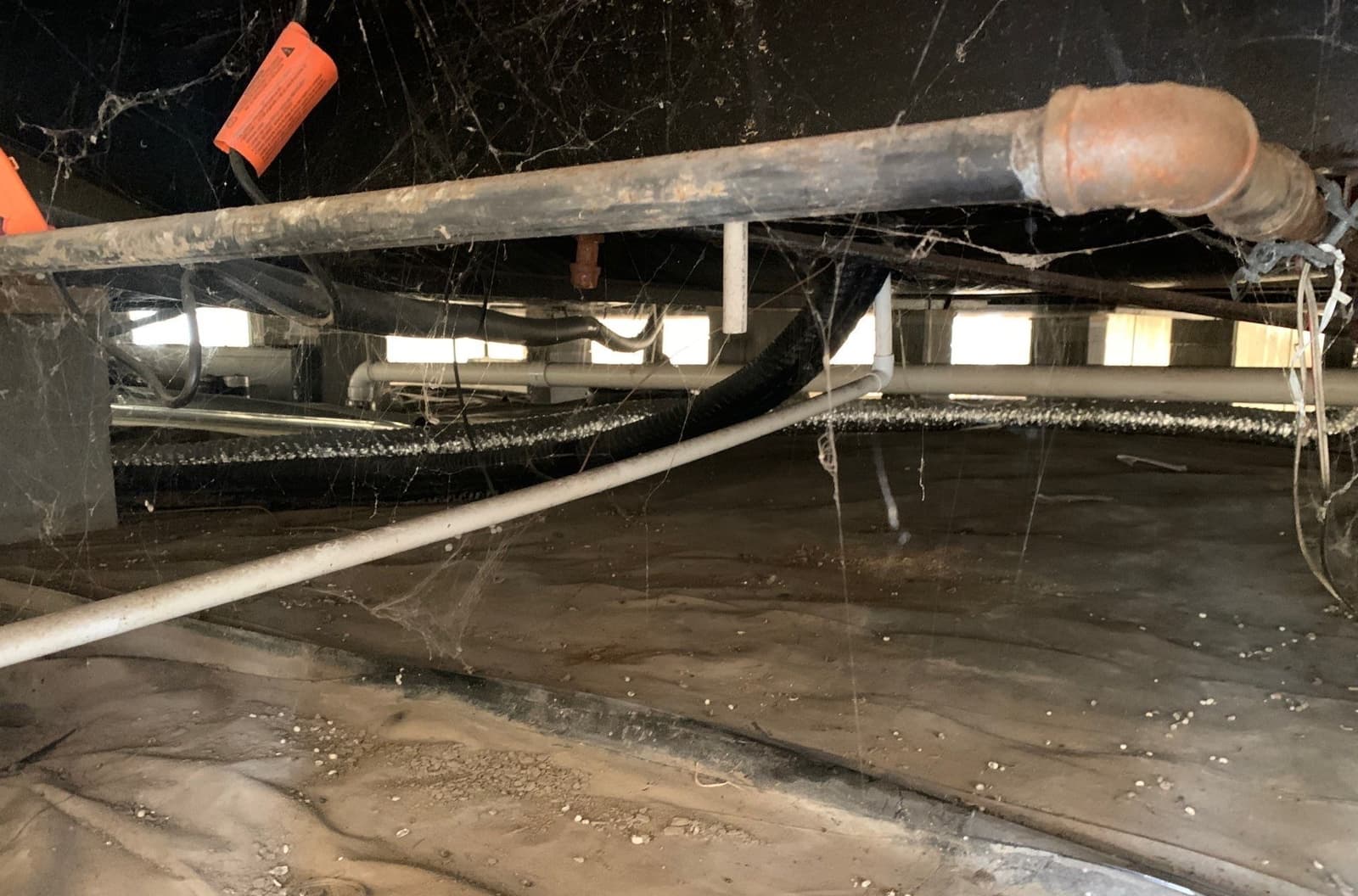
Crawl space dehumidifier installation places a commercial grade unit inside the crawl to pull airborne moisture out and hold humidity at a controlled target. Consumer grade units lose much of their rated capacity at crawl temperatures and fail within a few years. A dehumidifier is right once ground moisture and outdoor air infiltration are already controlled, not as a standalone fix for a wide open crawl.
In Depth
Everything a Midwest homeowner should know about this repair, from the specialists who do it every day.
A crawl-space dehumidifier is not a basement dehumidifier scaled up. The two units operate in different temperature ranges, against different humidity loads, and with different drainage and service constraints. A consumer-grade dehumidifier from a big-box store is designed to run in a warmer finished basement. It loses much of its rated capacity at the cooler temperatures common to a Nebraska or Iowa crawl space, and its evaporator coil can ice up until it stops dehumidifying. Epp Foundation Repair installs commercial-grade crawl-space dehumidifiers across NE, IA, KS, and MO inside a sealed crawl space encapsulation, and the unit selection is the most consequential single decision on the job. The physics are not negotiable. To lower the crawl's humidity, the dehumidifier has to remove moisture from the air, and it has to do that continuously against the moisture supply still entering the crawl (capillary rise, residual vent leakage, any unsealed wall penetration). A consumer unit loses much of its capacity at crawl-space temperatures, which is not enough to maintain target humidity even in a tightly encapsulated crawl. Epp sizes the unit for the load, not the price point.
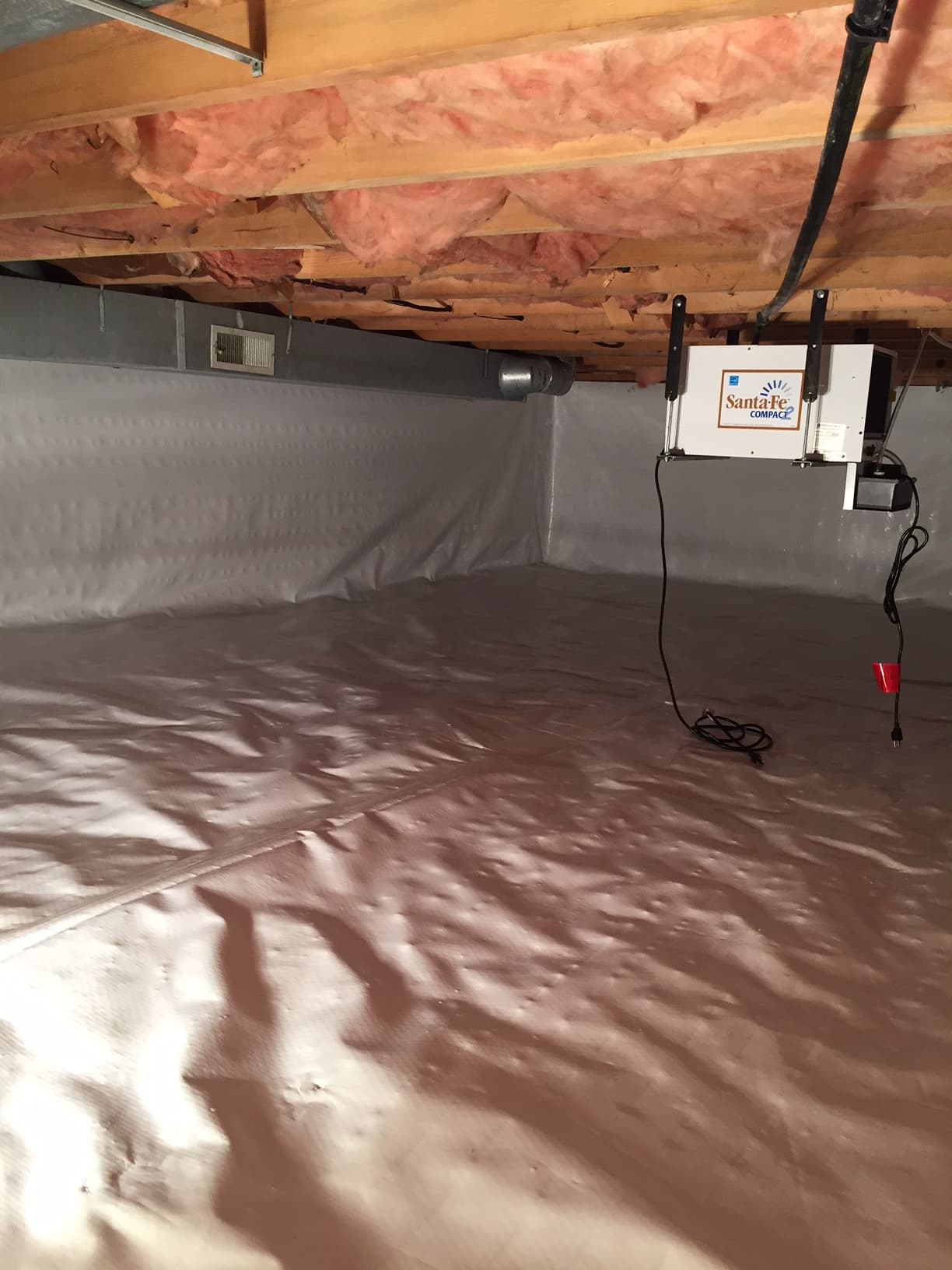
A crawl-space dehumidifier is a stand-alone commercial unit installed inside the crawl space (or, in some larger crawls, ducted in from a service closet). The unit pulls crawl-space air across a refrigerated evaporator coil, condenses the moisture out of the air, drains the condensate by gravity to a sump, floor drain, or condensate pump, and returns dry air to the crawl. Continuous operation through summer lowers crawl humidity from typical Nebraska or Iowa summer levels toward a controlled target. Continuous operation through winter holds the crawl above the dew point so condensation on the ductwork doesn't form. Epp sizes each commercial grade unit to the crawl. A standard capacity unit fits most residential crawls, a low profile unit fits where ceiling height is limited, and a higher capacity unit fits larger crawls or crawls with documented heavy moisture infiltration. Hard-plumbed gravity drainage is standard, with a condensate pump available where the crawl has no gravity outlet. Unit selection follows from a cubic-footage calculation, a moisture-load estimate (vapor barrier installed yes/no, vents sealed yes/no, ductwork leakage, climate zone), and the homeowner's RH target.
Three primary applications. As the active humidity-control component of a full encapsulation system. This is most of Epp's dehumidifier installations. The vapor barrier on floor and walls and the sealed vents stop the moisture sources; the dehumidifier removes the moisture already in the crawl air and the residual moisture that still enters. The combined system lowers crawl humidity and dries the wood in the joists over time. As a standalone control in a crawl without standing water on the dirt floor but documented chronic high indoor humidity. Less common. Typically the right scope still bundles vapor barrier and vent sealing because the dehumidifier alone fights a continuous moisture supply and runs constantly. But where a homeowner has already installed a barrier and sealed vents and just needs the humidity-control component, Epp installs the dehumidifier alone on existing prep. Required scope on any crawl space converted to storage or mechanical equipment housing. A crawl space used to store seasonal items, house an HVAC unit, or contain a water heater requires conditioned-space humidity control, and the dehumidifier is what holds that control consistently across a Midwest year.
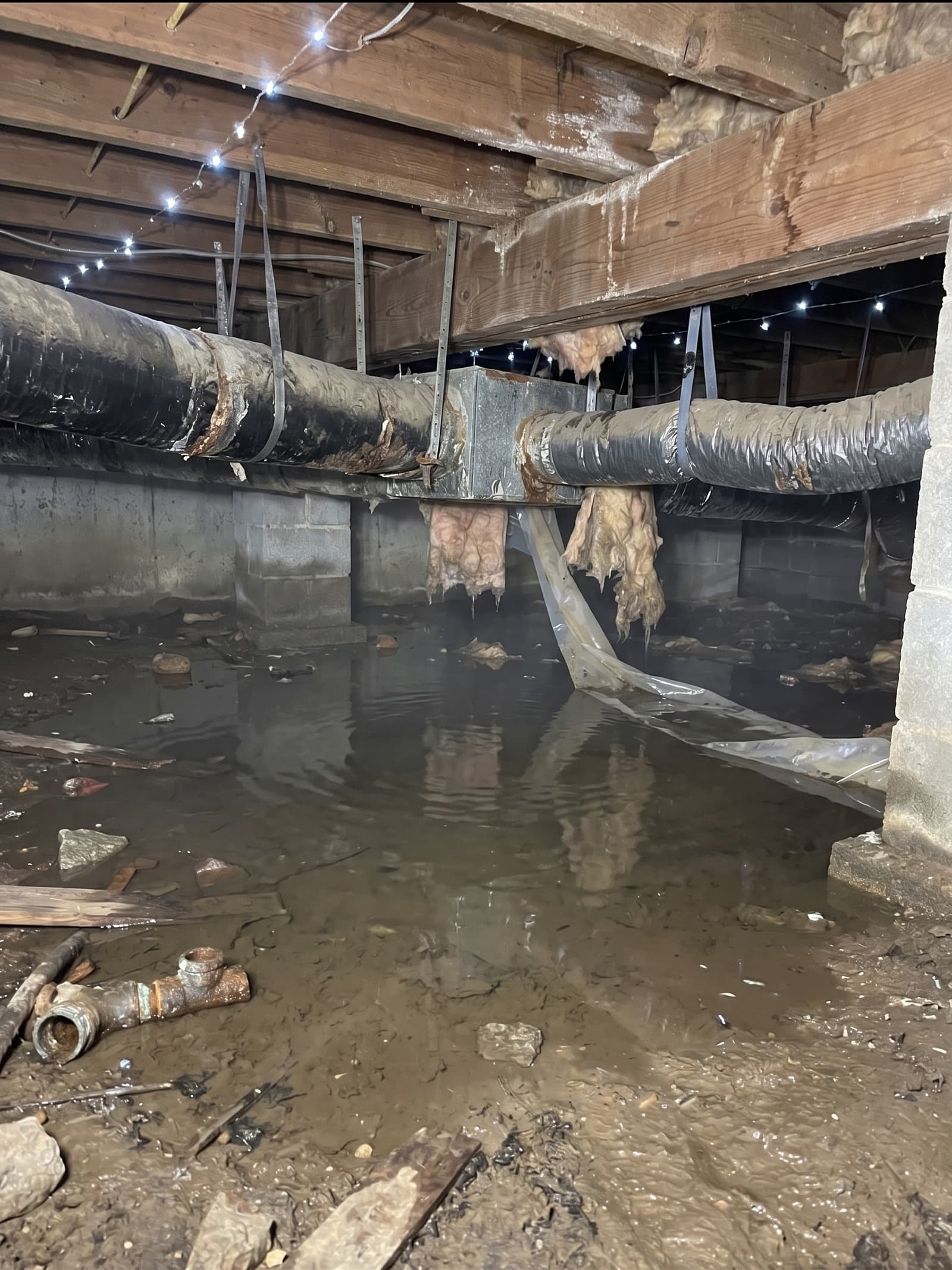
Two clear non-applications and one warning. Do not install a dehumidifier in a crawl with active standing water. The water source has to be addressed first with perimeter drainage and a sealed sump before the dehumidifier is a meaningful scope. A dehumidifier handles airborne moisture, not bulk water; trying to pump out a wet crawl with a dehumidifier loads the unit beyond capacity, runs the compressor constantly, and shortens unit life. Do not install a dehumidifier on a crawl with active mold growth on the joists or subfloor without remediation first. The unit will pull mold spores through its filter and recirculate them. Epp refers to a remediation contractor before the dehumidifier scope proceeds. And a consumer-grade dehumidifier from a hardware store is not a crawl-space scope. The unit loses capacity at crawl temperatures, ices its evaporator coil, drains into a bucket that can overflow, and fails within a few years. Epp will not install consumer-grade dehumidifiers and recommends against them even as a temporary measure. ## How Epp Installs It
A crawl-space dehumidifier installation is scheduled after any encapsulation or drainage prep is complete. Sizing calculation and unit selection. Crawl cubic footage measured. Existing encapsulation status (vapor barrier installed yes/no, vents sealed yes/no) documented. Target relative humidity confirmed with homeowner. Unit selected for the crawl's size, headroom, and moisture load. Selection logic documented on the proposal so the homeowner sees why each spec was chosen. Placement. Unit positioned for centralized air circulation, typically near the center of the crawl, on a level pad or hanging from joists per manufacturer specification. Clearance maintained on all sides for service access and airflow. Discharge directed away from cold ductwork or exterior walls where dry air would short-cycle back to the intake. Condensate drainage. Gravity drainage preferred, with PVC or flexible tubing routed to a sump pit, floor drain, or wall-penetrating sleeve to an outdoor discharge point. Where gravity drainage is not available, a condensate pump is installed with a high-water safety float. Drainage line slope verified. Power and electrical coordination. The dehumidifier requires a dedicated circuit per manufacturer specification. Epp does not install electrical. The dedicated circuit is licensed electrician scope, scheduled by the homeowner before the dehumidifier install date. Epp coordinates the timing and confirms circuit availability before the unit is energized. Controller setup and commissioning. Humidistat set to homeowner-confirmed target. Unit cycled through a full cooling and drainage cycle on site. Filter installed and dated. Service interval documented on a sticker on the unit. The Customized Repair Estimate includes the initial RH reading, the unit's expected runtime through the first summer, and the homeowner's filter-change schedule.
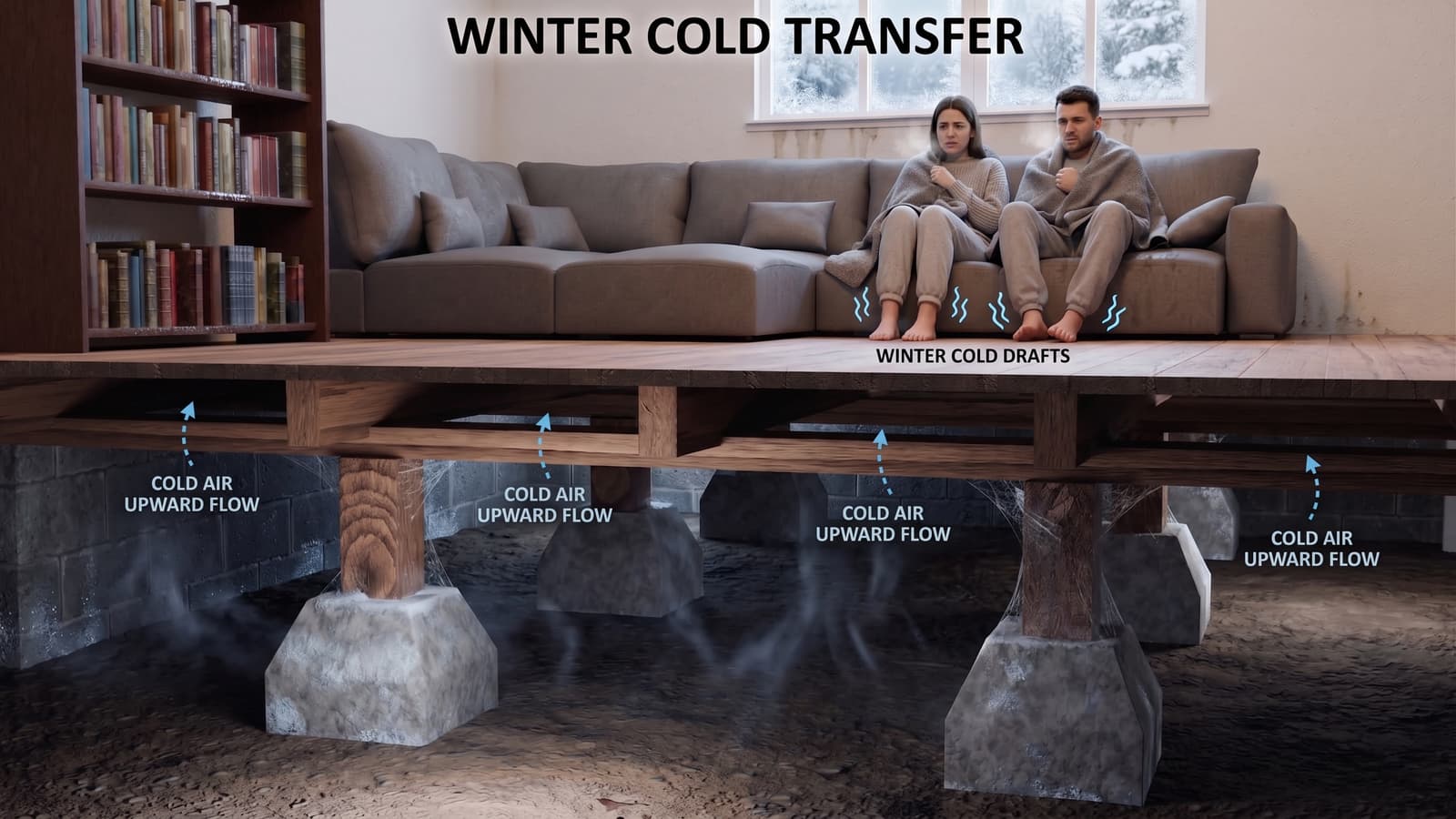
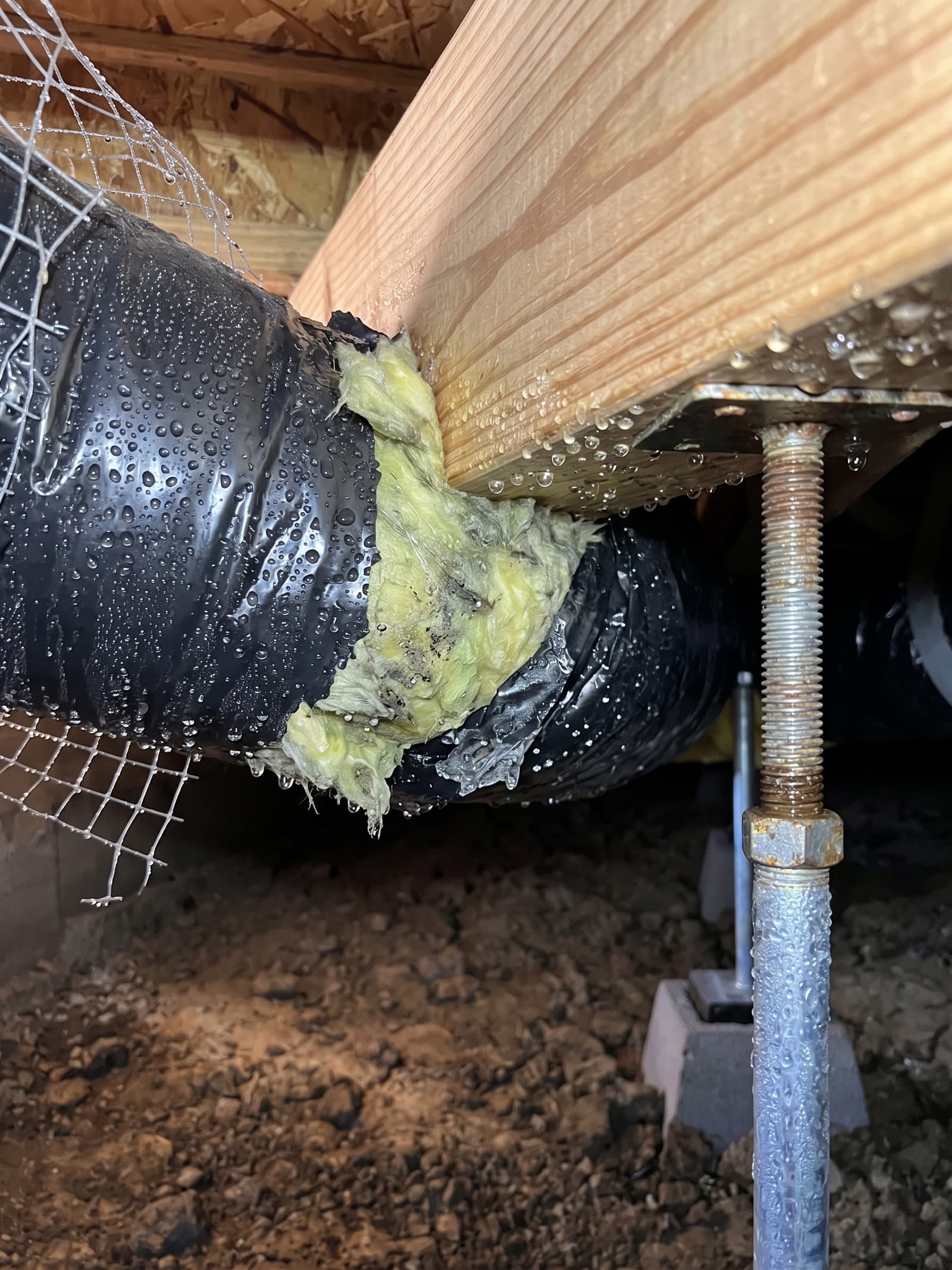
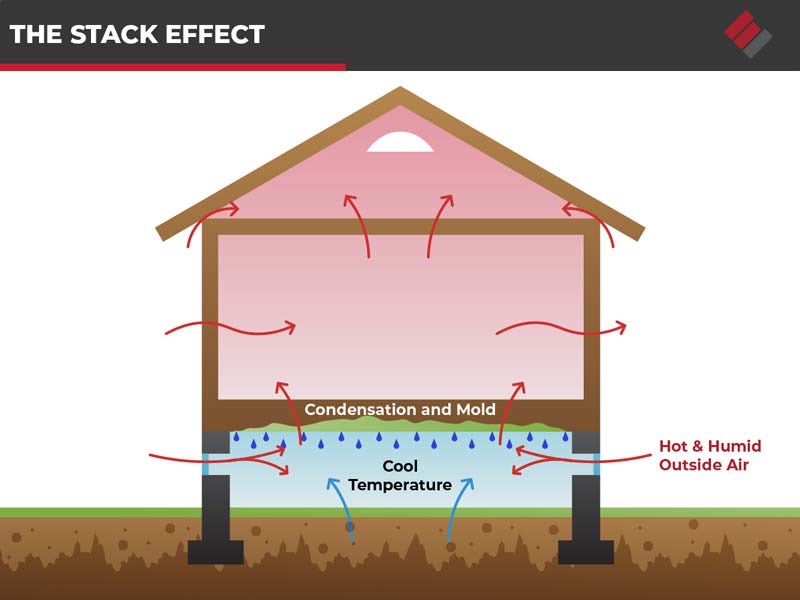
Summers across Nebraska, Iowa, Kansas, and Missouri regularly bring high dew points, meaning any crawl-space surface below that dew point condenses, and an uninsulated supply duct routinely sits well below ambient crawl temperature. The dehumidifier has to handle that latent load continuously, not occasionally. Indoor relative humidity in this region runs low in winter (heated air dries out) and spikes in summer (humid outdoor air pulled into vented crawls through the stack effect). A consumer-grade unit loses much of its capacity at the cooler crawl temperatures common in spring and fall. The moisture supply is high but the unit's removal capacity is depressed, the crawl never gets dry, and every crawl space encapsulation problem sign the homeowner called about is still there the next summer. Across the territory, freeze-thaw cycles and the seasonal heaving of expansive clay can shift crawl drainage outlets each year. Condensate plumbing is designed with flexible couplings at the unit and at the discharge point to absorb that movement without cracking.
Epp installs the dehumidifier, the condensate plumbing, and the unit commissioning. Three adjacent scopes Epp does not perform. Dedicated electrical circuit installation. The circuit required to power the dehumidifier is licensed electrician scope, scheduled separately by the homeowner; Epp coordinates the timing. HVAC integration. Connecting the dehumidifier to the home's central air system (rare in crawl-space installs but occasionally requested) is mechanical contractor scope. Annual service and filter changes. The homeowner is responsible for annual filter changes; Epp will perform service calls on the unit but routine filter maintenance is documented as homeowner scope. Mold remediation on joists or subfloor. Visible mold is a remediation contractor referral; Epp will not install a dehumidifier over active growth that the unit will recirculate.
Crawl-space dehumidifier installation includes the commercial grade unit sized to the crawl, gravity condensate drainage with PVC routing, controller setup, and commissioning. Customized Repair Estimate after on-site inspection reflects your scope. Epp Foundation Repair holds BBB A+ accreditation and is a BBB Integrity Award winner. Every crawl space dehumidifier install proposal documents the sizing calculation in writing: cubic footage, existing encapsulation status, target RH, and unit selection logic.
Which Solution Is Right?
| Method | Fits when | Not a fit when |
|---|---|---|
| Standard capacity commercial unit | Standard residential crawls with typical headroom and gravity drainage available. | Headroom is limited, where the taller cabinet will not fit. |
| Low profile commercial unit | Standard residential crawls where headroom is limited. | Standard headroom is already available, where the shorter profile offers no advantage over the standard unit. |
| Higher capacity commercial unit | Larger crawls, or any crawl with documented heavy moisture infiltration that needs more removal capacity. | The crawl is small enough that the smaller units already meet the load. |
Each method is matched to a specific failure mode and soil profile. Browse the toolkit we draw from when diagnosing your home.
Once a crawl space is sealed with a liner and closed vents, the dehumidifier is what holds the humidity down. Here is how Epp Foundation Repair sizes and sets it up across Nebraska, Iowa, Kansas, and Missouri.
Epp Foundation Repair has installed encapsulation systems across Nebraska, Iowa, Kansas, and Missouri since 1994. Epp is BBB A+ accredited and a BBB Integrity Award winner.
Epp Foundation Repair has diagnosed and corrected crawl space moisture across Nebraska, Iowa, Kansas, and Missouri since 1994.
Based on NOAA 1991 to 2020 climate normals for Lincoln Municipal Airport and Omaha Eppley Airfield, the average July dew point is 65 degrees in Lincoln and 66 degrees in Omaha. Water can form on any surface that is cooler than the dew point of the air around it, so summer air that comes in through open crawl space vents can leave water on pipes, ducts and joists. Ground that stays wet after rain and snowmelt can also keep a bare soil crawl space floor damp.
Based on NOAA 1991 to 2020 climate normals for Lincoln Municipal Airport and Omaha Eppley Airfield.
Based on USDA soil survey data for Lancaster County (Lincoln) and Douglas County (Omaha), clay is the main soil type in both counties. The survey rates Lancaster County high and Douglas County moderate for shrink swell. Clay can swell when it gets wet and shrink as it dries, so a slab or foundation on clay can move up and down with the seasons. The soils that cover the most ground in Lancaster County are Wymore and Aksarben, and in Douglas County they are Contrary and Marshall.
Loess, the wind deposited silt common in eastern Nebraska and western Iowa, can lose strength and settle when it gets wet. Water can reach it from runoff, a plumbing leak or a downspout that empties next to the house.
In Lincoln and Omaha, soil near the surface can freeze and thaw many times between fall and spring. Each city's building code sets a frost line depth, which is the minimum depth below finished grade for a footing. It is 36 inches in Lincoln and 42 inches in Omaha. Supports that sit above that depth, such as some porches, stoops and chimney footings, can move as the ground freezes and thaws.
Horizontal cracks in a basement wall are more often linked to pressure from the soil outside the wall than to settlement. Wet soil pushes harder against a wall than dry soil, and soil that freezes against the wall can add to that pressure.
Climate: NOAA U.S. Climate Normals 1991 to 2020, LINCOLN MUNI AP (USW00014939) and OMAHA EPPLEY AIRFIELD (USW00014942); July dew point averaged from the hourly normals at LINCOLN MUNI AP (USW00014939) and OMAHA EPPLEY AIRFIELD (USW00014942), retrieved September 30, 2026. Soil: USDA NRCS Soil Data Access (SSURGO), county survey for Lancaster County and Douglas County. Frost line depth: Lincoln Municipal Code 20.12.140 and Omaha Municipal Code Sec. 43-127.
These are the crawl space encapsulation problem signs Epp Foundation Repair diagnoses most often. Each one links to what causes it and how it is repaired.
Our specialists evaluate the underlying cause before recommending any work. Inspections are at no cost and there's no obligation to proceed.
"A box-store dehumidifier in a Nebraska crawl runs all summer and accomplishes nothing. I've seen homeowners spend real money on a unit, plug it in, and the crawl still reads high humidity in August anyway. The unit was never designed for the temperature. We install the commercial spec because the commercial spec is the only thing that holds the humidity in this climate."

Epp Foundation Repair is locally owned and operated, with crews dedicated exclusively to foundation, basement, and concrete work across the Midwest.
Foundation repair, waterproofing, and concrete leveling are our entire focus, not a sideline.
Three decades of experience with Midwest soils, basements, and weather conditions.
Recognized by the Better Business Bureau for integrity and ethical business practices.
Many of our repairs carry a written Epp warranty. The warranty page lists every covered repair and its terms.
A small sample of work completed across our service area.
Explore detailed case studies of recent foundation, waterproofing, and concrete projects across Nebraska, Iowa, Kansas, and Missouri.
View All ProjectsDon't see your question here? Our team is happy to help. Reach out anytime.
Every home is different. What a repair costs depends on the cause, the scope, and access. A free on-site inspection produces a Customized Repair Estimate that reflects your home, not a typical range.
Includes commercial unit sized to the crawl, gravity condensate plumbing, controller setup, and commissioning. Customized Repair Estimate after on-site inspection reflects your scope.
Do not install a dehumidifier in a crawl with active standing water. The water source has to be addressed first through drainage, sump, and vapor barrier. A dehumidifier handles airborne moisture, not bulk water, and trying to dry out a wet crawl with the unit shortens its life. Don't install over active mold growth on joists or subfloor. That's a remediation contractor referral; Epp installs over cleaned surfaces. And do not install a consumer-grade big-box dehumidifier as a crawl-space scope. These units lose much of their capacity at crawl temperatures, ice their evaporator coils, and fail within a few years.
Epp Foundation Repair holds BBB A+ accreditation and is a BBB Integrity Award winner.
Related to what you are reading. Our team covers the same ground on camera.
Every crawl space encapsulation method we install. Sequenced so the soil profile and failure mode determine the fix.
 01
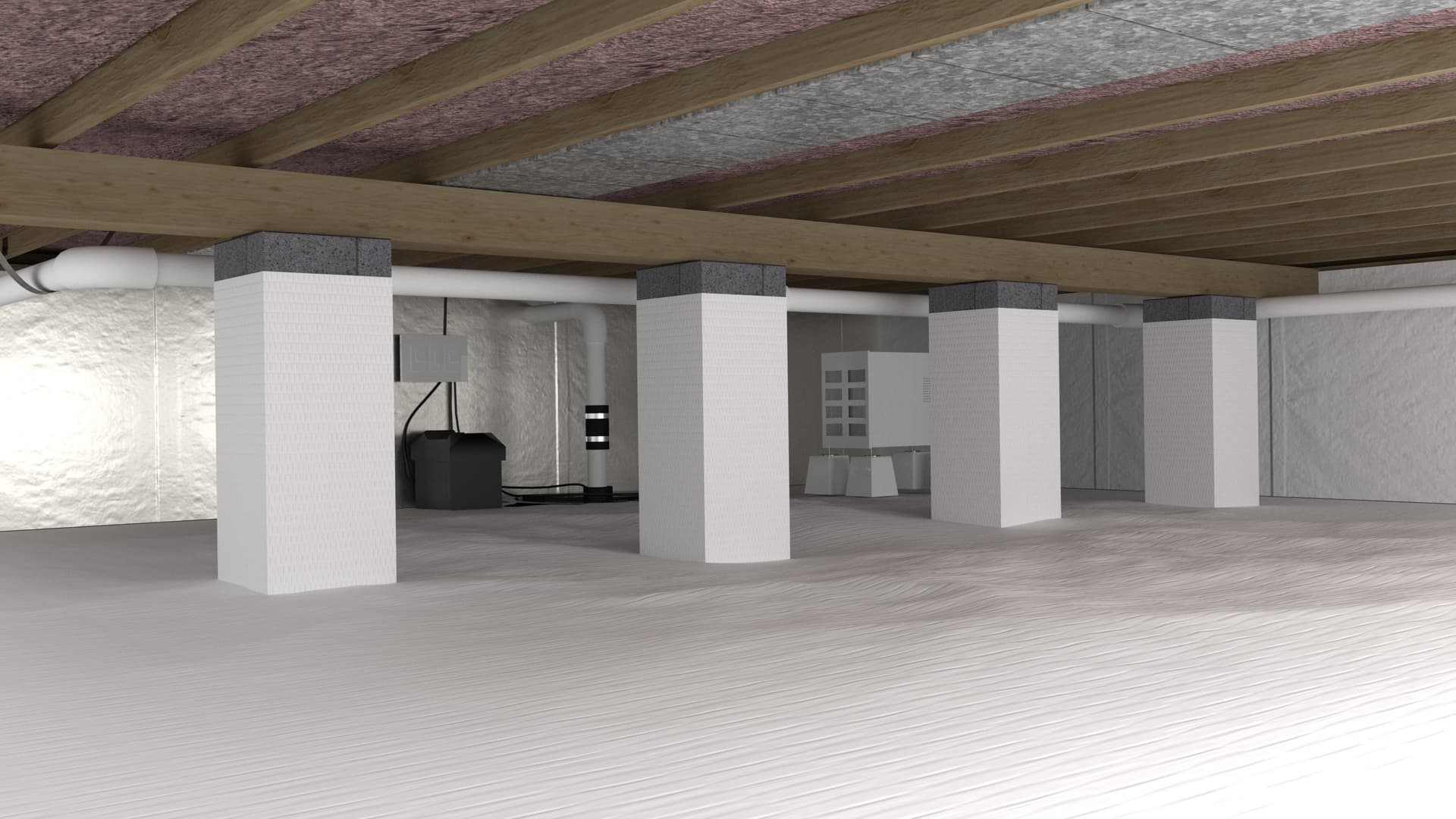
01 Crawl space liner installation from Epp Foundation Repair covers the entire dirt floor with reinforced polyethylene, sealed at every seam and mechanically fastened up the foundation walls. Serving Nebraska, Iowa, Kansas, and Missouri, Epp installs the liner as the foundation layer of a complete encapsulation system, built to be paired with drainage and a dehumidifier rather than serve as a standalone fix.
Learn more 02
02 Closed-cell spray foam (R-6.5 per inch) on crawl-space walls and band joist, or rigid XPS foam board on foundation walls. Rigid foam board goes in with Epp's own crew and closed-cell spray foam is coordinated through a certified subcontractor, as the post-encapsulation step that converts a vented crawl into a conditioned, energy-efficient buffer space. Serving NE, IA, KS, and MO. Fiberglass batts between joists do not work in this climate.
Learn more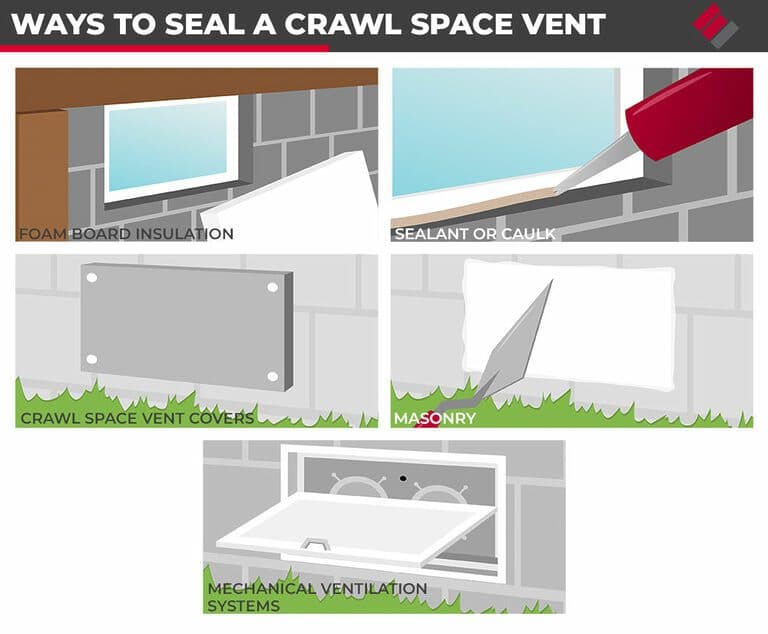 03
03 Crawl space vent sealing from Epp Foundation Repair that keeps the foundation vents closed all year. Rigid foam plugs cut to the vent opening, perimeter sealed with polyurethane caulk, vapor barrier overlapped and taped at the interior face. Serving NE, IA, KS, and MO. Open vents in a Midwest crawl import humidity, they don't remove it.
Learn more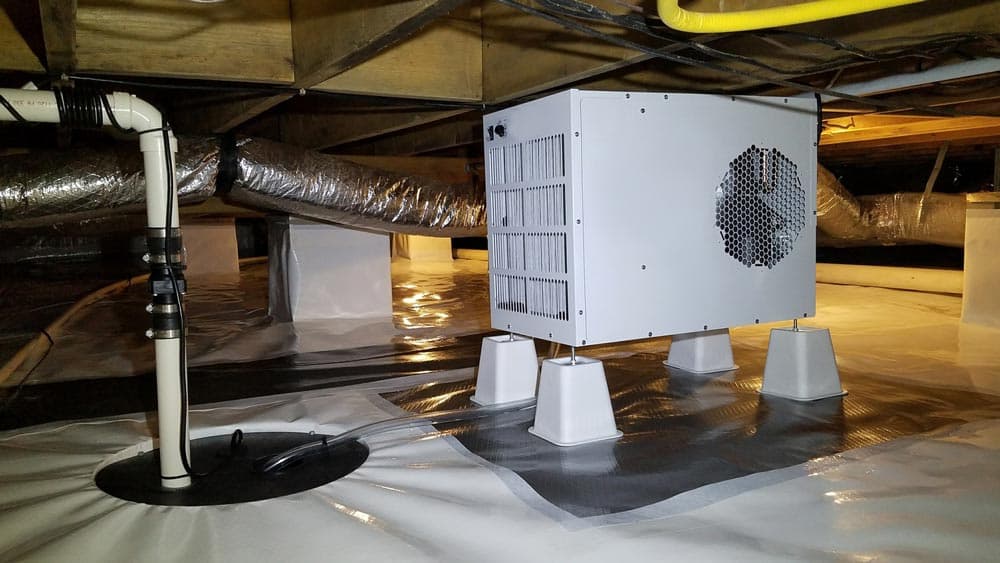 04
04 Crawl space drainage installation from Epp Foundation Repair channels groundwater to a sealed sump pit and cast-iron pump before the vapor barrier and dehumidifier go in. Low-profile perimeter waffle matting collects seepage at the foundation wall, the sump discharges it outside the foundation, and the barrier and dehumidifier take over the humidity that drainage alone leaves behind. Serving Nebraska, Iowa, Kansas, and Missouri.
Learn moreLocal crews based in five regional offices, dispatched daily across four states. If your town isn't listed, call us: we likely serve your area.
A straightforward path from initial inspection to completed repairs.
Crawl cubic footage measured (square footage times headroom). Existing encapsulation status documented (vapor barrier yes/no, vents sealed yes/no, ductwork leakage observed). Target relative humidity confirmed with homeowner. Unit selected.
Dedicated circuit required per manufacturer specification. Licensed electrician scope, scheduled by the homeowner before the dehumidifier install date. Epp confirms circuit availability and breaker labeling before the unit is delivered. Install date set after the electrical work is complete; encapsulation prep (vapor barrier, vent sealing) must also be complete or scheduled in the same window.
Unit positioned for centralized air circulation, typically near the center of the crawl, on a level pad or hanging from joists per manufacturer specification. Clearance maintained on all sides for service access and airflow. Discharge direction set away from cold ductwork or exterior walls where dry air would short-cycle back to the intake.
A 4.9-star average across Google, with verified reviews from homeowners throughout Nebraska, Iowa, Kansas, and Missouri.
Schedule your inspection in seconds with our Driive booking tool, or share a few details and a local specialist will follow up within one business day.
Practical articles from the Epp team on foundation health, waterproofing, and home preservation.
 Crawl Space EncapsulationLatest
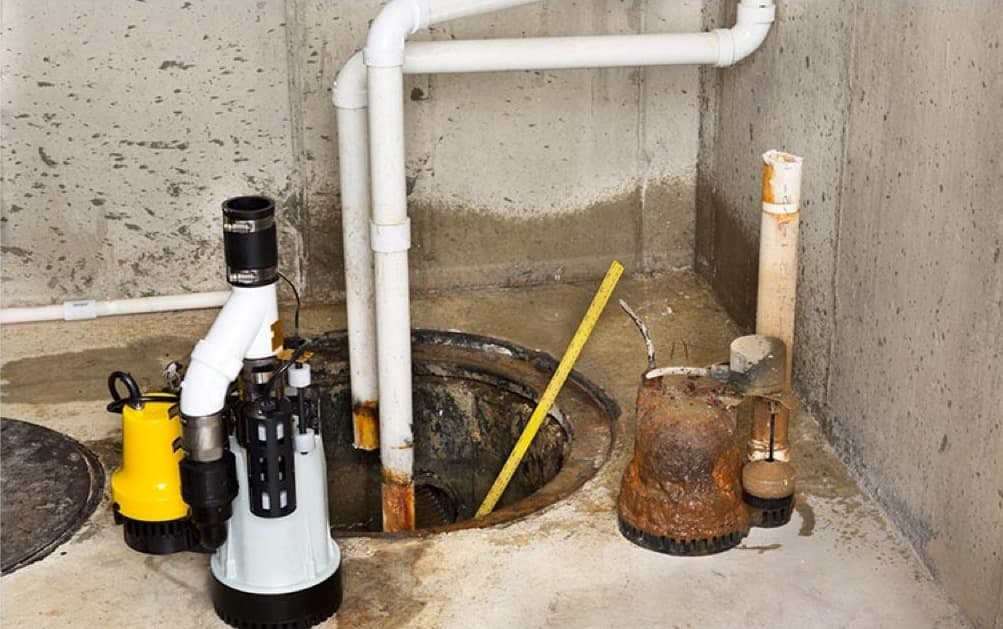
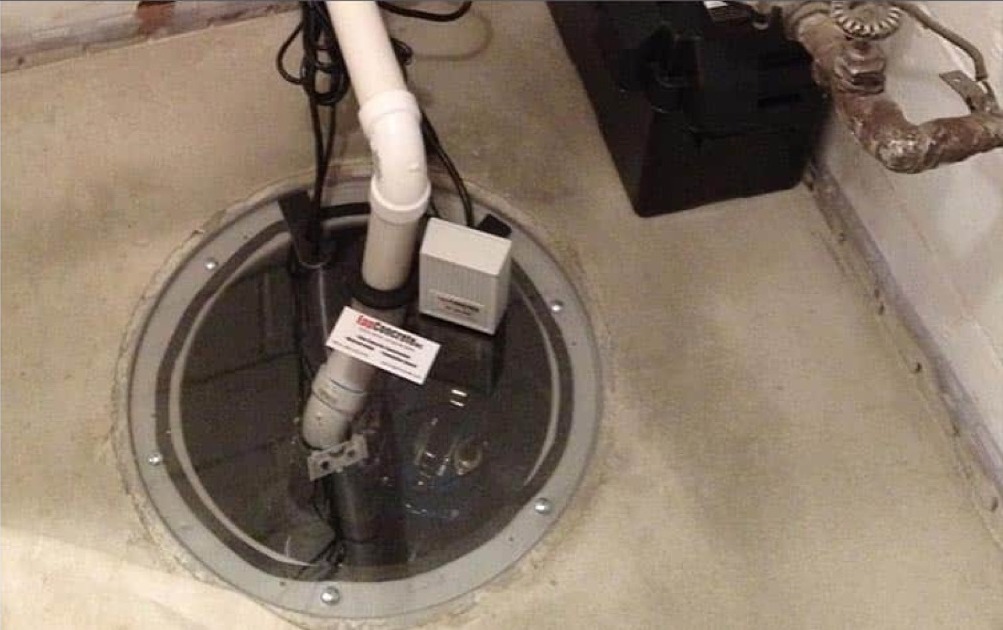
Ejector pumps and sump pumps both move water, but they serve different purposes. Learn how each one works and which one your home needs.
 Crawl Space Encapsulation
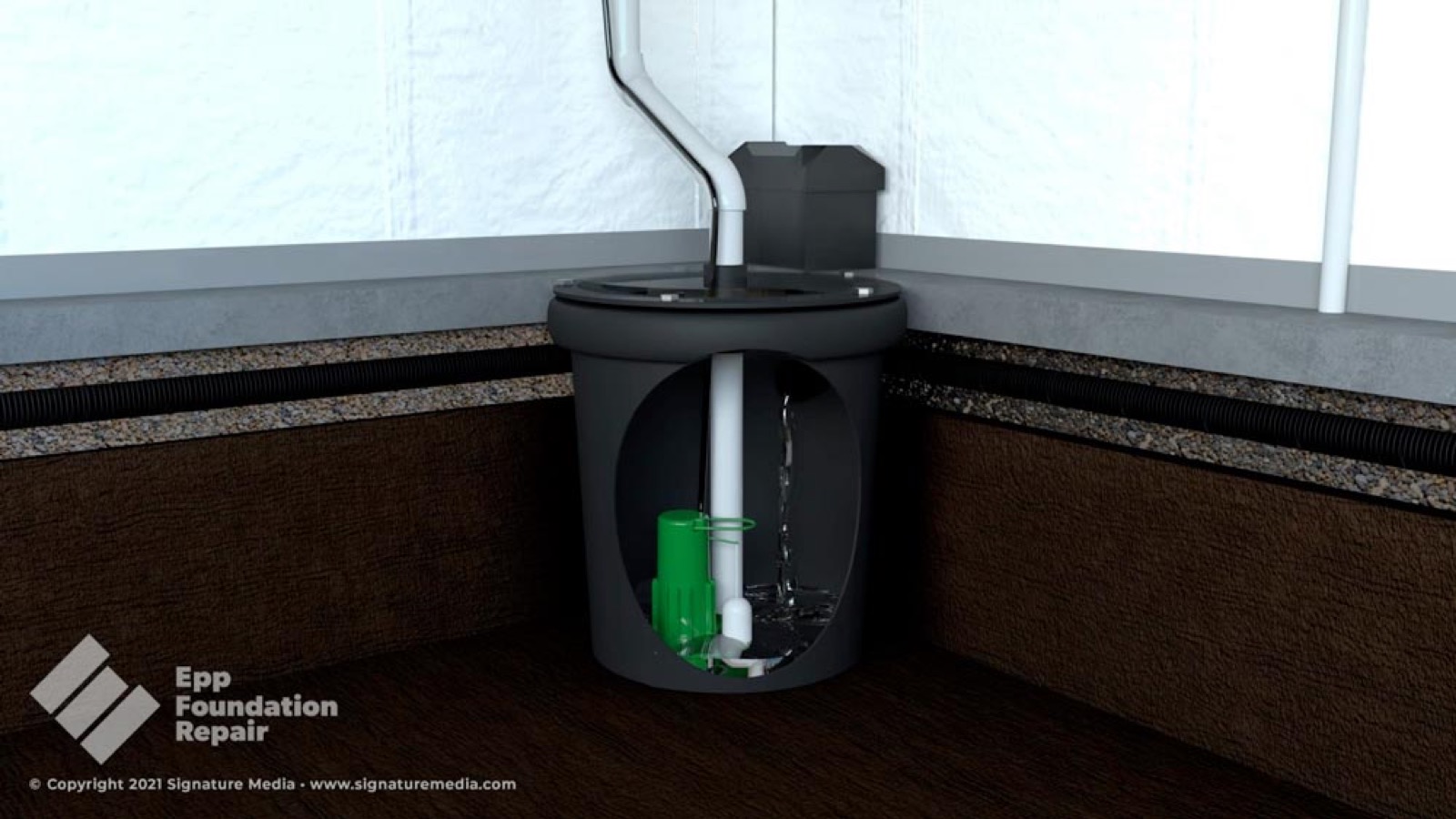
A sump pump removes accumulated water from a sump pit to protect your foundation. Learn how sump pumps work and the types available.
 Crawl Space Encapsulation
Learn why crawl space moisture is harmful, what causes it, and when a dehumidifier actually helps once your crawl space is encapsulated.
 Crawl Space Encapsulation
Sump pumps collect and expel excess groundwater around your foundation. Learn how they work, when you might need one, and effective alternatives.
