
Estimate Only
Approximate pricing
Customized Repair Estimate after on-site inspection reflects your specific scope.
Not every foundation crack is structural, but a foundation crack can let in water. Serving Nebraska, Iowa, Kansas, and Missouri since 1994, our crews repair vertical, horizontal, diagonal, and stair-step cracks in poured concrete, block, and stone foundations using methods chosen for the cause, not the convenience.

A local specialist will inspect your foundation, walk you through the findings, and send a clear estimate, no cost, no pressure.
Across Nebraska, Iowa, Kansas, and Missouri, most foundation cracks Epp Foundation Repair inspects fall into one of four categories, each with a distinct cause, structural risk, and repair path.
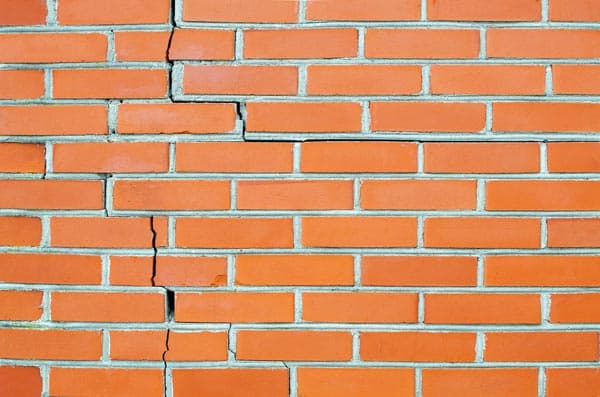
Foundation cracks fall into four categories based on cause and structural risk. Shrinkage cracks are cosmetic, caused by concrete curing, and rarely require structural repair. Settlement cracks are vertical and narrow, resulting from differential foundation movement, and require monitoring for progression. Lateral pressure cracks are horizontal cracks near the soil grade line caused by hydrostatic pressure and soil load; these indicate active structural stress and require reinforcement. Stair-step cracks follow mortar joints in block or brick veneer and result from differential settlement beneath the wall; underpinning is typically required.
In Depth
Everything a Midwest homeowner should know about this repair, from the specialists who do it every day.
The cause determines the repair method. There is no universal fix. A hairline shrinkage crack in poured concrete is cosmetic. A horizontal crack in block at the soil grade line is lateral pressure and needs reinforcement. A stair-step crack widening through brick veneer is differential settlement and needs underpinning beneath the affected wall. Epp Foundation Repair has diagnosed and repaired foundation cracks across Nebraska, Iowa, Kansas, and Missouri since 1994. The most important number on any crack job is one a homeowner cannot see without two measurements over time: whether the crack is moving. Epp's crack monitor process starts with that measurement, not a sales recommendation.
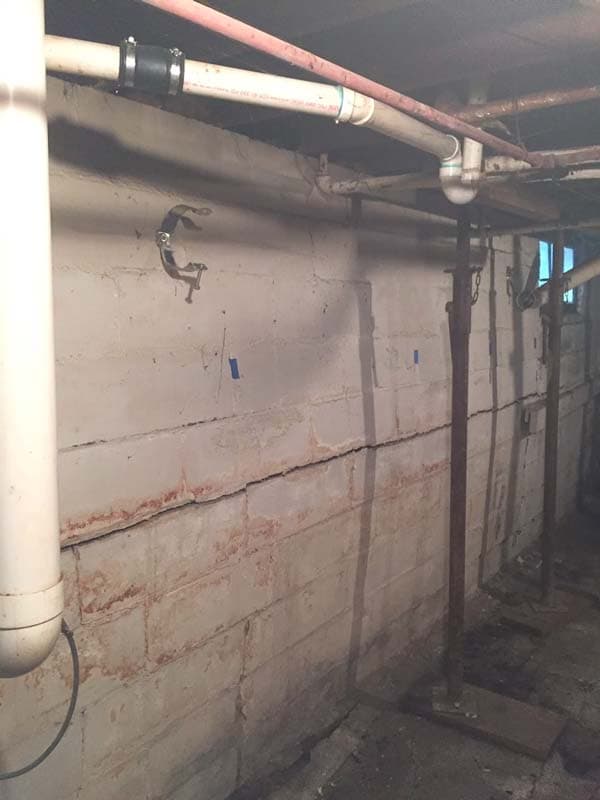
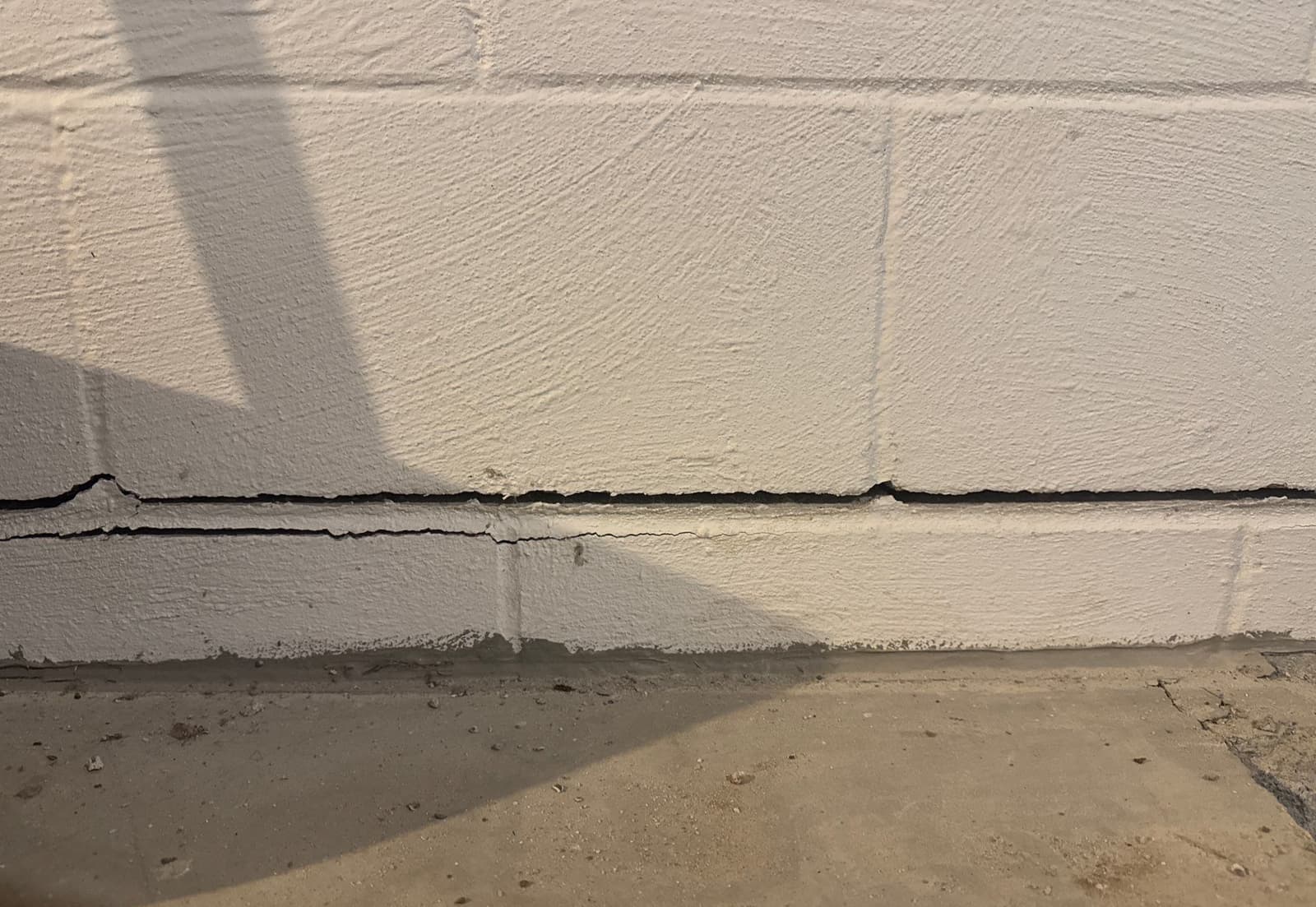
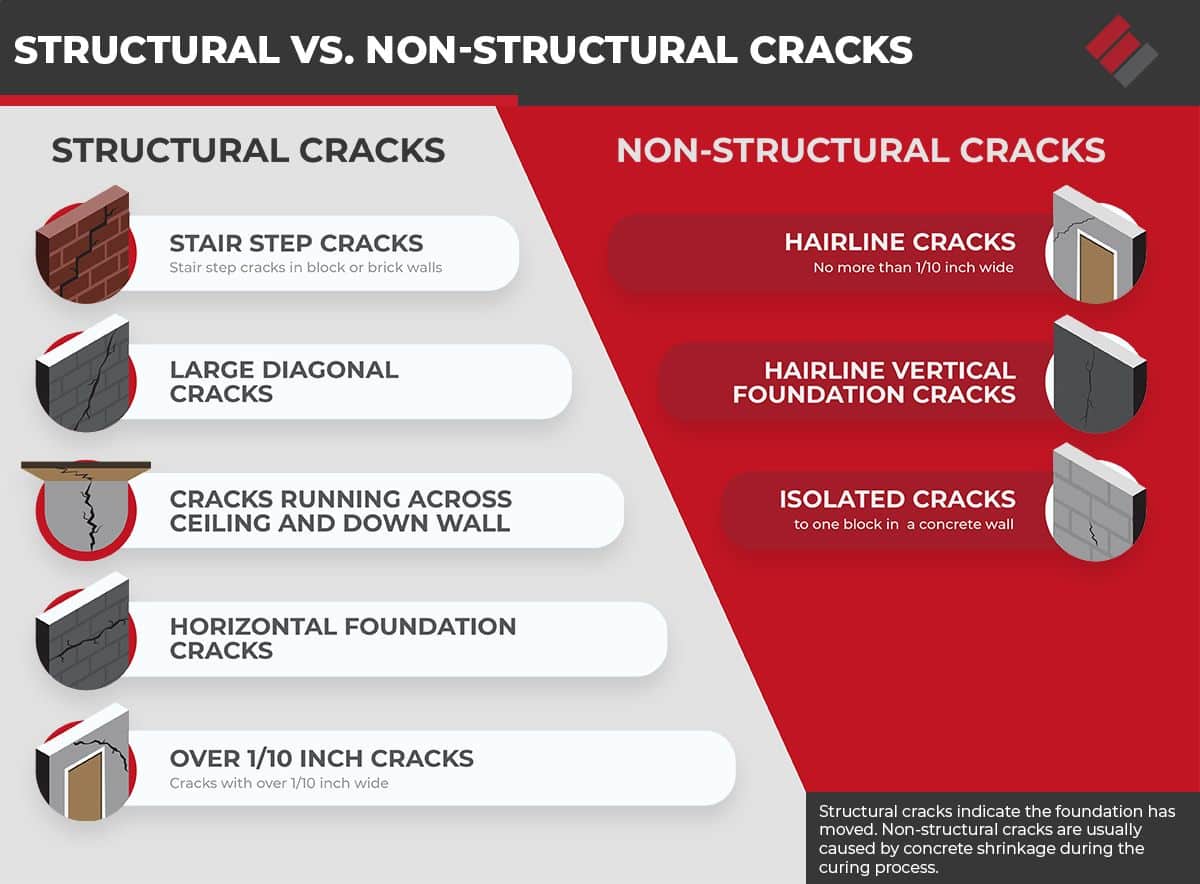
Foundation cracks divide into four categories, and each points to a different cause and repair. Non-structural cracks (no more than 1/10 inch wide, vertical, isolated to one block). Almost always shrinkage from concrete curing, or a stable vertical settlement crack that has held the same width for years. Cosmetic, no structural threat, though below grade these can still leak. A polyurethane caulk above grade or a low-pressure injection below grade stops the water; a vertical crack that widens past 1/10 inch, keeps growing, or starts leaking gets a crack monitor before any structural recommendation. Horizontal cracks. A horizontal crack across a CMU block wall (almost always at or just below the soil grade line) is the most serious crack pattern in residential foundation repair. Lateral soil pressure has exceeded the wall's bending capacity. Injection alone will not hold; the wall needs carbon fiber straps, wall anchors, or steel beams before any sealing. Stair-step cracks. A crack climbing diagonally up a CMU block wall, jogging along mortar joints, is the signature of differential settlement and is structural at any width. One part of the foundation has dropped relative to another. The crack is the symptom; the settlement is the disease. Large diagonal cracks. A large diagonal crack on a poured-concrete wall or from a window or door corner indicates frame distortion from foundation movement. Like stair-step cracks, the crack is downstream of a settlement or heave that must be addressed first. Width thresholds: non-structural is no more than 1/10 inch wide, vertical, and isolated to one block; structural is any crack over 1/10 inch wide, horizontal, stair-step, a large diagonal, widening, or actively leaking.
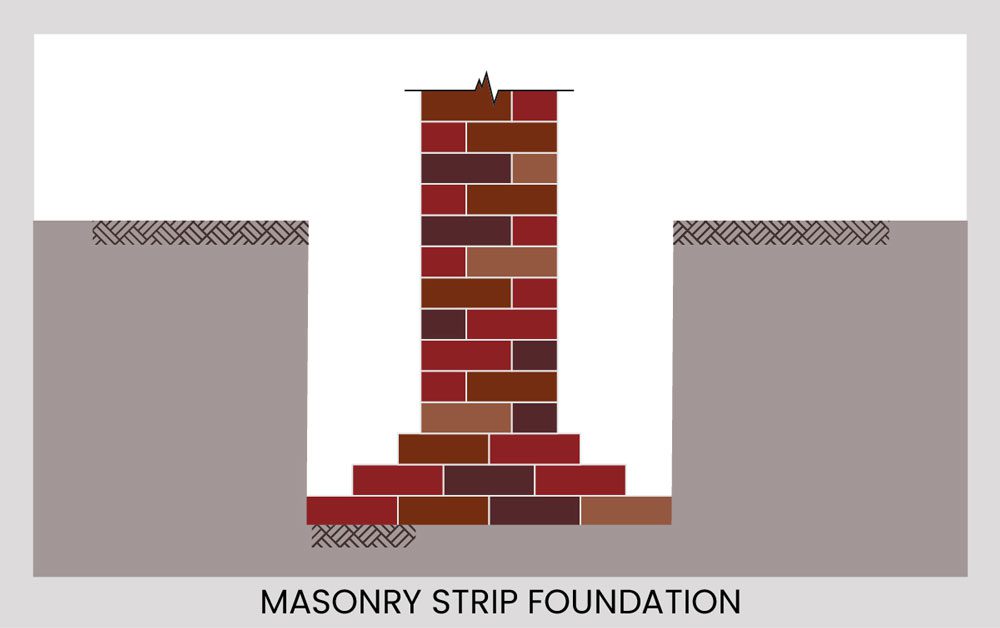
Nebraska, Iowa, Kansas, and Missouri see many freeze-thaw cycles each winter, and each cycle expands moisture in the soil and wall, propagating any existing micro-crack deeper. Loess soils underlie most of eastern Nebraska and western Iowa. Loess is hydrocollapsible: stable when dry, collapsing suddenly when first saturated. A downspout dumping water against a foundation can trigger a hydrocollapse void, dropping a footing section and producing fresh diagonal or stair-step cracks above. Clay backfill is the second major driver. Clay expands when wet and contracts when dry, applying cyclical lateral pressure every wet-dry season. In the KS/MO clay belt expansive clay under the slab also heaves walls upward at center while perimeter footings stay put.
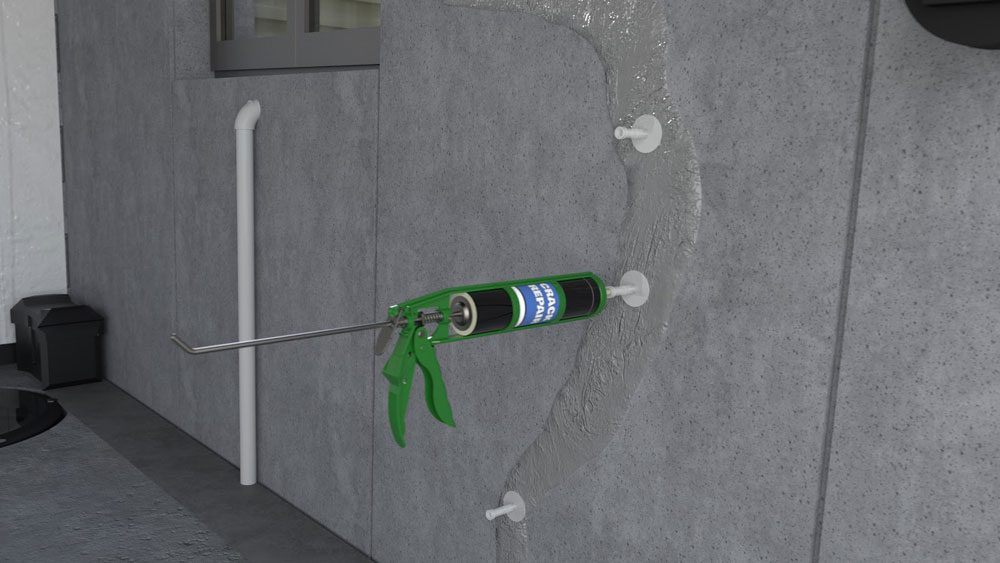
On any crack not clearly cosmetic, Epp installs a calibrated crack monitor, a ruler-style device that spans the crack and reads movement. The monitor stays in place so the crack can be measured again later. A single visit cannot tell whether the crack is past movement that has stabilized or active movement still ongoing. The threshold: if the gap has widened between measurements, the crack is active and needs reinforcement before sealing. If unchanged, injection alone is sufficient. A second measurement regularly turns up cracks that are stable, sparing homeowners unnecessary structural work.
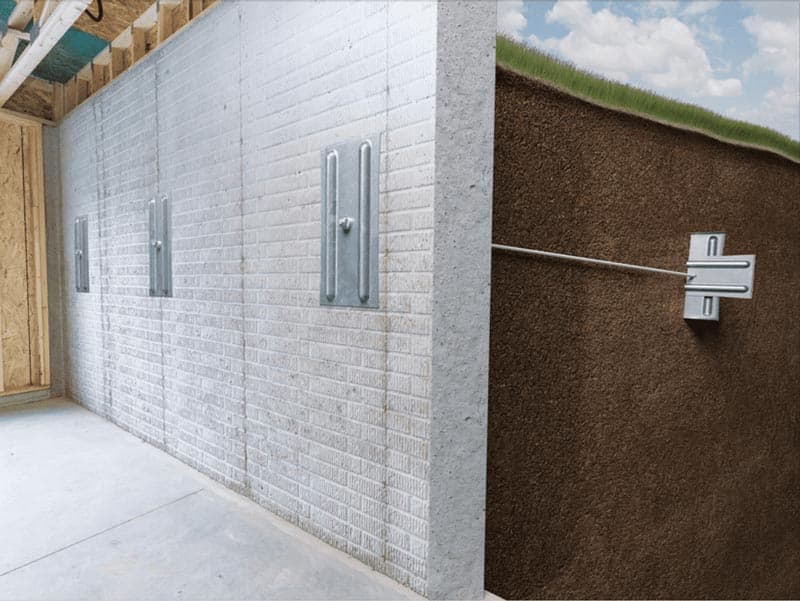
Epoxy injection fits when the crack is in poured concrete, structurally significant, dry, and stable per the monitor. Epoxy bonds the two sides into a unit stronger than the surrounding concrete. Polyurethane foam injection fits when the crack is wet, leaking, or active. The resin expands on contact with moisture, fills voids, and seals against water pressure, but does not restore structural integrity. Water repair, not structural repair. The sequential approach. Many jobs need both. Epp injects polyurethane first to stop the leak and dry the crack, then returns and injects epoxy to restore the bond. Doing one without the other leaves either an unsealed structural repair or an unbonded water seal. Carbon fiber reinforcement fits when the crack is in CMU block under lateral pressure. Block does not bond like poured concrete. Injecting epoxy into a hollow block cavity is largely wasted material. Carbon fiber straps are bonded to the wall face across the cracked area and anchored top and bottom into the sill plate and floor slab. Any active crack needs reinforcement first (carbon fiber, wall anchors, or a pier beneath the affected section) before any sealant. Sealing a moving crack just relocates it. A Customized Repair Estimate after on-site inspection reflects your scope.
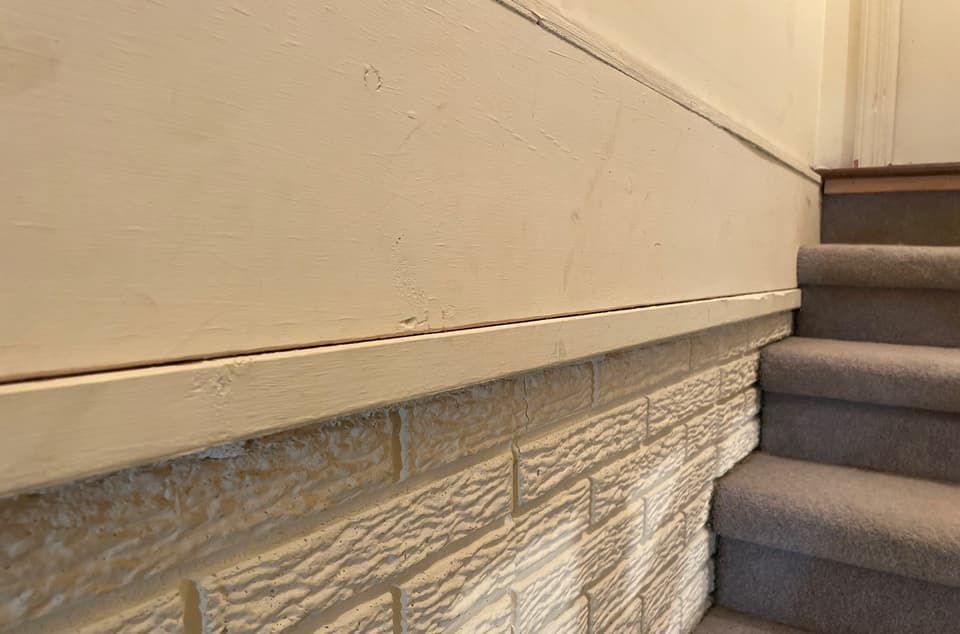
The most expensive crack-repair mistake is treating a downstream symptom as the problem. Three patterns Epp sees constantly: a crack at the soil grade line on a CMU wall is lateral pressure. The wall needs reinforcement, not injection alone. A stair-step crack widening at one corner is settlement. The footing is dropping, and the fix is push piers or helical piers beneath the affected footing. Multiple cracks radiating from a single low point is foundation repair territory. The repair is underpinning the moving section, not sealing the cracks above. Epp Foundation Repair is BBB A+ rated and a BBB Integrity Award winner. Every crack inspection ends with a clear diagnosis identifying cause, recommended scope, and when the answer is "your cracks are cosmetic, paint them and don't pay us to inject them," we say so.
Choosing the right solution depends on the crack's behavior, not just its appearance. Compare the methods we use most often in Midwest homes.
| Most common Epoxy Injection | For wet cracks Polyurethane Foam Injection | For bowing walls Carbon Fiber Strapping | |
|---|---|---|---|
| Best for | Stable, dry structural cracks | Wet, leaking, or actively moving cracks | Horizontal cracks with inward deflection |
| Crack types | Settlement cracks; healed lateral pressure cracks | Leaking shrinkage cracks; low-risk active cracks | Lateral pressure cracks; bowing walls |
| What it does | Bonds crack faces together. Restores the wall to near-original concrete strength, so the two faces become structurally monolithic after cure. | Expands to fill the crack and seals against water. Flexible enough to accommodate minor seasonal movement without re-cracking. | High-tensile carbon fiber straps lock the wall against further inward movement. Stabilizes the wall in position; it does not correct existing deflection. |
| Works when crack is… | Crack is stable (not actively moving) and dry | Crack is wet, leaking, or in an environment with seasonal movement | The wall has bowed 3 inches or less and the crack indicates active lateral pressure |
| Warranty | 2-year warranty | 2-year warranty | Lifetime of the structure, stabilization only, on walls bowed 3 inches or less |
*Carbon fiber's lifetime warranty applies when the wall is anchored corner to corner; it stabilizes the wall and does not straighten it. Full warranty terms and conditions for every method are at /epp-foundation-repair-warranties/.
Each method is matched to a specific failure mode and soil profile. Browse the toolkit we draw from when diagnosing your home.
Epp Foundation Repair has injected foundation cracks across Nebraska, Iowa, Kansas, and Missouri since 1994, and uses sequential polyurethane plus epoxy when one alone won't hold.
When the fill under a slab-on-grade foundation or a footing consolidates or washes out, Epp Foundation Repair injects structural polyurethane foam into the soil beneath it to restore support and attempt lift. Stabilization is guaranteed; lift is attempted, never promised.
Epp Foundation Repair has reinforced bowed walls across Nebraska, Iowa, Kansas, and Missouri since 1994. No interior steel, no excavation, no lost basement space.
A foundation rests on the soil under and around it. When that soil gets wetter, drier or colder, it can swell, shrink, settle or freeze, and the foundation can move with it.
Based on NOAA 1991 to 2020 climate normals for Lincoln Municipal Airport and Omaha Eppley Airfield.
Based on USDA soil survey data for Lancaster County (Lincoln) and Douglas County (Omaha), clay is the main soil type in both counties. The survey rates Lancaster County high and Douglas County moderate for shrink swell. Clay can swell when it gets wet and shrink as it dries, so a slab or foundation on clay can move up and down with the seasons. The soils that cover the most ground in Lancaster County are Wymore and Aksarben, and in Douglas County they are Contrary and Marshall.
Loess, the wind deposited silt common in eastern Nebraska and western Iowa, can lose strength and settle when it gets wet. Water can reach it from runoff, a plumbing leak or a downspout that empties next to the house.
In Lincoln and Omaha, soil near the surface can freeze and thaw many times between fall and spring. Each city's building code sets a frost line depth, which is the minimum depth below finished grade for a footing. It is 36 inches in Lincoln and 42 inches in Omaha. Supports that sit above that depth, such as some porches, stoops and chimney footings, can move as the ground freezes and thaws.
Horizontal cracks in a basement wall are more often linked to pressure from the soil outside the wall than to settlement. Wet soil pushes harder against a wall than dry soil, and soil that freezes against the wall can add to that pressure.
Climate: NOAA U.S. Climate Normals 1991 to 2020, LINCOLN MUNI AP (USW00014939) and OMAHA EPPLEY AIRFIELD (USW00014942), retrieved September 30, 2026. Soil: USDA NRCS Soil Data Access (SSURGO), county survey for Lancaster County and Douglas County. Frost line depth: Lincoln Municipal Code 20.12.140 and Omaha Municipal Code Sec. 43-127.
These are the foundation repair problem signs Epp Foundation Repair diagnoses most often. Each one links to what causes it and how it is repaired.
Our specialists evaluate the underlying cause before recommending any work. Inspections are at no cost and there's no obligation to proceed.
"On a typical month in Omaha I'll diagnose 20 cracks in block walls, and about 14 of them are the same horizontal crack at the grade line from clay pressure. Customers think injection will fix it. It won't. That wall needs carbon fiber straps or wall anchors first, then sealing. Epoxy alone in a block crack under active pressure is throwing money away."

Completed work photographed on real job sites across Nebraska, Iowa, Kansas, and Missouri.
Epp Foundation Repair is locally owned and operated, with crews dedicated exclusively to foundation, basement, and concrete work across the Midwest.
Foundation repair, waterproofing, and concrete leveling are our entire focus, not a sideline.
Three decades of experience with Midwest soils, basements, and weather conditions.
Recognized by the Better Business Bureau for integrity and ethical business practices.
Many of our repairs carry a written Epp warranty. The warranty page lists every covered repair and its terms.
Don't see your question here? Our team is happy to help. Reach out anytime.
Every home is different. What a repair costs depends on the cause, the scope, and access. A free on-site inspection produces a Customized Repair Estimate that reflects your home, not a typical range.
Customized Repair Estimate after on-site inspection reflects your specific scope.
Crack injection is the wrong scope when the wall is under active lateral pressure (horizontal cracks in block walls need carbon fiber or wall anchors first), when stair-step cracks indicate underlying differential settlement (push or helical piers come first), or when the crack is so wide and the wall so deteriorated that section replacement is more honest than injection. Epp will tell you on inspection when injection is not enough.
BBB A+ rated · BBB Integrity Award winner
Our team walks through this on camera.
Every foundation repair method we install. Sequenced so the soil profile and failure mode determine the fix.
 01
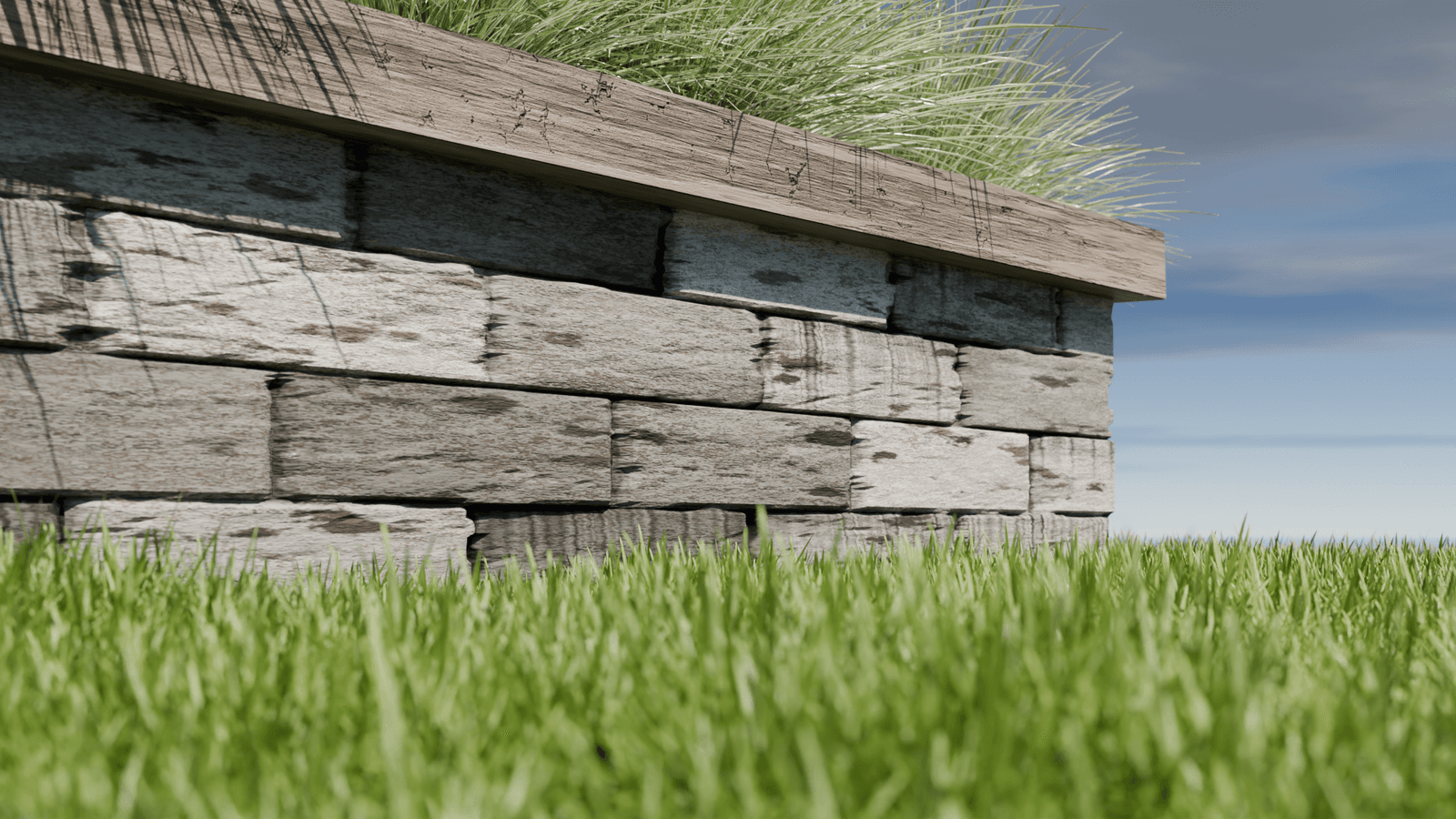
01 A leaning or bulging retaining wall is a soil problem before it is a wall problem. Epp Foundation Repair diagnoses the failure mode first, then prescribes the right fix: helical tieback anchors, drainage correction, or full wall replacement.
Learn more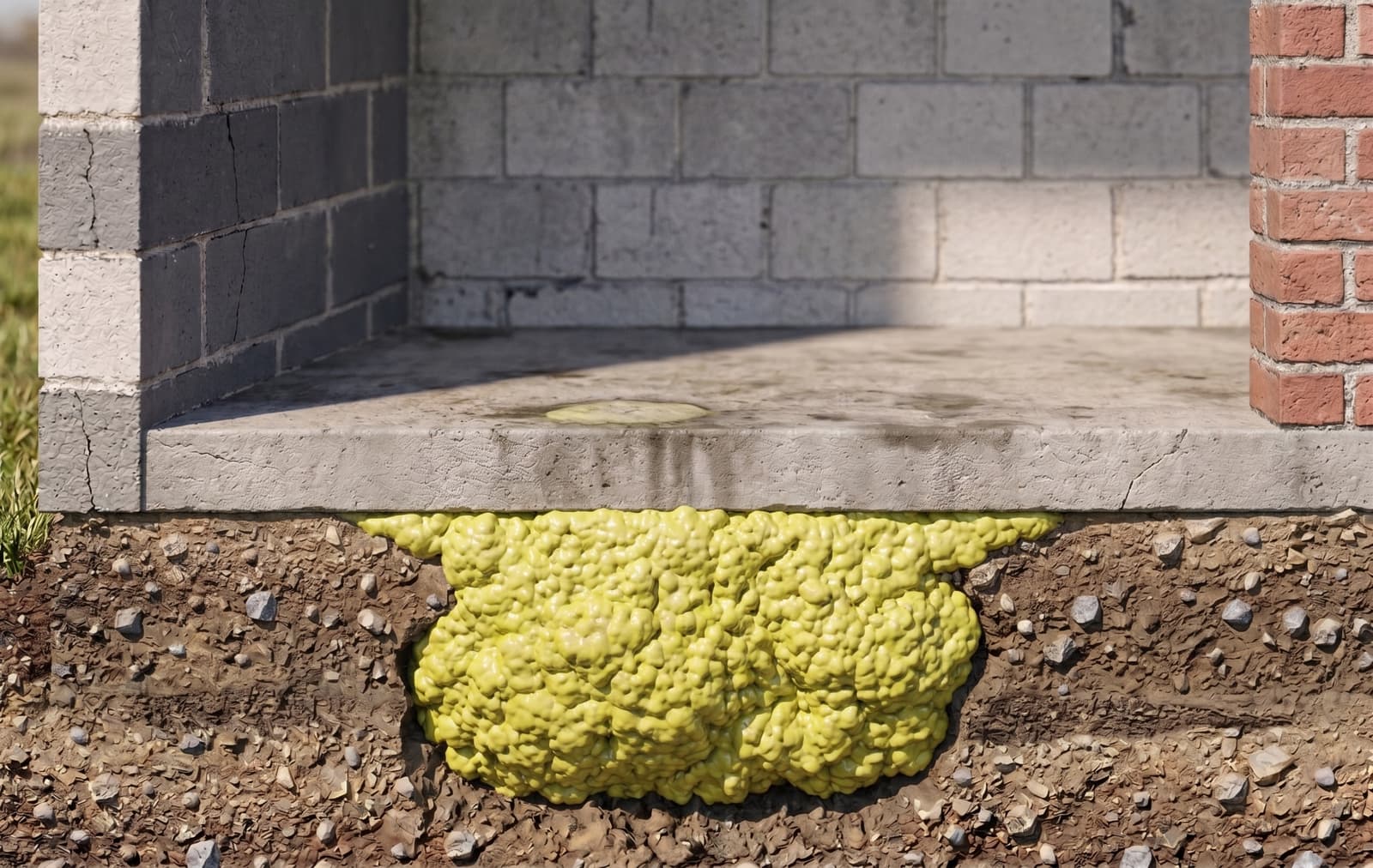 02
02 A settled slab foundation does not always mean piers. Sometimes the right answer is polyurethane foam, sometimes it is slab piers, and sometimes the slab needs to be replaced. Epp Foundation Repair diagnoses the depth and cause of the void first, then chooses the lift method.
Learn more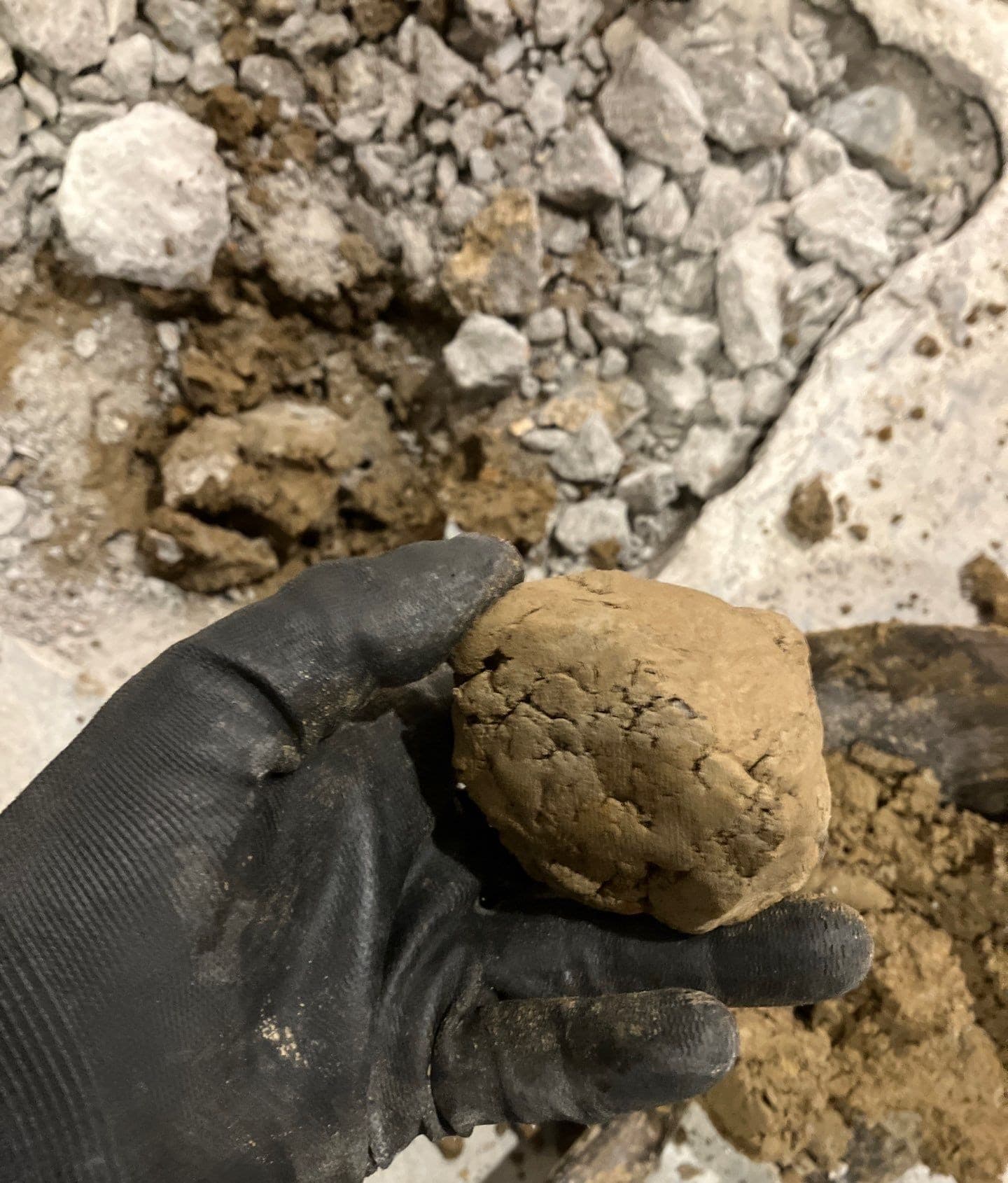 03
03 When the soil under your foundation is the problem, repairing the structure alone can fail. Epp Foundation Repair treats the cause (collapsing loess, expansive clay, washed-out voids) using polyurethane chemical injection, mid-soil injection, and deep-driven helical anchors, matched to the soil under your specific lot.
Learn more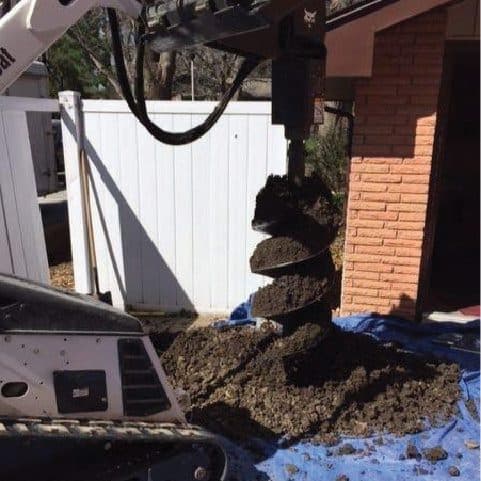 04
04 Foundation repair for warehouses, industrial slabs, strip malls, and multi-tenant residential. Engineered to commercial load classes, scheduled around your operations, executed alongside your structural engineer. An Epp foundation specialist inspects every commercial bid before the crew is dispatched.
Learn more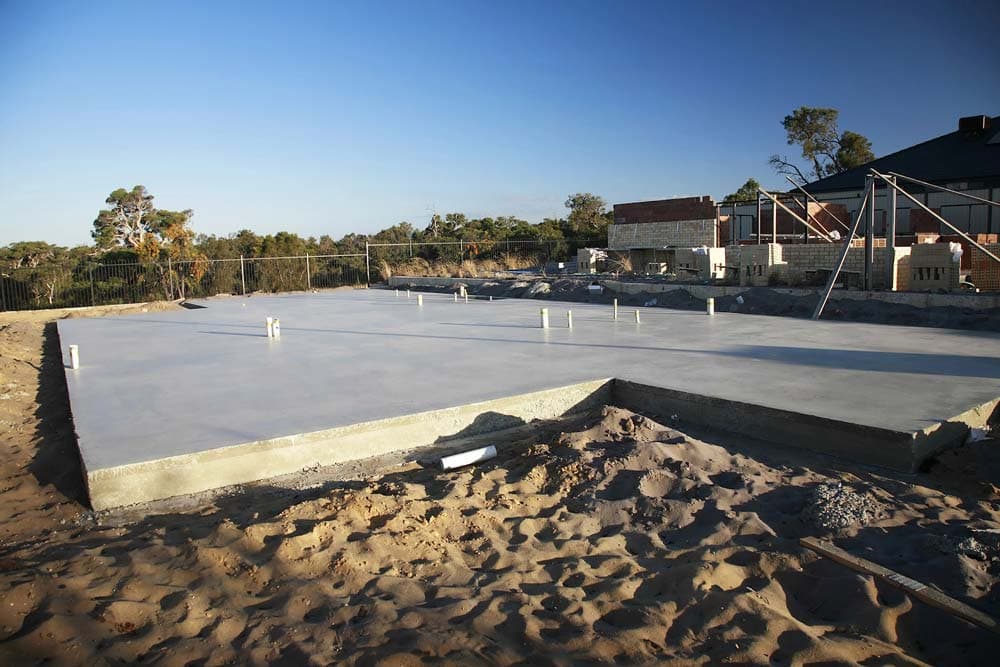 05
05 Epp Foundation Repair stabilizes failing slab-on-grade foundations across Nebraska, Iowa, Kansas, and Missouri using slab piers, polyurethane lift, and void-fill foam. Most settled slabs trace back to shallow original footings, expansive clay heave, or undetected plumbing voids. Epp diagnoses the cause before quoting a repair.
Learn more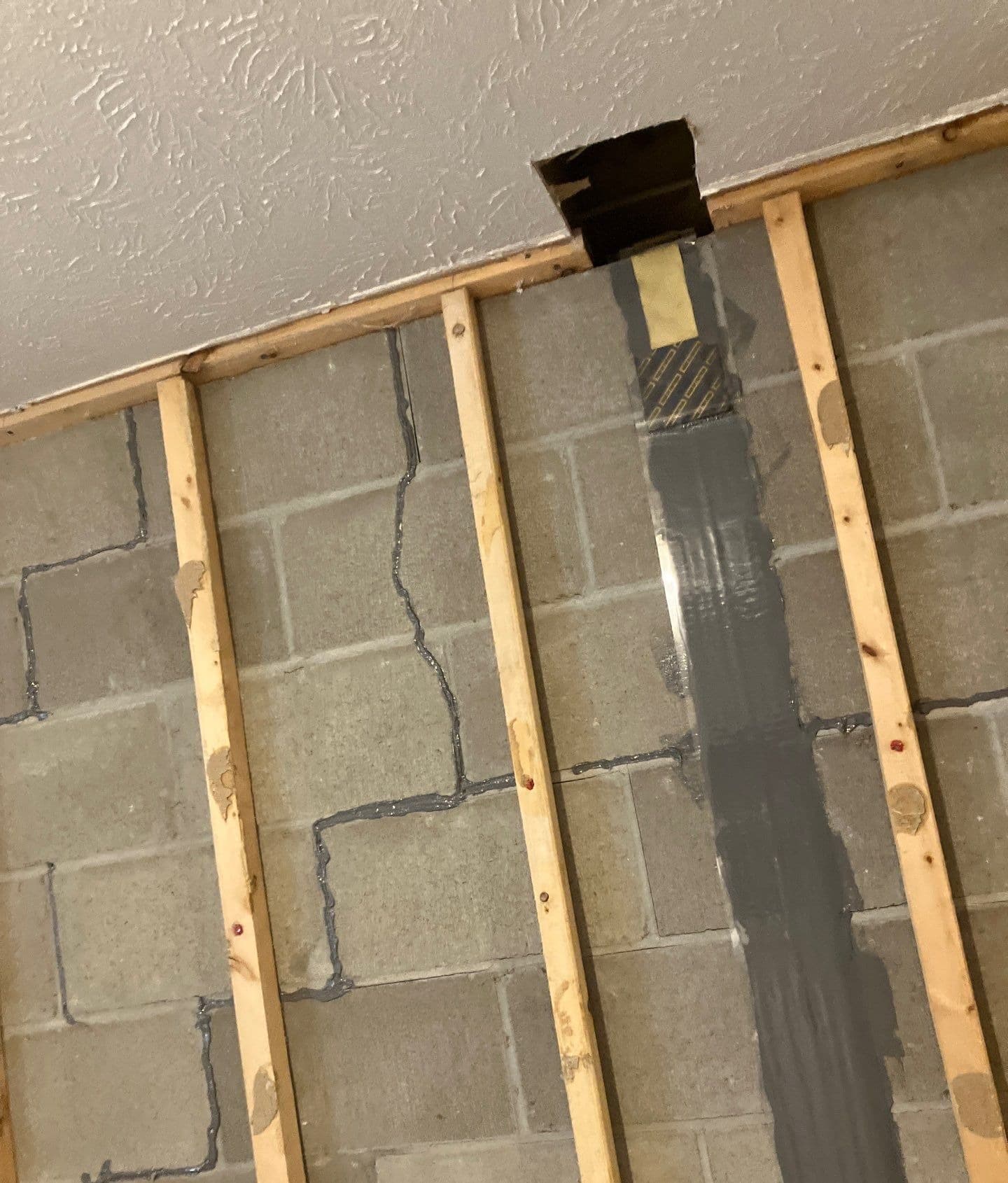 06
06 Epp Foundation Repair stabilizes poured concrete, CMU block, and stone basement walls across Nebraska, Iowa, Kansas, and Missouri. Each wall type fails differently. Epp diagnoses the failure pattern before specifying carbon fiber, wall anchors, push piers, or perimeter waterproofing.
Learn more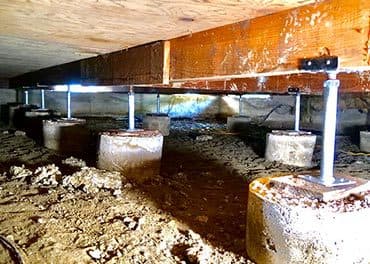 07
07 Epp Foundation Repair inspects, supplements, and replaces failing pier systems across Nebraska, Iowa, Kansas, and Missouri, including older helical piers installed before torque verification, rotted wooden crawl-space posts, and undersized push piers from an earlier repair. Every existing pier gets a load test before Epp recommends replacement.
Learn more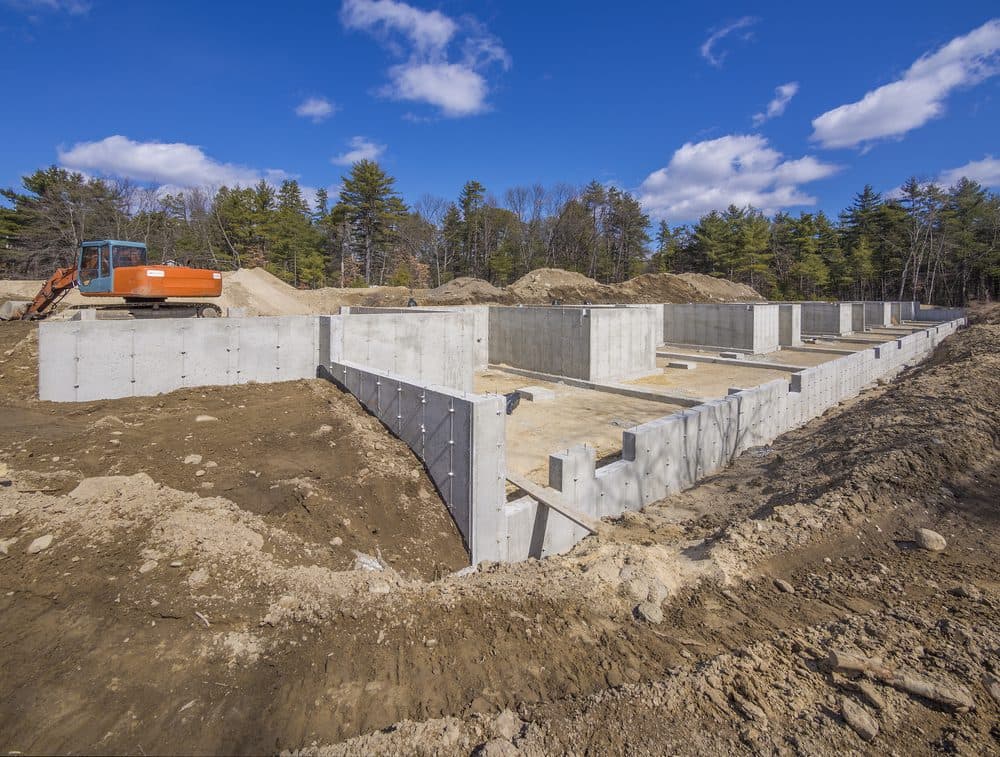 08
08 Epp Foundation Repair consults with builders and homeowners on new builds across Nebraska, Iowa, Kansas, and Missouri. Pre-construction soil assessment and engineered helical pier installs on questionable sites. Epp does not pour foundations or install waterproofing during construction. The honest scope is here.
Learn more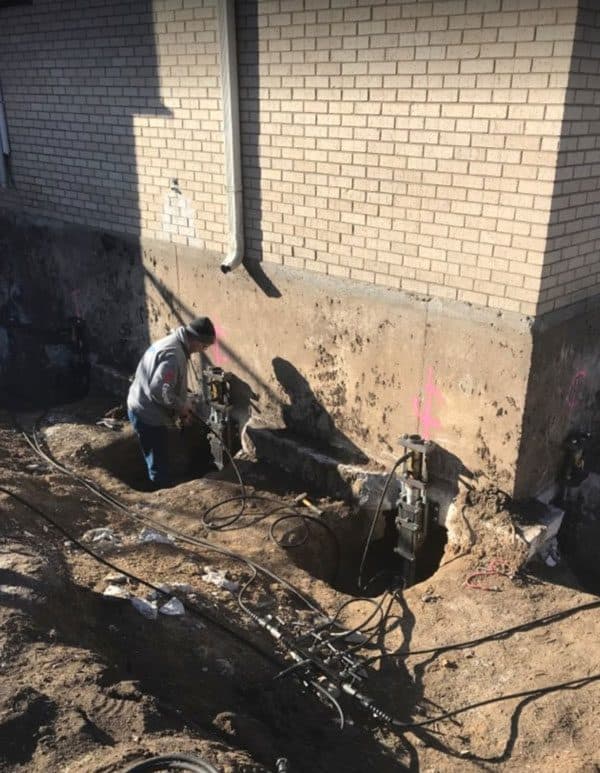 09
09 Foundation leveling lifts a settled house back toward original elevation using helical piers, push piers, or polyurethane foam, when ground conditions allow safe lift without cracking interior finishes.
Learn more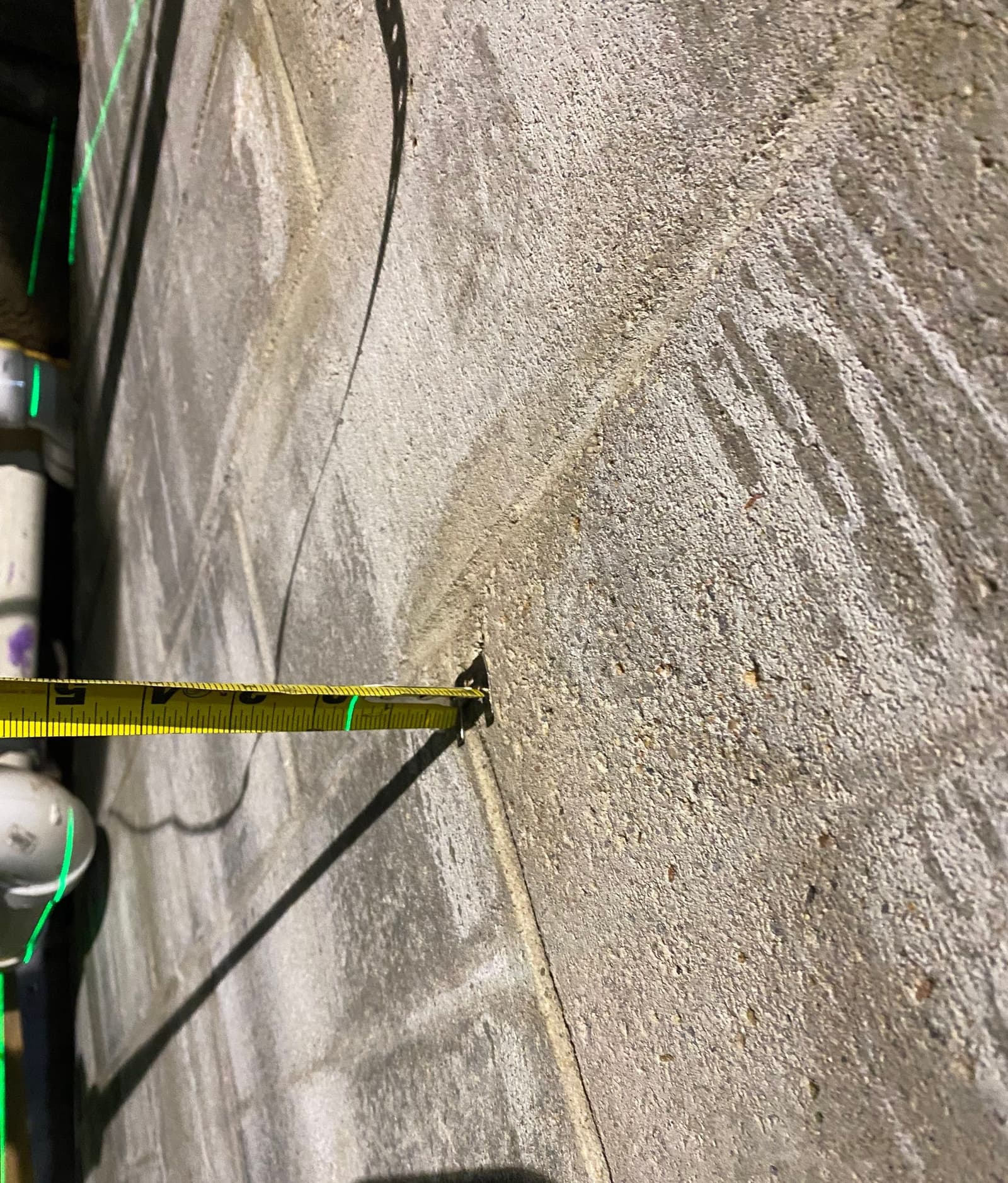 10
10 On-site foundation inspection with laser-level floor survey, crack monitor installation, and measurements over time that separate structural movement from cosmetic settling before any repair recommendation.
Learn moreLocal crews based in five regional offices, dispatched daily across four states. If your town isn't listed, call us: we likely serve your area.
A straightforward path from initial inspection to completed repairs.
An Epp structural diagnostician arrives on site and inspects every visible crack with a scale reference and a feeler gauge. The inspector classifies each crack by pattern (vertical, horizontal, stair-step, or diagonal), measures width, identifies substrate (poured concrete, CMU block, or stone), and checks for water staining or active seepage.
On any crack that is not clearly cosmetic, Epp installs a calibrated crack monitor across the crack and records the baseline reading. The monitor stays in place so the crack can be measured again later. Some monitored cracks turn out stable and need no structural reinforcement, only sealing.
Epp produces a written scope identifying repair method per crack: epoxy injection (structural, stable, dry), polyurethane foam (water repair, leaking), carbon fiber strap (block wall under lateral pressure), or sequential polyurethane-then-epoxy (water-active structural cracks). Cracks downstream of settlement or heave are flagged separately with a recommended underpinning or anchor scope.
A 4.9-star average across Google, with verified reviews from homeowners throughout Nebraska, Iowa, Kansas, and Missouri.
Schedule your inspection in seconds with our Driive booking tool, or share a few details and a local specialist will follow up within one business day.
Practical articles from the Epp team on foundation health, waterproofing, and home preservation.
 foundation repairLatest
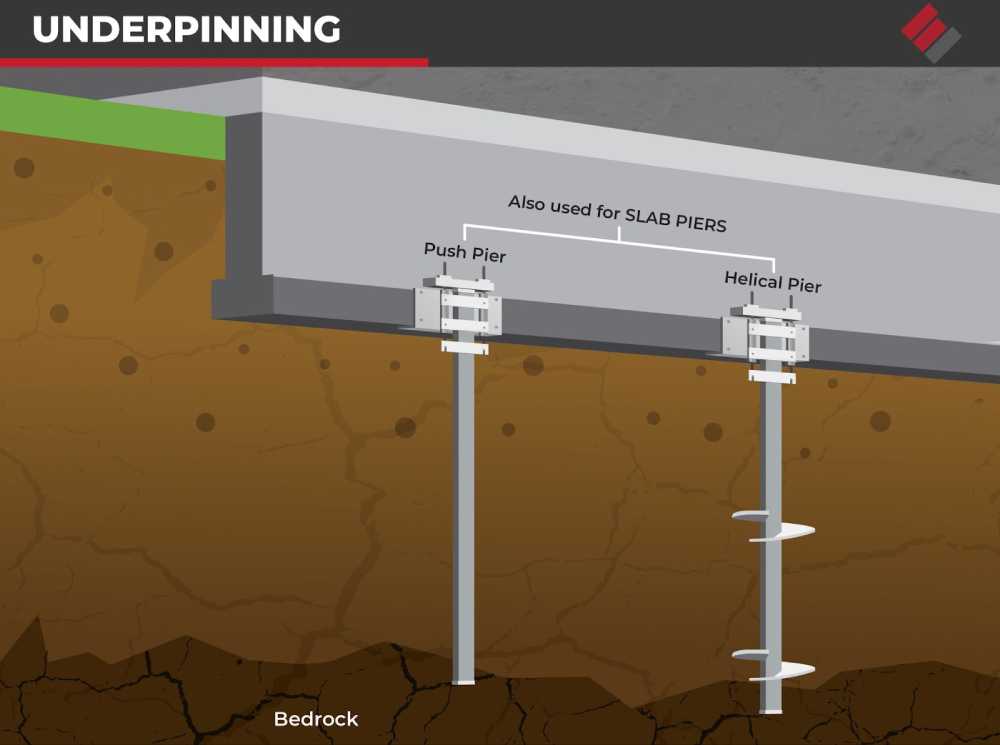
A stable foundation protects your building, your people, and your bottom line. This guide covers warning signs, repair methods, and what to expect from a…
 Foundation Repair
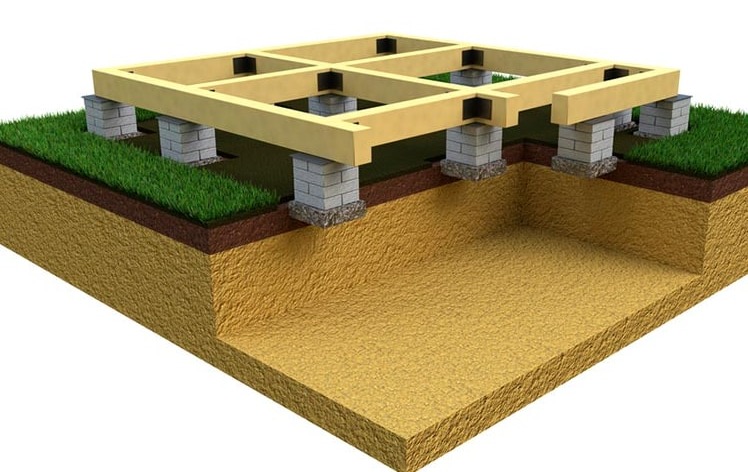
Learn the key to proper pier and beam foundation spacing for lasting home stability. Find out when to repair or add piers for support.
 Foundation Repair
Discover what causes cracks in a popcorn ceiling, the different crack types, and when foundation issues call for a professional repair.
 Foundation Repair
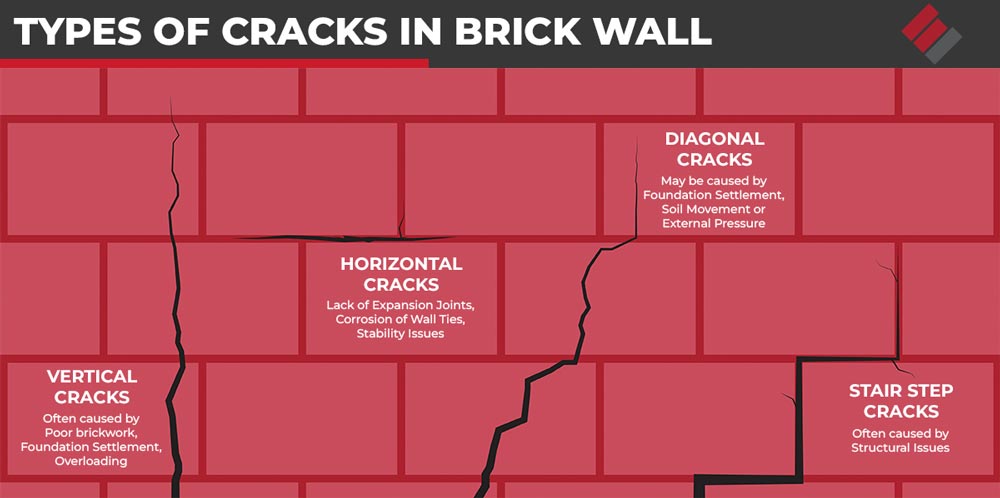
Not every crack in brick is a foundation problem. Learn the crack types, how to judge severity, the interior and exterior warning signs, and the repair options.
