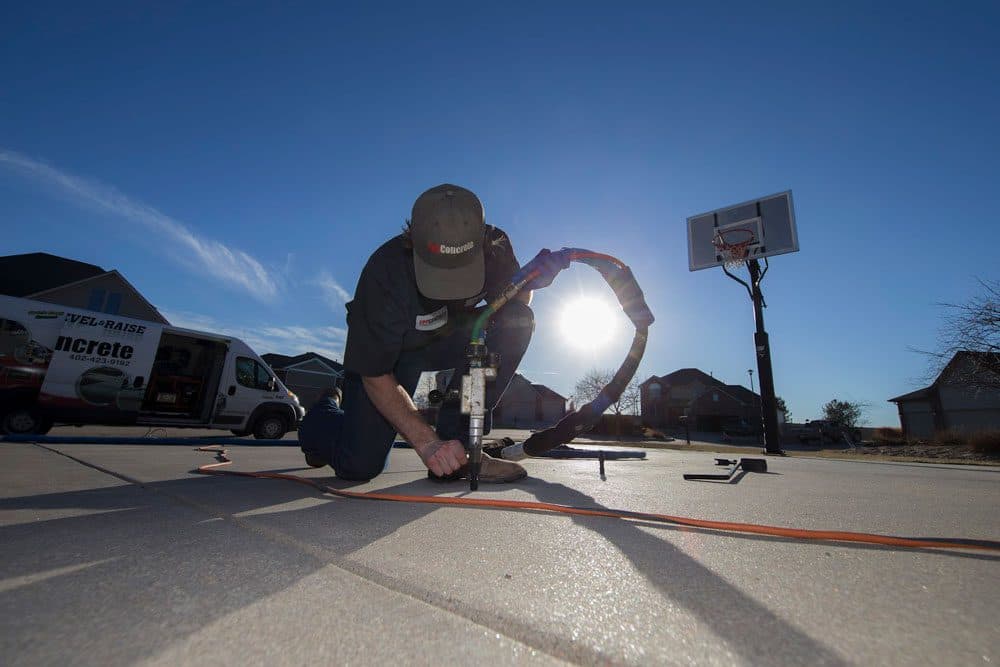
Polyjacking Is the Modern Name for Polyurethane Foam Slab Lift.
Epp Foundation Repair has installed polyurethane foam slab lift. Whether the contractor calls it polyjacking, foam jacking, or poly lift. Across Nebraska, Iowa, Kansas, and Missouri since 1994. Same closed-cell foam. Same 5-year warranty.
Let's take the first step toward a healthy home.
A local specialist will inspect your foundation, walk you through the findings, and send a clear estimate, no cost, no pressure.
Polyjacking: how it works and when it's the right call.
The mechanics are the same closed-cell polyurethane foam process Epp Foundation Repair has installed for decades. A 5/8-inch port is drilled through the slab. Two liquid components. An isocyanate and a polyol resin. Are pumped through heated hoses to an injection gun, where they mix and react. The reacting mixture enters the void, expands rapidly (full expansion in roughly 15 seconds), and continues to cure for 24 hours. During expansion, the foam first fills the void below the slab, then generates upward pressure against the underside as expansion continues into a confined space. Lift is monitored in real time with a laser level set across the slab. The technician adjusts injection rate and port sequence to control lift evenly across the slab. Typically lifting in increments measured in sixteenths of an inch until target elevation is reached. The cured foam weighs roughly 4 pounds per cubic foot, is hydrophobic (won't absorb groundwater), and is chemically inert in soil. On Nebraska and Iowa loess soils that hydroconsolidated, on Kansas and Missouri clay that shrank during drought, the foam fills the void and resists future re-consolidation because it can't compress under load. That's what "closed-cell" means structurally.
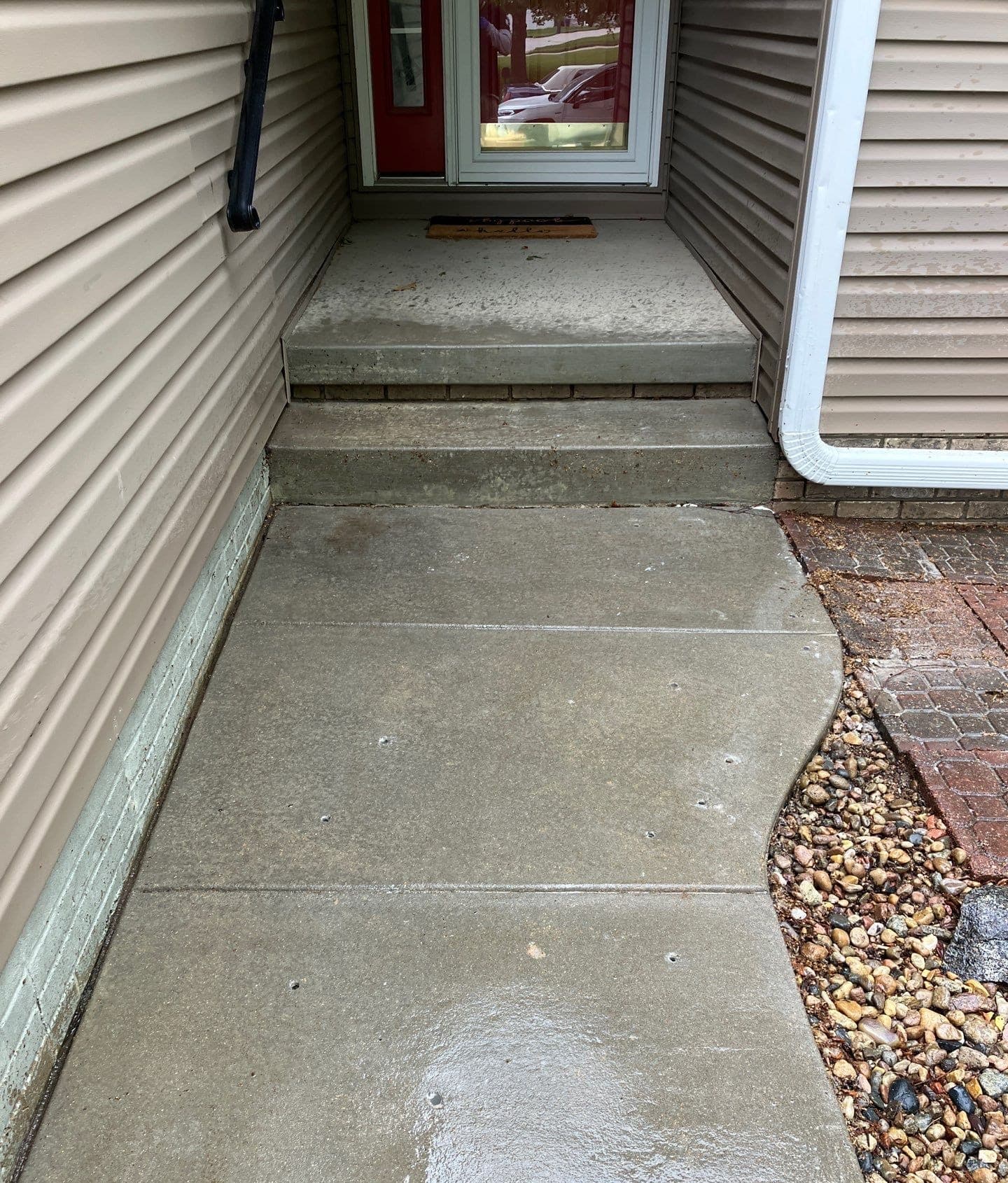
Before & After Concrete Repair | Poly Leveling & Joint Sealant Transformation


Related to what you are reading. Our team covers the same ground on camera.
How we install polyjacking.
Step 01.Inspection, Lift Plan & Customized Repair Estimate
A specialist measures the settlement with a laser, identifies the low points and the suspected water source, and marks port locations on the slab. Port spacing is typically every 4 to 6 feet, with extra ports added at low points.
Step 02.Port Drilling
Epp's technician drills 5/8-inch injection ports through the slab at the marked locations using a dust-controlled rotary hammer. The holes are roughly the diameter of a small coin. Small enough to disappear visually once patched with a color-matched cap. On a typical 400-square-foot driveway section, port count runs 8 to 16.
Step 03.Foam Injection With Real-Time Laser Monitoring
The two-component polyurethane is pumped through heated hoses to the injection gun. Components mix at the gun and react inside the void. A laser level set across the slab measures lift to within 1/16 inch. The technician moves between ports in a calculated sequence, controlling injection rate to lift the slab evenly and avoid overshooting target elevation.
"Half the calls I get about polyjacking are people who don't realize they've been talking to two contractors selling the exact same thing under different names. Once you know polyjacking and foam injection are the same install, the question becomes who's installing it. The chemistry, the equipment, the warranty, the years on the truck. That's where the real difference lives."

Care and expertise from a team that's been doing this since 1994.
Epp Foundation Repair is locally owned and operated, with crews dedicated exclusively to foundation, basement, and concrete work across the Midwest.
Foundation repair, waterproofing, and concrete leveling are our entire focus, not a sideline.
Three decades of experience with Midwest soils, basements, and weather conditions.
Recognized in 2011 and 2016 for ethical business practices and customer transparency.
Every repair comes with a written Epp warranty, from 1 year to the lifetime of the structure depending on the product.
Answers to common questions about Polyjacking.
Don't see your question here? Our team is happy to help. Reach out anytime.
Concrete Repair warning signs this solution resolves.
Each problem sign below is a symptom this solution is engineered to fix. See how we diagnose it before we recommend this method.
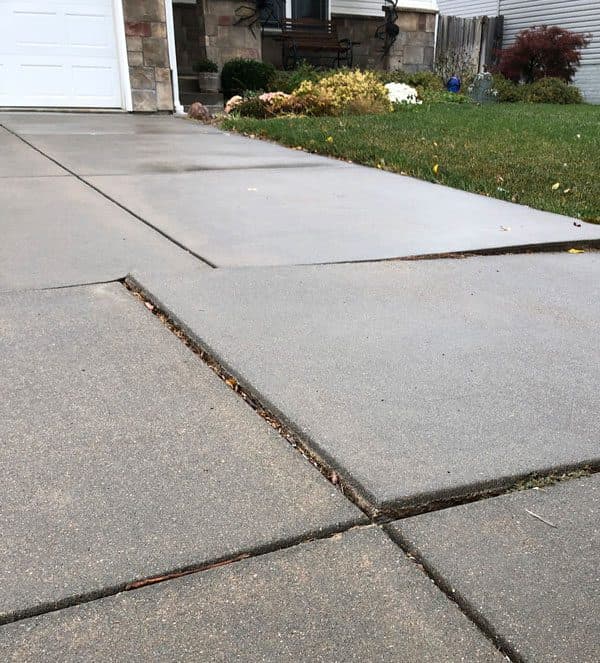
Sinking Driveways Diagnosed and Lifted Back to Grade
Epp Foundation Repair has diagnosed and lifted sunken driveways across Nebraska, Iowa, Kansas, and Missouri since 1994, and we fix the water source first, every time.
Learn more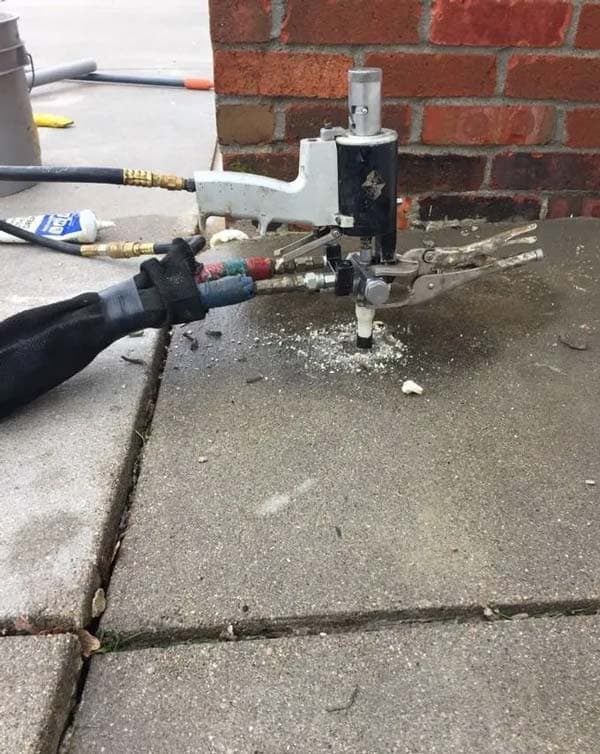
Sinking Sidewalks
Epp Foundation Repair has restored sidewalk sections across Nebraska, Iowa, Kansas, and Missouri since 1994, eliminating homeowner liability exposure on settled public and private walkways.
Learn more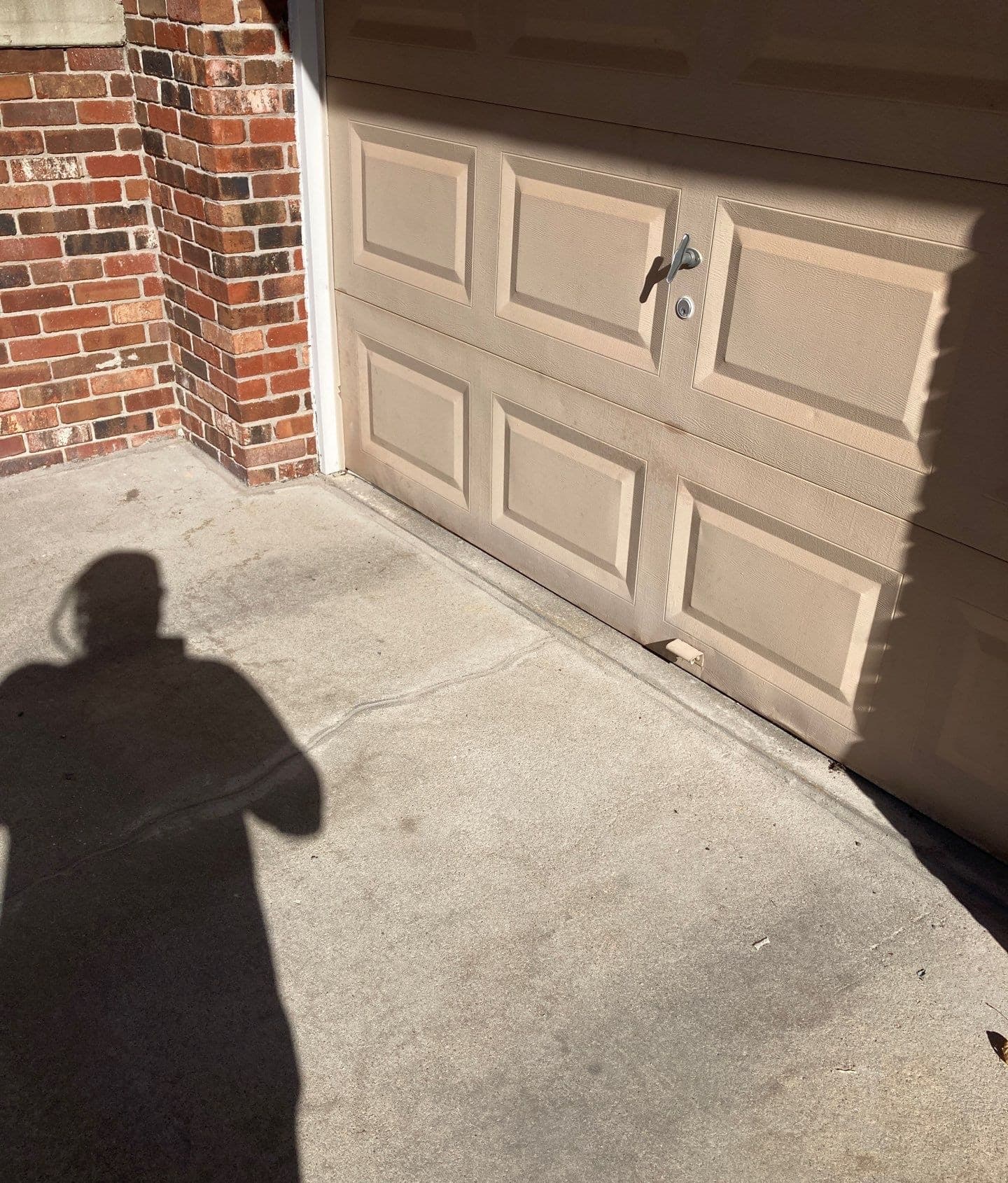
Sinking Garage Floors
Epp Foundation Repair has stabilized sinking garage slabs across Nebraska, Iowa, Kansas, and Missouri since 1994 using polyurethane foam injection that cures in 15 minutes.
Learn more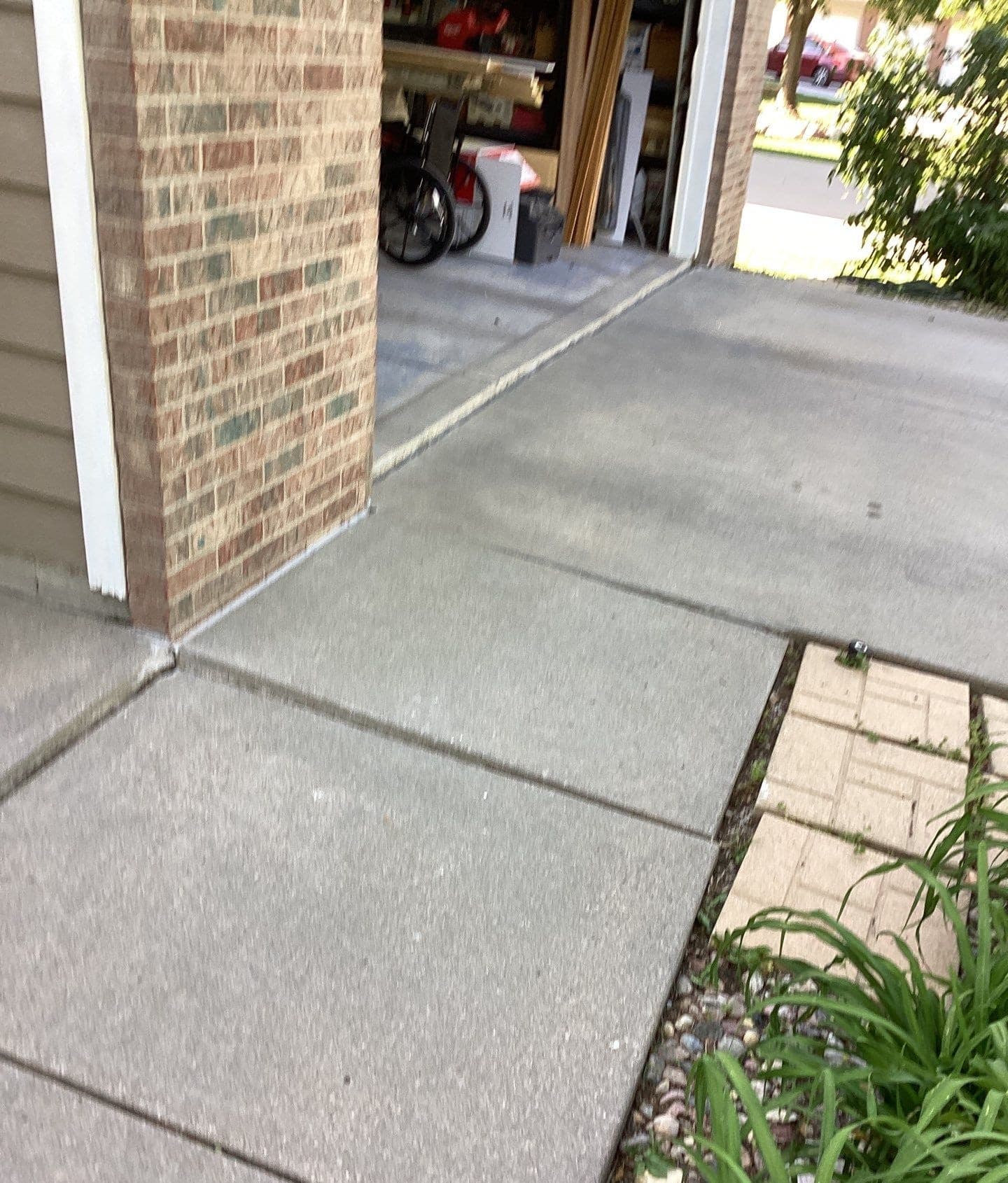
Concrete Cracks Diagnosed and Repaired
Epp Foundation Repair has read concrete cracks across Nebraska, Iowa, Kansas, and Missouri since 1994. Most exterior cracks signal a soil problem, not a concrete problem.
Learn more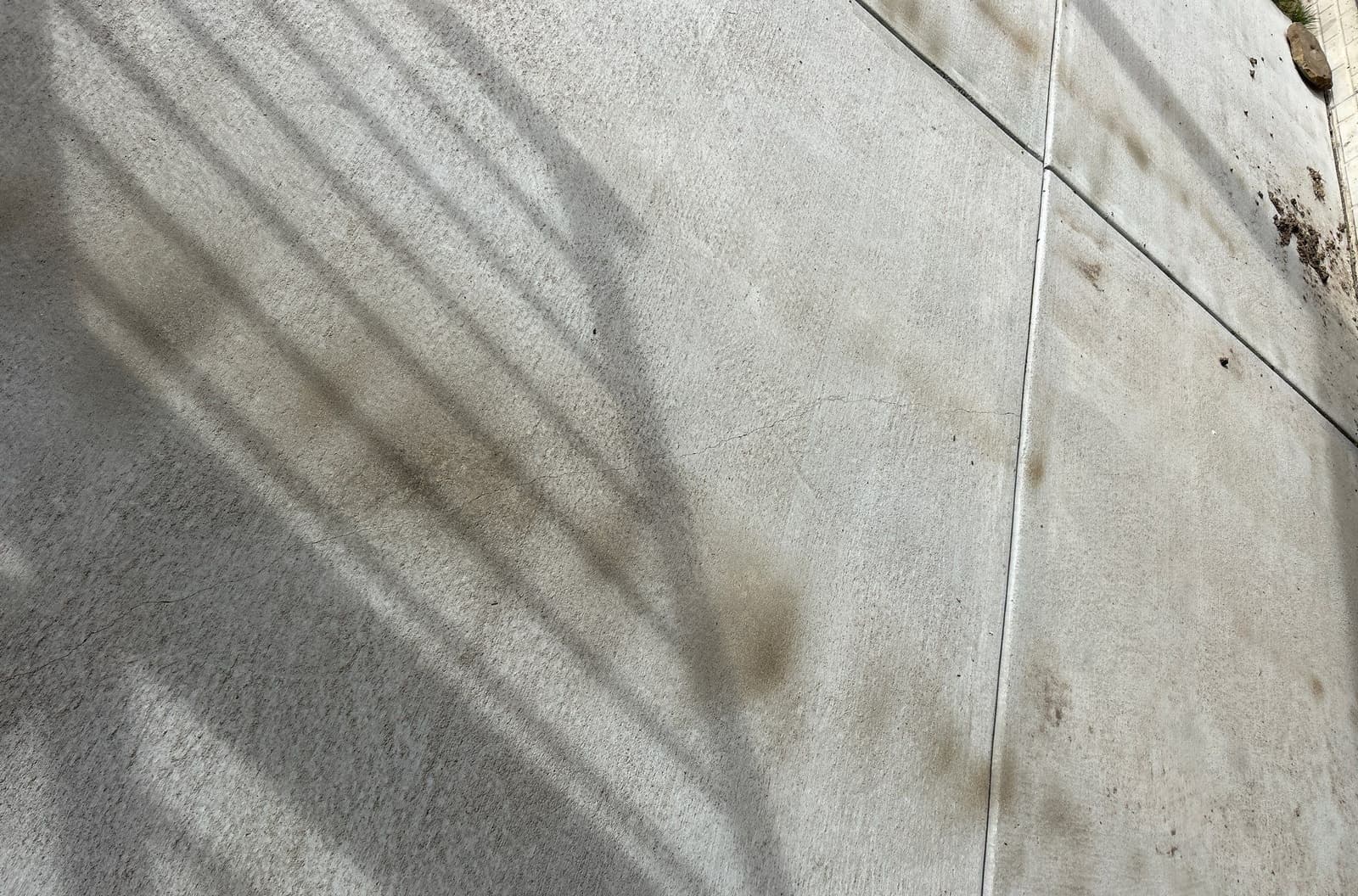
Cracking Expansion Joints
Expansion joints are supposed to absorb the movement of concrete as it heats, cools, and shifts. When the joint material cracks, splits, or pops out, the gap stops doing its job. Water gets under the slab, and the slab loses its cushion against the next round of movement.
Learn more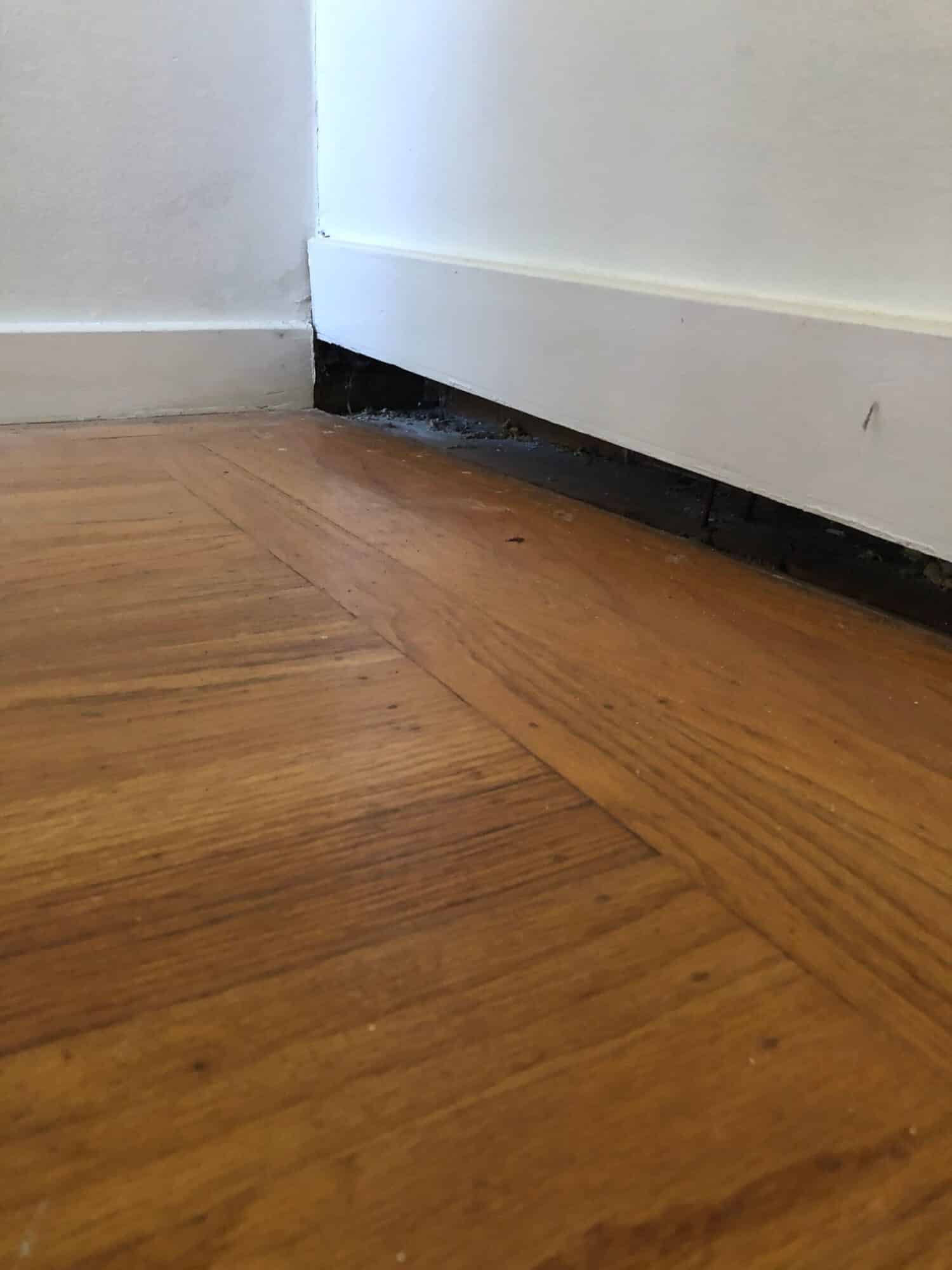
Gaps Between Concrete Slabs and Walls
A gap opening where a slab meets a wall, the house, or the next slab means one side has settled while the other stayed put. The space itself is a problem because it channels water down into the soil that is already moving.
Learn moreServing Nebraska, Iowa, Kansas & Missouri.
Local crews based in five regional offices, dispatched daily across four states. If your town isn't listed, call us: we likely serve your area.
- Omaha, NE
- Lincoln, NE
- Topeka, KS
- Sioux City, IA
- Bellevue, NE
- St. Joseph, MO
- Council Bluffs, IA
- Grand Island, NE
- Papillion, NE
- Kearney, NE
Take the first step toward a healthy home.
A straightforward path from initial inspection to completed repairs.
Schedule your inspection.
A local specialist visits your home, evaluates the foundation, and answers your questions on site. No cost, no obligation.
Receive an estimate based on your needs.
We provide a clear, Customized Repair Estimate with a scope of work tailored to your home's specific issues. Typically within one business day.
Get your repairs.
Our own trained crews complete the work on schedule and back it with a written Epp warranty, set out in your contract.
Over 1,700 homeowners have shared their experience.
A 4.9-star average across Google, with verified reviews from homeowners throughout Nebraska, Iowa, Kansas, and Missouri.
Two ways to start: book instantly, or request an estimate.
Schedule your inspection in seconds with our Driive booking tool, or share a few details and a local specialist will follow up within one business day.
- A local foundation specialist on site
- A complete walk-through of the findings
- A Customized Repair Estimate within one business day
- No cost, no obligation, no high-pressure sales
Expert guidance on protecting your home.
Practical articles from the Epp team on foundation health, waterproofing, and home preservation.
 Concrete RepairLatest
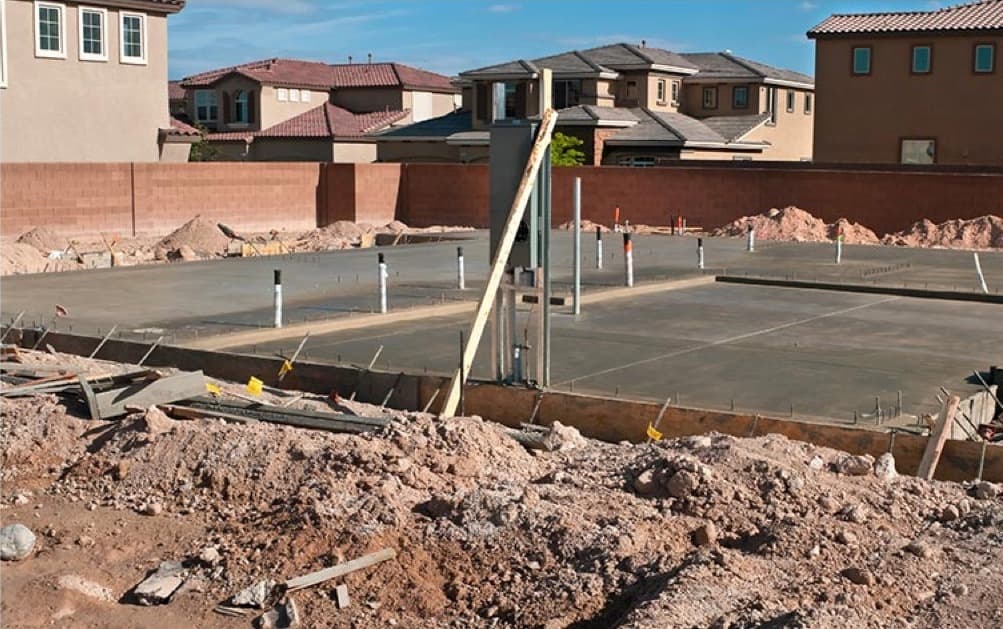
Difference Between Floating And Monolithic Slab Foundations
Monolithic and floating slab foundations are built differently and behave differently in the soil. Learn how each works and how they are repaired.
 Concrete Repair
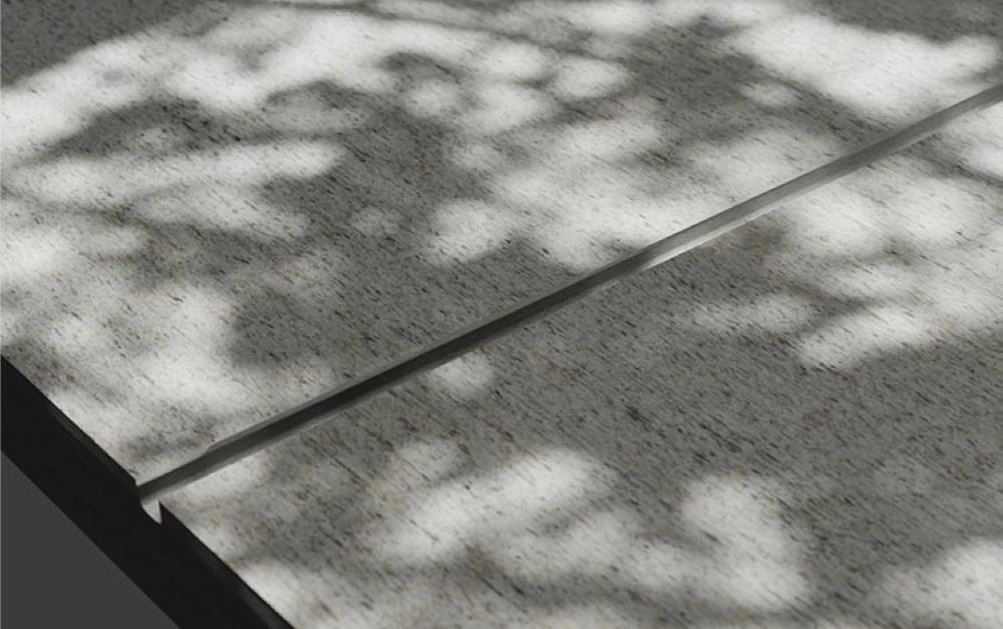
What Is The Difference Between Control And Expansion Joints In Concrete?
Control joints and expansion joints both protect concrete, but they work differently. Learn how each one functions and when to use them.
 Concrete Repair
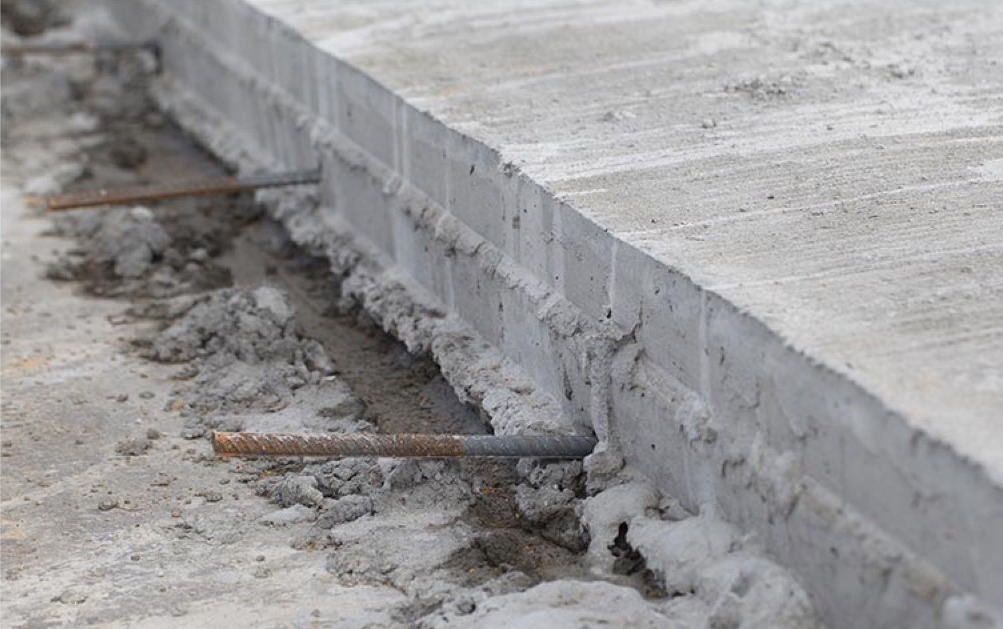
The Homeowner's Guide To Post-Tension Slab Foundations
Post-tension slab foundations use tensioned steel cables to resist cracking. Learn how they work, their pros and cons, and common repairs.
 Concrete Repair
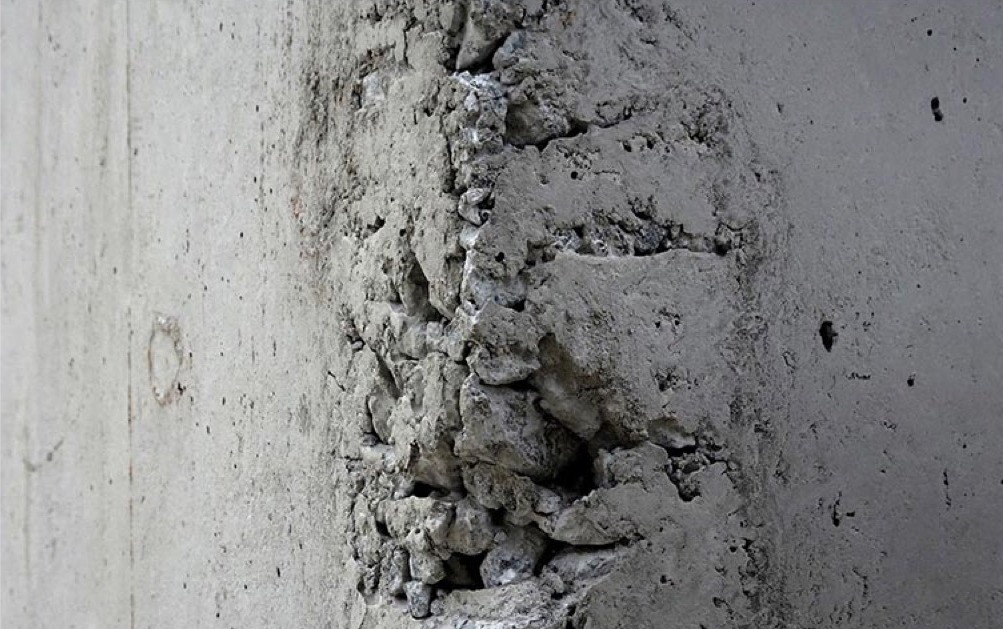
Common Causes Of Honeycomb In Concrete And How To Repair It
Honeycombing is a common concrete defect caused by poor mixing, compaction, or pouring. Learn what causes it, its risks, and how it gets repaired.
Five regional offices across the Midwest.
St. Joseph, MO 64506