
Estimate Only
Approximate pricing
Customized Repair Estimate after on-site inspection reflects your scope.
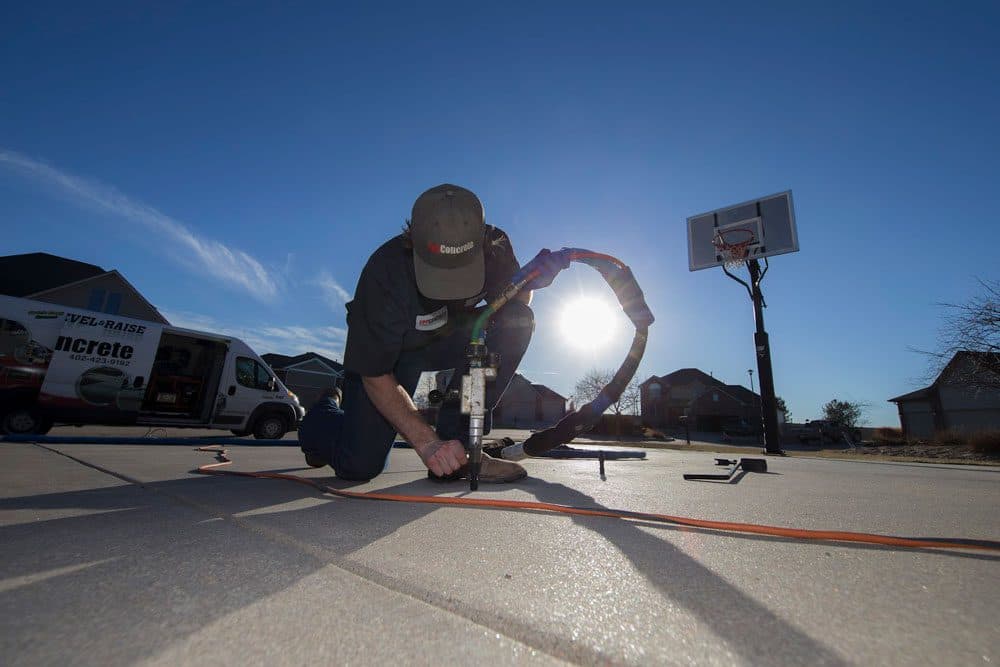
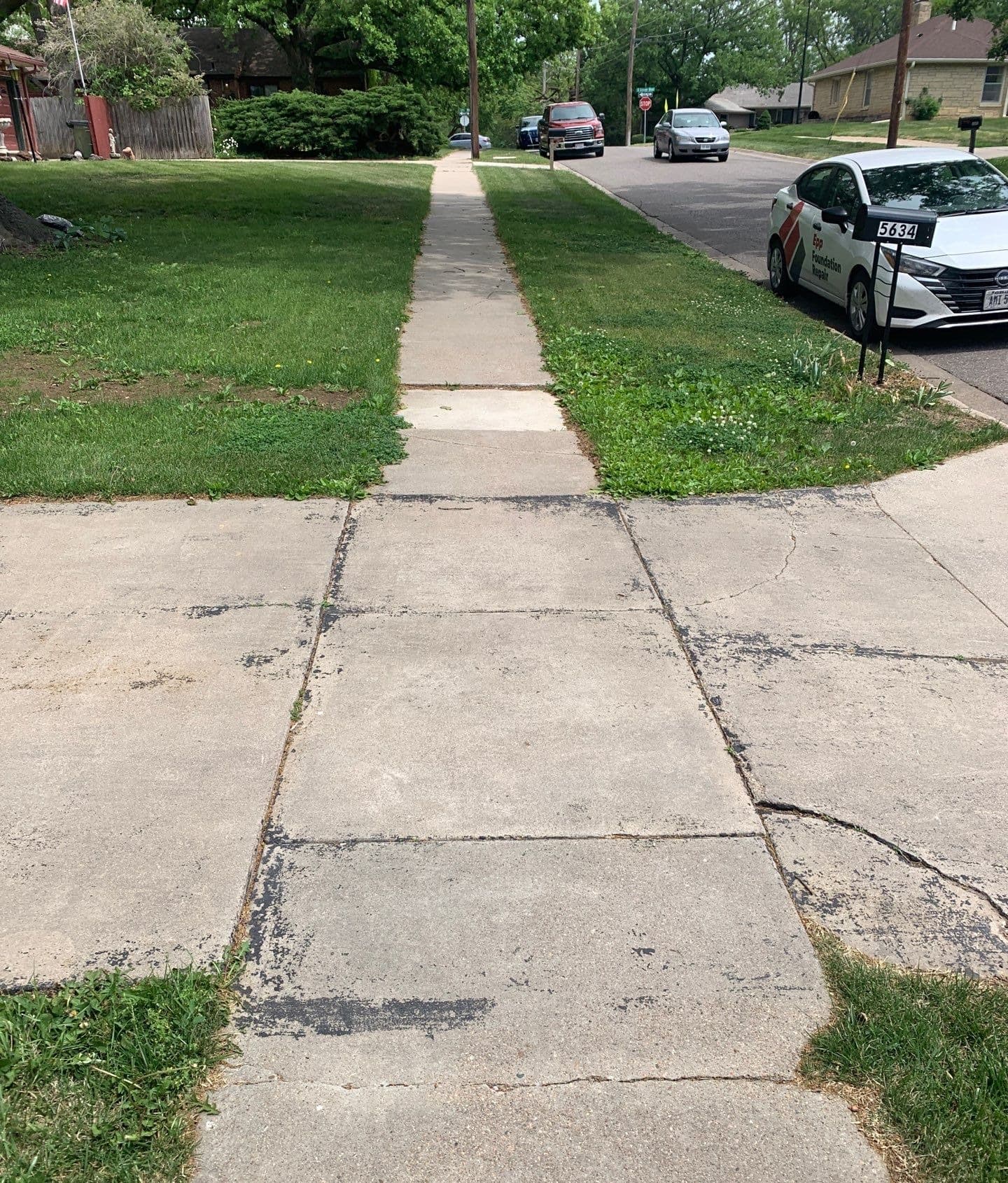
Epp Foundation Repair lifts settled sidewalk sections across Nebraska, Iowa, Kansas, and Missouri, removing the rise differentials that put homeowners on the wrong side of municipal trip-hazard liability standards.

A local specialist will inspect your foundation, walk you through the findings, and send a clear estimate, no cost, no pressure.
Diagnosis First
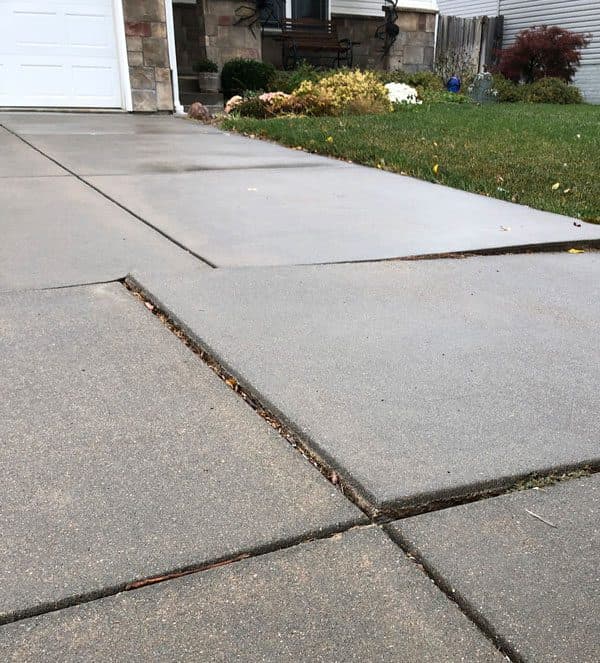
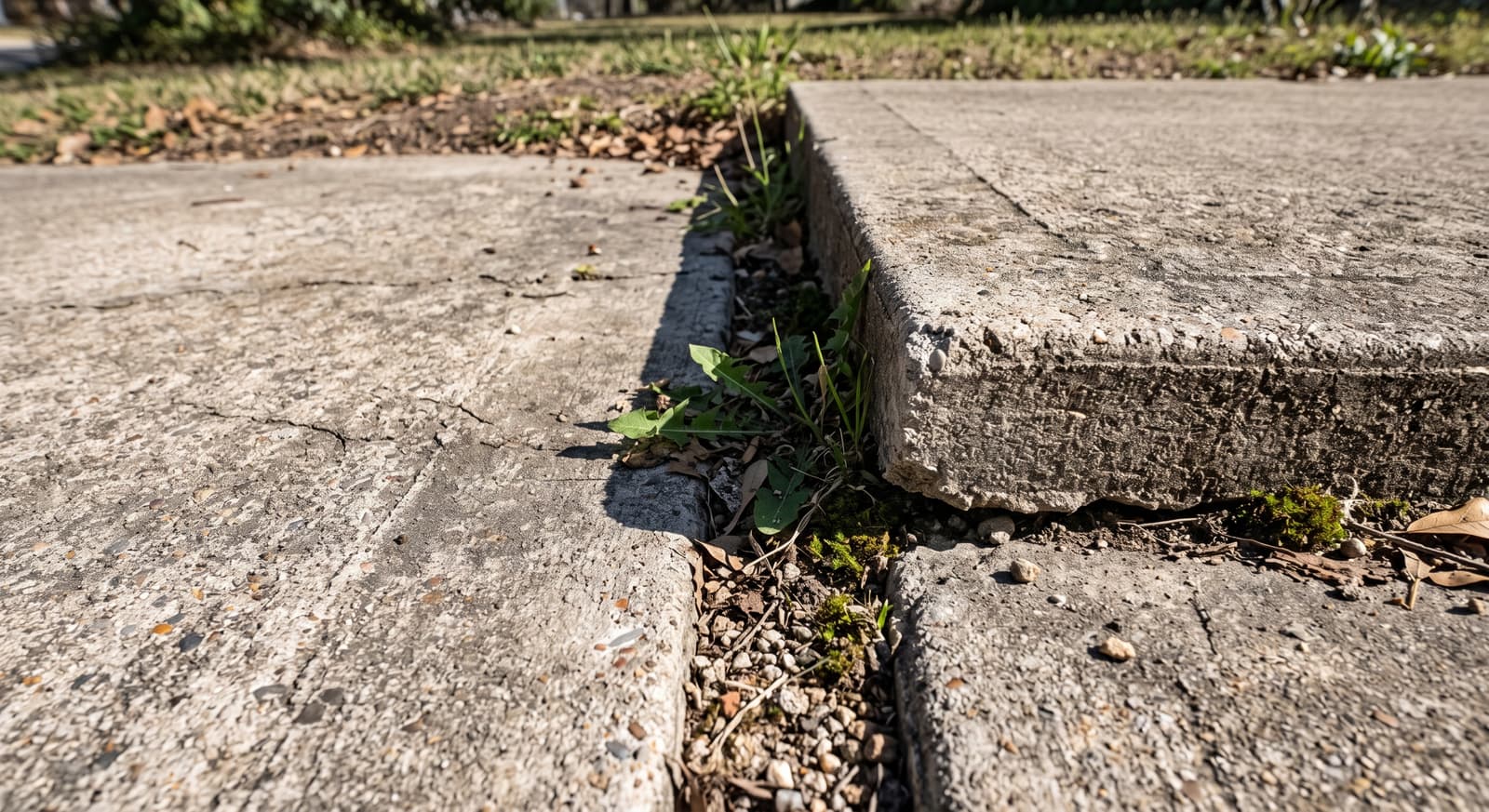
Sidewalk leveling raises a settled concrete panel toward a flush elevation using polyurethane foam injection. Epp Foundation Repair recommends it once the panel is diagnosed as settled from soil loss rather than pushed up by an active tree root, since many municipalities treat a rise past the local threshold as a trip hazard and a liability exposure.
In Depth
Everything a Midwest homeowner should know about this repair, from the specialists who do it every day.
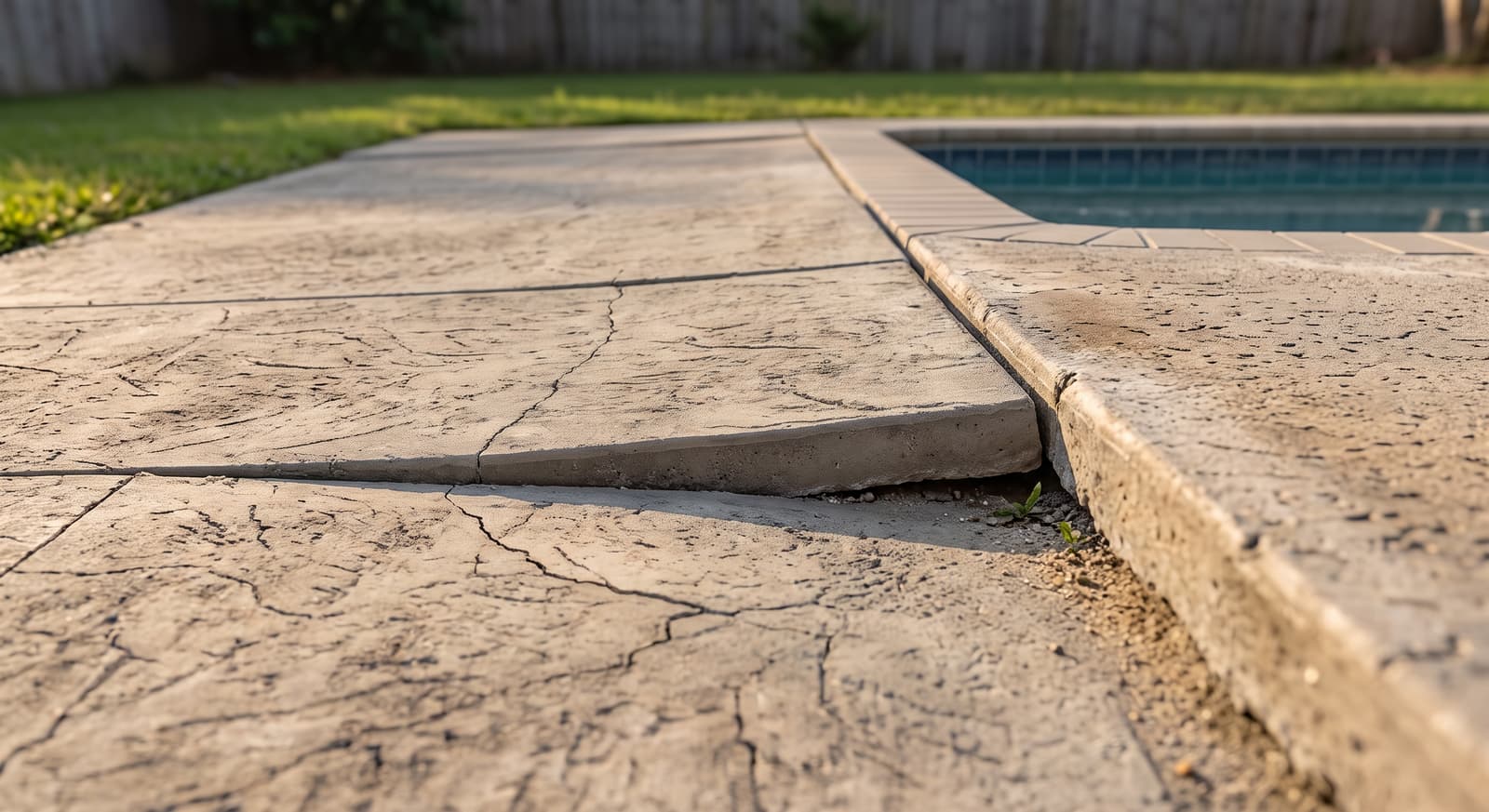
Epp Foundation Repair gets concrete leveling calls on settled sidewalks because most municipalities in Nebraska, Iowa, Kansas, and Missouri place liability for injuries on public sidewalks squarely with the adjacent property owner. Many municipalities treat a rise between sidewalk sections as a trip hazard, and a documented injury at that location can become a homeowner insurance claim. A settled section isn't just ugly. It can be a financial exposure. The cause list comes down to four repeat offenders. Tree root heave from species such as silver maples and cottonwoods pushes slabs up over years of root growth. Soil settlement at the walk-to-driveway joint or walk-to-porch joint creates a drop where two different fill standards meet. Freeze-heave at expansion joints causes seasonal vertical movement that accumulates over time. And downspout splash-zone erosion washes out the sub-slab fill on the house side of the walk.
The crew arrives, walks the sidewalk with a laser level, and marks every panel where rise differential exceeds the local trip-hazard threshold. Each problem panel gets diagnosed: is it heaved up (root or freeze-heave) or settled down (washout or fill settlement)? The diagnosis drives the method. For settled panels, polyurethane foam injection is the standard approach. Drill foam injection holes in a grid, inject foam, monitor lift in real-time, stop at target elevation. The goal is a panel that walks flush to its neighbor by the end of the lift. Epp calls this approach polyurethane mid-soil injection. Foam doesn't just fill the void under the slab, it expands into the soil column at depth and densifies the weak fill that caused the settlement. That's the difference between a lift that lasts and a lift that fails the next time the soil saturates.
Grinding the high side of a sidewalk panel (running an abrasive head across the rise until the differential disappears) is the fast and cheap fix. It's appropriate when the differential is small and the homeowner wants the cheapest legal answer. The trade-off: grinding reduces slab thickness at the high point, sometimes exposing aggregate and weakening that panel. For larger differentials, or for any panel where the low side has dropped, grinding is not the right answer. The slab needs to come up, not down. Foam lift can restore the original elevation across the joint while preserving slab thickness and addressing the soil cause underneath. It costs more than grinding. It also lasts longer. ## What Sidewalk Leveling Costs
Customized Repair Estimate after on-site inspection reflects your scope.
Epp Foundation Repair lifts what's salvageable. Crews do not remove trees. That's an arborist's call, and removing a root system without addressing the structural concrete is half a fix. When a panel is past lifting, Epp pours a new one on properly prepared base rather than skim-coating a slab that will fail again. Crews do not resurface decorative or stamped concrete, though they can lift it (the patches will not perfectly match the pattern). The critical honest scope item: Epp Foundation Repair will not lift a sidewalk panel that's being actively heaved by a living tree root. The root will keep growing. The slab will keep moving. The lift becomes wasted money. The recommendation in that case is to address the root system first (root pruning or tree removal by an arborist), then lift the slab once the heave source is gone.
Do not lift a panel over an actively growing tree root. The root will push it back. Address the root first. Do not lift sections with structural cracking running through the field of the slab; the panel won't move as a unit and a replacement is the correct answer. And do not pay for a lift before checking whether the downspout, gutter, or grading change that started the settlement is still active. Recurring settlement traces back to the unaddressed water source nearly every time.
Epp Foundation Repair lifts sidewalks across NE, IA, KS, and MO. BBB A+ rated. BBB Integrity Award winner. Customized Repair Estimate that names the cause, the method, the cost, and any honest exclusions. Crews work across the four-state territory. The lift carries a written PolyLift warranty; the warranty does not cover movement from erosion, washout, groundwater, or other site factors. The estimate flags those before the contract is signed.
Which Solution Is Right?
| Method | Fits when | Not a fit when | Warranty |
|---|---|---|---|
| Polyurethane Foam Injection | The panel has settled (not heaved by a root) and the differential is more than grinding can fix, or the low side needs to come up rather than the high side ground down. | An actively growing tree root is driving the heave, or the panel has structural cracking through the field. | 5 years from substantial completion against failure of the installed polyurethane to perform its lifting or stabilization function due solely to defects in materials or workmanship. Requires full payment and compliance with the PolyLift Concrete Lifting Addendum and Expectations Sheet. |
| Grinding | The differential is small and the high side is the problem. Grinding is the fast, cheap way to make the joint legal. | The differential is larger, or the low side has dropped, since grinding reduces slab thickness and does not address the soil cause underneath. | Ask about the warranty that applies to your project |
Warranty terms above are the headline coverage and its governing condition. Full terms, exclusions, and owner responsibilities for every method are on Epp's warranty terms page.
Each method is matched to a specific failure mode and soil profile. Browse the toolkit we draw from when diagnosing your home.
PolyLift is Epp Foundation Repair's polyurethane foam injection method for lifting sunken driveways, sidewalks, patios, and garage floors. Small ports, a two-part expanding foam, and a laser-monitored lift, with the slab walkable 15 minutes after the work is complete.
Slab jacking and polyjacking are names homeowners use for the same idea: lifting a sunken concrete slab by injecting material underneath it. Epp Foundation Repair's slab jacking work, across Nebraska, Iowa, Kansas, and Missouri, is done with polyurethane foam.
Epp Foundation Repair grinds tripping edges off sidewalks, driveways, and garage entries across Nebraska, Iowa, Kansas, and Missouri. It is a fast fix when the differential is small and the slab underneath is stable.
Concrete depends on the soil underneath it for support. Runoff along an edge or a downspout that empties beside a slab can wash out or soften that soil, and part of a driveway, sidewalk or patio can then settle or tilt. Water under a slab that freezes and thaws can also leave gaps beneath it.
Based on NOAA 1991 to 2020 climate normals for Lincoln Municipal Airport and Omaha Eppley Airfield.
Based on USDA soil survey data for Lancaster County (Lincoln) and Douglas County (Omaha), clay is the main soil type in both counties. The survey rates Lancaster County high and Douglas County moderate for shrink swell. Clay can swell when it gets wet and shrink as it dries, so a slab or foundation on clay can move up and down with the seasons. The soils that cover the most ground in Lancaster County are Wymore and Aksarben, and in Douglas County they are Contrary and Marshall.
Loess, the wind deposited silt common in eastern Nebraska and western Iowa, can lose strength and settle when it gets wet. Water can reach it from runoff, a plumbing leak or a downspout that empties next to the house.
In Lincoln and Omaha, soil near the surface can freeze and thaw many times between fall and spring. Each city's building code sets a frost line depth, which is the minimum depth below finished grade for a footing. It is 36 inches in Lincoln and 42 inches in Omaha. Supports that sit above that depth, such as some porches, stoops and chimney footings, can move as the ground freezes and thaws.
Horizontal cracks in a basement wall are more often linked to pressure from the soil outside the wall than to settlement. Wet soil pushes harder against a wall than dry soil, and soil that freezes against the wall can add to that pressure.
Climate: NOAA U.S. Climate Normals 1991 to 2020, LINCOLN MUNI AP (USW00014939) and OMAHA EPPLEY AIRFIELD (USW00014942), retrieved September 30, 2026. Soil: USDA NRCS Soil Data Access (SSURGO), county survey for Lancaster County and Douglas County. Frost line depth: Lincoln Municipal Code 20.12.140 and Omaha Municipal Code Sec. 43-127.
These are the concrete leveling problem signs Epp Foundation Repair diagnoses most often. Each one links to what causes it and how it is repaired.
Our specialists evaluate the underlying cause before recommending any work. Inspections are at no cost and there's no obligation to proceed.
"A sidewalk that's settled half an inch isn't a future problem. In most Nebraska and Iowa towns, it's already a liability the day the inspector tags it. Fix the lift, fix the soil cause, document the work. That's how homeowners stay off the wrong side of a slip-and-fall."

Completed work photographed on real job sites across Nebraska, Iowa, Kansas, and Missouri.
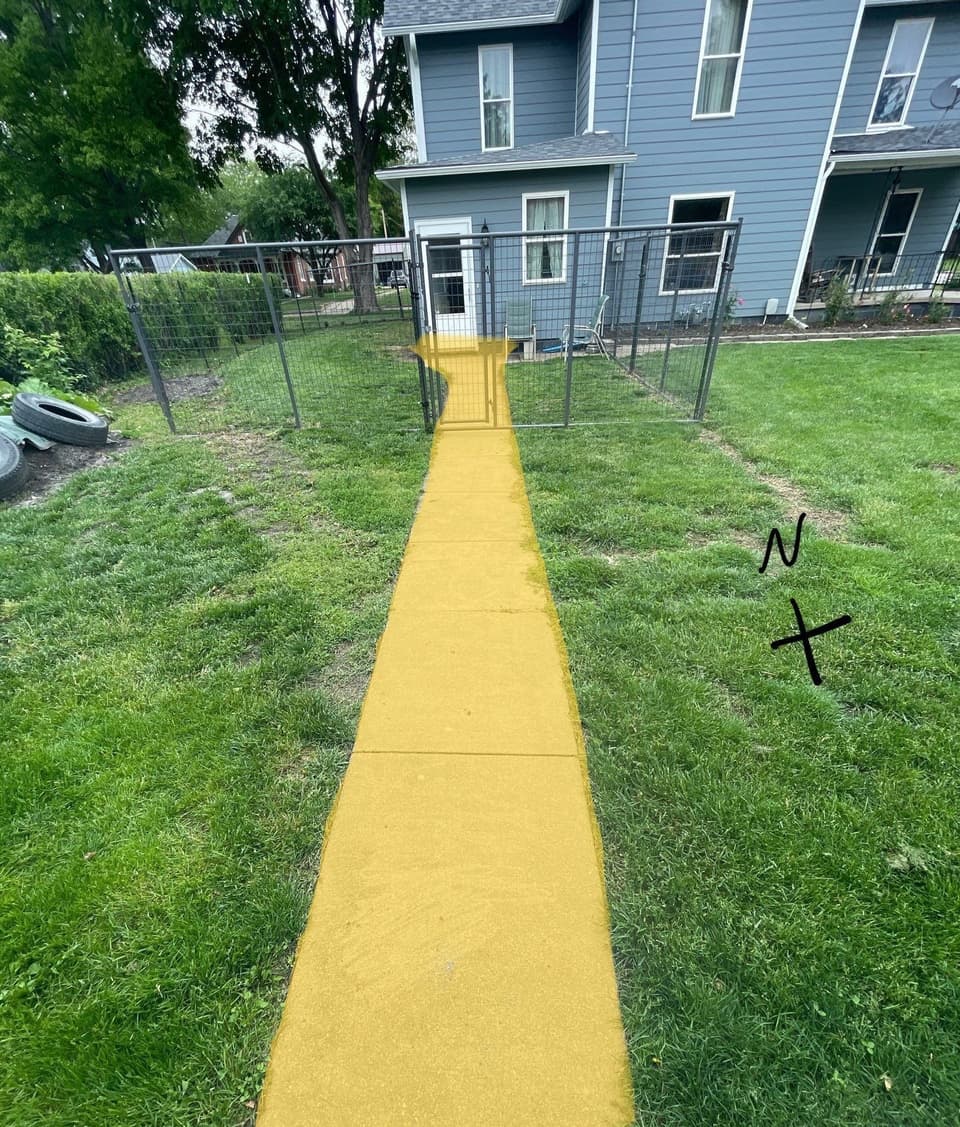
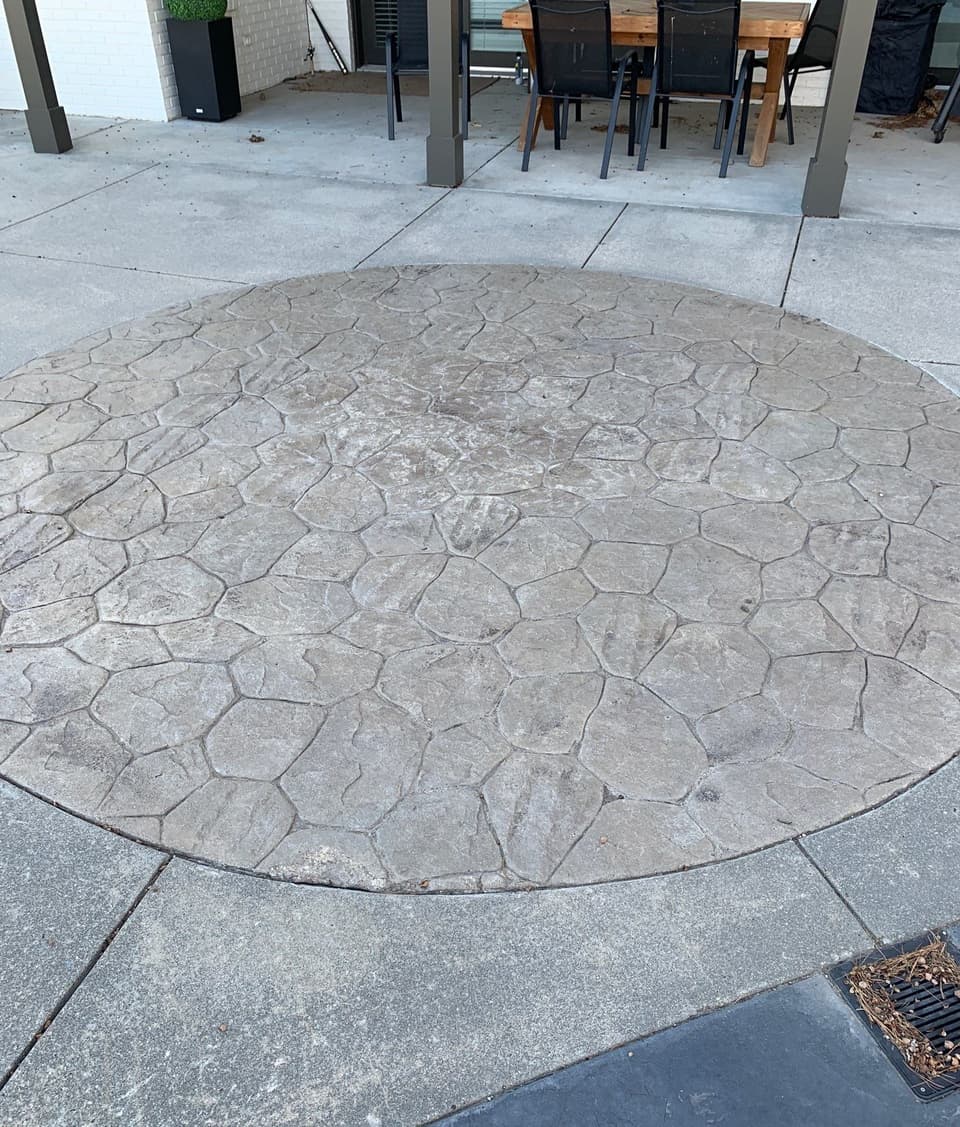
Epp Foundation Repair is locally owned and operated, with crews dedicated exclusively to foundation, basement, and concrete work across the Midwest.
Foundation repair, waterproofing, and concrete leveling are our entire focus, not a sideline.
Three decades of experience with Midwest soils, basements, and weather conditions.
Recognized by the Better Business Bureau for integrity and ethical business practices.
Many of our repairs carry a written Epp warranty. The warranty page lists every covered repair and its terms.
Don't see your question here? Our team is happy to help. Reach out anytime.
Every home is different. What a repair costs depends on the cause, the scope, and access. A free on-site inspection produces a Customized Repair Estimate that reflects your home, not a typical range.
Customized Repair Estimate after on-site inspection reflects your scope.
Sidewalk leveling is not the right call when a living, actively growing tree root is driving the heave. The root will push the slab back and the lift is wasted money. Address the root system first through an arborist. Lifting is also not the right call for panels with structural cracking through the field of the slab; those need replacement, not lift.
Epp Foundation Repair holds a BBB A+ rating and won the BBB Integrity Award for ethical business practices.
Our team walks through this on camera.
Every concrete leveling method we install. Sequenced so the soil profile and failure mode determine the fix.
 01
01 Polyurethane foam can lift settled driveway sections back to original grade. Epp Foundation Repair corrects settled drives across Nebraska, Iowa, Kansas, and Missouri.
Learn more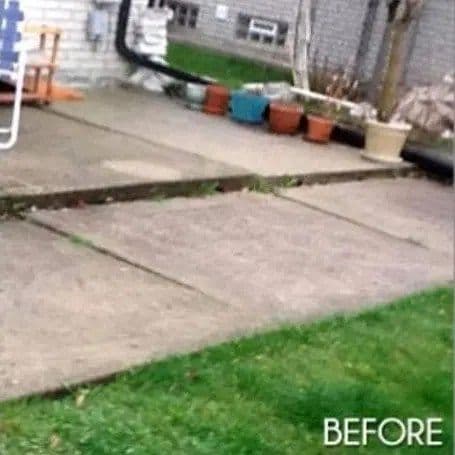 02
02 Polyurethane foam can lift settled patio and porch slabs back to original grade and restore positive drainage away from the house. Epp Foundation Repair corrects residential outdoor living spaces across Nebraska, Iowa, Kansas, and Missouri.
Learn more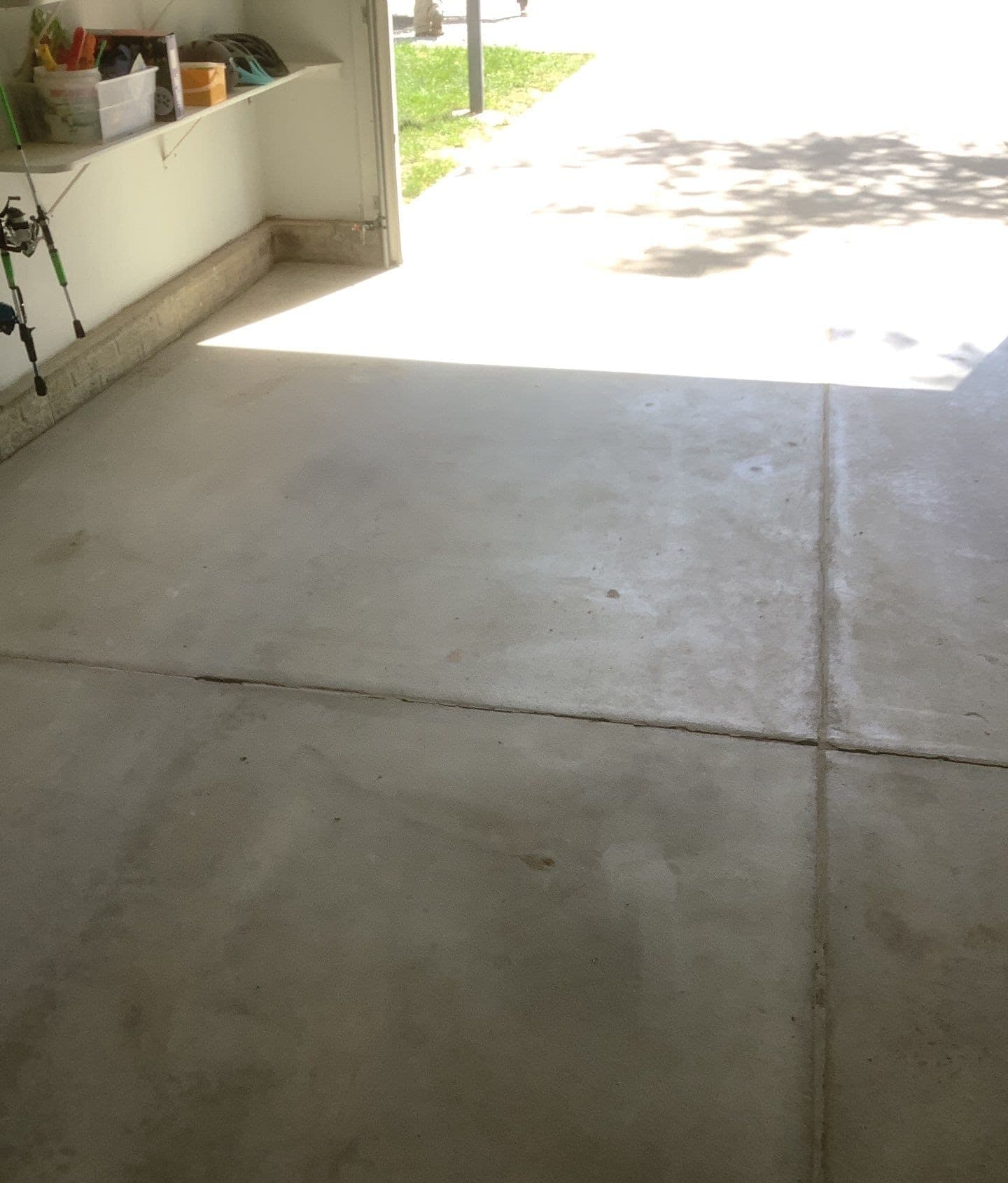 03
03 Polyurethane foam can lift settled garage slabs back toward original grade for vehicles, equipment, and future floor coating. Epp Foundation Repair corrects garage floors across Nebraska, Iowa, Kansas, and Missouri.
Learn more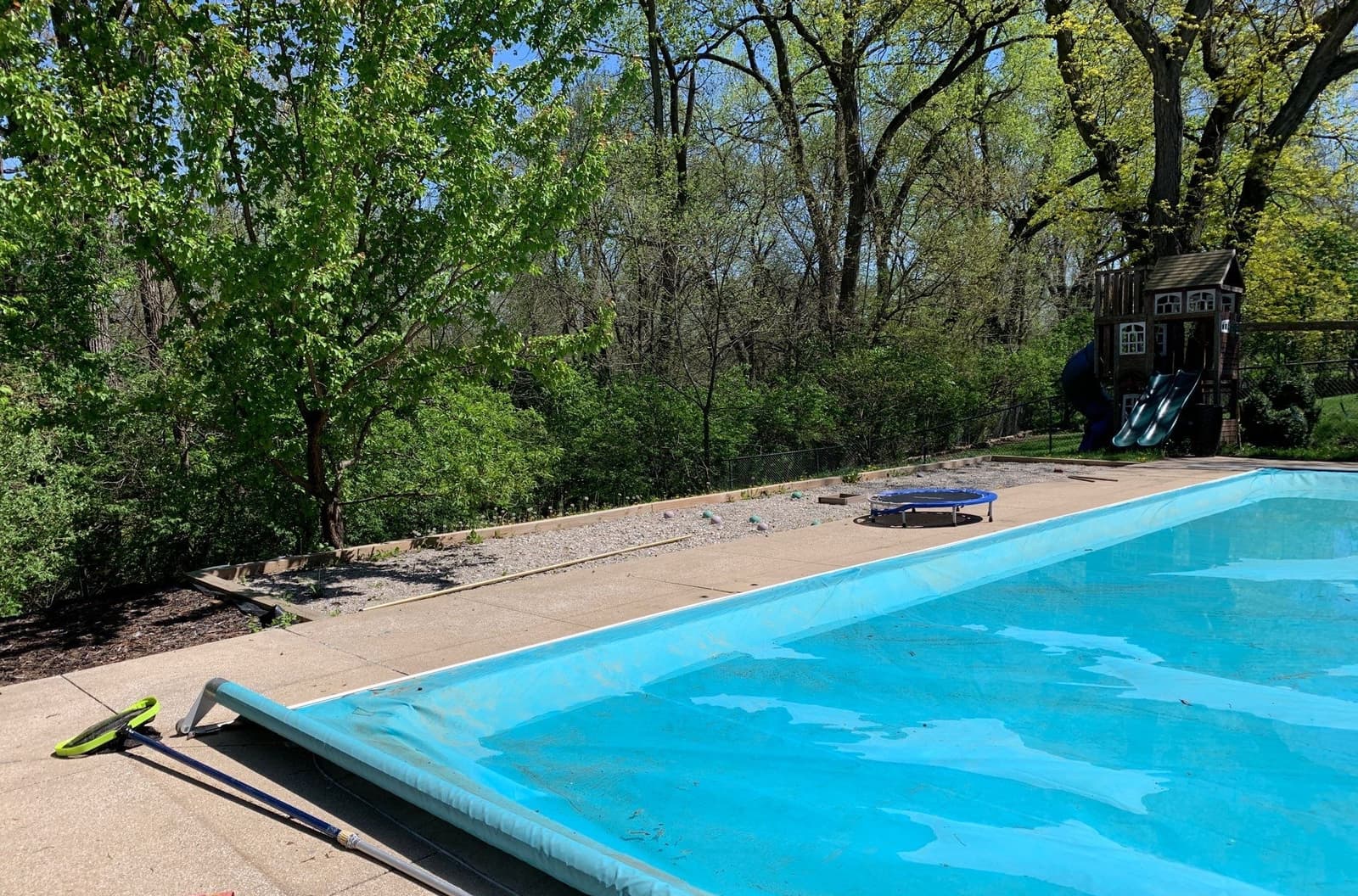 04
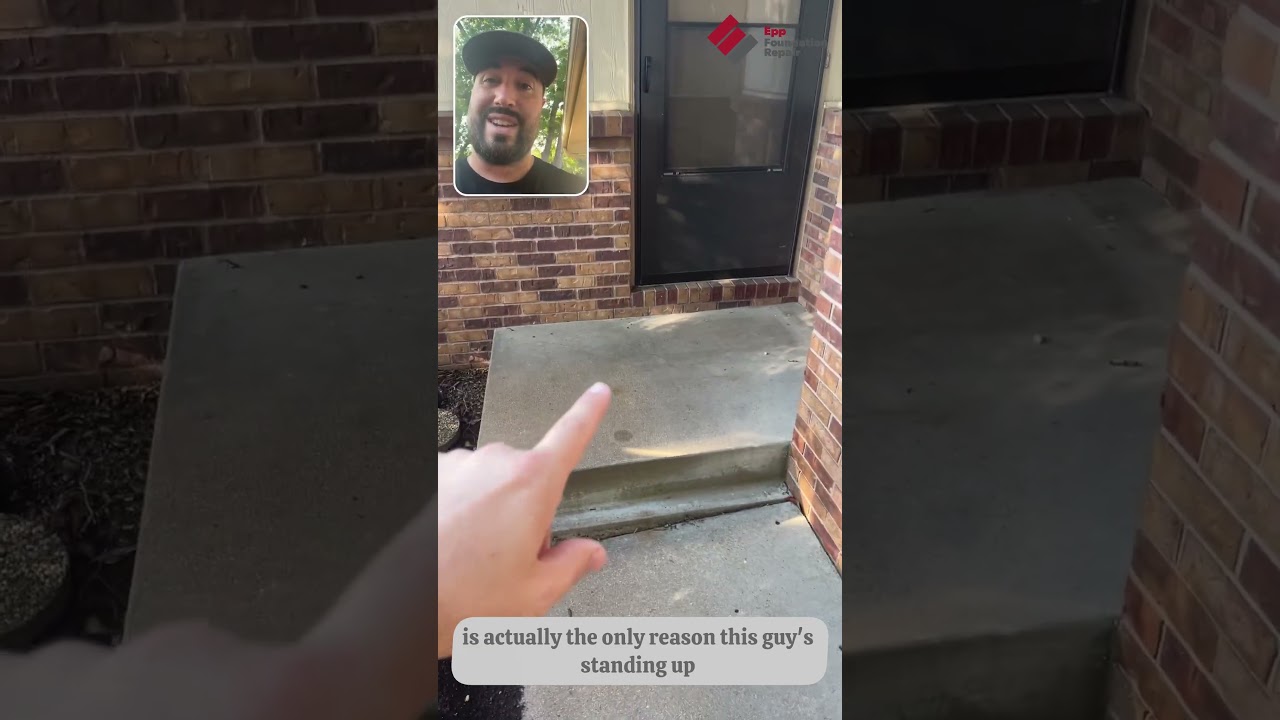
04 Epp Foundation Repair lifts settled pool deck sections with polyurethane foam, but only after confirming the pool shell and coping aren't the actual problem. A settling deck and a moving pool are two different jobs.
Learn more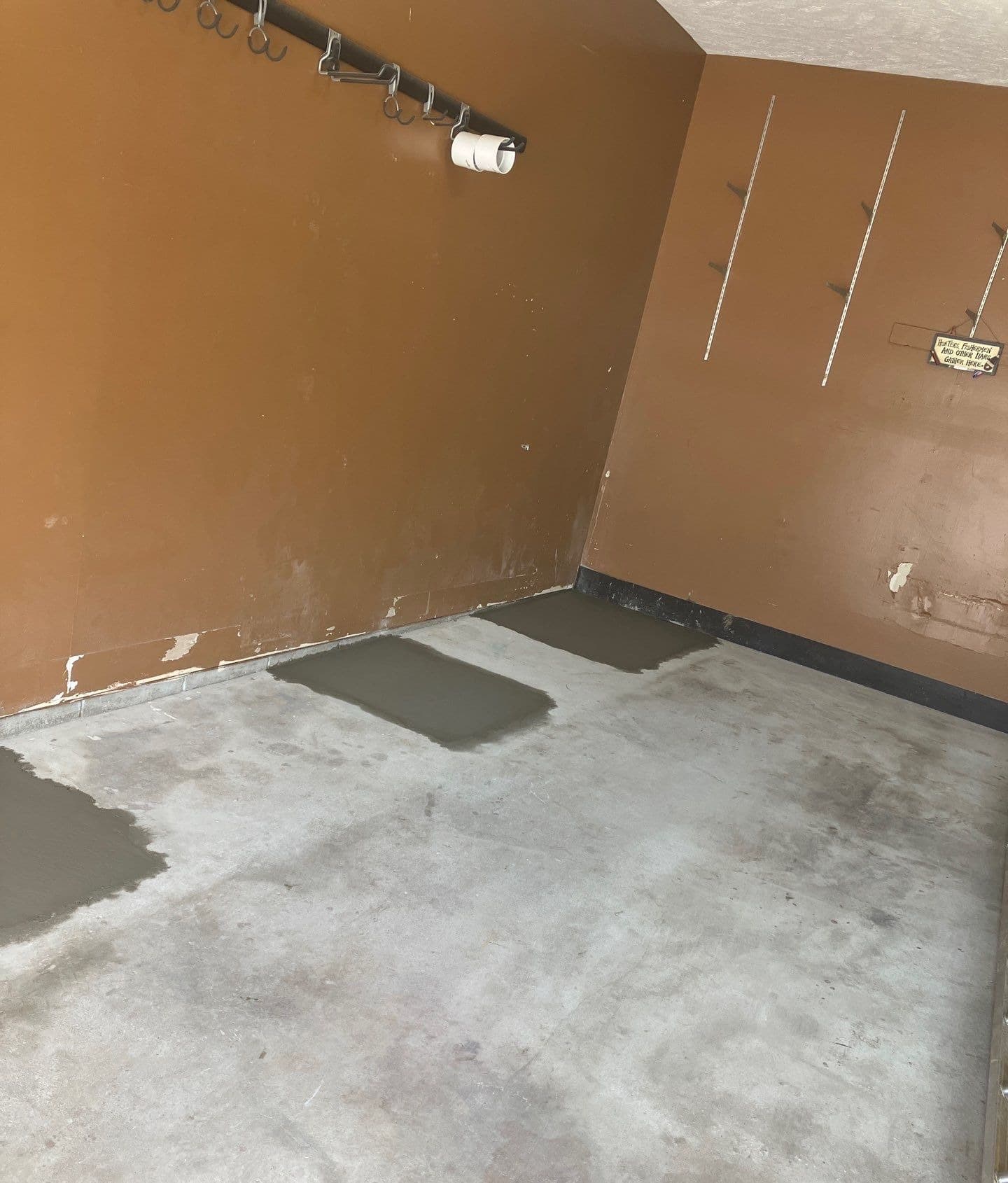 05
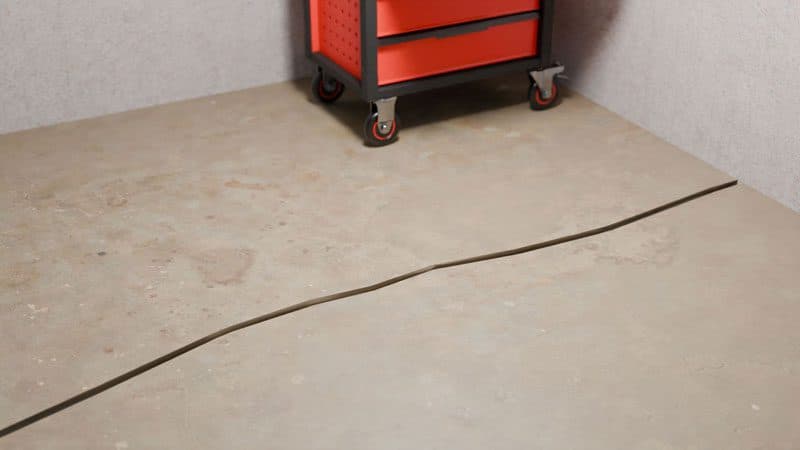
05 Epp Foundation Repair lifts settled interior slabs (basement floors, slab-on-grade living areas, garage floors) with polyurethane foam injected through floor finishes, only after the sub-slab cause is identified.
Learn more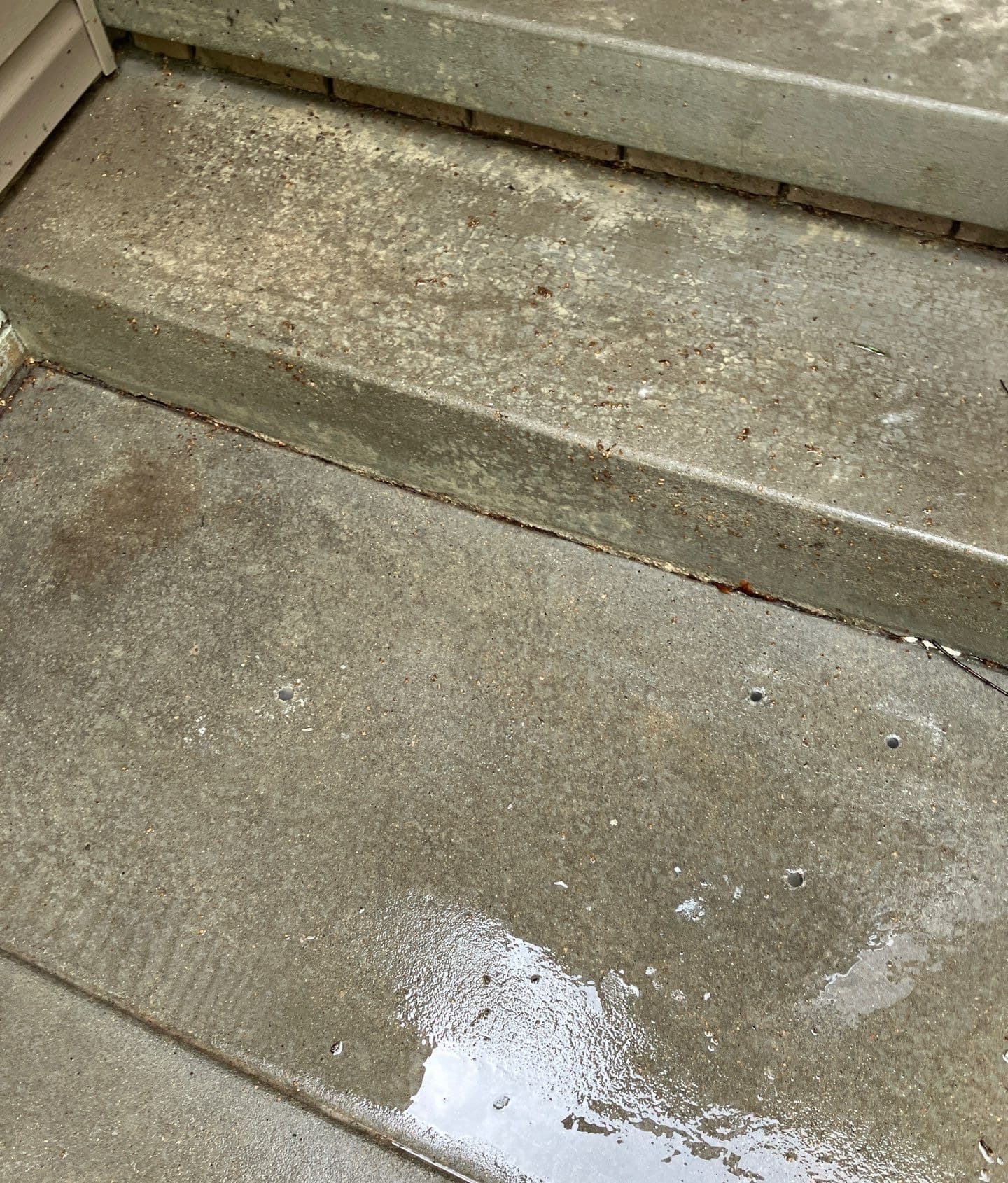 06
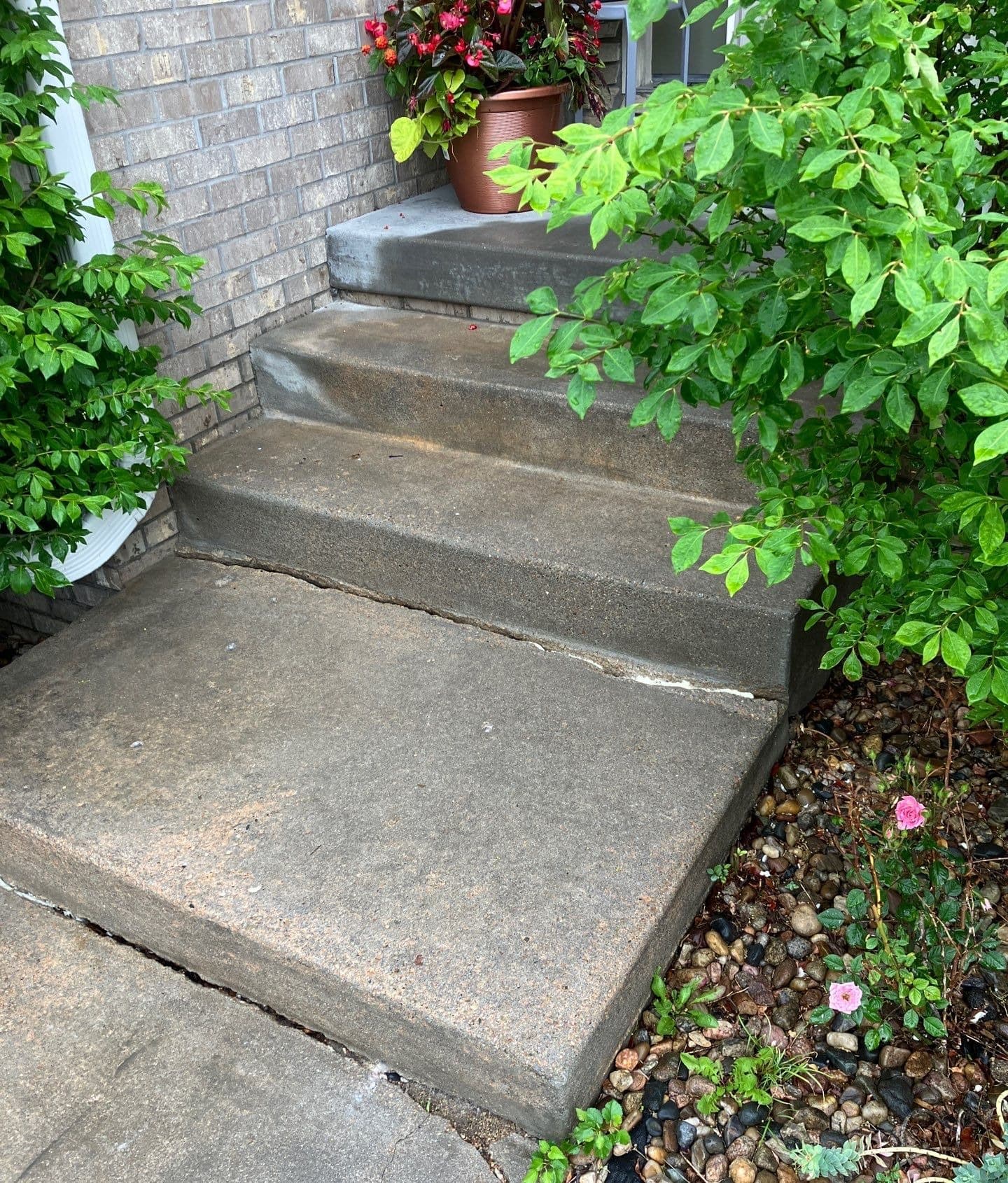
06 Epp Foundation Repair lifts settled concrete stair steps (front porch steps, basement entry stairs, garage steps) with polyurethane foam, when the steps themselves are intact and only the fill below has settled.
Learn more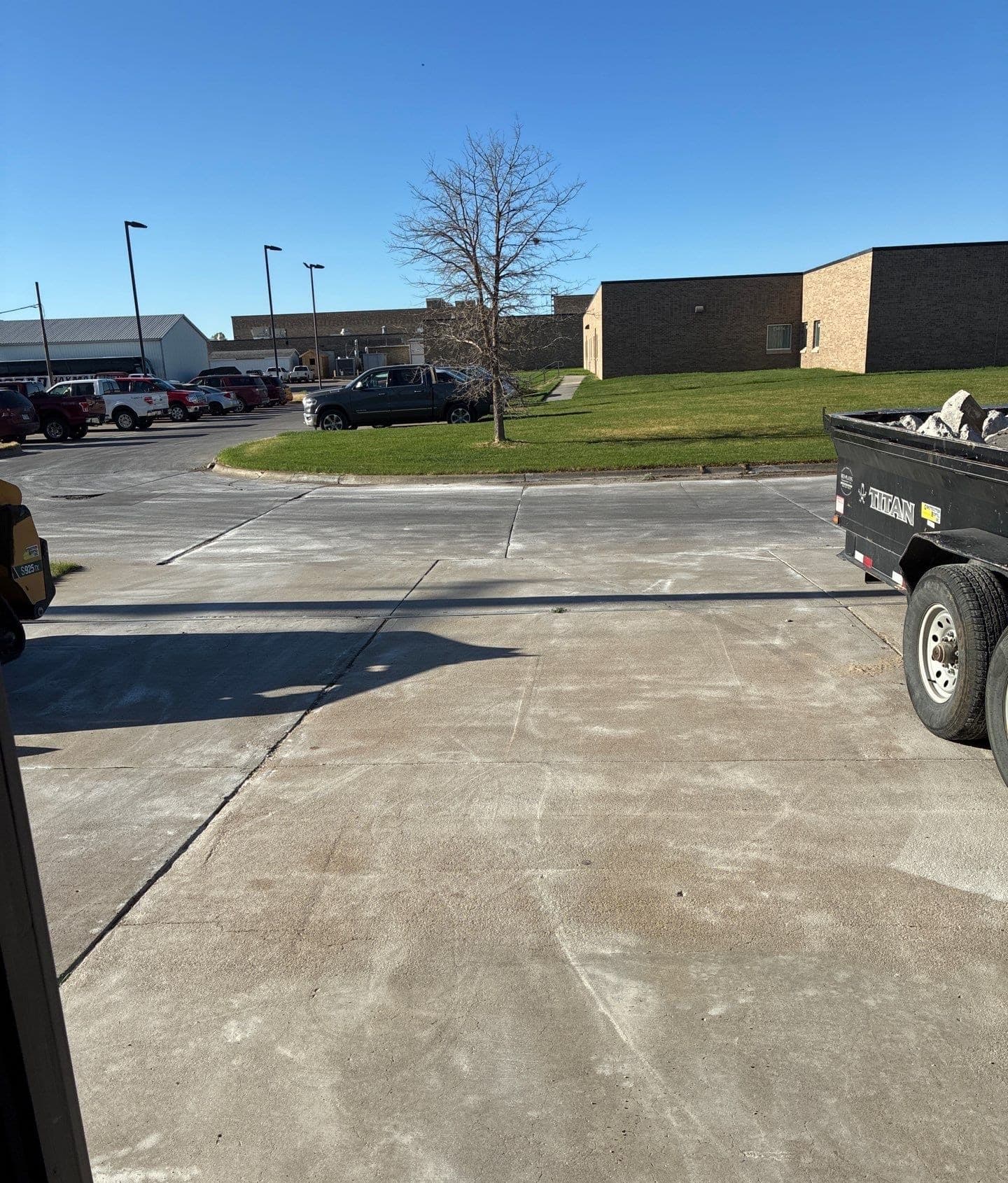 07
07 Epp Foundation Repair lifts settled commercial slabs (warehouse floors, retail flatwork, restaurant kitchens, parking lots, loading docks) with polyurethane foam, engineered around the operating schedule of the business.
Learn moreLocal crews based in five regional offices, dispatched daily across four states. If your town isn't listed, call us: we likely serve your area.
A straightforward path from initial inspection to completed repairs.
Crew walks the sidewalk with a laser level, measures rise at every joint, and flags any panel exceeding the local trip-hazard threshold. Each panel gets diagnosed as heaved up (root or freeze) or settled down (washout or fill settlement), and the diagnosis drives the method.
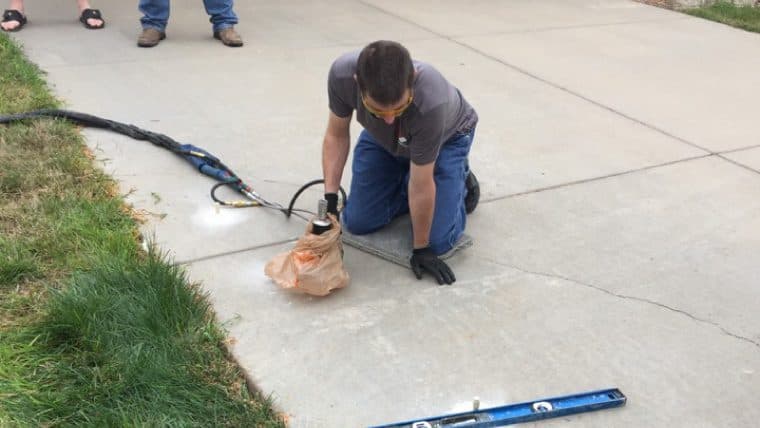
For settled panels, crew drills injection holes in a grid pattern. Hole placement targets the void map identified during diagnostic.
Foam injects under controlled pressure. The material expands to fill the sub-slab void, then continues into the soil column to densify weak fill at depth (Epp's mid-soil injection method). Crew monitors lift continuously with a laser and stops at target elevation flush with adjacent panels.
A 4.9-star average across Google, with verified reviews from homeowners throughout Nebraska, Iowa, Kansas, and Missouri.
Schedule your inspection in seconds with our Driive booking tool, or share a few details and a local specialist will follow up within one business day.
Practical articles from the Epp team on foundation health, waterproofing, and home preservation.
 Concrete LevelingLatest
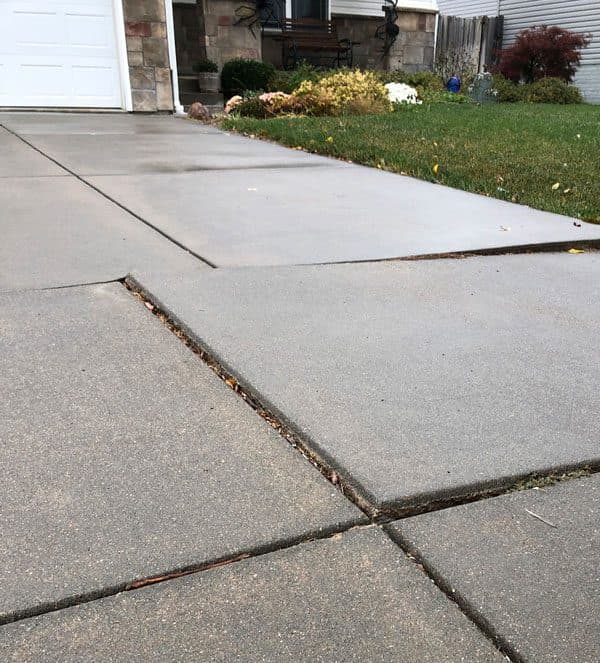
Sunken concrete can often be lifted instead of replaced. Learn why driveways and sidewalks sink, when lifting works, and when replacement makes more sense.
 Concrete Leveling
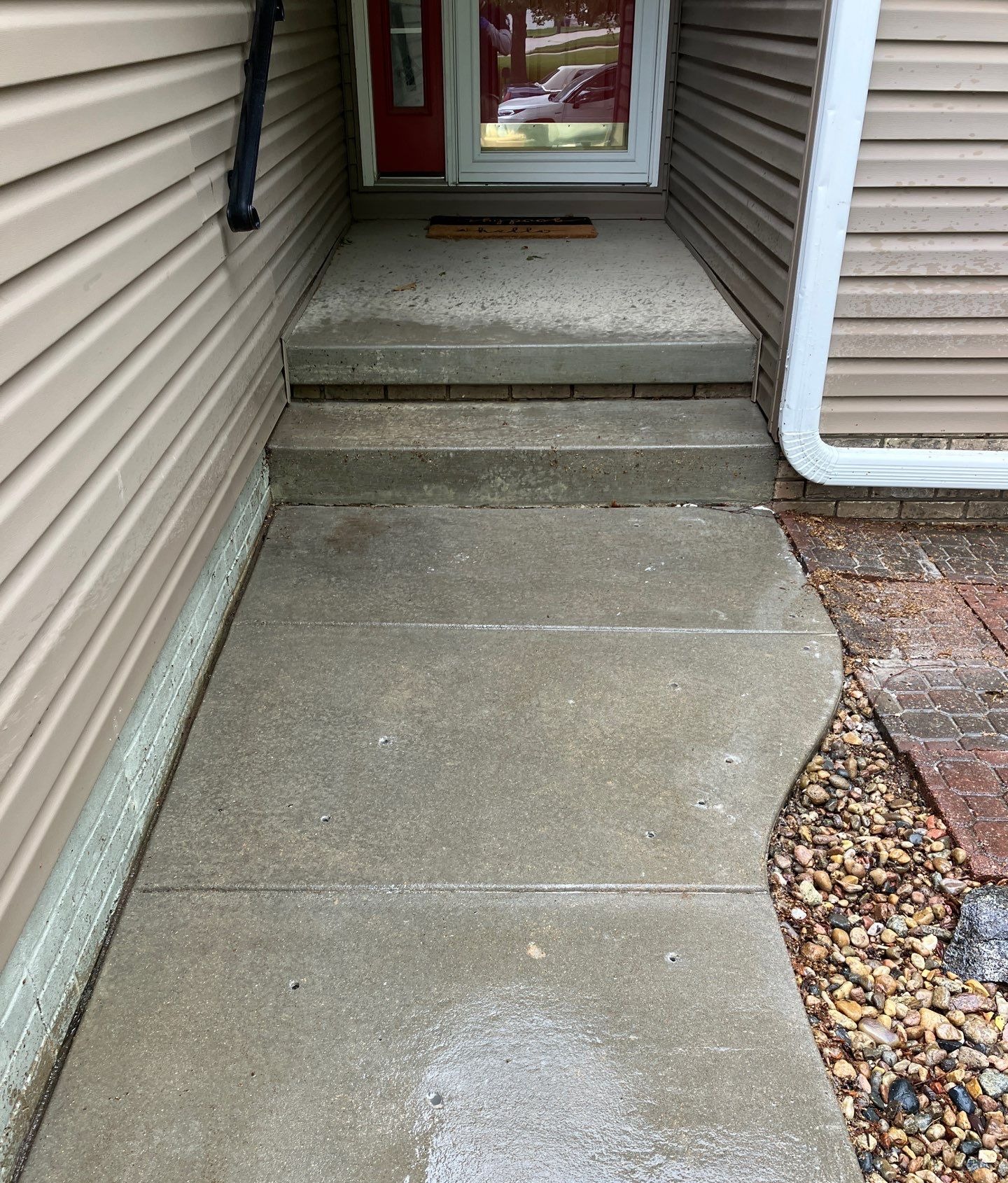
Front steps that sink and pull away from the house are often a soil problem. Learn why it happens and when Epp can lift them with polyurethane foam.
 concrete leveling
Both methods can lift sunken concrete, but only one is what Epp Foundation Repair installs. Here are the ten factors behind the price difference and why.
 Concrete Leveling
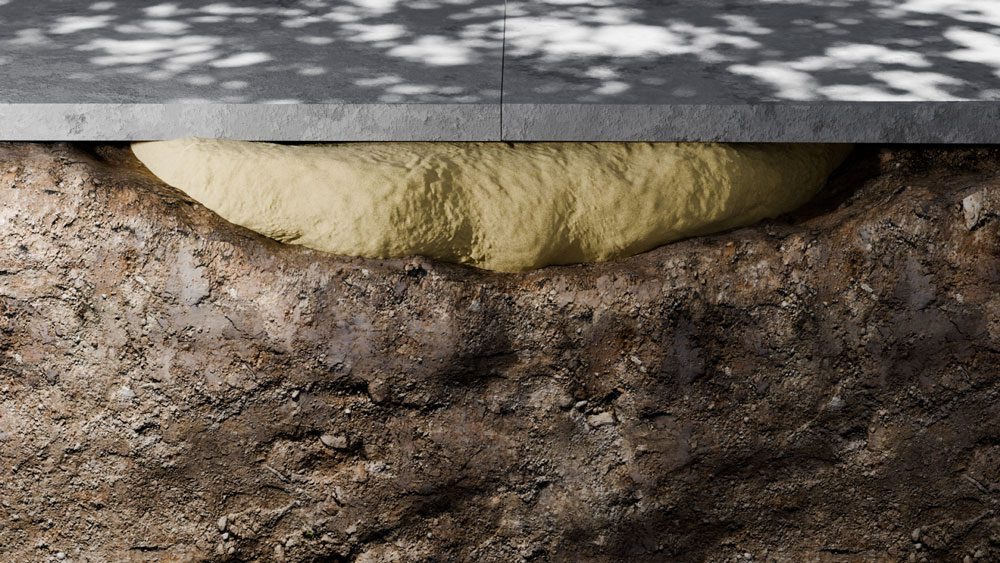
Expandable foam offers a fast, minimally invasive way to level uneven concrete surfaces. Learn how polyurethane foam injection works and what to avoid.