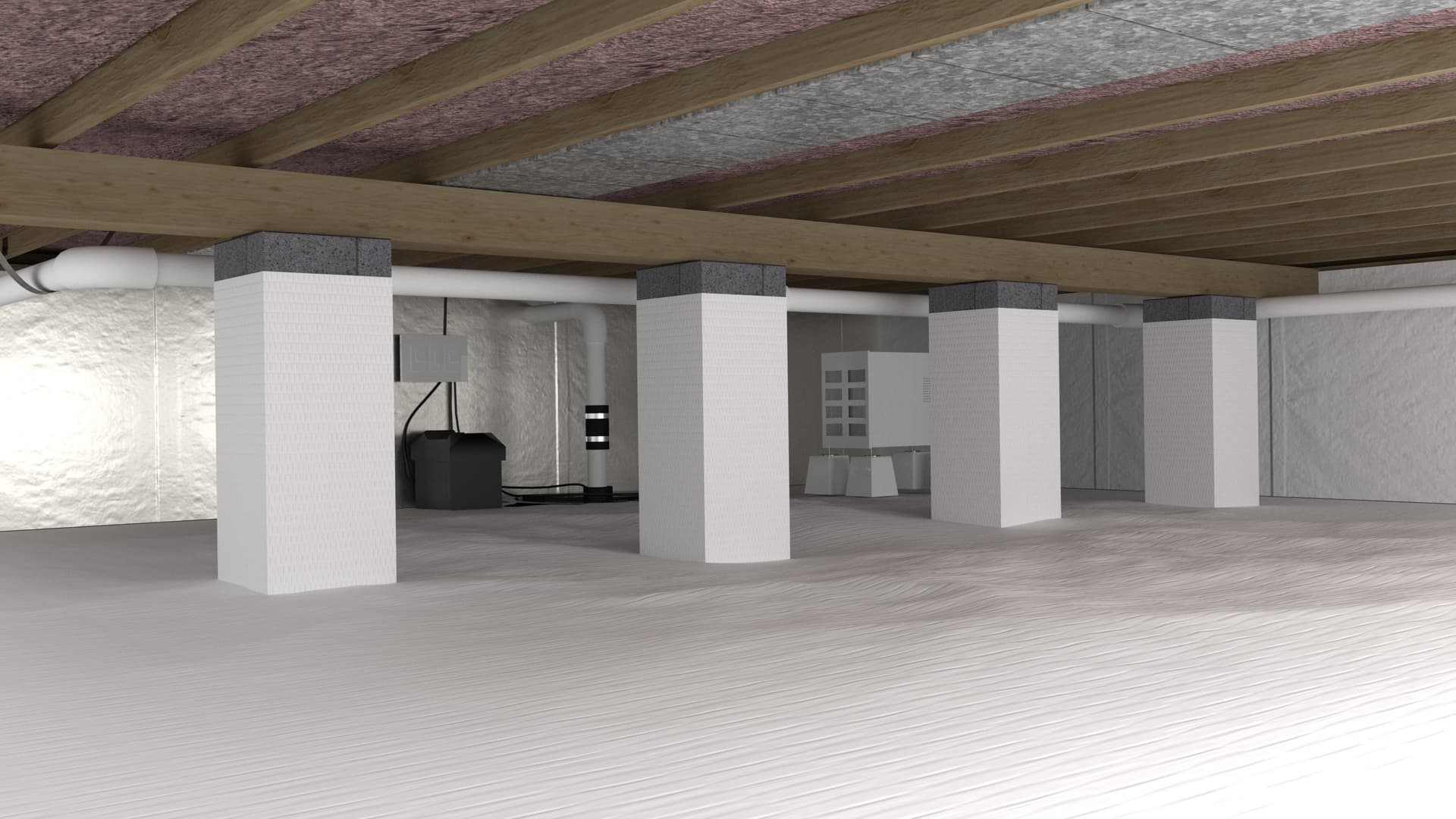
What Causes Crawl Space Mold? Trace It to the Water Source
Epp Foundation Repair has diagnosed crawl space moisture across Nebraska, Iowa, Kansas, and Missouri since 1994. Mold spores exist in every crawl space and only colonize when humidity stays high, so the question is never the spores. It is where the water is coming from.

Let's take the first step toward a healthy home.
A local specialist will inspect your foundation, walk you through the findings, and send a clear estimate, no cost, no pressure.
Crawl Space Mold Causes: diagnosed and explained.
Epp Foundation Repair regularly inspects mold complaints in crawl spaces across the Lincoln-Omaha corridor, and the colonies almost always follow the same map: black or gray fuzz on the bottom edge of floor joists, white bloom on the sill plate, dark staining on fiberglass batt insulation, and slick patches on any existing vapor barrier. The growth is the symptom. The cause is water, and it comes from a short list of places: groundwater seeping in through the cove joint or the floor, a bare or failed barrier over dirt, a plumbing leak, condensation dripping off ductwork, or humid summer air condensing on cool framing. Dave Epp tracks the source first because mold cannot grow without sustained high humidity, and until that source is corrected any remediation work regrows. Epp fixes the water; a certified remediator removes the mold.


Early Signs Mold Is Already Active

- 01
Musty Smell in First-Floor Rooms
The stack effect pulls a large share of a home's air from the crawl space upward into living space. If you smell mildew in upstairs closets or in cold-air returns, the source is almost always crawl moisture, not the walls of those rooms.
- 02
Visible Black or Gray Fuzz on Joist Edges
Inspect the bottom edge of floor joists with a flashlight. Active mold appears as fuzzy black, gray, or olive-green patches. Old dry mold looks like dark staining without texture. Still a moisture indicator, even if not currently growing.
- 03
Sagging or Falling Fiberglass Insulation
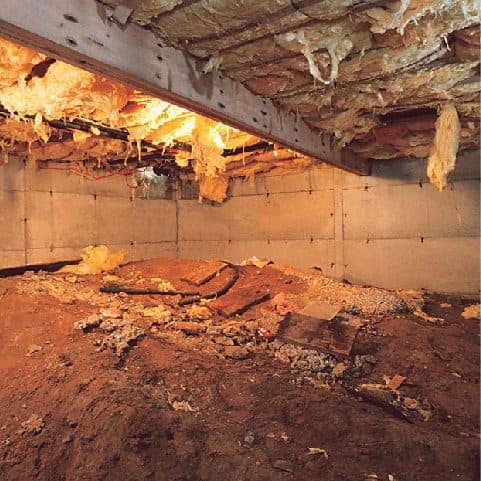
Wet fiberglass batts darken, lose loft, and droop. When you see batts hanging or piled on the dirt floor, the insulation has been saturated long enough to fail. Mold is almost certainly present in the joist cavity above.
- 04
Allergy or Asthma Symptoms That Improve When You Leave Home
Chronic cough, sinus pressure, or asthma flare-ups that ease within a few hours of leaving the house point to indoor air quality. Crawl mold is a common source in older NE/IA homes because those crawl spaces are vented and usually sit over bare or poorly covered dirt.
What causes crawl space mold causes in Midwest homes.

- 01
Humid Summer Air Condensing on Cool Framing
Open foundation vents let in humid Midwest summer air. When that air reaches cooler surfaces in the crawl space (joists, ductwork, water lines) it condenses, and the framing stays damp for the whole season. Vent air on its own rarely puts water on the floor, so when Epp finds condensation alongside wet soil or seepage, the liquid water gets fixed first and the vents are handled on the same estimate.
- 02
Failed or Missing Vapor Barrier Over Dirt Floor
A dirt crawl floor releases moisture vapor every day in NE/IA/KS/MO loess and glacial-till soils. Without a sealed barrier, that water vapor saturates joists and insulation above. Old thin black poly barriers tear, separate at seams, and fail over time. Epp replaces it with a reinforced vapor barrier sealed to piers and walls.
- 03
Groundwater Seepage From Spring Water Table
Spring snowmelt and spring rain push the water table close to the surface across much of eastern Nebraska and western Iowa. Water enters through cove joints, cracked block, or directly through dirt floors. Even slow seepage that evaporates daily keeps humidity high and feeds joist mold. That is a drainage repair, not a humidity problem.
- 04
Wet Fiberglass Batt Insulation Between Joists
Fiberglass batts stuffed between floor joists hold moisture like a sponge. Once damp, they never fully dry in a vented crawl. The paper facing feeds mold, the fiberglass holds spores, and the batts sag and fall onto the dirt floor, a pattern Epp sees in older NE/IA homes. Removing the batts is part of corrective work once the moisture that soaked them has been stopped.
- 05
Plumbing Leak or Condensation From Uninsulated Ducts
A pinhole leak in a copper supply line or a dripping condensate from uninsulated HVAC ductwork can dump enough water into a crawl space to colonize joists. Epp identifies the source but does not repair plumbing or insulate ductwork; those go to a licensed plumber or HVAC contractor before any other crawl space repair starts.
How crawl space repair specialists actually fix crawl space mold causes.
Solving crawl space mold causes means addressing the underlying soil, pressure, or settlement cause. Not just patching the visible damage. Below are the engineered solutions we install most often for this symptom in Nebraska, Iowa, Kansas, and Missouri homes.
Engineered crawl space repair solutions for this problem.
Each method is matched to a specific failure mode and soil profile. Browse the toolkit we draw from when diagnosing your home.
Crawl Space Encapsulation
Epp Foundation Repair has installed encapsulation systems across Nebraska, Iowa, Kansas, and Missouri since 1994. Epp is BBB A+ accredited and a BBB Integrity Award winner.
Crawl Space Dehumidifier Sizing
Epp Foundation Repair sizes and installs commercial-grade crawl space dehumidifiers across Nebraska, Iowa, Kansas, and Missouri, and tells homeowners when a dehumidifier is not what their crawl space needs first.
Crawl Space Vapor Barrier Replacement
Epp Foundation Repair has replaced failed crawl space vapor barriers across Nebraska, Iowa, Kansas, and Missouri since 1994. If the old sheet is torn, thinner than the job needs, buried under debris, or was never there, replacing it is the repair.
How does summer humidity in Nebraska and Iowa affect crawl space framing?
Based on NOAA 1991 to 2020 climate normals for Lincoln Municipal Airport and Omaha Eppley Airfield, the average July dew point is 65 degrees in Lincoln and 66 degrees in Omaha. Water can form on any surface that is cooler than the dew point of the air around it, so damp summer air in a vented crawl space can leave water on posts, beams and joists. Water that reaches a crawl space floor can also keep that wood wet.
Based on NOAA 1991 to 2020 climate normals for Lincoln Municipal Airport and Omaha Eppley Airfield.
What kind of soil is around Lincoln and Omaha?
Based on USDA soil survey data for Lancaster County (Lincoln) and Douglas County (Omaha), clay is the main soil type in both counties. The survey rates Lancaster County high and Douglas County moderate for shrink swell. Clay can swell when it gets wet and shrink as it dries, so a slab or foundation on clay can move up and down with the seasons. The soils that cover the most ground in Lancaster County are Wymore and Aksarben, and in Douglas County they are Contrary and Marshall.
Loess, the wind deposited silt common in eastern Nebraska and western Iowa, can lose strength and settle when it gets wet. Water can reach it from runoff, a plumbing leak or a downspout that empties next to the house.
How does freezing weather affect footings and basement walls?
In Lincoln and Omaha, soil near the surface can freeze and thaw many times between fall and spring. Each city's building code sets a frost line depth, which is the minimum depth below finished grade for a footing. It is 36 inches in Lincoln and 42 inches in Omaha. Supports that sit above that depth, such as some porches, stoops and chimney footings, can move as the ground freezes and thaws.
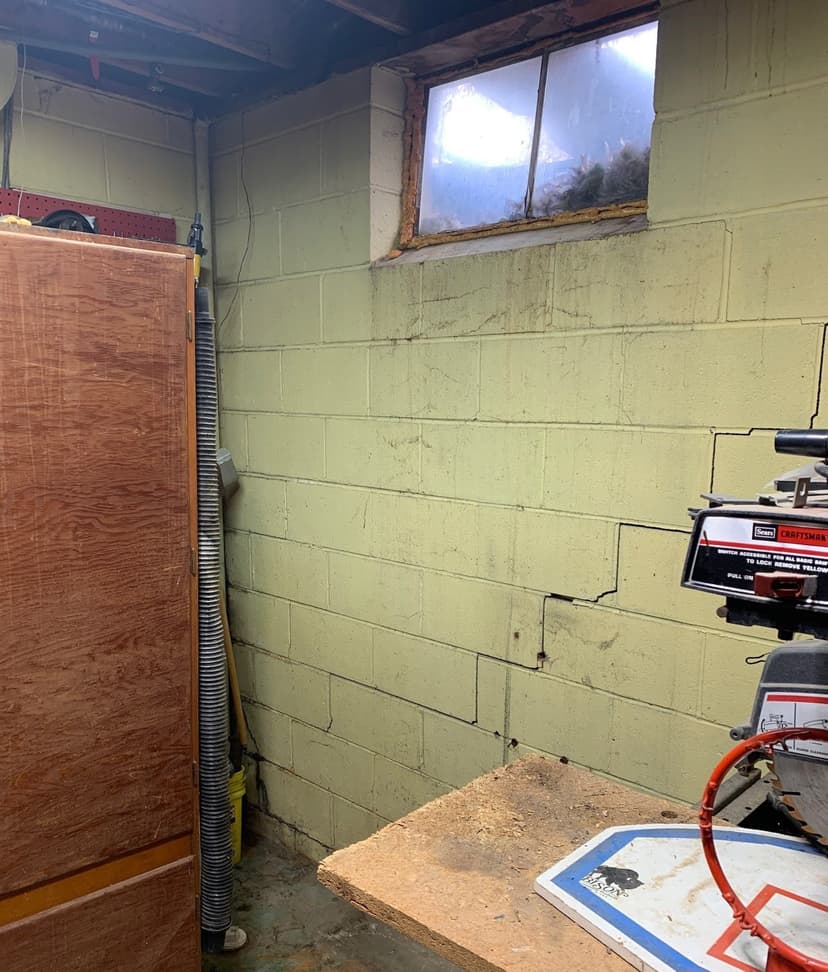
Horizontal cracks in a basement wall are more often linked to pressure from the soil outside the wall than to settlement. Wet soil pushes harder against a wall than dry soil, and soil that freezes against the wall can add to that pressure.
Climate: NOAA U.S. Climate Normals 1991 to 2020, LINCOLN MUNI AP (USW00014939) and OMAHA EPPLEY AIRFIELD (USW00014942); July dew point averaged from the hourly normals at LINCOLN MUNI AP (USW00014939) and OMAHA EPPLEY AIRFIELD (USW00014942), retrieved September 30, 2026. Soil: USDA NRCS Soil Data Access (SSURGO), county survey for Lancaster County and Douglas County. Frost line depth: Lincoln Municipal Code 20.12.140 and Omaha Municipal Code Sec. 43-127.
"I tell every homeowner the same thing on a mold call: the spores aren't the problem, the water is. You can wipe down every joist with bleach and have it back in two months. Fix the moisture first, every time. That's been the rule since I started this work in 1994."

Care and expertise from a team that's been doing this since 1994.
Epp Foundation Repair is locally owned and operated, with crews dedicated exclusively to foundation, basement, and concrete work across the Midwest.
Foundation repair, waterproofing, and concrete leveling are our entire focus, not a sideline.
Three decades of experience with Midwest soils, basements, and weather conditions.
Recognized by the Better Business Bureau for integrity and ethical business practices.
Many of our repairs carry a written Epp warranty. The warranty page lists every covered repair and its terms.
Answers to common questions about Crawl Space Mold Causes.
Don't see your question here? Our team is happy to help. Reach out anytime.
Other crawl space repair warning signs to watch for.
If you see one, it's worth checking for the others. Most foundation problems show up as more than one symptom.
Serving Nebraska, Iowa, Kansas & Missouri.
Local crews based in five regional offices, dispatched daily across four states. If your town isn't listed, call us: we likely serve your area.
- Omaha, NE
- Lincoln, NE
- Topeka, KS
- Sioux City, IA
- Bellevue, NE
- St. Joseph, MO
- Council Bluffs, IA
- Grand Island, NE
- Papillion, NE
- Kearney, NE
Take the first step toward a healthy home.
A straightforward path from initial inspection to completed repairs.
Schedule your inspection.
A local specialist visits your home, evaluates the foundation, and answers your questions on site. No cost, no obligation.
Receive an estimate based on your needs.
We provide a clear, Customized Repair Estimate with a scope of work tailored to your home's specific issues. Typically within one business day.
Get your repairs.
Trained crews complete the work on schedule.
Over 1,700 homeowners have shared their experience.
A 4.9-star average across Google, with verified reviews from homeowners throughout Nebraska, Iowa, Kansas, and Missouri.
Two ways to start: book instantly, or request an estimate.
Schedule your inspection in seconds with our Driive booking tool, or share a few details and a local specialist will follow up within one business day.
- A local foundation specialist on site
- A complete walk-through of the findings
- A Customized Repair Estimate within one business day
- No cost, no obligation, no high-pressure sales
Expert guidance on protecting your home.
Practical articles from the Epp team on foundation health, waterproofing, and home preservation.
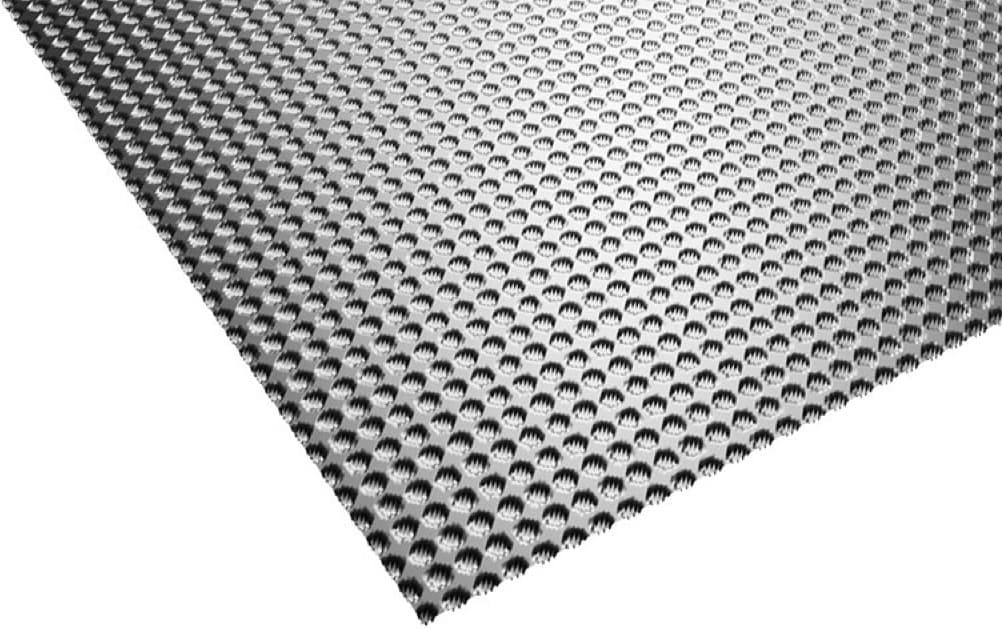 Crawl Space RepairLatest
Protect Your Crawl Space With Drainage Matting
Learn what crawl space drainage matting is, the signs you need it, how it works with a vapor barrier, and how it is installed in your home.
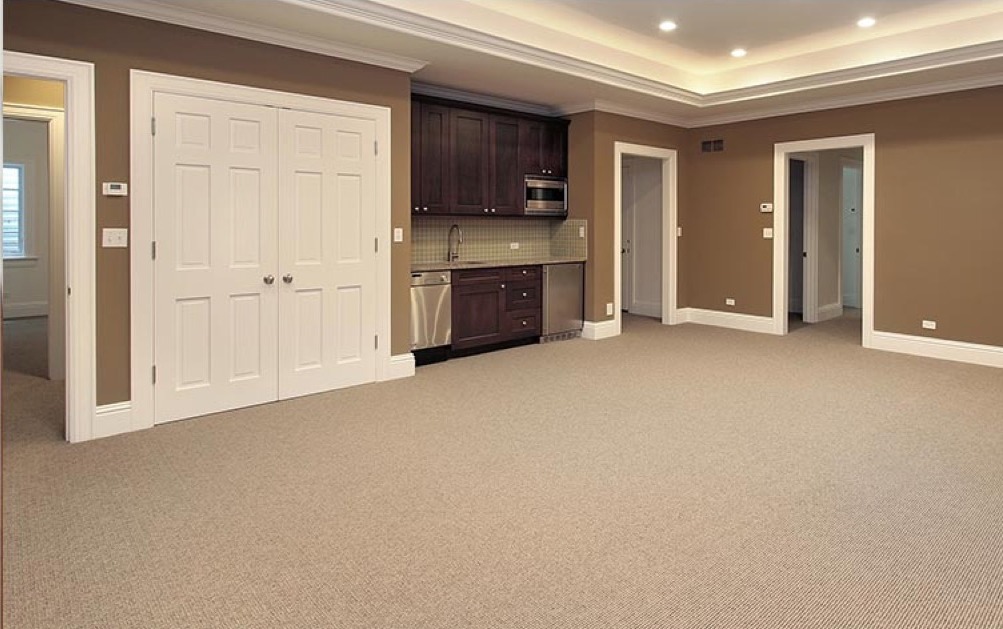 Crawl Space Repair
Can You Turn A Crawl Space Into A Basement?
Converting a crawl space into a basement is possible but involves major work. Learn the process, the pros and cons, and what to expect before starting.
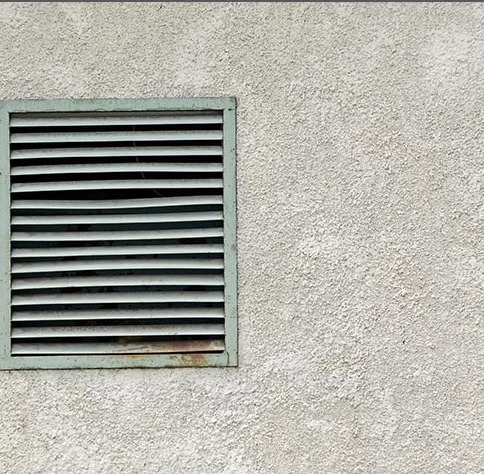 Crawl Space Repair
What Can I Use For DIY Crawl Space Vent Covers?
Protect your home with DIY crawl space vent covers. Discover the best materials, methods, and tips for moisture, pest, and draft control.
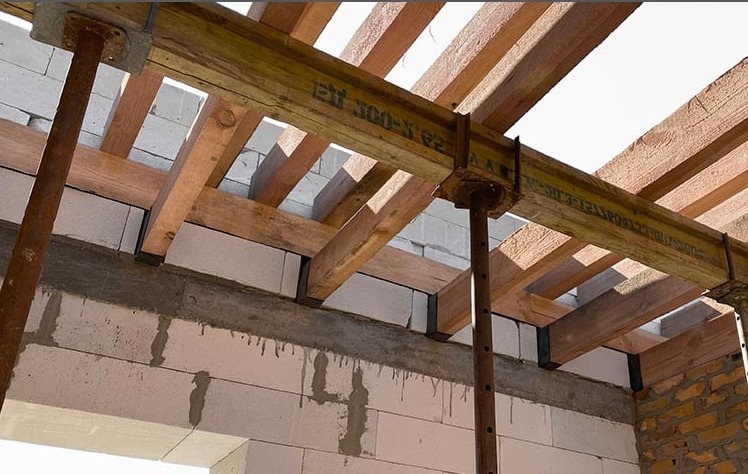 Crawl Space Repair
What Is A Rim Joist?
Discover what a rim joist is and its crucial role in building structures. Learn where rim joists are used and their importance in your home.
Five regional offices across the Midwest.
St. Joseph, MO 64506