A stable foundation protects your building, your people, and your bottom line. This 2026 guide helps Omaha business owners identify foundation problems early, choose the right repair method, and manage projects with minimal downtime. 

You’ll learn how modern diagnostics, sustainable materials, and smart monitoring can keep commercial structures stable and safe in our region’s variable soils and freeze–thaw cycles. 

If you suspect movement or water intrusion, schedule a free, no-pressure inspection—Epp Foundation Repair offers tailored commercial foundation stabilization solutions backed by strong local warranties. We’re family-owned and locally operated in Omaha since 1994, with in-house crews and an education-first approach.

Assessing Your Commercial Property’s Foundation

Early assessments reduce risk, cost, and disruption. In Omaha, seasonal moisture swings and clay-rich soils can lead to settling, cracked slabs, bowing walls, and water damage. 

A professional foundation inspection typically includes a walkthrough, interior and exterior crack mapping, floor elevation readings, moisture checks, and drainage/grading review. Some contractors now leverage advanced tools like Augmented Reality (AR), though most accuracy gains come from proven, field-tested methods. 

Technicians may also use laser levels, moisture meters, and thermal imaging to locate hidden issues.

Watch for these red flags between inspections:

If you notice any of the above, request a foundation inspection in Omaha promptly to avoid compounding damage and business interruptions. Our team provides comprehensive professional foundation inspection services to accurately diagnose the root cause of movement.

Selecting the Right Repair Method for Your Building

Understanding the various foundation repair methods for commercial buildings is essential for long-term structural integrity.

There’s no one-size-fits-all solution. The right approach depends on soil conditions, structure type, load paths, and the extent of movement or moisture. Key modern solutions used in Omaha:

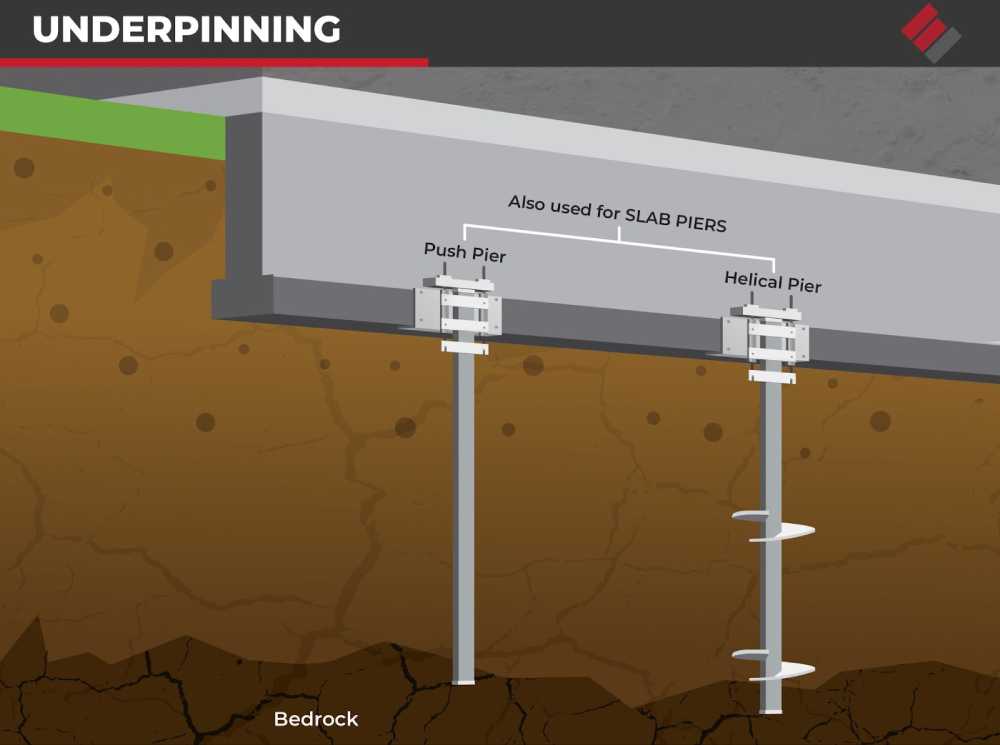
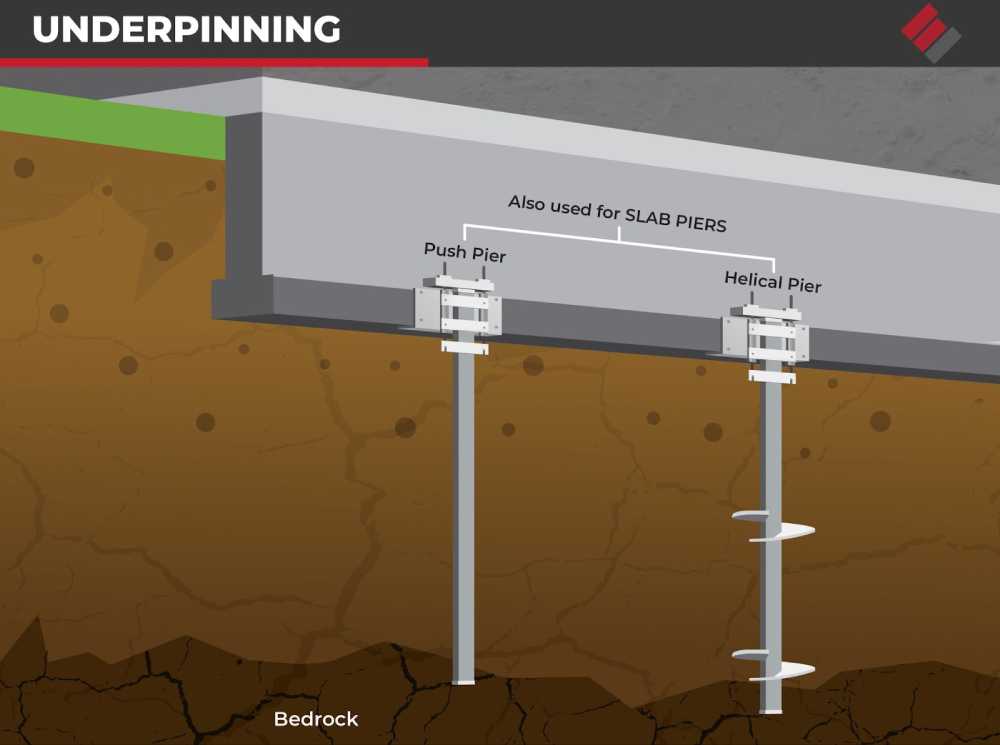
  • Hydraulic pier systems: Minimally invasive systems that transfer loads to stable strata for permanent stabilization; limited lifting may be attempted when conditions allow.
  • Epp Foundation Repair’s helical and push piers: Engineered steel piering systems that provide permanent stabilization for commercial buildings. Installed by our in-house crews and supported by local, transferable warranties.
  • Wall anchors: Galvanized steel anchors and carbon fiber reinforcements stabilize bowing walls and add capacity where framing is undersized or compromised.

Underpinning is the process of installing new supports beneath an existing foundation to permanently stabilize and, when feasible, re-level structures that have shifted or settled.

Working with Qualified Foundation Repair Professionals in Omaha

A capable, local team helps you get it right the first time. Vet commercial foundation repair contractors using these criteria:

  • Deep local experience with Omaha’s soils and building types
  • Transparent, line-item cost estimates and clear scopes
  • Custom designs stamped by licensed, insured engineers (as needed)
  • Eco-friendly practices and modern diagnostic tools
  • Transferable warranties and recent commercial references

Smart questions to ask:

  • What technology do you use for diagnostics and monitoring?
  • Which repair methods fit my building and soil profile, and why?
  • What types of warranties do you offer on repairs?
  • How will you minimize business disruption and protect occupants?
  • Can you provide engineered drawings, permits, and as-builts?

Epp Foundation Repair offers free inspection consultations, tailored commercial solutions, and industry-leading warranties for added peace of mind. We’re family-owned and locally operated since 1994, with in-house crews and local warranty support. Learn more about our Omaha foundation repair services or schedule a free, no-pressure inspection.

Using Technology to Monitor and Support Foundation Repairs

Digital tools can reduce surprises and protect your investment long after the crew leaves. We prioritize field-tested monitoring and documentation; emerging technologies are evaluated case by case and used when they add clear value:

  • AI-powered soil monitoring and analysis: Emerging data tools can help evaluate soil and elevation data to highlight potential movement trends; most projects still rely on geotechnical reports and elevation surveys.
  • Real-time smart monitoring systems: Smart sensors track moisture, foundation movement, and temperature and can alert you to emerging issues before they escalate.
  • Bio-modified soil stabilization: Natural microorganisms can be used to improve soil performance under foundations, a sustainable option in select conditions; currently uncommon in Omaha commercial repairs and considered only with geotechnical guidance.

Comparison of technology tools:

Tool/Technology

Purpose

Benefits

Longevity/Sustainability

AI soil analysis

Support identification of potential movement and risk zones

Informs design/maintenance; complements geotechnical evaluation

Accuracy depends on data quality; periodic updates are recommended

Smart movement/moisture sensors

Track settlement, tilt, and moisture in real time

Early alerts; fewer emergency repairs

Low power; scalable; supports preventive maintenance

Bio-modified soil stabilization

Improve subgrade bearing and moisture response (limited use)

May reduce swelling/shrinkage; requires case-by-case validation

Project-specific; performance depends on site conditions

AR-assisted inspections

Visualize hidden conditions for planning

Faster, more accurate scopes; better documentation

Can reduce exploratory excavation and waste when appropriate

Ask your contractor which technologies they’ll integrate into your repair plan and ongoing maintenance. Epp Foundation Repair recommends proven tools first and supplements with emerging options only when they offer clear benefits.

Commercial foundation inspection in Omaha showing crack measurement, laser leveling, steel piers, and foundation monitoring tools

Preparing Your Business for the Repair Process

A little preparation goes a long way toward keeping operations running:

  • Move furniture/fixtures and secure valuables near work zones
  • Clear exterior access points, staging areas, and parking for equipment
  • Notify employees, tenants, and clients of scheduled disruptions and wayfinding routes


Plan a brief on-site setup and safety walk-through before work begins. Early coordination streamlines repairs and reduces downtime.

Staying Communicative Throughout the Repair Project

Set communication norms on day one:

  • Establish a single point of contact on both teams
  • Schedule milestone updates (mobilization, mid-point, pre-backfill, punch list)
  • Agree on protocols for change orders, schedule shifts, or new findings


Use digital tools—text, email, and simple project apps—for quick documentation and rapid updates. Epp Foundation Repair prioritizes open, ongoing communication so you’re never guessing what comes next.

Planning Post-Repair Maintenance for Long-Term Stability

Protect your investment with a proactive plan:

  • Schedule regular foundation inspections—annually or after major weather events
  • Continue smart monitoring where feasible, to track moisture and movement
  • Maintain site drainage: clean gutters, extend downspouts, preserve positive grading
  • Seal visible cracks early to block water entry
  • Watch for changes in door/window operation, new cracks, or uneven floors


For a maintenance plan tailored to your building, contact Epp Foundation Repair.

Helical Piers

Frequently Asked Questions About Commercial Foundation Repair in Omaha

What are the common foundation problems in Omaha commercial buildings?

Common problems include foundation settling, cracked slabs, bowing basement walls, uneven floors, and doors or windows that stick due to shifting soils and moisture changes.

How do I know if my commercial property needs foundation repair or underpinning?

Visible wall or floor cracks, doors that won’t close, sloping floors, water intrusion, or exterior gaps around windows or brick indicate a need for professional evaluation and potential underpinning to stabilize the structure. Reviewing your foundation settling repair options early can help you choose a solution that provides permanent stabilization for the structure.

What repair methods are typically used for Omaha commercial foundations?

Typical methods include helical or push piers, hydraulic piering, wall anchors, slab injections, crawl space supports, and basement wall stabilization—chosen based on structure and soil conditions to provide permanent stabilization; lifting may be attempted when feasible.

How long does commercial foundation repair usually take?

Minor pier installations or crack repairs can take a few days; extensive underpinning or wall reconstruction may require several weeks.

How can I minimize disruption to my business during repairs?

Plan work in phases or off-hours, prepare the site in advance, coordinate clear access, and communicate schedules to employees and visitors.

Looking for a fast, expert opinion? Schedule a free, no-pressure inspection with Epp Foundation Repair to get a clear, customized plan for your Omaha property.