Sunken Driveway or Sidewalk: Should You Lift It or Replace It?
Sunken concrete can often be lifted instead of replaced. Learn why driveways and sidewalks sink, when lifting works, and when replacement makes more sense.
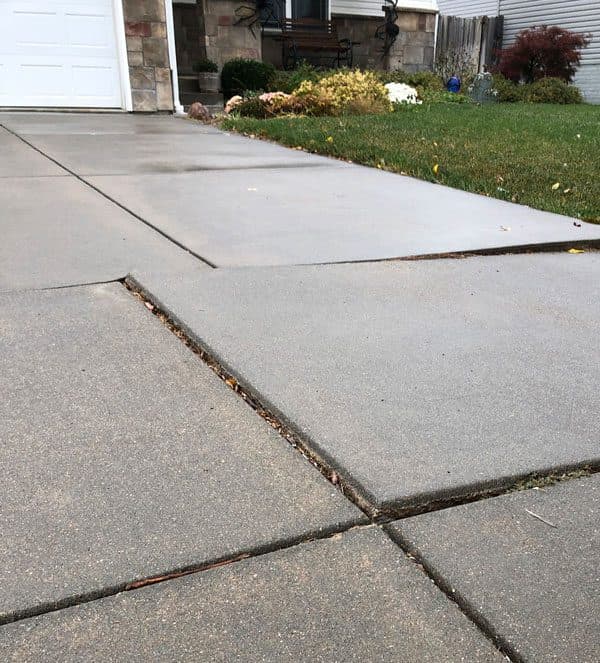
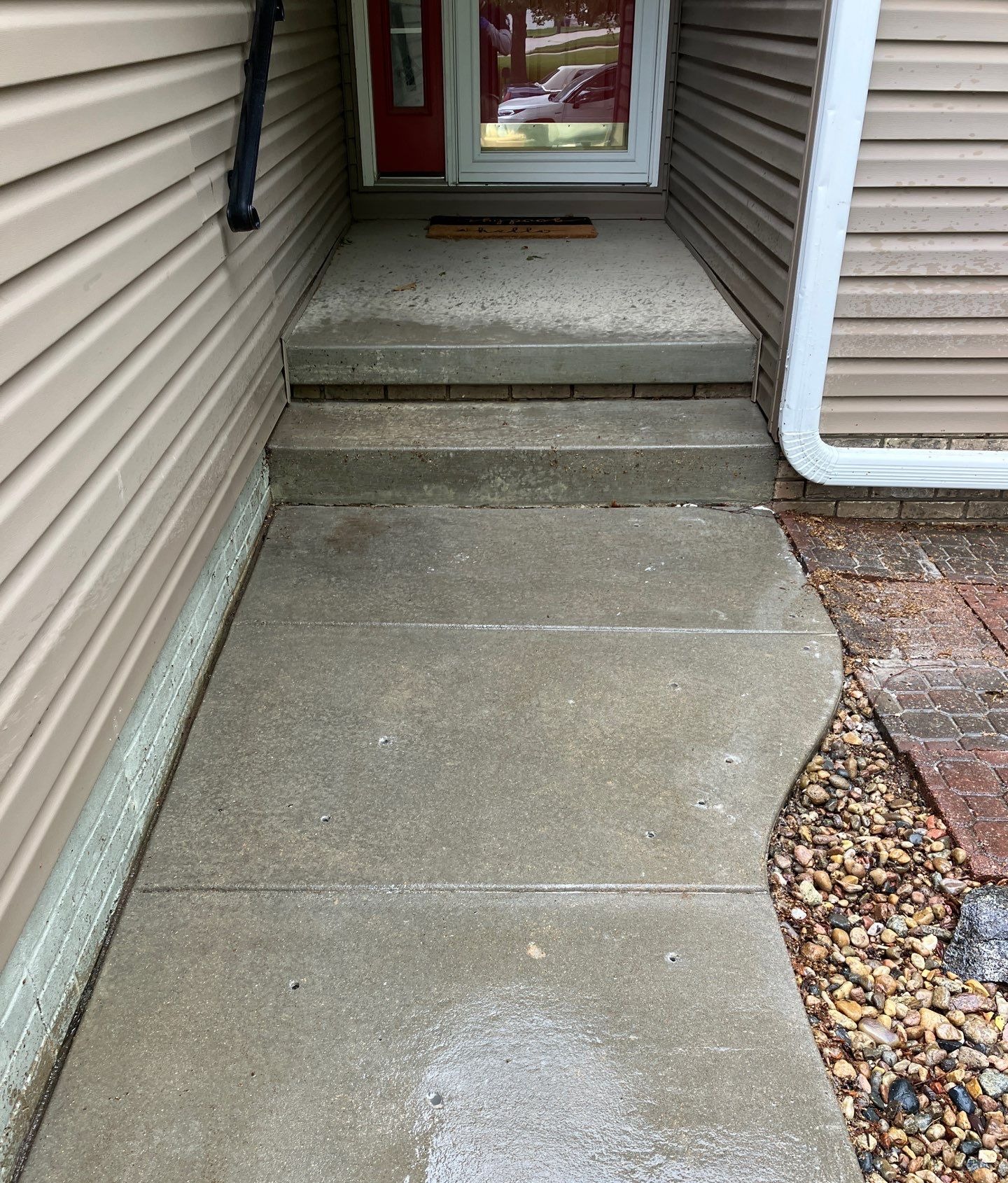
A sunken driveway or sidewalk does not automatically need to be torn out and replaced.
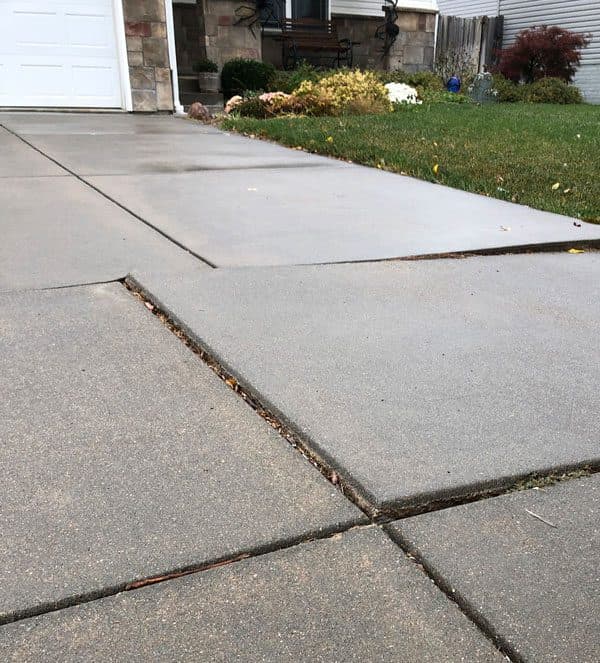
Sometimes the concrete itself is still in good shape. It has simply lost some of the support beneath it and settled. In that case, lifting the slab may be the better repair.
Other times, the concrete is badly cracked, deteriorated, or simply too damaged to save. Then replacement makes more sense.
The important question is not how uneven the slab looks. It is whether the concrete is still sound enough to lift and support.
Why Do Driveways and Sidewalks Sink?
Concrete depends on the soil underneath it for support. When that support changes, part of the slab can settle or tilt.
There are several common reasons this happens:
- Water can carry soil away. A downspout that empties beside a driveway, an overflowing gutter, or poor drainage along a sidewalk can move fine soil particles over time. As support beneath the slab is reduced, the concrete may begin to settle.
- Some soils change as they get wet and dry. Clay soil swells when it absorbs moisture and shrinks when it dries. Repeated cycles of swelling and shrinking can cause the concrete above to shift, settle, or become uneven over time.
- Fill soil can settle. Before pouring concrete, the soil or fill beneath it needs to be properly compacted. If the material wasn’t packed tightly enough during installation, it can continue to settle over time. As the ground drops, the slab above can settle with it.
The important point is simple: the slab needs solid, even support underneath it.
When Can Sunken Concrete Be Lifted?
Concrete lifting makes the most sense when the slab itself is still in reasonably good condition. Epp uses polyurethane foam injection to restore support beneath settled concrete and raise the slab.
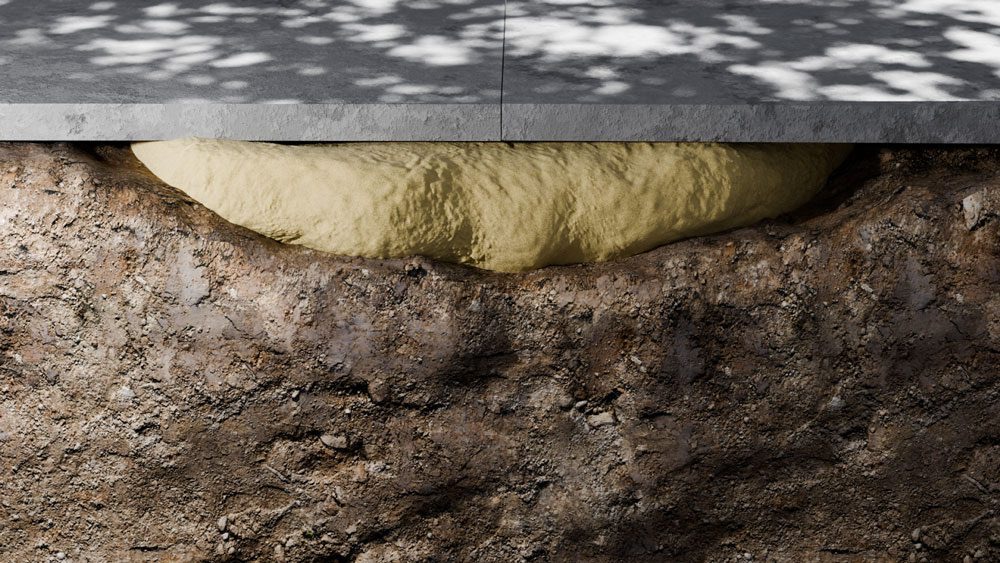
Small holes are drilled through the concrete. Polyurethane foam is injected beneath the slab, where it expands and fills areas that have lost support. The technician watches the slab closely and controls the amount of lift as the foam expands.
The technician patches the holes when the work is finished.
The foam is lightweight and cures quickly, which makes the process much less disruptive than removing and repouring an entire driveway or sidewalk.
When Should Sunken Concrete Be Replaced?
Replacement may be necessary when:
- The slab is broken into many separate pieces. Polyurethane can lift concrete, but it cannot turn badly fractured sections back into one solid slab.
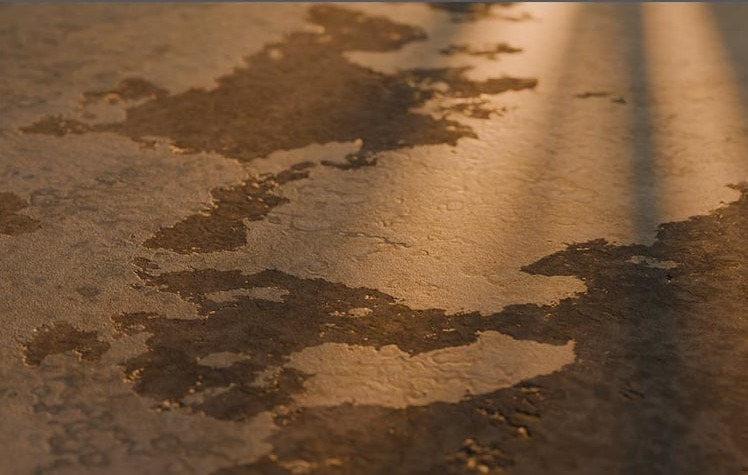
- The surface is badly deteriorated. Heavy spalling, scaling, exposed reinforcement, or extensive surface damage are problems with the concrete itself. Raising the slab will not repair them.
- The slab is too thin or weak to lift safely. Severely deteriorated concrete may crack further during the lifting process.
Address the Cause of the Concrete Settlement
Whether the slab is lifted or replaced, the condition that caused it to settle still needs attention.
If a downspout empties beside the concrete, water collects along the edge, or the surrounding grade sends runoff toward the slab, drainage may need to be corrected as part of the repair.
There is little point in leveling a concrete sidewalk or driveway while leaving the same condition that contributed to the settlement.
How Can You Tell Whether Your Sidewalk or Driveway Can Be Lifted?
You can learn quite a bit by looking at the slab itself.
- Look at the cracks. A slab that is still in one or two large, solid sections may be a good candidate for lifting. If it has broken into many smaller pieces, replacement may make more sense.
- Look at the surface. If the concrete is solid but uneven, lifting may be an option. If the surface is badly flaking, crumbling, or deteriorated, raising the slab will not repair the concrete itself.
- Look at the overall condition. The concrete needs to be strong enough to move as it is lifted. A severely damaged or weakened slab may not be a good candidate.
These checks can give you a general idea, but an inspection is still the best way to determine whether lifting or replacement makes more sense.
What Happens During a Concrete Lifting Inspection?
The goal of the inspection is to answer two questions:
- Is the concrete worth saving? And if it is:
- Can lifting restore enough support and position to make the repair worthwhile?
Epp assesses the slab’s condition and checks the surrounding drainage and soil conditions.
If lifting is appropriate, the Customized Repair Estimate explains the proposed work and what the repair is expected to accomplish.
If the concrete is too damaged to lift successfully, replacement may be the better recommendation.
What Happens If You Leave Sunken Concrete Alone?
Sometimes settled concrete is mostly an inconvenience. Sometimes it creates a larger problem.
An uneven sidewalk or driveway can create a trip hazard. A slab that continues to lose support may also become more vulnerable to cracking under vehicles, weather, and its own weight.
Drainage can change too.
If a driveway or sidewalk settles toward the house, rainwater may begin flowing in a direction it was never intended to go. Water that once drained away from your home’s foundation can start collecting near it instead.
How Polyurethane Concrete Lifting Works
The process is straightforward.
- Small holes are drilled through the slab at selected locations.
- Polyurethane foam is injected beneath the concrete to restore support and lift the slab.
- The technician monitors the movement carefully and stops the injection when the desired correction has been reached.
- The holes are then patched.
Many residential concrete lifting projects can be completed in a day, and the surface can return to use much sooner than newly poured concrete.
Replacement takes longer because the existing slab must be removed, the area prepared, new concrete poured, and the new slab given time to cure. That does not automatically make lifting the right answer. It simply makes lifting a useful option when the concrete is still worth saving.
Should You Lift or Replace Your Sunken Concrete?
If the concrete is still structurally sound and mostly intact, lifting may be a good way to restore its position without tearing it out.
If the slab is badly cracked, crumbling, or otherwise too damaged to move safely, replacement will make more sense.
The key question is the concrete’s condition.
Schedule a free inspection. Epp will evaluate the slab, explain whether lifting or replacement is the better option, and provide a Customized Repair Estimate.
Serving Nebraska since 1994.

Written by
Owner and President, Epp Foundation Repair
Dave joined the family business in 2004 after growing up watching his father Phil build it from the ground up. Today he runs daily operations across Epp's service region in Nebraska, Iowa, Kansas, and Missouri, and is trained and experienced across every repair method Epp installs.
More about Dave