Can You Waterproof Basement Walls From the Inside With Paint?
Waterproof paint and sealer can help with light dampness, but they usually cannot stop water pushed through a basement wall by wet soil outside.
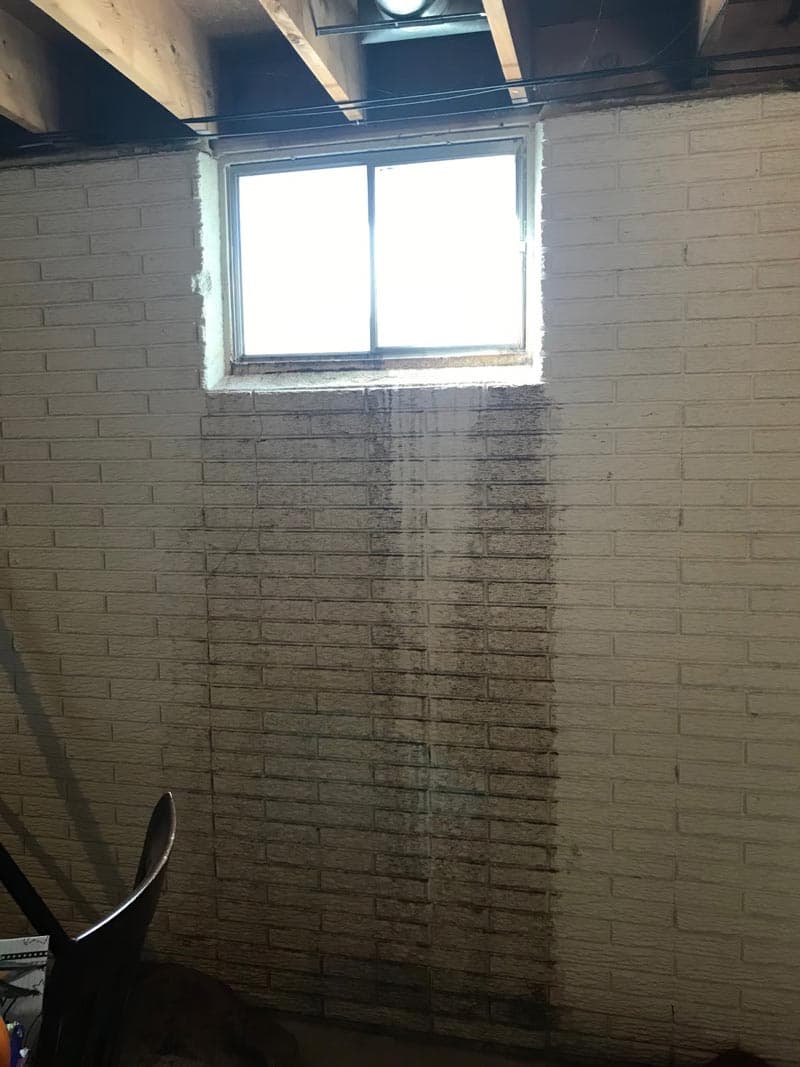
Waterproof paint and other interior sealers can reduce light dampness on a basement wall, but they usually cannot stop water that is being pushed through the wall from the soil outside. When a basement actually leaks, a coating on the inside tends to blister and peel, and the water often keeps coming in.
A coating can still make sense on a wall that is dry or only slightly damp.
What Types of Basement Waterproofing Paint and Sealer Are There?
Basement waterproofing paint and sealer products fall into a few general types. Each works a little differently, and none is designed to drain water away from the house.
- Waterproof masonry paint. These are thick acrylic or latex paints made for concrete and block. They form a film on the wall’s surface.
- Coatings made with cement. These are mixed with water and brushed onto bare masonry. They bond to the surface and can fill small pores.
- Penetrating sealers. These soak into the concrete and usually leave little or no visible film on top.
- Elastomeric coatings. These are rubbery coatings that can stretch a little as a wall moves.
Some of these products are sold as foundation sealer. When used to waterproof a basement from inside, they go on the inside face of the wall, the side away from the water.
Why Does Water Come Through Basement Walls?
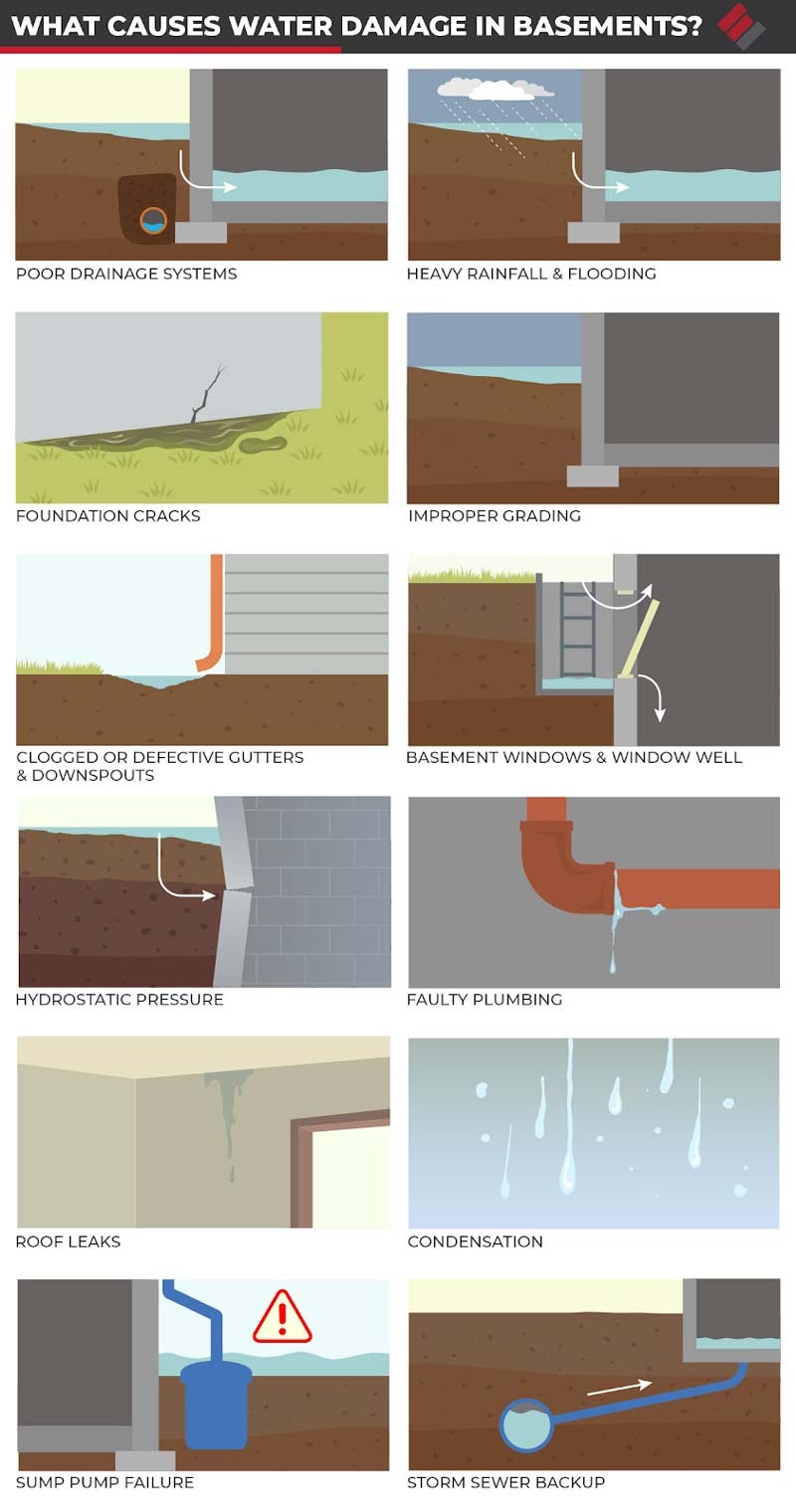
Water usually comes through basement walls because the soil around the foundation is holding water. After heavy rain or snowmelt, that soil can fill with water, and the water presses against the wall from the outside. This force is called hydrostatic pressure. Epp most often sees water pushed through basement walls from March through May, when snowmelt and spring storms raise the water held in the soil.
Concrete and concrete block are porous, so water under pressure can move through the wall itself, including through the hollow cells inside a block wall. It can also move through cracks, through gaps around pipes, and through the cove joint, which is the seam where the basement wall meets the floor.
As that water dries on the inside of the wall, it can leave a white, chalky film of minerals called efflorescence. These white deposits on basement walls can return the next wet season if you don’t stop the water.
Why Does Paint Fail on a Leaking Basement Wall?
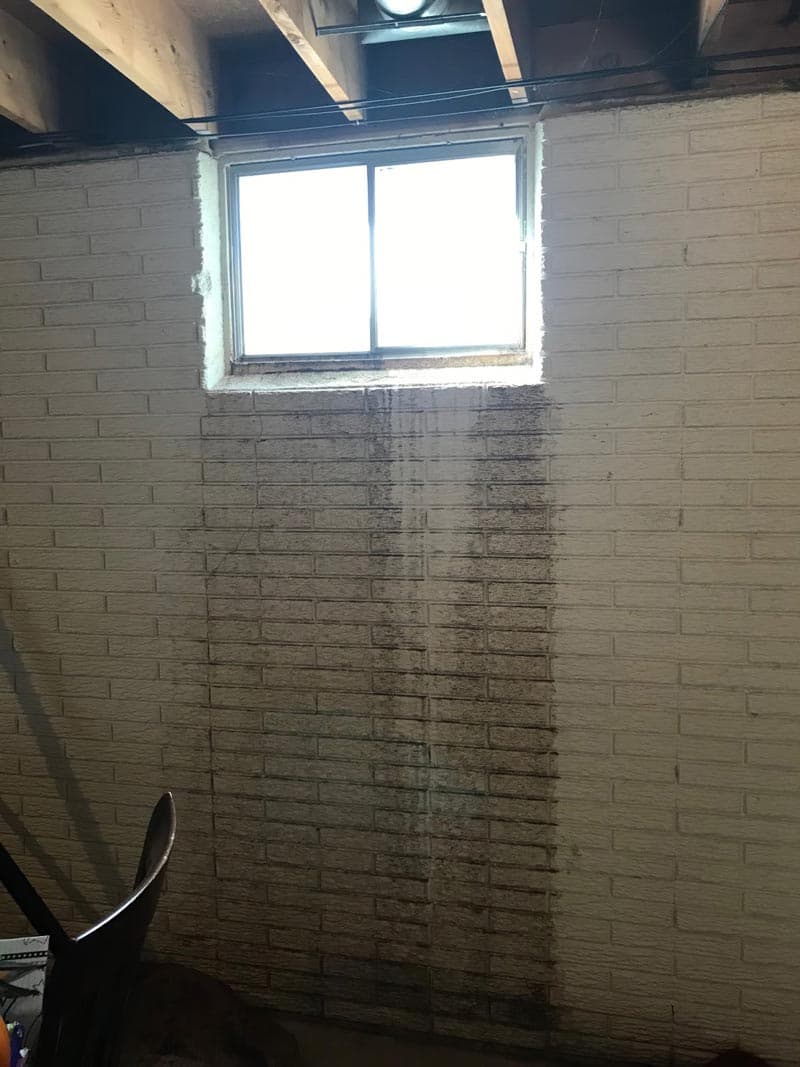
Paint fails on a leaking basement wall because it sits on the opposite side of the wall from the water. When water pushes through the masonry, it reaches the back of the paint film and can break the bond, so the paint bubbles, flakes, or comes off in sheets. Peeling in a band near the floor is a common sign of paint peeling from water, and it can mean water is still moving through the wall.
An Epp specialist checks for this by scraping a test patch and feeling the wall behind the paint. If the concrete is cool and damp, the cause is water, and a repaint that doesn’t address the source will likely peel again. Blisters can tell the same story: when Epp pricks a blister in basement paint with a probe, water often weeps out.
Peeling does not always mean a leak. Paint can also fail from age. Some older basement walls were painted straight onto bare concrete or block without a primer made for masonry, so the paint may never have held well.
If the wall behind the peeling paint is dry to the touch and a moisture meter confirms it, the cause is not active water. In that case, Epp records the finding, recommends no waterproofing work, and refers the homeowner to a painting contractor.
Can Paint Seal Cracks and the Cove Joint?
Paint can cover a crack, but it usually cannot keep a moving crack sealed. Some foundation cracks continue to move, and freeze and thaw cycles can widen them over time. In Lincoln, soil near the surface can freeze and thaw repeatedly between fall and spring. Because paint forms only a thin film, a moving or widening crack can split the coating again.
Paint has the same limit at the cove joint. The wall and floor are usually separate pieces of concrete, so the seam between them is a natural path for water, and sealing the cove joint alone often isn’t enough to keep it out. Surface sealants can handle vapor and light moisture, but water at the cove joint usually comes from pressure under the floor that a thin coating cannot hold back.
Patching products such as hydraulic cement for cracks are another option people try, and they may help in some spots and fall short in others. When a crack is leaking but not moving, it can often be sealed by injecting the leaking crack. A crack that is still widening usually needs reinforcement before any injection.
Can Water Get Past a Coating on a Basement Wall?
Water can get past a coating on a basement wall because it doesn’t always come out where it went in. A hairline crack too fine to see through paint can still let water through, and that water can travel behind the paint film before it shows. This is why peeling sometimes appears some distance from the crack that is feeding it.
Water that pushes through at the cove joint can also wick up into the lower part of the wall. A fresh coat can look fine at first and still peel if the water source hasn’t been fixed.
Water from above the ground can leave a different pattern. When a downspout empties close to the foundation or the yard slopes toward the house, the wall can get wet from the soil line down. Paint on that part of the wall tends to peel in vertical streaks running down from the wet spot. Pressure from wet soil at the base of the wall more often leaves a band of peeling near the floor.
When Does Painting a Basement Wall From the Inside Make Sense?
Painting a basement wall from the inside makes the most sense on a dry wall. However, a damp wall is not always a leak. Moisture can come from humid basement air settling on a cool wall, often in late summer, and condensation on a basement wall can look a lot like a leak. The fix for condensation is different from the fix for water coming through the wall. Epp does not sell waterproofing to a homeowner whose problem turns out to be condensation.
A coating can be a reasonable choice in situations like these:
- The wall is dry, and you want a cleaner finish.
- The source of the water has already been fixed, and you want to repaint a wall that has fully dried.
If the wall shows water near the floor, peeling paint that keeps coming back, white deposits, or puddles after rain, a coating alone is unlikely to keep the basement dry. These cases aren’t always easy to tell apart by looking, and an inspection usually shows you which one you have.
If you repaint after fixing the water source, the wall needs to dry fully first, because paint applied too soon can trap moisture behind the new film. Epp advises repainting the entire wall surface below ground level, using a primer made for masonry and then a finish coat. Touching up only the peeled spot on a wall that is still leaking usually leads to more peeling. Epp does not repaint walls itself, and it refers homeowners to local painters when asked.
How Do You Stop Water From Seeping Through Basement Walls?
You stop water from seeping through basement walls by addressing it before it reaches the room, or by giving it a path out of the basement. The right basement waterproofing repair depends on where the water is coming from, so the first step is finding the source.
Moving roof water away from the wall
Sometimes the cause is outside and above ground, such as a downspout that empties right next to the foundation. Carrying that water farther from the house with buried downspout lines may reduce or stop the leak.
Draining the water inside the basement
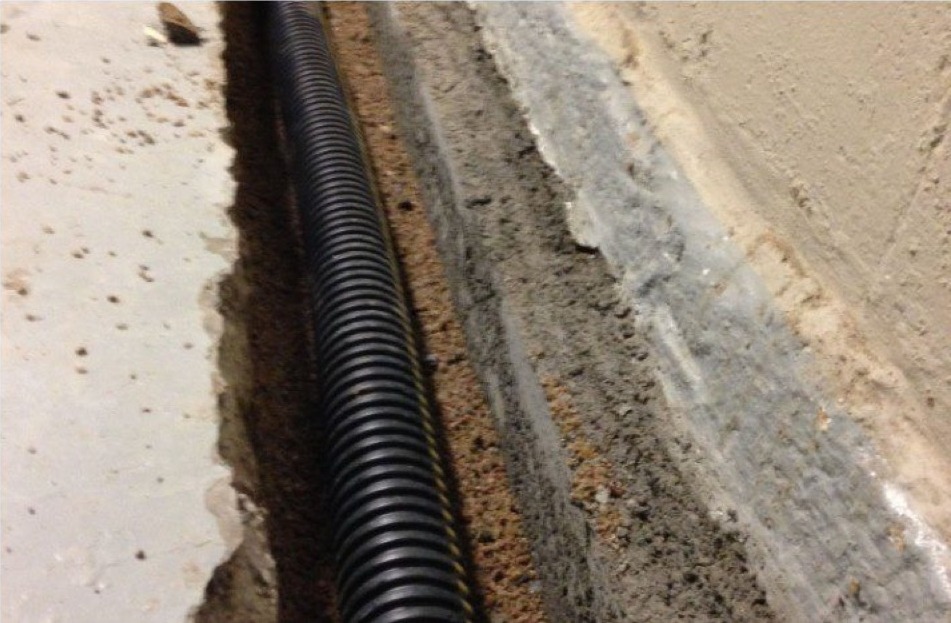
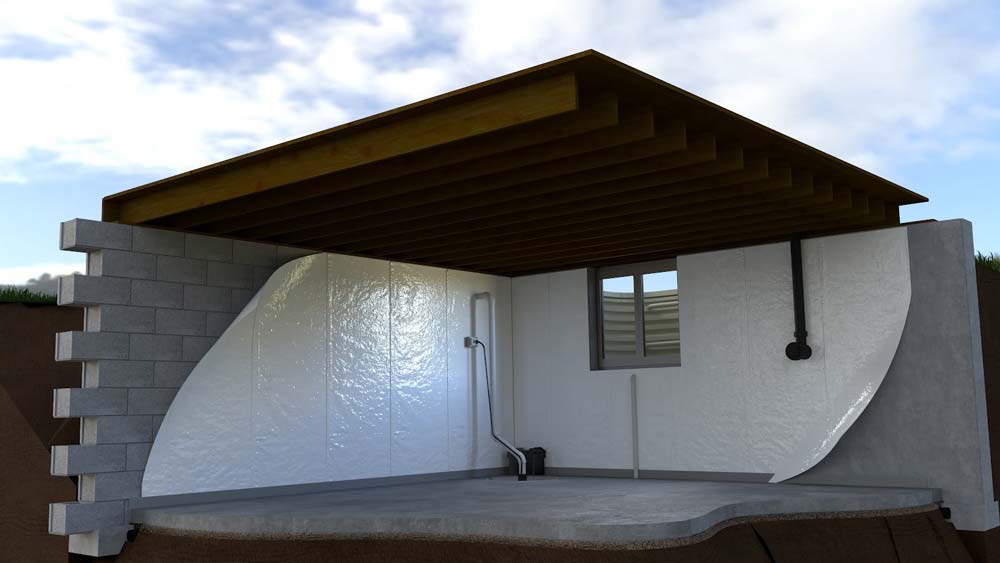
When hydrostatic pressure is pushing water through the wall, Epp may recommend a drain along the inside footing. Perforated pipe is set in a trench along the inside of the foundation at footing depth. A vapor barrier on the wall directs minor seepage down to the drain. The water flows to a sump pit, and a sump pump moves it outside through a discharge line that should end 6 to 10 feet from the house. This system is what waterproofing a basement from inside usually means, and it is a different job from coating the wall.
Waterproofing from the outside
In some cases, a membrane applied to the outside of the wall is the better fit. This work involves digging out and sealing the wall, and Epp does it only on the specific sections of wall that need it. Epp typically recommends exterior waterproofing only as a last resort, where an interior system will not work.
Checking the wall itself
A bowing or cracking wall may also need structural repair. That is a separate question from waterproofing, and an inspection is the way to tell which problem is present.
Can Someone Come Out to Look at a Crack That Is Leaking Water Into My Basement?
Yes, an Epp specialist can come out to look at a crack that is leaking water into your basement. Epp repairs leaking basement wall cracks, and its free inspection ends with a Customized Repair Estimate for the crack.
Which Basement Wall Cracks Are Structural?
Epp treats cracks wider than 1/10 inch, horizontal cracks, stair step cracks in block or brick, and large diagonal cracks as structural, because they show the foundation has moved.
How Can You Tell What Your Basement Wall Needs?
You can often tell what your basement wall needs from where the water shows up, and when. Notice whether it appears after rain or in humid weather, whether the wall is wettest near the floor, and whether paint has peeled more than once. These clues can point to a likely cause, but they cannot always tell you whether a coating will be enough or whether the wall needs drainage or a crack repair.
An inspection can settle the question. An Epp specialist takes readings with a moisture meter whose pins go into the concrete or block, at several heights on the wall. A high reading inside the wall means water is moving through it, and a dry reading behind a wet surface points to condensation.
Epp Foundation Repair has been family owned since 1994. During a free inspection, an Epp foundation specialist looks at the wall, explains what is likely causing the water, and provides a Customized Repair Estimate. If the wall needs no waterproofing work, the inspection can tell you that, too. If you want to start on your own, the Home Problem Finder tool can help you match what you see to a likely cause.
When you are ready, you can ask Epp for a free inspection. The specialist will show you what they find and explain each option before you decide.
Quick answers from this article.
Don't see your question here? Our team is happy to help. Reach out anytime.

Written by
Owner and President, Epp Foundation Repair
Dave joined the family business in 2004 after growing up watching his father Phil build it from the ground up. Today he runs daily operations across Epp's service region in Nebraska, Iowa, Kansas, and Missouri, and is trained and experienced across every repair method Epp installs.
More about Dave