Helical Piers vs. Push Piers: Pros, Cons, and Preferences
Helical piers and push piers both underpin a settling foundation. Learn how each works, their pros and cons, and the three factors that decide which fits your home.
If you are reading this article, you likely have foundation issues with your home and are faced with a choice: should you use helical or push piers to stabilize your foundation? Well, rest assured that by the end of this article, you will be better equipped to talk with your foundation repair specialist and make the best decision for your home.
When you research the pros and cons of helical and push piers, you may notice many biased articles favoring one pier over the other. However, at Epp Foundation Repair, we recognize that every repair solution is unique, so each repair method has its proper place. Reviewing a foundation pier systems overview can help you understand the full range of options available for your specific soil conditions.
What Is Foundation Underpinning?
When a structure’s foundation settles unevenly, piers are installed beneath the affected area to connect the building to stable soil or bedrock and stabilize the sinking foundation, with lift attempted where conditions allow. Foundation underpinning stops foundation settlement permanently using quick and minimally invasive installation methods. Results are immediately noticeable, and stabilization is backed by a transferable lifetime warranty.

Push piers vs. Helical piers
Helical and push piers are both used for foundation underpinning. Deciding which one to use is contingent on the circumstances surrounding the structure.
What Is a Helical Pier?
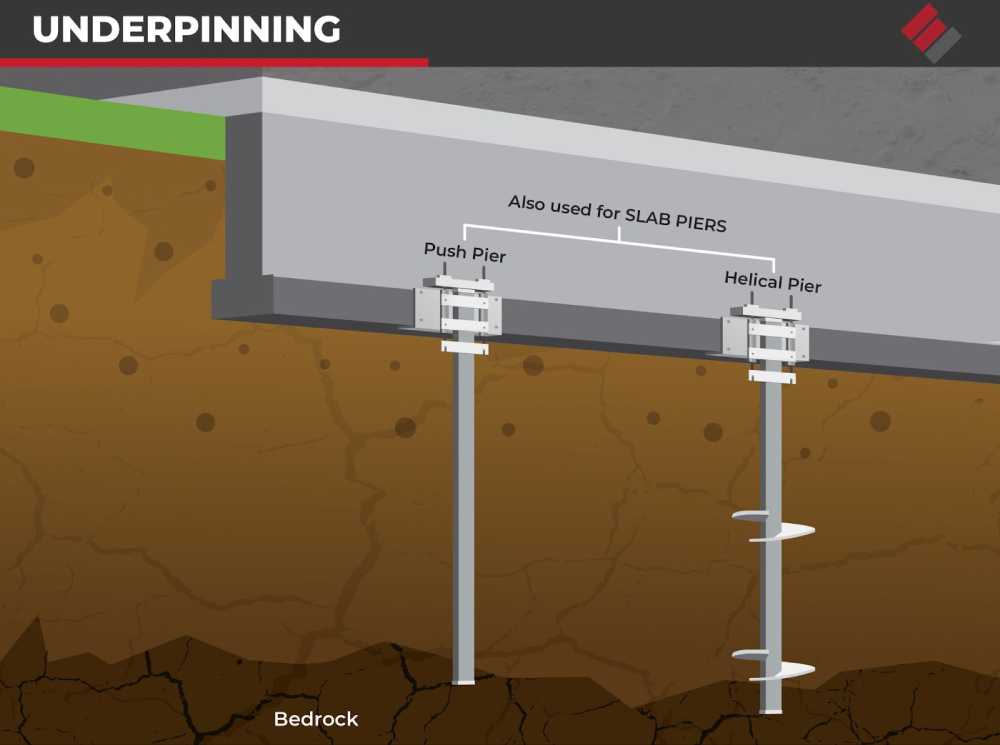
A helical pier is a hollow steel shaft with one or more helix-shaped plates welded to its bottom end and sometimes along the shaft. Similar to a screw, helical piers are turned into the ground until they reach the desired depth and load-bearing capacity. Homeowners interested in the technical aspects of this method can read more about the helical pier installation process. The helix design allows helical piers to penetrate deep into any type of soil without displacing or disturbing it and creating significant resistance, stabilizing the foundation.
What Is a Push Pier?
A push or resistance pier is a hollow, stackable steel tube. Like a nail, it is pushed through the ground using hydraulic equipment until it reaches stable soil or bedrock. Ultimately, push piers use the building as a counterweight to help drive the pier into the ground and support the structure. Then, the pier is attached to the foundation, the building’s weight is transferred onto the piers to stabilize it, and a synchronized hydraulic system is used to attempt lift.
Which Is Better, Helical or Push Piers?

In short, no one can conclusively determine that helical piers are better than push piers or vice versa. While many contractors prefer helical piers, saying that one is inherently better would be biased and a failure to recognize the purposes of each pier. Just as nails and screws are ideal for different projects, helical and push piers are both suitable for different situations. How do you determine which pier is best for your project?
Pros and Cons of Helical and Push Piers
Helical Piers

Push Piers

Which Pier Should I Choose, Helical Piers or Push Piers?
After considering the pros and cons of each pier, use these three factors to help you decide which pier might suit your home’s needs:
- The weight of the structure needing support: Push piers use the weight of the building to help drive them into the ground. As a result, push piers are ideal for heavier buildings like multistory homes and industrial or commercial buildings. Helical piers, however, do not rely on the building’s weight, so they are most often used to stabilize smaller structures like garages and porches. However, they can also be used for larger structures since they have load-bearing capabilities similar to push piers.
- The depth of the stable soil or bedrock: The purpose of underpinning a foundation is to connect it to load-bearing strata or bedrock to stabilize the foundation permanently and attempt lift as far as practical. Consulting a pier foundation design guide can offer further insight into how engineers determine the correct depth for these supports. In some cases, that stable strata or bedrock is exceptionally deep and can only be reached using push piers because of their stackable nature. If that is the case with your home, an expert will let you know.
- The access space surrounding the structure: Although helical and push piers offer minimally invasive solutions, they each require different installation methods, which may limit your repair options. Helical piers require larger installation equipment, which may be challenging to use in narrow spaces between buildings or around dense landscaping.
Do Foundation Piers Require Maintenance?
Foundation piers require minimal to no maintenance and are considered permanent repair solutions that should outlive the actual structure itself.
However, to protect a pier’s longevity, limiting potential damage from poor water drainage is encouraged. Options may include installing gutter extensions, a French drain, or a drain tile system with a sump pump. Consider regrading your yard so water flows away from your home. Lastly, do not plant shrubbery too close to your home’s foundation. Talk to your foundation repair specialists about professional and DIY waterproofing solutions.

Foundation piers are designed to stand the test of time. So, unless your home is affected by a major natural disaster like an earthquake or a mudslide, you can relax and rest assured that your home is stable.
When Should I Contact a Foundation Repair Expert?
While we hope this article has helped you to decide which type of foundation pier will suit your needs, we recognize that nothing can replace an expert opinion. We offer a variety of foundation repair solutions tailored to your home’s unique structural needs. If you have already determined that your home’s foundation is settling unevenly, contact us; settlement that is left alone tends to continue. Schedule your free inspection today. We service areas in Nebraska, Iowa, Kansas, and Missouri.
If you are unsure if your home’s foundation is settling unevenly and needs foundation piers, learn the telltale signs that your home is in trouble.

Written by
Owner and President, Epp Foundation Repair
Dave joined the family business in 2004 after growing up watching his father Phil build it from the ground up. Today he runs daily operations across Epp's service region in Nebraska, Iowa, Kansas, and Missouri, and is trained and experienced across every repair method Epp installs.
More about Dave