House Jacking with Crawl Space Jacks and Push Piers
House jacking stabilizes a settling foundation with push piers or restores support under a sagging crawl space with new jacks. Learn what it solves and the warning signs.
What is house jacking?
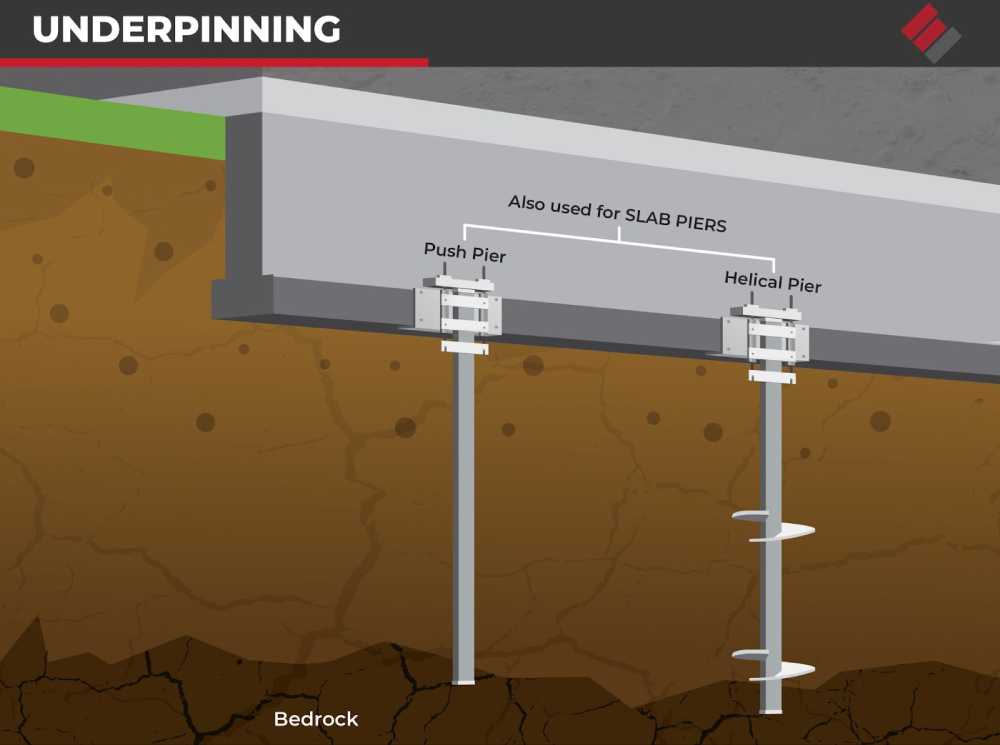
House jacking is a way to repair and reinforce an existing foundation that can no longer adequately support a house, usually because of soil issues. House jacking creates a deeper foundation in stronger, load-bearing soil. House jacking stops further differential settlement, and where conditions allow, lift back toward the original position is attempted.
House jacking might also be used when a foundation is healthy but isn’t strong enough to support additional construction. For example, if you add another floor to your home, you might need house jacking to reinforce the foundation before you start building.

What problems does house jacking solve?
House jacking repairs and reinforces a weak foundation. Various things cause weak foundations. However, the leading cause of weak foundations is something called “differential settlement”.
Differential settlement
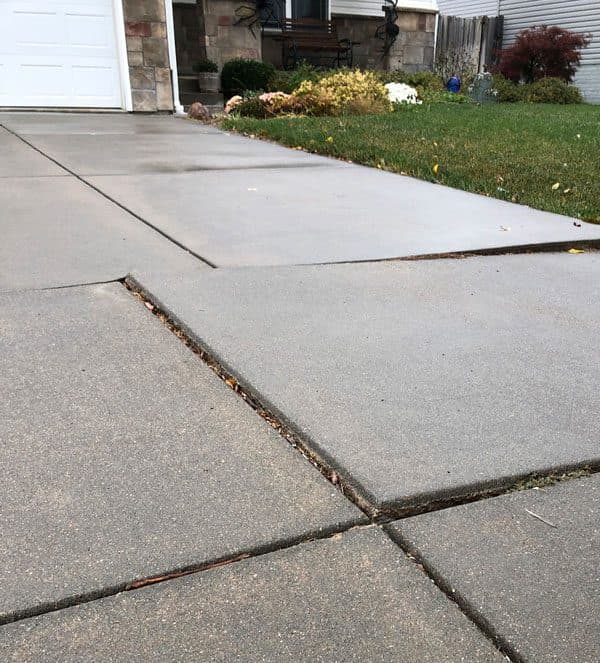
Differential settlement happens when a house starts gradually sinking into the ground unevenly. In other words, parts of the home settle faster (or more slowly, if you prefer) than others. This puts a lot of stress on a foundation and can cause structural damage.
Differential settlement can be caused by:
- Weak soil: Soils are not all alike. Some aren’t strong enough to support something heavy like a foundation. Building on top of weak soil is possible. However, it will lead to structural problems if not done correctly.
- Expansive soil: Expansive soil has a lot of clay in it. Because of this, it swells when it soaks up moisture and then shrinks again when it dries out. This swelling and shrinking process, which is usually seasonal, puts a lot of stress on a foundation and can lead to structural damage.
- Soil erosion: Soil erosion can create destabilizing voids. Certain types of soil are susceptible to erosion, especially if there’s poor drainage around the home.
- Soil that wasn’t compacted before construction: Backfilled soil needs to be adequately tamped down before anything gets built on top of it. If this isn’t done, the house will settle unevenly into the ground after it’s built.
- Poor construction: Sometimes a home simply wasn’t built properly.
- Poor design: Sometimes a home wasn’t designed properly. For example, maybe there aren’t enough posts in the crawl space to hold up the house.
- Natural disasters: Earthquakes, floods, drought, and sinkholes all have the power to destabilize a foundation, sometimes significantly.
- Soil creep: Homes built on hillsides are susceptible to something called “soil creep”. This is when the soil at the top of a hill slowly makes its way downhill. Soil creep can cause lateral movement in a foundation.
- Large trees near the foundation: Vegetation needs moisture, and if there are large trees near your foundation, they can drink up most of the water and leave behind dry, unstable soil susceptible to voids.
Sagging floors due to a settling crawl space
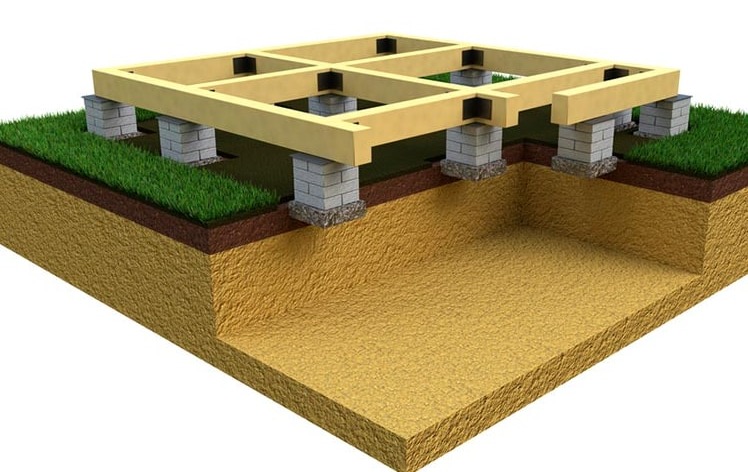
House jacking is also used to repair what is often referred to as “sagging crawl spaces.” In this case, the crawl space foundation has signs of settlement, even though the foundation is perfectly sound. This usually happens because the support posts in the crawl space have settled or the screw jacks have deteriorated. So, it’s not the crawl space itself that sags. Instead, the floorboards, joists, and beams sag due to loss of support caused by deteriorating piers, screw jacks, etc.

Types of house jacking
There are various house jacking methods in use today. However, this article is going to focus on house jacking with push piers (the most common form of house jacking) and house jacking with crawl space jacks, a method used exclusively on homes with crawl space foundations:
House jacking using push piers
Most house jacking today is done using resistance push piers. The piers are driven down into the soil using the house’s weight along with hydraulic pressure. Once they’re in place, hydraulic jacks are used to attempt to lift the house back toward level.
Push piers are quick to install, minimally invasive, and stop further foundation settlement. For more information, see Foundation Underpinning with Steel Push Piers.

House jacking using crawl space jacks
Sometimes a crawl space foundation will have what appears to be signs of foundation trouble even though there’s nothing wrong with the foundation. For example, your floor might feel spongy, or your furniture might shake when you walk by, or both. This problem can often be fixed by removing and replacing the support posts in the crawl space or by removing and replacing the deteriorated screw jacks.

House jacking cost
Because there are many variables involved, we can’t say how much house jacking will cost unless we come out and do an in-person inspection. The only way to know for sure how much house jacking will cost in your particular case is to contact a foundation repair contractor and ask for an inspection and repair estimate. Most contractors will inspect for free.
Signs your home might need house jacking
All homeowners should know how to spot foundation issues early before they turn into big problems that will be expensive to repair. Here are some things to look out for:
- Windows and/or doors that don’t open and close properly
- Uneven floors
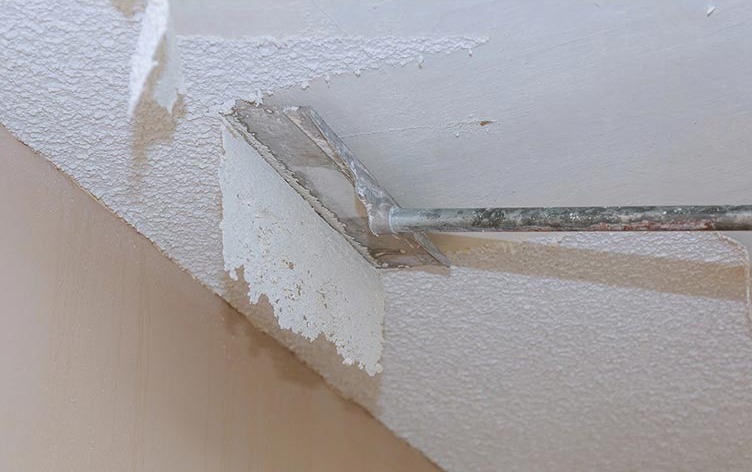
- Walls no longer in contact with ceiling and/or floor: Even slight separations could mean foundation trouble.
- Floor cracks: If the crack is limited to one or two tiles, it’s probably nothing to worry about. Maybe something heavy was dropped on the floor. However, be on the lookout for floor cracks that stretch from wall to wall.
- Cracked walls: Large horizontal cracks are a sure sign of structural damage.
- Bowed walls: Sometimes bowed walls are also cracked.
- Torn wallpaper: There might be a problem with the wall behind the wallpaper.
- Wall rotation: This happens when the soil around the foundation gets oversaturated with water that can’t drain off. The inside edge of the foundation, because it’s on dry ground, pulls up, and this causes the wall to rotate.
- Diagonal cracks: These run from the corners of windows and doors up toward the ceiling.
- Moldings that have separated from the wall and/or ceiling: Even slight separations could signify the foundation is in trouble.
- Chimneys and/or porches separating from the house: The problem might be with the home’s foundation, or it could be a problem with the foundation under the chimney or porch.
If you think your home might need house jacking, it is worth having it looked at. Foundation problems tend to get worse over time, and the repair usually gets more involved the longer it waits. If you’re in our service area in Nebraska, Iowa, Kansas, and Missouri, contact us today for a repair estimate.

Written by
Owner and President, Epp Foundation Repair
Dave joined the family business in 2004 after growing up watching his father Phil build it from the ground up. Today he runs daily operations across Epp's service region in Nebraska, Iowa, Kansas, and Missouri, and is trained and experienced across every repair method Epp installs.
More about Dave