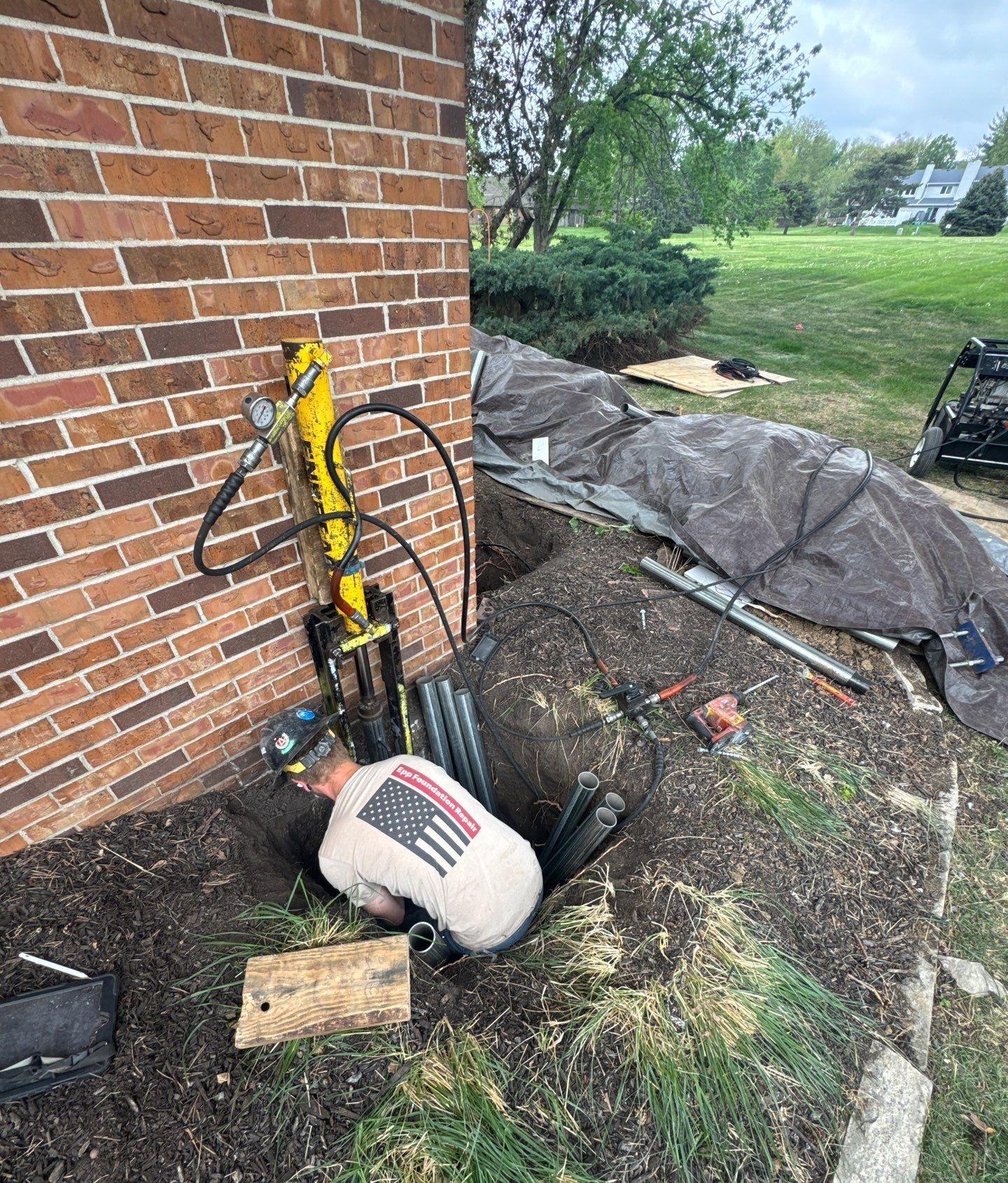

Piers are installed to stop a settling foundation from sinking any further. Whether they also lift the house back toward level depends on the soil under the footing and on the house itself. Epp Foundation Repair guarantees stabilization. Some lift may be possible depending on conditions, and lift is never promised.
This post explains what piers do, why lift is attempted and never guaranteed, how much lift is realistic, and when lift is the wrong goal for a settled house.
What Do Foundation Piers Do?
A foundation settles when the soil under the footing can no longer carry the weight above it. Push piers and helical piers move that weight off the failing soil and onto firmer soil below.
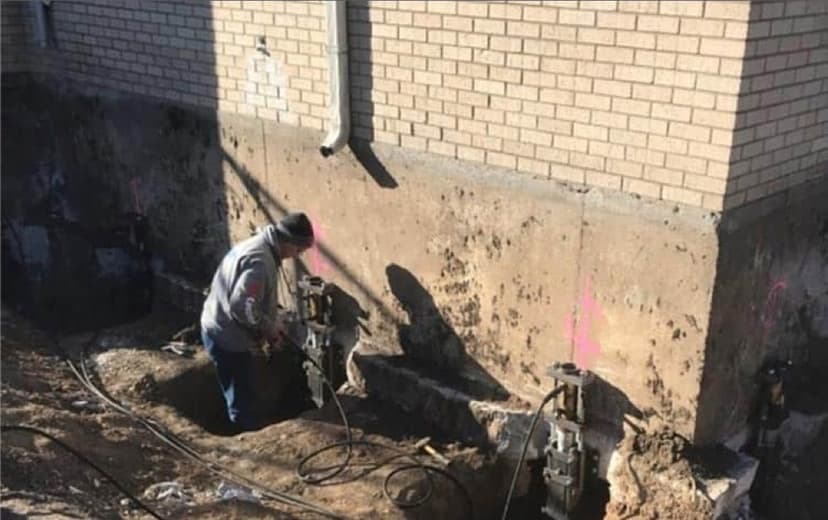
A push pier is a steel tube pressed down through the unstable soil, section by section, until it reaches a dense bearing layer. The weight of the house supplies the force, through a bracket fastened to the footing.
A helical pier is a steel shaft with helical plates that is turned into the ground until the plates reach soil firm enough to resist further rotation. Helical piers are set below the freeze and thaw zone, which helps keep frost near the surface from lifting them.
With either pier, a bracket connects the pier to the foundation and a hydraulic jack transfers the weight of the house onto the piers. Settlement stops. That is the repair every pier job is designed to deliver. Epp’s post on helical piers versus push piers covers how it decides between the two.
Why Can’t Foundation Lifting Be Guaranteed?
Lift is attempted on every pier job and never promised, because the two things that decide it are outside Epp’s control: the soil and the structure. Once the piers carry the load, the crew can use the jacks to raise the footing toward its original elevation, and how far it comes depends on those two things:
- The soil above the bearing layer decides how the footing moves as the jacks work.
- The structure decides how much movement the house can take. A house that has sat settled for years has drywall, tile, brick veneer and plumbing lines that have set to that shape. Raising it further than those finishes can tolerate trades one problem for another.
That is why Epp treats stabilization as the job and lift as the secondary objective on every pier install.
How Much Foundation Lifting Is Realistic?
Realistic foundation lifting is often partial, sometimes full, and never guaranteed. Settlement that happened recently tends to come back further than movement that has been building for decades, where the finishes have adjusted and the soil has packed in around the footing.
Before any pier goes in, Epp crews run a laser level survey across the main floor, referenced to a benchmark set outside the house. The survey shows how much elevation has been lost, where the bearing points sit now, and which parts of the house can tolerate lift without cracking finished drywall, tile or plumbing. Lift then proceeds in small increments, with the foreman checking interior finishes between each one. Some cosmetic drywall cracking is normal during any lift.
Dave Epp, founder of Epp Foundation Repair, on what that survey settles:
I’ve been called out to sinking foundations for more than two decades, and the thing that decides the job is establishing which corner is the high reference point before anyone quotes piers. Half the time the corner the homeowner is worried about is actually the one that didn’t move. The other side heaved or settled, and the visual symptom showed up across the house. That’s why we put a laser on every job before we put a pier in the ground.
The goal Epp sets for every house leveling job is a stable foundation first, then whatever lift the ground and the house safely allow.
What Does the Pier Warranty Cover?
Epp’s pier warranty covers stabilization of the piered area for the lifetime of the structure, with no promise of lift, and the full terms are on the Epp warranties page.
When Is Lift the Wrong Goal?
Lift is the wrong goal in three situations, and each one calls for a different plan.
- Heave. In some homes, what looks like a settled low spot is a high spot. Expansive clay under part of a slab swelled when it got wet and pushed the floor up. Foundation upheaval calls for moisture management before any repair, and lifting the rest of the house toward the high spot does not address the cause.
- Old settlement. When the movement happened decades ago and the finishes have adjusted to the new shape, stabilization alone may be the right scope.
- A bowing wall. A basement wall that bows or leans is a different problem, caused by soil pressure against the wall, and it is repaired with wall anchors, bracing or carbon fiber instead of piers.
An Epp foundation specialist works out which of these a house has during the free inspection, and the Customized Repair Estimate reflects that scope.
Why Do Homes in Nebraska and Iowa Settle?
Homes in Nebraska and Iowa settle, in most cases, because of the soil under the footing.
Loess, the wind deposited silt common across eastern Nebraska and western Iowa, can lose strength and settle when it gets wet; engineers call this hydroconsolidation.
Based on USDA soil survey data for the counties Epp serves, clay is the main soil type in every county in the Lincoln area, and clay soils swell when they get wet and shrink as they dry, so a footing on clay can move with the seasons.
Fill placed under a slab during construction may not have been compacted in even layers, and it can keep compressing under load for years.
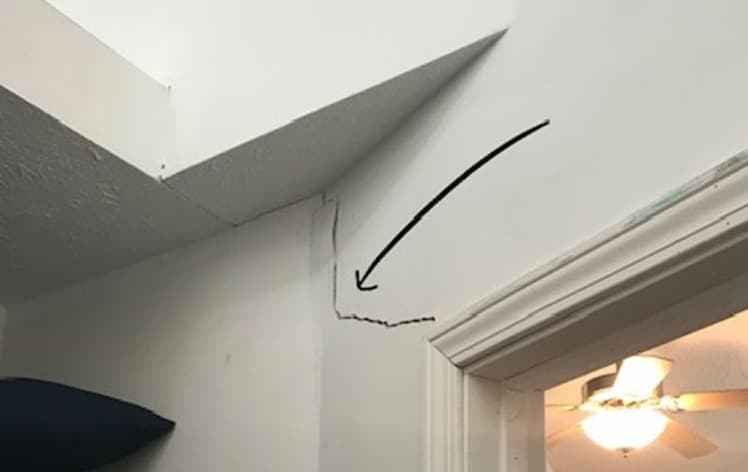
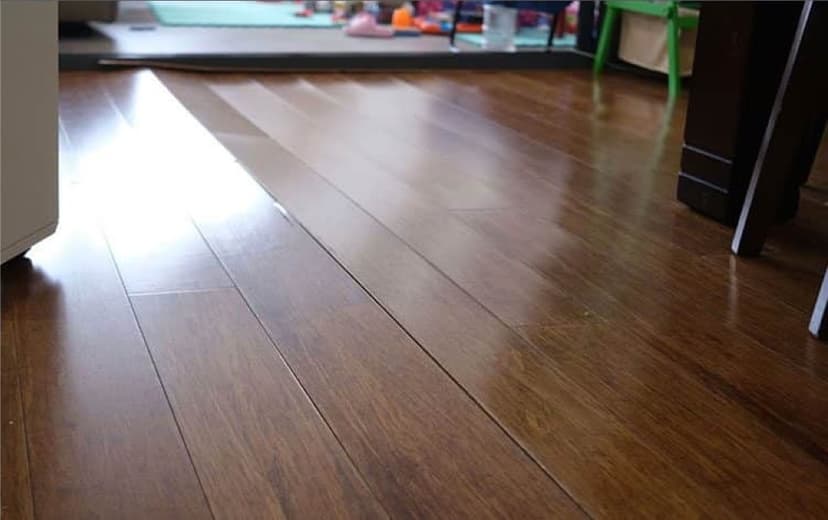
When the soil under part of a house settles, doors and windows can start to stick and cracks can appear in walls, often starting at the corners of windows and doors. Settlement most often shows as stair step cracks in block or brick, uneven floors, and gaps around doors.
Common Questions About Lifting a Settled House
Here are short answers to the questions Epp hears most about lifting a settled house.
Will My Floors Go Back to Level After Piers Are Installed?
Often partly, sometimes fully, and never guaranteed. Epp stabilizes the foundation first, and how much of the lost elevation can safely come back depends on the soil and the structure.
Will Lifting the House Crack My Drywall?
Some cosmetic drywall cracking is normal during any lift. Epp lifts in small increments and checks the interior finishes between each one.
Do Piers Stop a Foundation From Settling Again?
Piers carry the weight of the house past the soil that let it settle, to firmer soil below, so the piered area stops sinking.
Schedule a Free Foundation Inspection
If a corner of the house has dropped, doors stick, or a crack has opened in the block, a free foundation inspection is the place to start. An Epp foundation specialist measures and documents what is found, shows the photos and drawings, and explains the options in a Customized Repair Estimate, with one point of contact from inspection through completion.
Epp has been a family owned Nebraska company since 1994 and serves homeowners across eastern Nebraska and western Iowa through its foundation repair team.
Next Step
Let's take the first step toward a healthy home.
A local specialist will inspect your foundation, walk you through the findings, and send a clear estimate, no cost, no pressure.
Learn more about our foundation repair services.
Found this useful? Share it with someone working on their home.
Written by
Dave Epp
Owner and President, Epp Foundation Repair
Dave joined the family business in 2004 after growing up watching his father Phil build it from the ground up. Today he runs daily operations across Epp's service region in Nebraska, Iowa, Kansas, and Missouri, and is trained and experienced across every repair method Epp installs.
More about Dave
Let's take the first step toward a healthy home.
A local specialist will inspect your foundation, walk you through the findings, and send a clear estimate, no cost, no pressure.